Listen Now
0:00
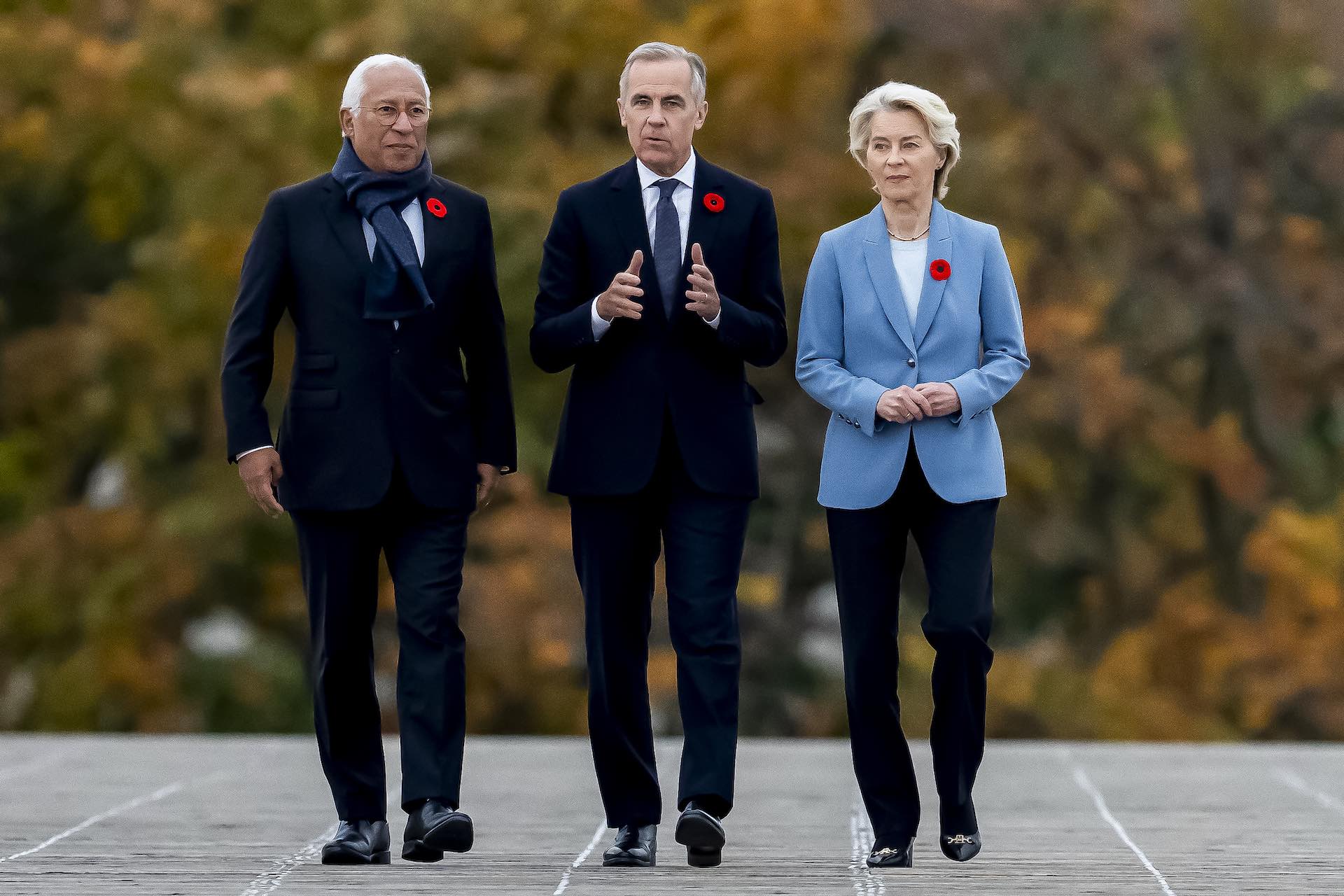
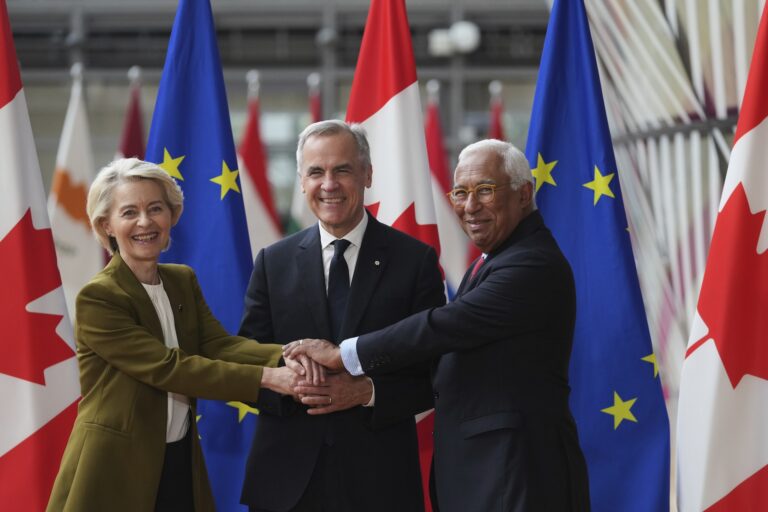
MONTREAL — Prime Minister Mark Carney and European Union leaders announced the outlines of a stronger alliance they said will lead to Canada becoming an “associate member” of the 27-nation bloc, with the scope of that relationship to be shaped in the coming months.
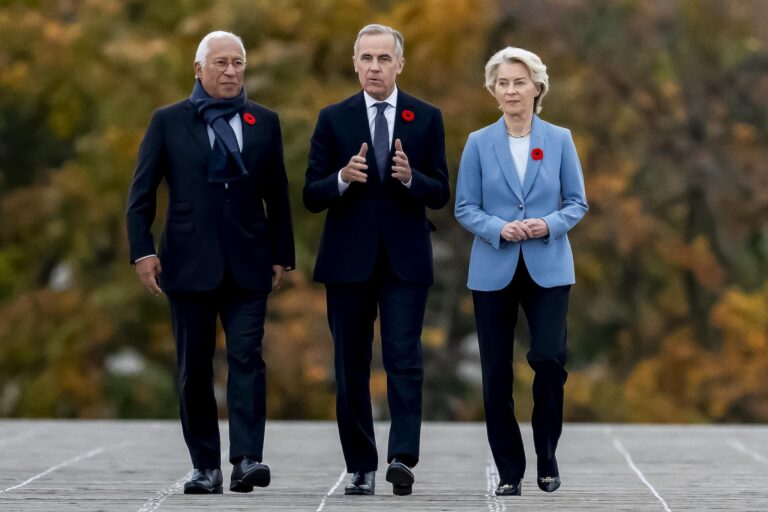
“Our relationship is so special that we want to create something new,” European Commission President Ursula von der Leyen said Friday in Montreal alongside Carney and António Costa, president of the European Council, at the conclusion of the Canada-EU Summit.
“Our association will be the closest, deepest and most unique of its kind,” she said. “We will do it through closer engagement at the highest political level, and by identifying shared priorities and co-ordinating our responses to common challenges.”
Related Articles
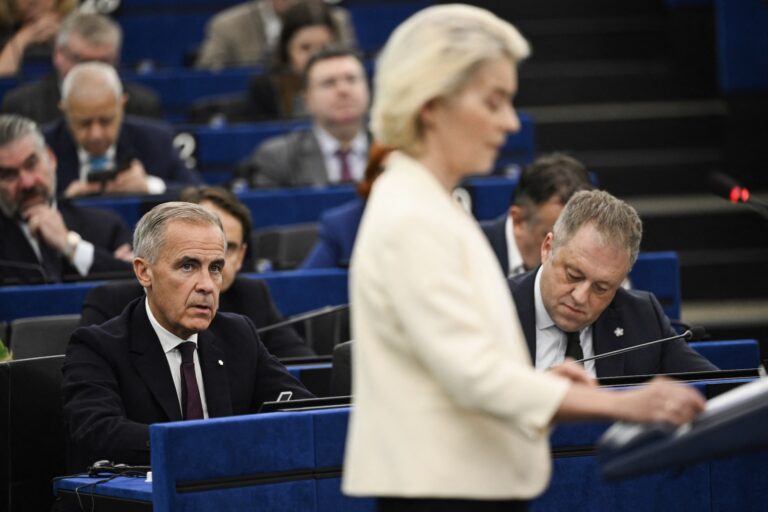
The final text of the joint statement did not mention the phrase “associate member,” which is a label without definition or precedent that has received pushback from some members of the economic bloc. Yet Carney and von der Leyen both used those words to describe their vision.
The timeline for completing the work to flesh out the “concept of an ever-closer association of Canada to the EU, short of full membership itself,” as the joint statement said,
is next June, when Carney has been invited to Brussels to join meetings of the European Council.
In the meantime, Canada and the EU released a joint statement outlining an “Alliance for the Future” aimed at strengthening co-operation between the transatlantic partners. They will explore Canada having a bigger role in Horizon Europe, the EU’s flagship research and innovation program, and getting access to Galileo, its global navigational satellite system. Canada and the EU have also reached the end of negotiating a Digital Trade Agreement to shore up their existing trade deal in the age of rapidly evolving technologies such as artificial intelligence and quantum computing.
Working together
The vision von der Leyen outlined for associate membership would have Canada and the EU including each other as early as possible when shaping policy in climate, energy, AI, innovation, security and other areas of mutual interest. The joint statement would see the partners examine their respective economic security measures, “striving, where possible, to limit negative effects on one another,” which could include checking in with each other over how they respond to trade with China. The partners agreed to take a sector-by-sector approach in safeguarding their supply chains from being used to get around the rules.
Mark Camilleri, the Brussels-based president and CEO of the Canada EU Trade and Investment Association, pointed to the Buy Canadian policy that the Liberal government announced in response to U.S. President Donald Trump’s trade war as an example of a barrier to doing more business with Europe, even though it was not designed with Europe in mind. The EU, meanwhile, has its Industrial Accelerator Act for low-carbon technologies and products made in Europe.
As each party develops rules for its own reasons, Camilleri told The Logic Thursday in Montreal, it should keep the other in mind “so that the Canada-EU relationship doesn’t become collateral damage to legitimate policy goals.”
In the press conference Friday, Carney noted that Canada is trying to speed up major infrastructure projects and reduce barriers to interprovincial trade by cutting down on the duplication of regulations and reviews. He suggested it could expand the scope of that effort to include Europe.
Getting energy and critical minerals across the Atlantic
The European Investment Bank and Canada finalized an agreement at the summit that opens the door to the EU’s long-term lending arm backing critical mineral projects in this country. Ottawa and Brussels also announced a joint long-term feasibility study on how to transport liquefied natural gas from Canada to Europe. To help make that happen, the joint statement said the transatlantic partners will “develop gateway-to-gateway co-operation connecting Canadian Atlantic, Pacific and Arctic routes with European ports and logistics networks.”
Trade in goods and services between the two partners reached nearly $179 billion in 2025, making Europe Canada’s second-largest trading partner behind the United States. Merchandise trade alone grew by 77 per cent from 2016, which is the year before the Canada-EU Comprehensive Economic and Trade Agreement (CETA) provisionally took effect. Yet governments and businesses on both sides of the Atlantic acknowledge that is nowhere near the deal’s full potential.
Lack of awareness among smaller businesses about the benefits of CETA is one reason, Camilleri said. Another is lack of volume: Rather than do the paperwork required, many firms eat the cost of higher duties on smaller shipments. As the new alliance helps companies on both sides of the Atlantic forge stronger ties and start integrating supply chains, Camilleri expects that math to change. “You need to start aggregating transactions,” he said, and “moving the trade from being transactional to being more strategic and deeply embedded into the respective supply chains.”
Competition and financial services
Canada and the EU agreed to explore opening their financial services markets to each other’s banks, insurers and fintechs, Carney said. They have also finished negotiating a new and stronger competition agreement to crack down on anti-competitive practices by firms operating in both jurisdictions, but gave few details about it. “More competition means better, more affordable service for families, and most fundamentally, all Canadians will benefit from more ready access to a wide range of European goods and services,” he said.
As expected, Ottawa and Brussels agreed to look into connecting instant payment systems to make it easier to do business across borders—and get paid more quickly. Carney has highlighted payments as one area where they should co-operate to strengthen their “strategic autonomy.” Both are working to reduce reliance on U.S.-based giants, such as Visa and Mastercard.
Carbon-pricing resolution
Canada has been facing the threat of carbon-related tariffs from the EU as the bloc begins implementing its Carbon Border Adjustment Mechanism next year, even though Canada has a national industrial carbon-pricing regime and a trade deal with the EU. The CBC reported this week on a government memo that showed the Canadian steel, iron and aluminum industries—already struggling under steep U.S. tariffs—would face new duties from Europe.
Carney said both sides had found a solution, without offering details. In a briefing provided to media on the condition they not be named, a Canadian government official said the talks are still ongoing, heading toward Canada getting credit for its own price on carbon.