Listen Now
0:00
I’m reading Inside the Box, non-fiction writer David Epstein’s follow-up to his hit Range, which informed generations of narrowly focused hedgehogs that their parents and mentors had it all wrong—it’s actually the wide-ranging foxes that have the most success in life.
Range was published in 2019 and is aging rather well. Tiger Woods, who won his first golf tournament at the age of two, is now a diminished figure. Meanwhile, Roger Federer, who played a number of sports before settling on tennis, is living a charmed post-retirement life as a brand ambassador and early investor in On Running, the upstart maker of athletic shoes that has destabilized Nike and other legacy sneaker companies.
Related Articles

Similarly, it appears that a new form of range anxiety has taken hold in mathematics and other hyper-specialized domains where machines are now solving previously unsolvable problems. The future has been returned to the polyglots, if only because they will be better at writing prompts for artificial intelligence.
The full title of Epstein’s new book is Inside the Box: How Constraints Make Us Better. Epstein’s latest “big idea” has me feeling better about Canada’s prospects. It’s been a long time since we’ve applied any constraints on how we manage this place. All this chaos is uncomfortable, but it’s forcing us to focus. If that focus leads to an outbreak of creativity, we could be setting up for a solid run of success.
Make no mistake, though; it will be hard. The months and years ahead will be a constant struggle against reverting to what we know.
Epstein’s method is finding a myth and busting it. He stitches his narrative in Inside the Box with the origin story of the periodic table. The myth is that it came to Dmitri Mendeleev in a dream in 1869, creating source material for the idea that science is built on “Eureka!” moments. The reality is that Mendeleev was on deadline. He had a contract to write a two-volume chemistry textbook. He had completed the first volume, but it covered only eight of the 63 known elements. He needed a way to fit the remaining 55 elements into a standard-size textbook. Eureka! The periodic table was born.
The most successful policymaking that I’ve observed over the last few decades has occurred when policymakers chose to put themselves in a box. The most obvious example is monetary policy. The federal government put a lid on inflation by ordering the Bank of Canada in the early 1990s to keep the consumer price index advancing at an annual rate of about two per cent—and then limited the ability of the political class to influence interest rates by insisting that governors would be left alone to base their decisions on economics, not politics.
Inflation targeting has delivered price stability for more than three decades, depending on how you rate the central bank’s performance after the COVID-19 pandemic. The glass-half-full assessment would be that Canada’s approach to monetary policy bent, but didn’t break, as governor Tiff Macklem guided inflation back to target without triggering a recession.
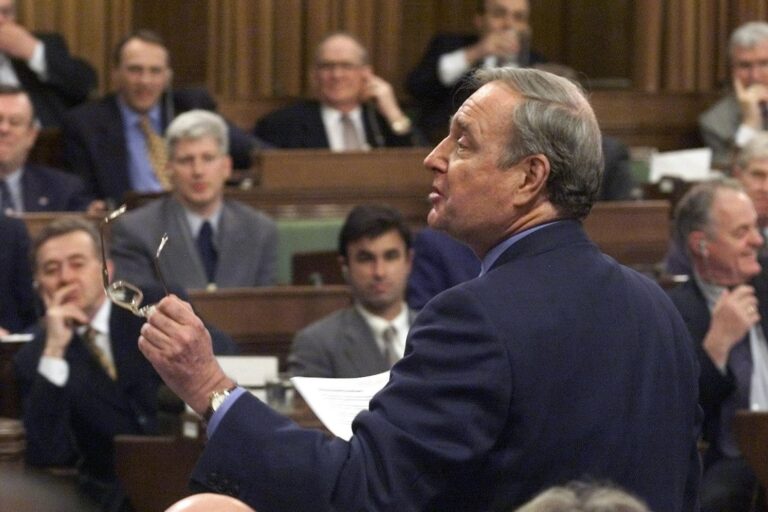
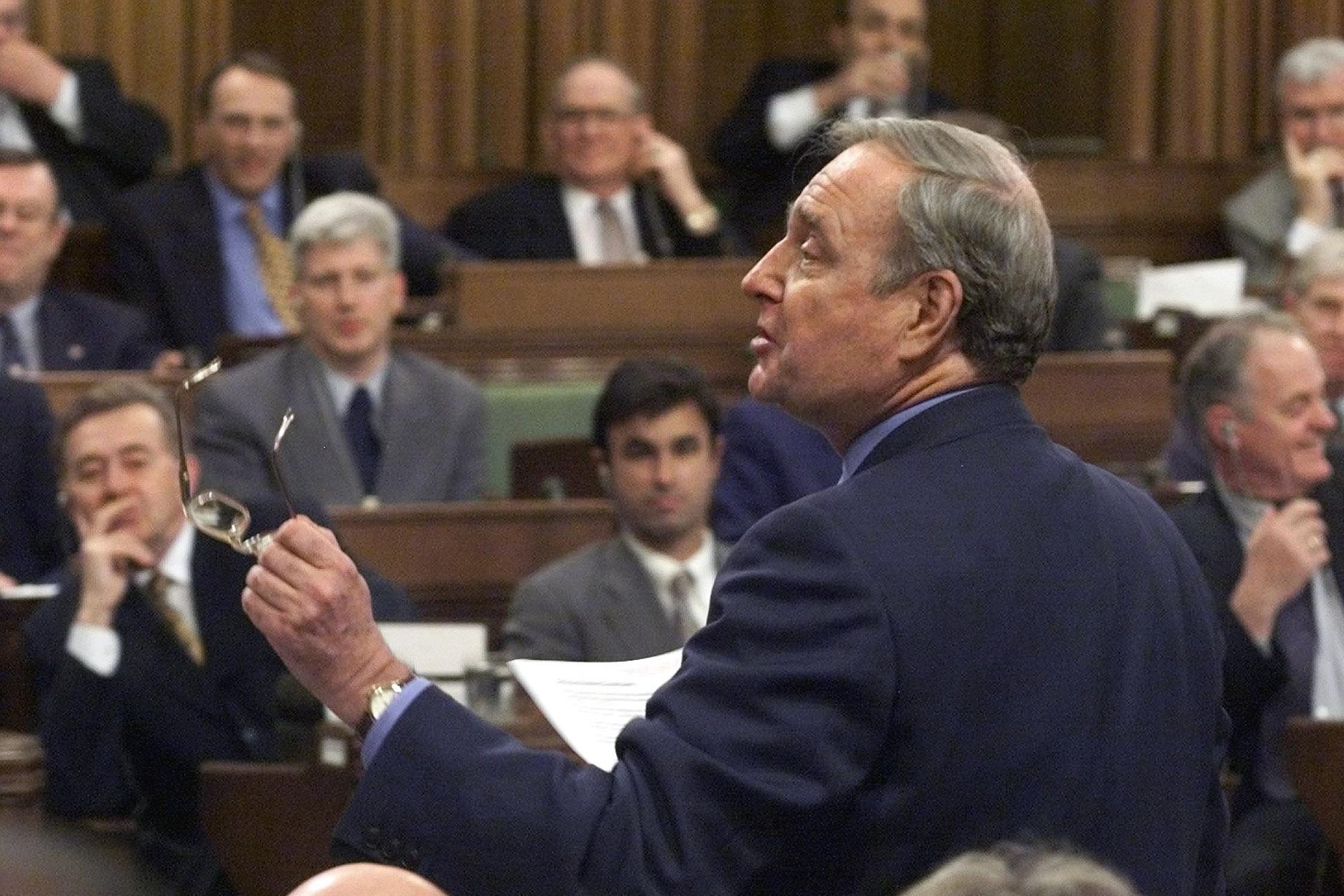
Another example is the way former finance minister Paul Martin tamed the budget deficit in the mid-1990s.
Epstein’s book introduced me to the term “cognitive miser,” a concept from psychology based on the observation that humans dislike thinking and will unconsciously resort to the simplest solution possible. Martin could have followed his predecessors and continued hacking away at the deficit with various tax increases, spending cuts and vague fiscal targets. Instead, he created constraints that kept the cognitive misers around him in line.
Martin scrapped long-term targets in favour of two-year commitments, which made it harder to procrastinate. He led an across-the-board program review, rather than implementing arbitrary cuts, forcing an element of creativity into what could have been an entirely destructive exercise. He famously low-balled his fiscal outlooks, a clever way to both create momentum and limit the ability of lobbyists to divert excess revenue away from the deficit and (eventually) the debt.
Fiscal policy under Martin wasn’t perfect. He got help from the North American Free Trade Agreement (another form of constraint, in that it exposed Canadian industry to greater competition) and lower interest rates, which came down in part because the Bank of Canada had lashed itself to an inflation target. But it’s undeniable that a series of creative decisions, implemented under the strain of self-imposed duress, set the foundation for one of the better runs of wealth creation that Canada has ever had.
Then we released ourselves from Martin’s shackles and the cognitive misers took over. Former prime minister Stephen Harper could have used the surpluses he inherited to restore public investment and meet Canada’s NATO security commitments. Instead, he cut the GST.
Former prime minister Justin Trudeau could have used unusually low interest rates to invest heavily in the energy transition. Instead, he sprayed money in all directions, an approach to fiscal policy epitomized by Chrystia Freeland’s 739-page budget in 2021, a something-for-everyone tome that was 547 pages longer than the fiscal plan that Martin used to tame the deficit in 1995.
Much of Canada’s history has been more like the decades under Harper and Trudeau than the years Martin was finance minister. At the macro level, things were mostly good. That’s how the drift sets in. “It is a myth,” Nobel laureate economist Herbert Simon once said, “that people are most creative when they are most free.”
History has handed Canada’s leaders a set of constraints. They have to reorient the economy and rebuild the military amid higher interest rates. That pressure has already created a steady stream of policy decisions unlike anything we’ve seen since Martin’s time in government. It’s not a fluke. Humans tend to thrive under conditions like these. There will be voices in your head suggesting otherwise. Ignore them.
Kevin Carmichael is The Logic’s economics columnist and editor-at-large. He has spent more than two decades covering economics, business and finance for outlets including Bloomberg News, The Globe and Mail and the Financial Post, where he also served as editor-in-chief.