Listen Now
0:00
CALGARY — Cenovus Energy is buying one of the country’s last large independent oilsands companies in a friendly $5.7 billion deal, extending the wave of consolidation sweeping the Canadian oilpatch.
Amid a surge in oil prices triggered by the Iran War, the oilsands major is marshaling its ample cash firepower to buy Athabasca Oil in a deal that comes less than a year after Cenovus’s takeover of oilsands producer MEG Energy. The transaction values Athabasca at $12 a share, with Cenovus set to pay as much as $4.3 billion in cash and the remainder in shares.
Cenovus CEO Jon McKenzie was explicit Monday about the role the federal government’s expanded tax incentives for new investment—the so-called Productivity Mega Deduction—is playing into the company’s thinking.
Related Articles
“Having the federal government come forward with accelerated capital cost allowance is not immaterial to this,” McKenzie said Monday on a conference call. “We also expect to see growth incentives on the royalty side with the province of Alberta.
“All of that fits together to draw capital back into the resource in the Athabasca Basin, and probably accelerate growth as well.”
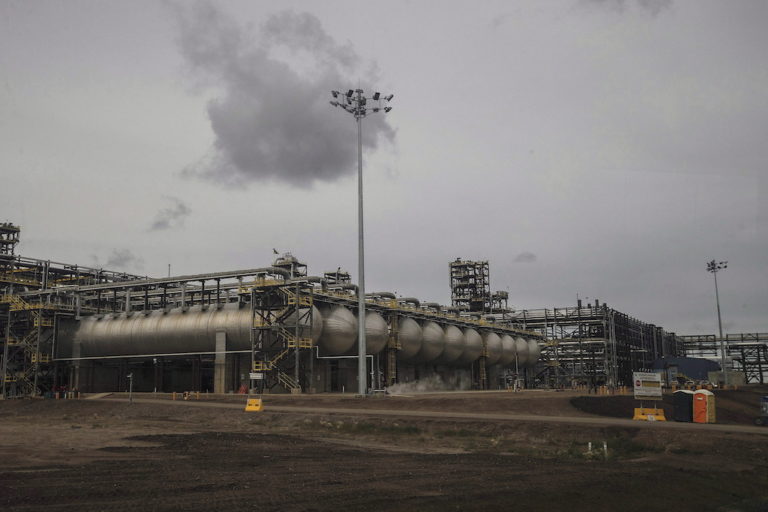
The acquisition would see Cenovus scoop up roughly 45,000 barrels per day of existing production largely neighbouring its own assets in northeastern Alberta—enough to push the combined company above one million barrels of oil equivalent per day, based on Cenovus’s second-quarter output. Cenovus said Monday that it plans to nearly triple Athabasca’s thermal oil production to roughly 115,000 barrels per day by 2032—three years faster than Athabasca’s plans currently contemplate.
Unleashing that expansion, however, depends on government policy. Cenovus said that sanctioning a major expansion of Athabasca’s Corner project is contingent on Ottawa and Alberta finalizing promised regulatory reforms and growth incentives.
“All of the oilsands companies are cautiously positioning to prepare for a renewed growth push, given the changes to federal fiscal policy, the [Pacific Link oil pipeline] and potentially provincial fiscal stimulus as well,” said energy economist Peter Tertzakian.
More consolidation: The deal, which must still be approved by Athabasca’s shareholders, would take out one of the few sizable public oilsands firms remaining in Canada. A research note from RBC Dominion Securities described Athabasca as the “last oilsands pure play [small-to-midsized companies] left in the basin,” and TD Cowen called it “one of the last remaining thermal plays,” adding that “scarcity” arguably justifies the price Cenovus is paying.
The deal is the latest step in a steady march of consolidation in the oilsands that has largely seen independent producers dwindle and foreign majors exit while Canadian giants Cenovus, Suncor Energy and Canadian Natural Resources Limited continue to grow.
Still, Tertzakian said the latest round of moves may be laying the groundwork for the industry’s next growth cycle: “Consolidation is necessary to build scale, to drive cost efficiency and competitiveness, to then justify growth capital for filling the upcoming pipeline expansions, especially to the West Coast,” he said.
The power of a “mega-deduction”: Monday’s announcement is one of the first tangible signals that new federal tax incentives are influencing investment decisions in the oilsands. The measures, introduced last year and substantially expanded last month, allow qualifying new capital investments to be written off much faster.
In a research note Monday, TD Cowen pointed out that Athabasca already comes with $2.1 billion in accumulated deductions it has yet to use from past spending. Combined with Ottawa’s new so-called productivity mega-deduction, the bank estimated those incentives could allow Cenovus to defer paying cash income taxes on the acquired business until 2032.
That could be particularly valuable given what Cenovus intends to spend. The company said Monday that accelerating development on Athabasca’s assets could require as much as $800 million in capital spending annually through 2030.
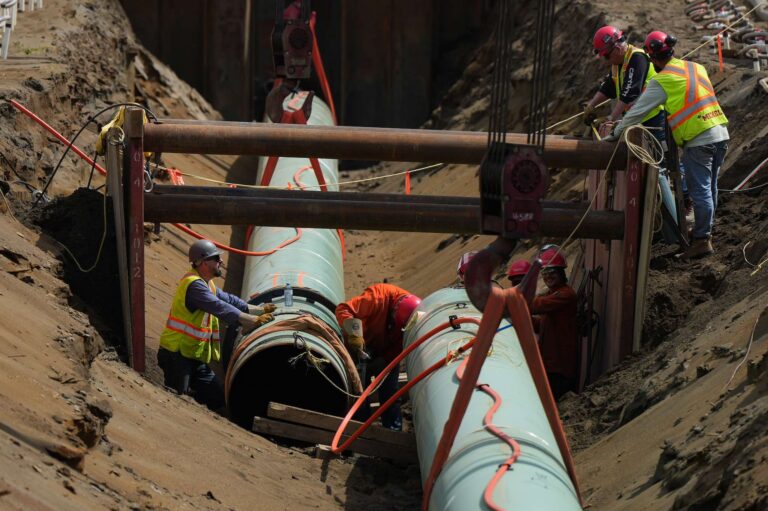
What’s next: Cenovus is one of five oilsands firms in talks with the federal and Alberta governments to finalize terms on a set of tax breaks, royalty incentives and other regulatory measures aimed at unleashing another wave of investment to support Pacific Link—the proposed million-barrel-a-day pipeline to the West Coast.
The parties aim to strike binding agreements by Nov. 15, spelling out industry commitments to the Pathways carbon capture project, to which Ottawa has yoked its support for the new pipeline.