Listen Now
0:00
Canada’s biggest pension funds and banks pledged to put billions of dollars to work at home around the Canada Investment Summit. But for some early-stage companies, accessing that capital could be a challenge: their projects are often too small for the country’s biggest investors.
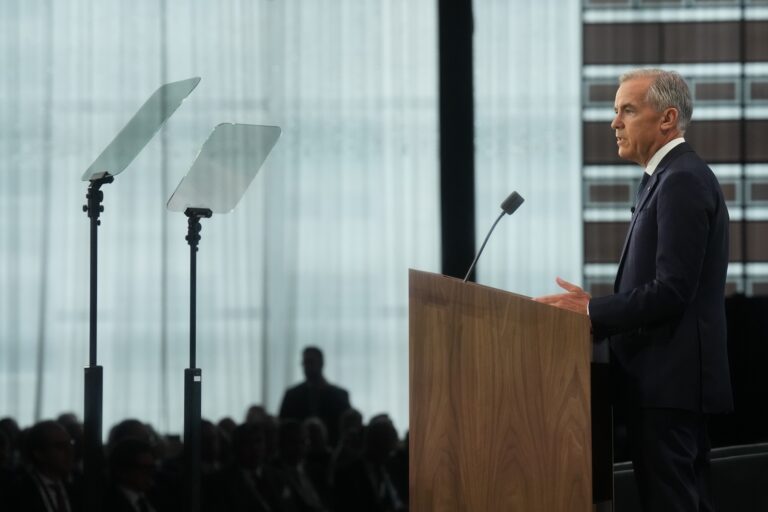
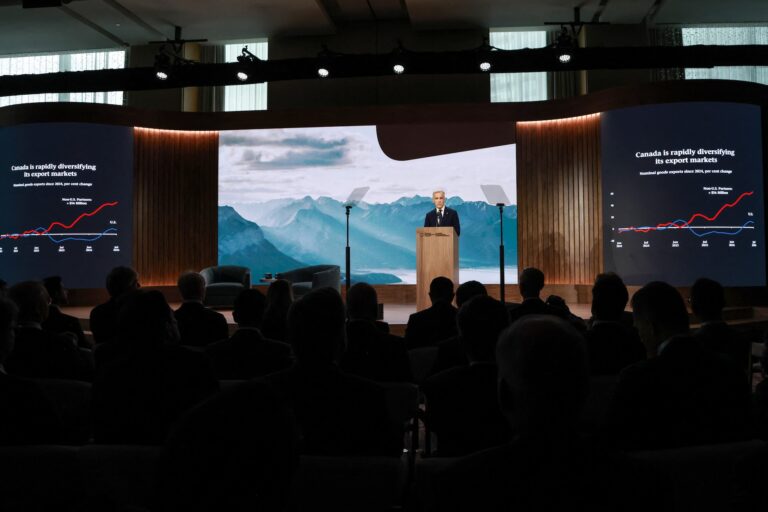
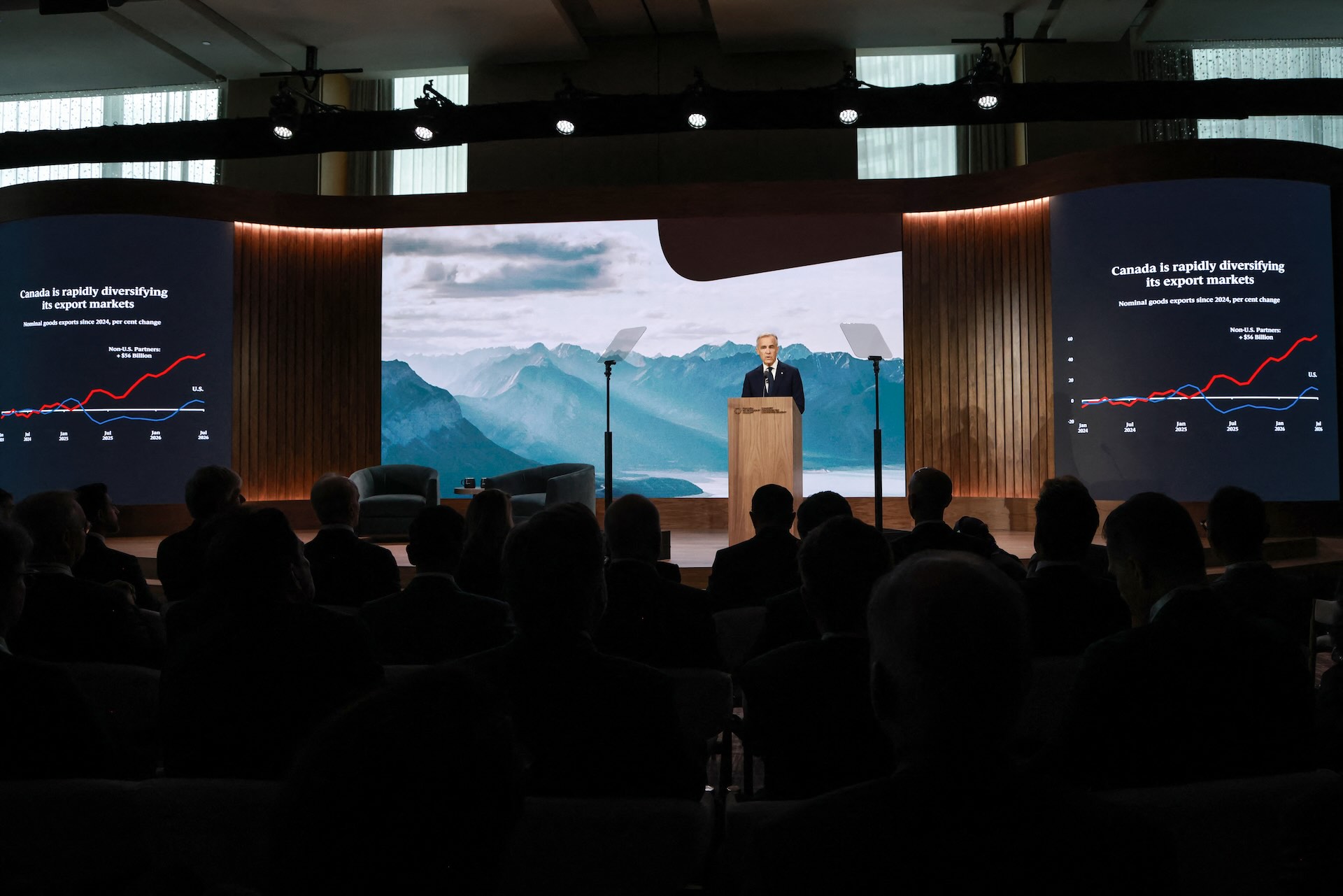
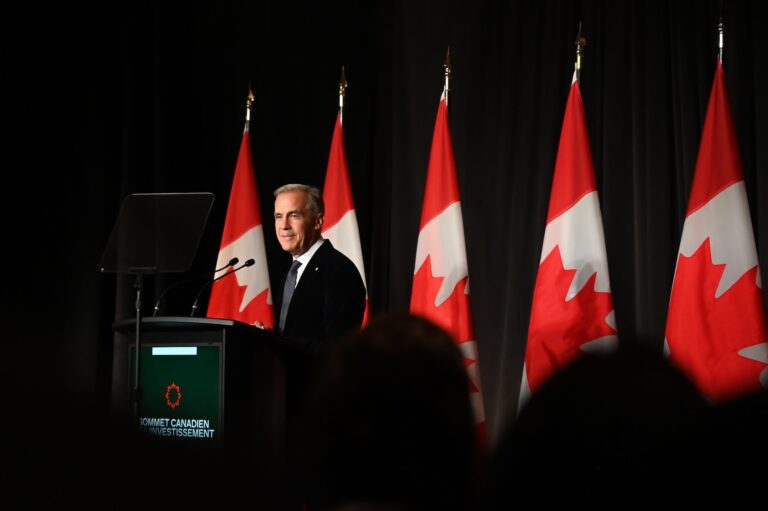
Prime Minister Mark Carney spent last week pitching some of the world’s largest investors at the summit in Toronto, as he seeks to catalyze $1 trillion in investment over the next five years in areas including data centres, mines, energy projects and other infrastructure.
Talking Points
- Of the 167 projects in the Canada Investment Summit prospectus, only a small number explicitly sought Canadian investors or Indigenous equity, even as billions in new domestic investment commitments were announced around the event
- RockAI and Eauclaire Tidal–two companies pitching projects in the deal book—both used the summit to broaden their investor networks, but neither had yet secured the financing they were seeking, with project size emerging as a key barrier
Relatively few entries in the federal prospectus—an official list of investment opportunities— target domestic investors. Of the 167 projects in the deal book, only three explicitly name Canadian investors or partners in their financing objectives. Two seek Indigenous equity, while five others seek broader Indigenous partnerships or participation.
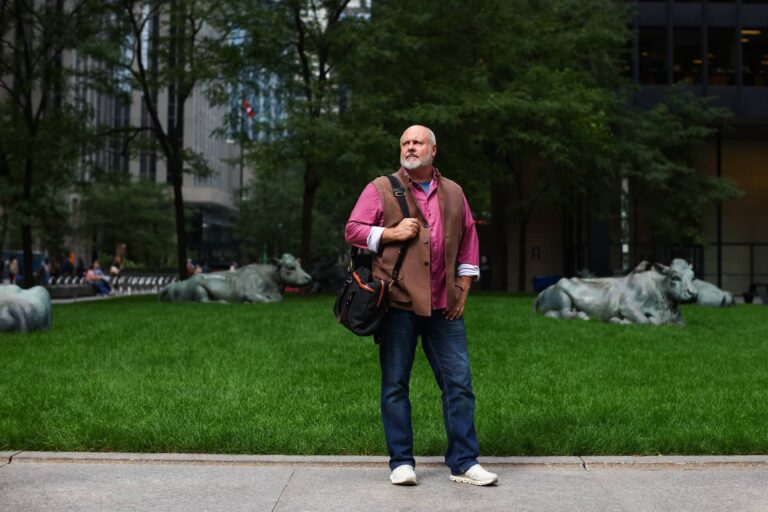
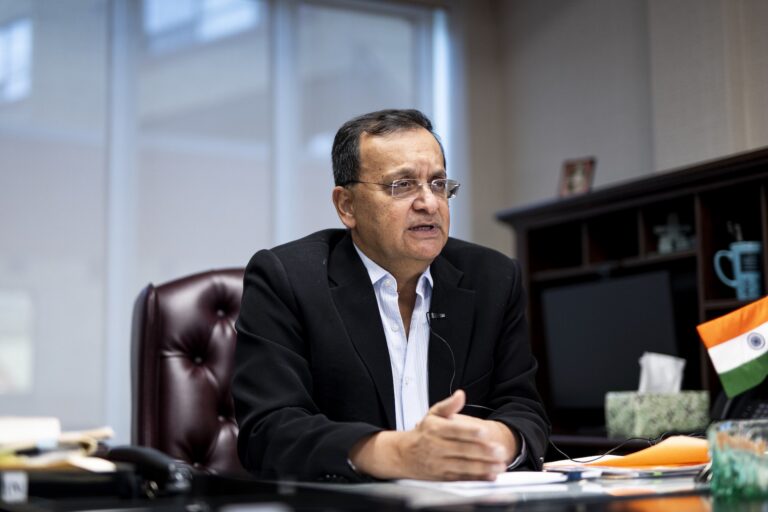
RockAI is one of the companies seeking Canadian pension capital. The Ottawa-based startup—no relation to the American company of the same name—is proposing a roughly US$427-million ($604 million) advanced manufacturing and R&D campus designed to support its AI initiatives, high-performance computing and potential defence-related workloads.
Founder Joe Hickey said he’s targeting Canadian pensions because of the project’s scale and his desire to keep its ownership and financing in domestic hands. The Maple 8’s longer investment horizons make them a natural fit for infrastructure projects, he said, while their ability to invest through both debt and equity could help RockAI finance the build without giving up as much ownership.
Related Articles
Hickey is open to foreign debt and minority equity investment, but said letting a foreign investor take a controlling stake would undermine the sovereignty RockAI is trying to preserve.
“Sovereignty is a choice that we can make, and over the last 10 to 15 years, we kind of deferred it to the United States, and maybe that’s not the future that we should be looking for now,” he said.
It’s not Hickey’s first attempt at courting Canadian pension capital. While leading his previous company, Rock Networks, Hickey said he pitched some of them on a $172-million broadband project between Sault Ste. Marie and Sudbury, but was told the investment was too small.
His new project, Canada Sovereign Systems Centre, is big enough that it “starts to move into the wheelhouse that pension funds would be interested in,” Hickey said.
The federal government said the summit helped generate almost $500 billion in new investment commitments, including nearly $100 billion from Canadian pension funds, insurers and other institutional investors.
So far, though, foreign investors have shown more interest in RockAI’s project than Canadian pension funds. While Hickey was not invited to the summit itself, he attended sideline events and said he has since been speaking with potential investors and customers from the U.S., Asia and the Middle East.
Hickey called the company’s inclusion in the federal deal book a “vote of confidence” that could help as the pre-revenue company approaches lenders and investors.
For Jennifer Lewis, vice-president at Nova Scotia-based clean-energy company Eauclaire Tidal, whose project is featured in the deal book, keeping investment close to home includes making room for Indigenous ownership.
The company is seeking roughly US$175 million ($247 million) to build six tidal turbines in the province’s Bay of Fundy. Lewis said Eauclaire expects to finance about 60 per cent of the cost through debt and 40 per cent with equity, with as much as 49 per cent of that equity—roughly $48 million at the current budget—coming from First Nations investors.
The emphasis on Indigenous ownership stands apart from a summit geared largely toward attracting international capital. Ottawa billed it as a forum for global investors, with participants from nearly 30 countries, while the guest list of more than 200 names reviewed by The Logic included just seven representatives from Indigenous groups: the Assembly of First Nations, Inuit Tapiriit Kanatami, the Métis National Council, First Nations Bank of Canada, First Nations Finance Authority, First Nations Financial Management Board and the First Nations Major Projects Coalition.
“We’re looking for local investment in Nova Scotia where possible, because it’s [First Nations’] backyard,” Lewis said. “We want to share the benefits of the project with the people that live there.”
Getting the project to the point where those investments can happen, however, has been difficult. Lewis said Eauclaire relied largely on money from her family’s Ontario oil-and-gas business, friends and family and its turbine manufacturer partner during development, while outside offers either failed to materialize or would have substantially diluted existing owners.
Eauclaire came out of the summit without new financing and only limited investor interest so far. Lewis said Invest in Canada, the agency tasked with attracting foreign investment, told the company it could take a month after the summit for investors to work through the deal book and begin approaching individual proponents.
The Port of Halifax, which was included in the deal book, is also looking at Indigenous investment for its Northern Expansion of Atlantic Hub Container Terminal (NEXT) project, aimed at expanding Canada’s trade capacity and the port’s role as a national gateway.
In a statement, spokesperson Lori MacLean said the project’s scale and long-term economic benefits make Indigenous investment and partnership “a natural fit,” adding that its financing structure is still being evaluated. The deal book did not specify how much Indigenous or private capital it hopes to raise.
Like RockAI, Eauclaire wasn’t invited to the main summit. However, Lewis tried to make the most of it, attending the summit’s dinner reception the night before, where she spoke with provincial premiers, investors and other project proponents.
She said she had several conversations with Bay Street asset managers, but project size emerged as an obstacle. Some investors told her the roughly $247 million in financing could fall below their minimum investment threshold.
But Lewis remains hopeful that one investor’s commitment could unlock others. She expects Eauclaire to secure some financing within the next month, an early test of whether the summit’s conversations translate into actual capital.
“Usually in our experience, it’s been a bit of a domino effect,” she said. “You get one [investor], two, and then the whole thing sort of comes together quite quickly.”