Listen Now
0:00
OTTAWA — The United States remains the natural choice for Canadian artists, musicians and video game creators seeking a global stage, but internal government analysis shows growing potential for cultural exports to succeed in China and India—along with greater volatility and risk.
“While the past cooling of bilateral relationships has made it more challenging to effectively engage with these markets, relations are now on a trajectory for improvement resulting from the government of Canada’s trade diversification efforts,” officials at the Department of Canadian Heritage wrote in an analysis of where in the world its support might make the biggest difference.
Talking Points
- An internal analysis of international markets by the Department of Canadian Heritage recommends directing resources from the creative export strategy toward high-potential, high-risk markets like India and China as part of broader efforts to diversify trade
- The memo, released to The Logic through the Access to Information Act, also stresses the need to maintain the foothold that Canadian cultural industries have in the U.S.
In May, the Liberal government announced the permanent renewal of the creative export strategy with $95 million over five years. Launched in 2018, the program was designed to help Canadian artists and producers seek audiences beyond their borders.
Cultural exports are a wide-ranging trade category encompassing everything from fashion and architecture to book publishing and photography. Canadian Heritage said the program designed to boost those exports has helped more than 3,250 businesses and non-profit organizations reach 140 international markets in its first eight years. Its biggest award last fiscal year, $595,000, went to Toronto-based ethical fashion and home-goods brand Kotn to support its expansion to the United Kingdom. The company opened a store and hotel in London earlier this year.
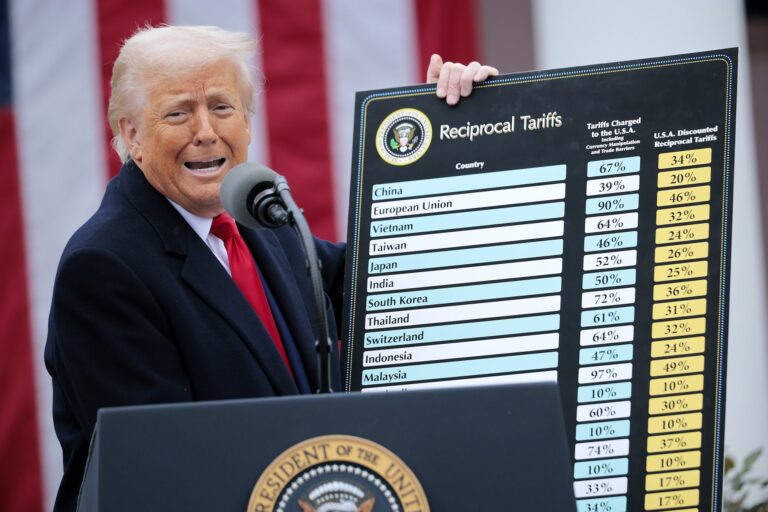
The renewal of the strategy and its funding streams comes as the government pushes to diversify Canada’s trade amid the trade war launched by U.S. President Donald Trump. Canada’s cultural exports amounted to about $27 billion in 2023, according to the most recent data available from Statistics Canada. As with many other sectors that have long been drawn to the massive market south of the border, two-thirds of the total went to the U.S.
Related Articles


A memo provided to Culture Minister Marc Miller ahead of the announcement took a hard look at the international markets to guide the department as it allocates its resources so that Canada’s creative industries can grow around the world—without losing their foothold in the U.S. The Logic obtained the memo under the Access to Information Act.
The markets seen as having the highest potential for growing cultural exports from 2026 to 2029 years were India, China, Hong Kong, South Korea and Australia. They are not for beginners. They have “more volatile patterns of growth, with past successes not anchoring future trade or supply chains,” the memo says, which makes them best for those “looking for higher risk, higher reward scenarios.”
Looking more closely at the Indo-Pacific, the memo recommended striving to grow market share “through large-scale interventions” in India and China, including Hong Kong. The memo said it might be a good time to “shift support and focus toward rebuilding market share lost in China due to the pandemic and the cooling of bilateral relations, and in building business relationships with India, now that there is political will and appetite to engage with this fast-growing market.”
Hong Kong imported US$40.5 billion worth of creative goods in 2022, representing about six per cent of global imports in that category. China’s share amounted to four per cent, or US$24.2 billion, according to UN Trade and Development’s latest outlook on the global creative economy, which placed both among the top 10 importers. Canada’s share was under three per cent.
India imported US$5.6 billion worth of creative goods in 2022, which was less than one per cent of the total share. Yet its media and entertainment sector is growing rapidly—especially when it comes to online gaming (valued at US$2.8 billion in 2024) and animation and visual effects (US$1.2 billion).
When The Logic asked to view the international engagement plan that Canadian Heritage created from its analysis, spokesperson Martine Courage said it is “an internal evergreen document” that is still in the works. She confirmed the federal government has begun to act on its advice, however, as Miller is leading a trade mission to China in October.

Courage said the department shared its analysis with creative industries stakeholders, who said the list of target markets generally aligns with their own. For the Indo-Pacific, however, those in music and publishing stressed the need to think about copyright protection and intellectual property enforcement when assessing opportunities, she said.
Andrew Cash, president and CEO of the Canadian Independent Music Association, told The Logic that trade missions can be a good way for Canadian artists and producers to learn more about how the copyright and licensing regimes work in those markets. “There’s opportunity, no question about it, but there’s some spade work that has to be done.”
In Europe, the memo said France, Germany and the U.K. deserve the most attention and resources, as together they took in 76 per cent of Canada’s creative exports to the continent in 2023. The government could build on previous investments it has made in Europe through the strategy, the memo notes, such as the $14.5 million it put toward Canadian participation in the Frankfurt Book Fair—the largest event of its kind in the world.
Canadian Heritage identified other markets where the strategy could help to build, explore or monitor their potential for exports and possible future funding. Ireland, the Netherlands, Spain and Switzerland, which the analysis listed in the “build” section for Europe, are countries where some “light touch” support at international trade events could help to grow the momentum. The same goes for South Africa, Saudi Arabia and the United Arab Emirates, where investment in the creative industries help those markets punch above their weight.
To avoid stretching itself too thin, the department recommends simply tracking trade data in countries like Poland or Peru, which show signs of growth but are too small for such an investment. Some markets may develop without the support, the analysis says, noting the large Filipino diaspora in Canada may stoke interest in the Philippines for Canadian cultural exports.
The department is not cutting Canada’s largest export market out of its strategy. The U.S. remains an attractive destination, and the stiff competition with American cultural industries means Canadian creative businesses and organizations still need government funding to set up or expand there. Some challenges predate Trump, such as restrictive visa requirements that make it hard for live performers to book shows.
Jennifer Wicks, executive director of the Canadian Crafts Federation, said her organization used its $33,000 grant to scope out collector shows in France, Spain and the U.K. to see whether it would be worth the money to organize a group of Canadian exhibitors.
Such efforts are expensive, but her members need to diversify their clientele. The new 50 per cent U.S. tariffs on a wide range of Canadian goods—including sculptures, jewelry, paintings and textiles—hit the crafts industry hard. Before that, artisans lost the US$800 de minimis threshold for duty-free shipping, which forced many to halt their e-commerce sales to the U.S. due to higher costs and red tape. “It’s dire. It’s tragic. It’s awful,” Wicks said.
With files from Murad Hemmadi