Listen Now
0:00
Toronto’s MaRS Discovery District and Fredericton defence accelerator Vimy Forge are joining forces to help Canadian defence startups and venture investors find one another.
“Most of the capital in this country, especially in the defence sector, is chasing companies that have already proven themselves,” MaRS’s Liam Gill, the head of its capital program, said in announcing the effort.
Talking Points
- Toronto’s MaRS and Fredericton’s Vimy Forge are teaming up to match unproven Canadian defence and dual-use startups with investors, building on Vimy Forge’s existing work connecting founders with military end users
- Investors often don’t understand defence procurement or the unusual risk profile of defence startups, while founders often lack the contacts to turn technical know-how into a fundable business
The point of the collaboration is to find defence and dual-use startups that haven’t proven themselves yet and help them “reach the technical, commercial and organizational milestones needed to become investable, mission-ready ventures.”
For MaRS, this is the first iteration of what it’s calling “a capital matchmaking engine” it hopes will produce perfect pairings of founders with investors who understand their sectors and needs.
The Toronto organization has experience nurturing new businesses and connecting novice executives with corporate mentors and investors; but for MaRS, defence work is pretty unfamiliar.
Related Articles


For Vimy Forge, the alliance adds a new dimension—financing—to its work connecting founders with potential military users of their products.
“We don’t have this soft connective tissue,” says managing director and co-founder Duncan McSporran, of the defence startup scene in Canada.
He’s a veteran of the British army who fell in love with Atlantic Canada during a secondment at Canadian Forces Base Gagetown.
After retiring from military service, McSporran moved back and forth between the private sector and supporting research at institutions like the University of New Brunswick. He says he and fellow Vimy Forge co-founder Ian Whytock, a venture capitalist at Halifax’s Tidal Venture Partners, started talking about the problems facing Canadian defence startups about two-and-a-half years ago, before the gold rush in the sector began.
Entrepreneurs, investors, uniformed military members and the civilians who buy things for them often don’t know how to talk to each other. Figuratively or even literally—they don’t know whom to contact or how to reach them.
A veteran might know what the Canadian Armed Forces need but lack the corporate experience and contacts to turn that knowledge into a business. A founder might have a great idea for something the Forces could use and the technical chops to make it, but no military contacts who could help refine the idea for the battlefield.
The Canadian military has too few people to spare time for spitballing chats, McSporran says. “Innovation is just one of those additional tasks that hasn’t been considered in the defence planning assumptions, really, until now.”
Also, well-funded prime contractors can wait a long time for government decisions. Startups whose CFOs are counting nickels every night can’t.
“Whether it’s our uniformed personnel that are involved in procurement or it’s our civil servants, they really don’t understand how to deal with small or medium businesses,” McSporran says.
But for a Canadian company, selling to the Department of National Defence is huge, lending credibility to Canadian startups hoping to export their products—far out of proportion to the usual benefits of a government sale, McSporran says.
Potential investors, meanwhile, might have money but little experience with the military or how it buys things.
“Right from pre-seed all the way up to private equity, through that entire stack, there’s a lot of people that are kicking tires and looking at things but not that many actually who have taken the plunge,” says Whytock.
Potential investors need entirely different mental models for judging pitches from defence startups. There’s a good chance such a company makes physical goods that it hopes to deliver on a time-limited contract, to one major customer. That means massive concentration risk, Whytock says. And product-market fit? That doesn’t really apply.
Even if you make, say, the best night-vision gear in the world and have half of NATO lined up at your door, you still won’t have a book of annual recurring revenue the way a firm that sells subscriptions to cloud-based accounting software does.
“We’ve got a whole generation of investors that look at [annual recurring revenue] as the crown jewel of how they evaluate a company,” says Whytock. “If you’ve been raised on the software-as-a-service metrics of the last decade, then this is really challenging.”
There’s a flip side, though. “Once you’re nested within the military and your product is being used, it’s actually extremely sticky,” Whytock says. “It’s getting in that’s really difficult.”
Why Fredericton for this? McSporran cites technical expertise at and around the University of New Brunswick, support from the provincial government, and geography. CFB Gagetown in nearby Oromocto, N.B., is a major centre for the army. Nova Scotia has CFB Greenwood for the air force and CFB Halifax for the navy.
“In the space of a four-hour drive, we really have a fantastic representation of the Canadian Armed Forces,” McSporran says.
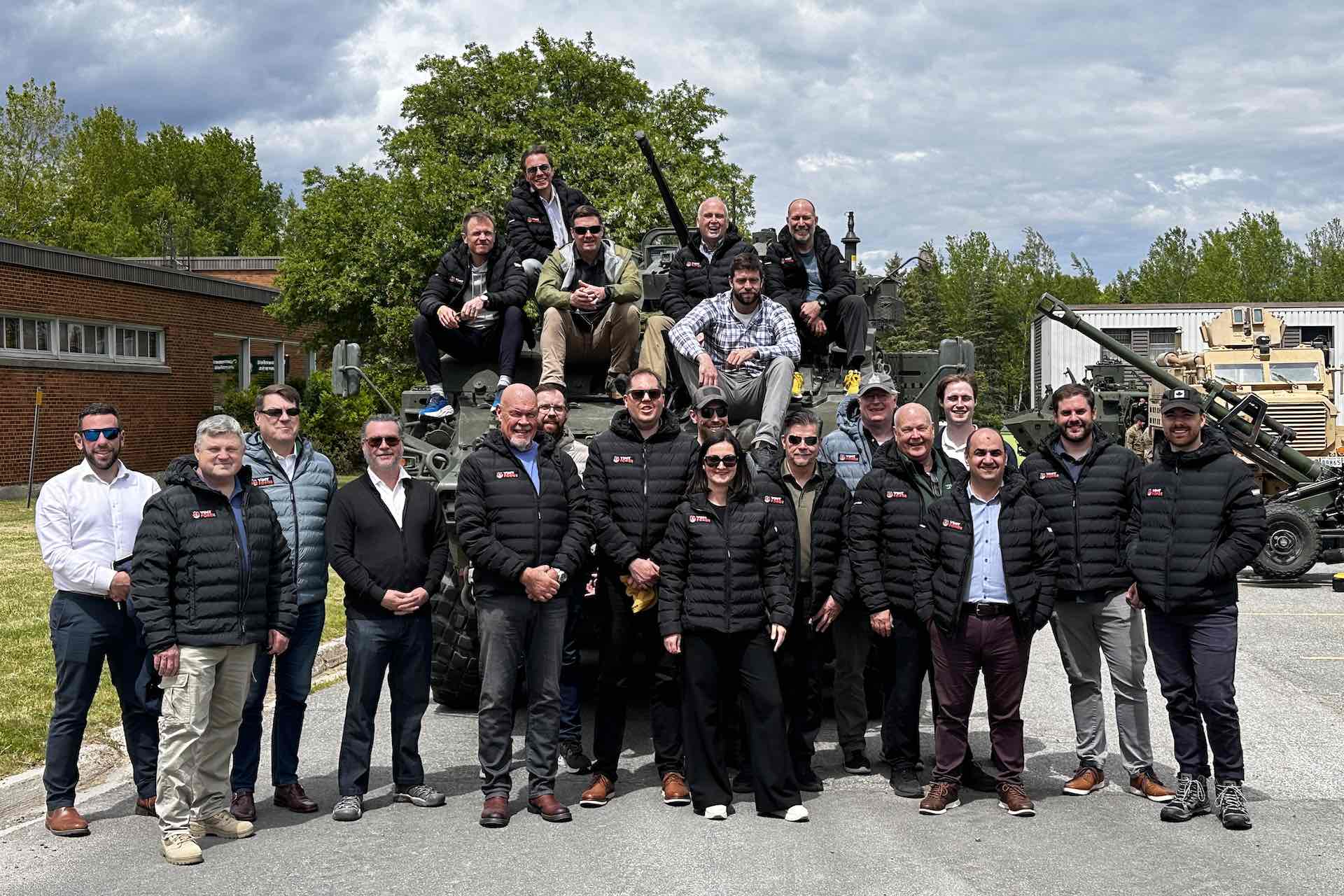
Vimy Forge has had one cohort of startups—with members like Cellula Robotics of Burnaby, B.C., and Wuxly of Mississauga, Ont.—go through its program of weeklong “sprints,” meeting with mentors, experts and potential end users. It’s preparing to induct a second in January.
It operates as a non-profit with public funding, eschewing the common accelerator model of taking equity stakes in the startups it works with. McSporran says that’s important for sustaining trust, especially on the military side, that Vimy Forge has no selfish agenda.
“We just want to create the conditions for the success of the small and medium businesses to engage, and then withdraw from that discussion.”