Listen Now
0:00
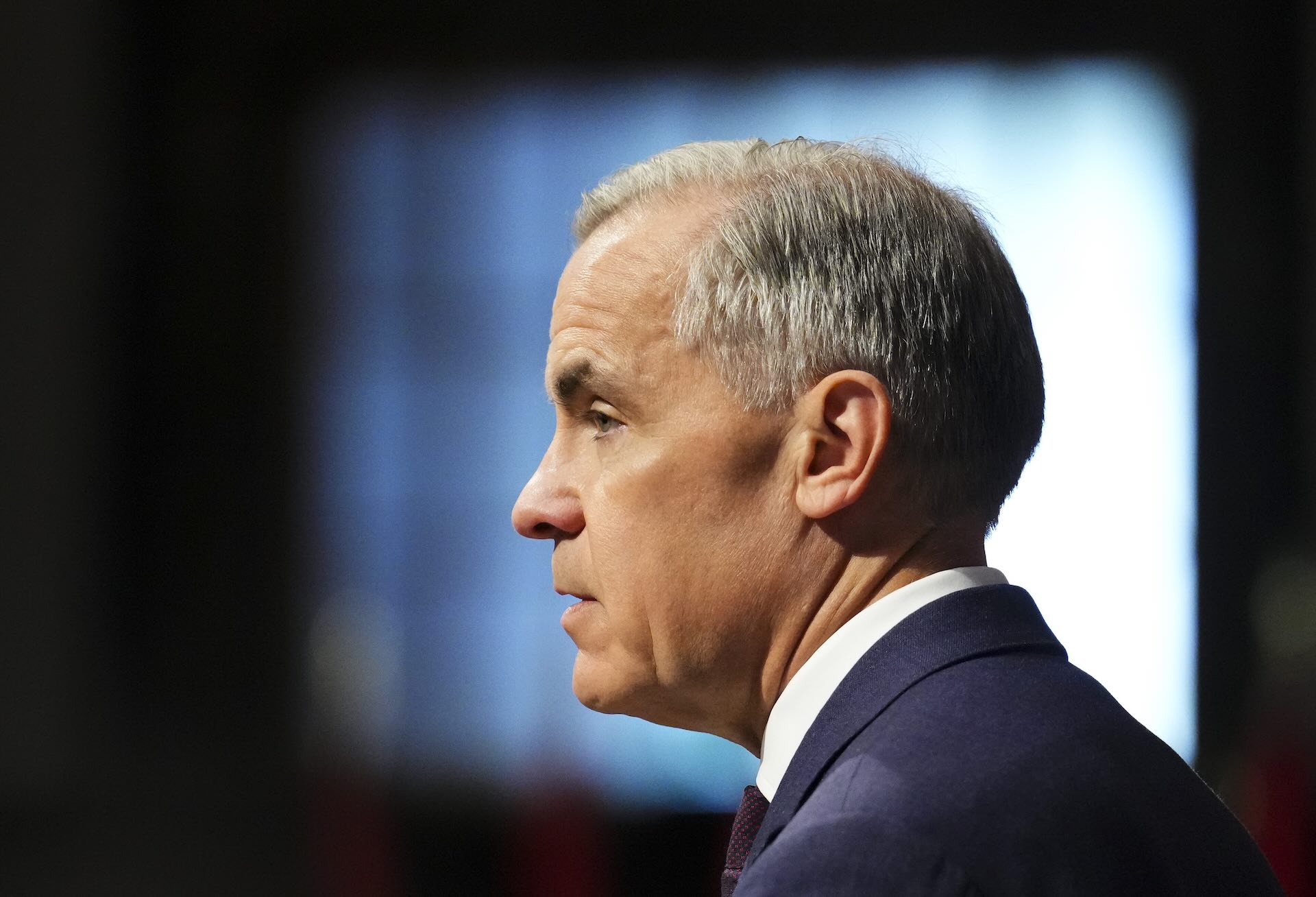
Prime Minister Mark Carney wants nation-building infrastructure projects to strengthen Canada’s economic autonomy. But the foreign capital he’s courting to pay for them might have conflicting goals—raising questions about how much control Canada should give up.
Matthew da Mota, research director at the Canadian Shield Institute think tank, said the government must be careful to strike deals with governance terms that preserve sovereignty and autonomy. Otherwise, foreign shareholders in critical national infrastructure could push to fire workers, raise prices, cut corners on upkeep or even actively sabotage it if geopolitical relationships break down, he said.
Talking Points
- Foreign investors who make deals to back critical nation-building projects at the Canada Investment Summit will likely insist they get a say in their operations, potentially undermining Prime Minister Mark Carney’s explicit goal of increasing Canadian autonomy
- If deal terms aren’t crafted carefully, foreign investors in such projects could push to fire workers, raise prices, cut corners on upkeep or even actively sabotage infrastructure if geopolitical relationships break down, watchdogs warn
“Governance is really the key,” he said. “How do you come up with, in some cases, novel approaches to making sure that governance remains with the government or with trusted local partners, despite also getting the foreign capital?”
Carney has set a goal of attracting $1 trillion in foreign investment over the next five years, saying in a May speech in New York City that “our core objective across these partnerships is to increase our strategic autonomy.” Sovereignty and economic diversity have become key national priorities in the wake of the U.S.-led global trade war, which escalated last month with the collapse of trade talks between the two countries.
The government is hoping the upcoming Canada Investment Summit will attract foreign funding for what it calls “major projects”—infrastructure in the energy, transportation, data, defence and other strategic sectors designed to grow the Canadian economy and increase its resilience.
Related Articles
Despite the summit’s explicit goal of strengthening Canada’s sovereignty in the face of U.S. economic threats, many of its most prominent attendees will be American. According to a draft guest list reviewed by The Logic, the summit will host executives from 33 U.S.-based companies or institutions, the most from any country other than Canada. They include investment heavy hitters BlackRock, Blackstone, Berkshire Hathaway, JPMorganChase, PIMCO, KKR and TPG. The 10 largest investment managers on the guest list collectively hold about US$37 trillion in assets under management.
Representatives of U.S. pension funds will also attend, including the California State Teachers’ Retirement System (CalSTRS), which has over US$400 billion in assets under management, and managers of public pension funds for the states of Washington and Wisconsin.
The guest list also includes several state-owned enterprises and sovereign wealth funds from such countries as the United Arab Emirates, Saudi Arabia and China, even though investments from such entities face enhanced national security scrutiny under the Investment Canada Act.
It would be extremely challenging for the Liberal government to meet its foreign investment goals without American capital. The U.S. is by far the largest source of foreign investment in Canada, making 687 deals worth about $10.7 billion in the 2024-2025 fiscal year, according to Innovation, Science and Economic Development Canada’s (ISED) annual report. The value of China’s deals was a distant second, at $2.2 billion. (The data includes takeovers of Canadian companies, which experts say do not necessarily benefit Canada, in addition to investment in new projects.)
Anita Banicevic, co-head of the competition law and foreign investment group at Davies Ward Phillips & Vineberg, said the data suggests Canada still treats the U.S. as an ally when it comes to foreign investment. The government did not subject any of the U.S.’s 2024-2025 acquisitions to national security reviews, ISED statistics show.
That could change. On March 5, 2025—the day after the U.S. imposed 25 per cent tariffs on many Canadian products—the government added “economic security” as a factor to consider in national security reviews of foreign investments. But Banicevic said it would be a major change if Canada started treating the U.S. as a hostile state for the purpose of foreign investment, raising investor concerns and risking American retaliation.
“It would be a decision that would not be taken lightly by the government,” she said.
So far, the Liberal government under Carney has taken a consistent approach to funding major projects. Government initiatives such as the Canada Infrastructure Bank (CIB), the Canada Growth Fund and the Critical Minerals Sovereign Fund tend to take positions in projects alongside foreign investors.
Funding for the Contrecoeur terminal expansion at the Port of Montreal follows this pattern, as do many critical minerals projects. The Major Projects Office helps co-ordinate private financing with public commitments and government initiatives like the CIB.
This public-private partnership model for critical national infrastructure helps attract foreign capital by making the investment less risky. It also has staunch critics. The website for a protest counter-summit organized by a coalition of social justice organizations argues the Canada Investment Summit is essentially putting the country up for sale, saying it’s designed to “auction off Canadian public resources and infrastructure.”
Sebastien Betermier, a finance professor at McGill and executive director of the International Centre for Pension Management, a global network of pension funds, said the large institutional investors the federal government is courting at the summit will almost certainly expect to have a say in the operations of any project they invest in. However, he said it’s possible to structure the terms of the deals to avoid giving up sovereign control.
Betermier pointed to India’s National Investment and Infrastructure Fund, which will be represented at the summit, according to the draft guest list, as an example. He said the fund gives the government and foreign investors stakes in its projects that each total just under 50 per cent, with domestic pension funds holding the remainder, ensuring majority control remains in India. Investment from the domestic pension funds also reassures foreign investors because it makes it less likely that the government will renege on the terms of the deal later, he said.
“You haven’t necessarily sold off strategic key assets to foreign investors,” Betermier said. “But from the foreign investors’ perspective, you do have a seat at the table.”
Da Mota said the prospect of foreign investors exerting political influence, spying or taking actions as extreme as shutting down important infrastructure is not far-fetched. “It’s absolutely something we should be worried about,” he said.
Each deal needs a clear set of goals for how it’s meant to serve national interests, as well as its own assessment of potential security risks, da Mota said.
“Making sure that you have a clear sense of what the infrastructure is supposed to be doing, and then putting in place those rules and only allowing capital that agrees to those rules,” he said. “I think it is more doable than we might assume.”