Listen Now
0:00
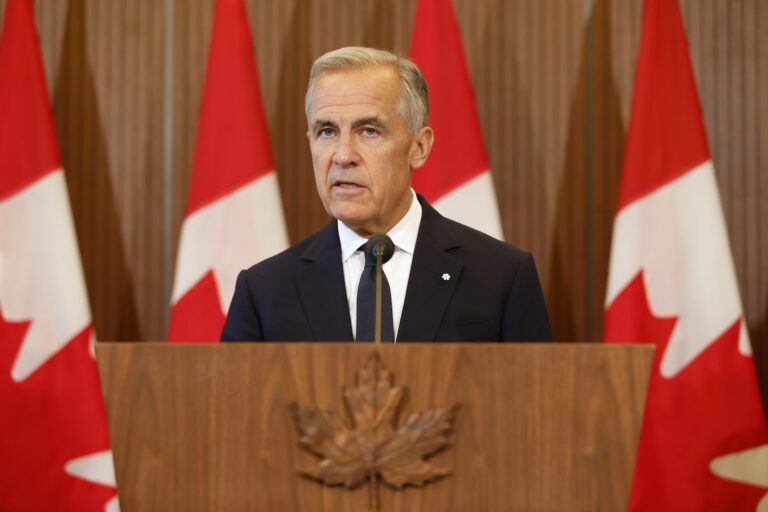
U.S. lawmakers voiced growing alarm on Tuesday at the escalating Canada-U.S. trade war, warning of impacts to agriculture, manufacturing and tourism after Prime Minister Mark Carney announced countertariffs on a wide array of American goods.
Rep. Tim Kennedy of New York blamed U.S. President Donald Trump for starting an “economic war,” saying that Canadian tourism to his state is down 26 per cent while Canadian spending there has fallen 28 per cent, hurting employment in the Buffalo-Niagara region. Rep. Nikki Budzinski, a fellow Democrat from Illinois, lamented the rising costs of dairy, lumber, paper and building materials, while Gwen Moore, a Democratic representative from Wisconsin, said her state’s farmers and manufacturers would be harmed by Trump’s barbs, such as his threat to change the name of Lake Ontario to Lake America.
Talking Points
- Democrat lawmakers called on U.S. President Donald Trump to ease trade threats against Canada amid worries that new retaliatory tariffs would worsen the fortunes of industries like tourism, manufacturing and agriculture in their states
- U.S. leaders in industries hit by Canada’s retaliatory tariffs—from automotive to sports equipment—said they want the discussion back in the hands of the countries’ trade negotiators
Chuck Schumer, the Democrats’ leader in the Senate, said “prices of everyday goods are bound to skyrocket even further for millions of Americans” after Canada’s retaliatory tariffs, while Rep. Don Beyer and Rep. Brendan Boyle both doubled down on plans to propose legislation that would curb Trump’s power to use tariffs.
Few Republicans joined the ranks of Maine Sen. Susan Collins and Rep. Don Bacon of Nebraska, who have decried the tariffs’ impacts on their local businesses. But criticism of Trump’s trade tactics, and coverage of Canada’s response, have featured prominently in the U.S. media. On Tuesday afternoon, the White House weighed in, issuing a statement claiming it is Canada’s trade policies that have hammered U.S. companies and repeating the administration’s complaint that Canada retaliated against Trump’s original tariffs.
Either way, the cacophony of voices reflected how trade relations with Canada have shot to the top of the agenda in the U.S., with the country’s midterm elections just 10 weeks away and concern in its business community rising about the effects of a tit-for-tat trade war.
Oxford Economics wrote in a research note that, while its economists had previously expected inflation to ease in the U.S. next year, the latest escalation will shave 0.1 percentage points from U.S. GDP growth in 2027. Analysis by University of Calgary economist Trevor Tombe found that Michigan, Indiana, Kentucky, Alabama and Missouri will be the states with the greatest share of exports hit by counter-tariffs.
Related Articles

The chief executive of the Minnesota Chamber of Commerce was one of those sounding warning bells. “Trade between Minnesota and Canada is a critical part of our state’s economy, and businesses on both sides of the border need certainty to make investments, hire workers and plan for the future,” Doug Loon said in a statement. “Retaliatory tariffs of this magnitude potentially add costs and expand uncertainty, which is why we encourage both countries to return to the negotiating table and advance a stable, predictable trade relationship.”
Industry associations across the country said they would like cooler heads to prevail and both countries to return to the negotiating table before tariffs start to bite.
“We need the politics and the rhetoric to die down, and we need to focus on what the true economics are,” Glenn Stevens Jr., who leads the MichAuto automotive group at the Detroit Regional Chamber, told The Logic. He said costs have already gone up in the region, which is an auto manufacturing hub, due to existing tariffs. Carney has warned that consumers will see higher prices and fewer choices due to the trade war, Stevens noted, and it will only get worse if Trump follows through on threats to hike auto part tariffs.
“The average cost of a vehicle in our countries is already very high,” he said. “We don’t want a partner like Canada to be forced to look for other trading partners, and certainly not countries like China.”
Aneysha Bhat, director of government affairs and strategic advocacy at the Washington, D.C.-based Sports & Fitness Industry Association, laments that the cost of sporting equipment is going up due to the trade war right at the start of a school year. The counter-tariff list Canada announced Tuesday would raise prices on imported golf clubs, fishing rods and athletic equipment for swimming, gymnastics and table tennis, among other items.
Bhat would like to see both countries restart negotiations on a trade deal “as expeditiously as possible,” suspending the U.S. Section 338 tariffs and the Canadian equivalents.
“The tariffs have continuously been one of the [top] issues as a concern ranked by the industry. Tariffs, of course, raise costs, but they slow consumer spending,” she said. “One of the biggest barriers to ensuring access to the sports and fitness industry is affordability.”
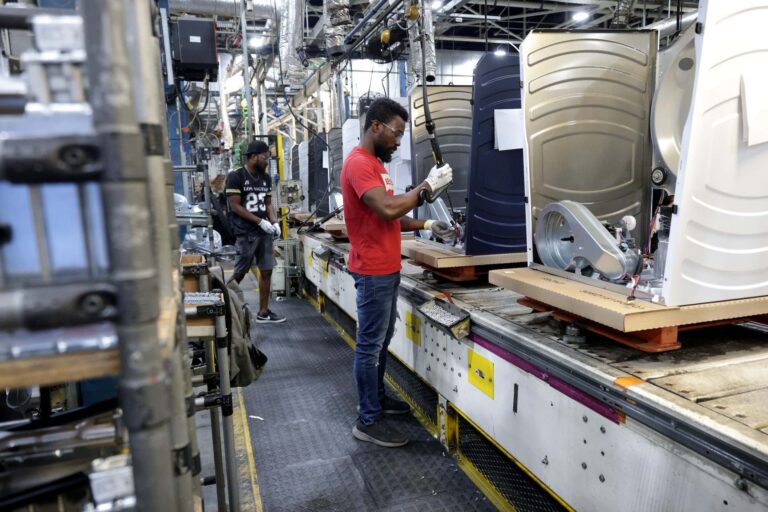
Home appliances are another industry targeted in Canada’s retaliatory tariff list, which mentions dishwashers, laundry machines, stoves, barbecues, air conditioners and refrigerators. The Washington, D.C.-based Association of Home Appliance Manufacturers co-signed a statement from its Canadian counterparts warning that “as a major importer of home appliances, a strong integrated North American market is a top priority for the Canadian home appliance industry.”
On Tuesday, Canada put trailers and forklifts on its list of tariffed goods. That will add to an already uncertain situation for the Association of Equipment Manufacturers, which represents construction and agricultural equipment companies like Caterpillar, John Deere and Linamar on both sides of the border.
Late Monday, Kip Eideberg, the association’s senior vice-president of government and industry relations, warned that the new agricultural tariffs would be a drag on the industry, adding to the burden of the current steel duties. Proposed duties on medium and heavy-duty trucks, said to be a sticking point in bilateral negotiations, could hit farms and construction sites that use truck-mounted equipment and share overlapping supply chains with the auto parts industry. So could the additional U.S. tariffs on vehicles and auto parts Trump has floated for Jan. 1, he said.
Targeted relief for agriculture and farm equipment would help his members, Eideberg added, but he too wants to see both countries get back to the table.
“We want trade, not aid,” he said.