Listen Now
0:00
Trade talks between Canadian and U.S. negotiators collapsed Friday night after a series of marathon meetings, allowing the 50 per cent tariffs U.S. President Donald Trump has threatened on a wide range of Canadian goods to take effect.
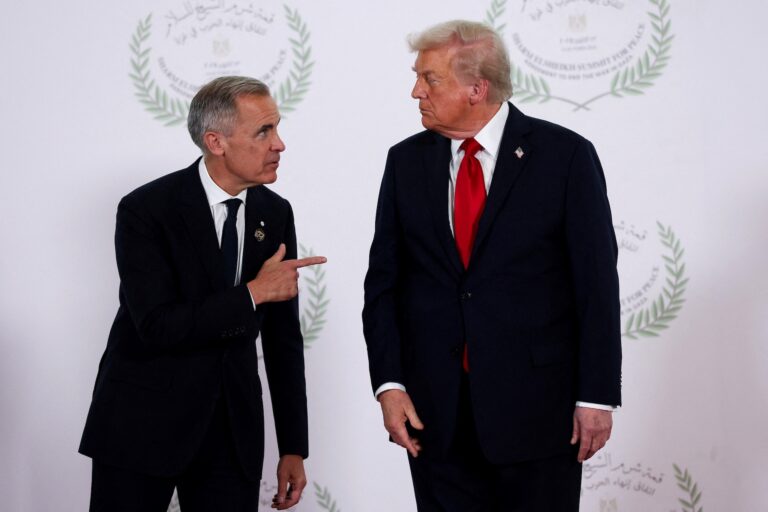
“I have decided to suspend trade negotiations with the U.S. and have directed Canada’s negotiators to return to Ottawa,” Prime Minister Mark Carney said in a statement, delivered just 20 minutes before the midnight deadline.
Talking Points
- Trade talks between Canada and the U.S. fell apart Friday night, and U.S. President Donald Trump made good on his plan to impose 50 per cent tariffs on roughly US$20 billion worth of Canadian goods
- The two sides blamed each other for the collapse of the proposed deal they had been fine-tuning for the last several days
- Prime Minister Mark Carney promised to match Trump’s new tariffs dollar for dollar, and said the government will offer support to industries that are affected
The prime minister charged that U.S. negotiators had proposed last-minute changes to the terms of a tentative deal the two sides had been working on. The amendments, he added, were “unfair, uneconomic, and called into question the reliability of any deal.”
Carney didn’t specify what changes the Americans proposed, but said he’s recalled Canada’s negotiators to Ottawa.
U.S. Trade Representative Jamieson Greer, meanwhile, blamed Canada for the failure of the talks. “New demands and walkbacks of other commitments by Canada have upended the careful balance reached in the past days,” he said in a statement late Friday night.
Related Articles

The collapse of the negotiation means the U.S. will go ahead with 50 per cent tariffs on roughly US$20 billion worth of Canadian goods as of 12:01 a.m. EDT Saturday.
Carney said in his statement that Canada would retaliate dollar for dollar against the new tariffs. He also said the federal government will extend support for workers and businesses hit by the levies.
Ontario Premier Doug Ford, who had remained uncharacteristically silent in public during the later stages of the trade negotiation, said he supports the plan to fight back. “The prime minister has my full support for a strong response,” he said in a statement.
Others—especially business leaders—fear the development signals a major escalation in the trade war.
“This will be a body blow to North American competitiveness in this self-defeating trade saga. A whopping, non-absorbable tariff is not sustainable or viable for business,” Candace Laing, president of the Canadian Chamber of Commerce, said in a statement late Friday night. Laing is also a member of the prime minister’s advisory committee on Canada-U.S. economic relations.
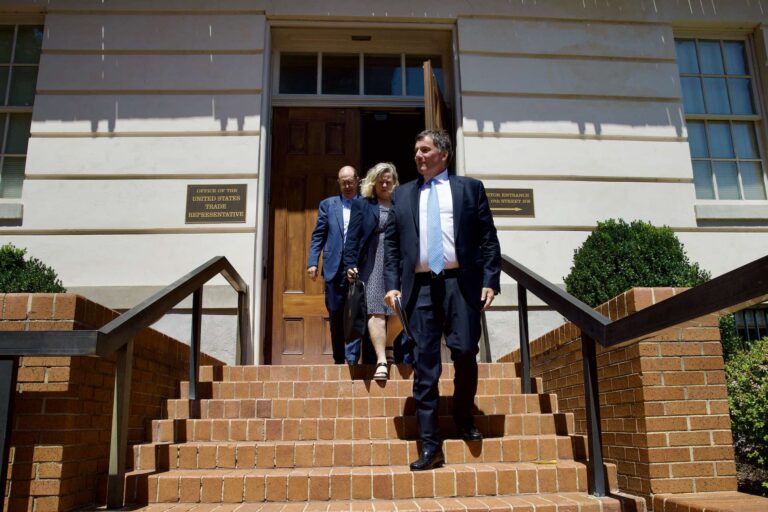
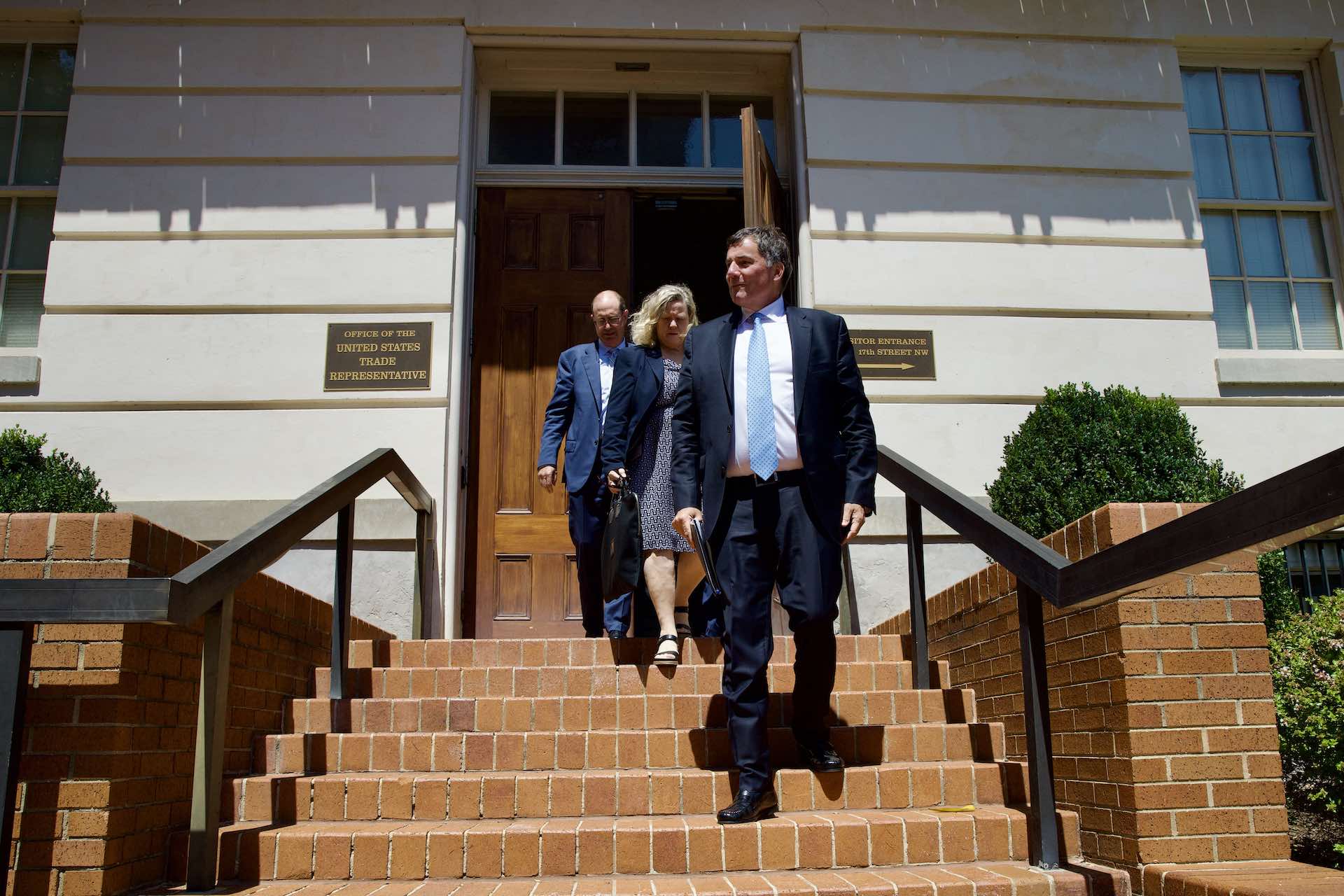
The abrupt turn follows a week of negotiations in Washington, D.C., including an all-day meeting Friday between Greer and Canada’s chief trade negotiator, Janice Charette, that extended late into the night.
The talks had initially gone well enough to convince U.S. President Donald Trump to give Canada a three-day reprieve from the new tariffs he originally planned to impose Wednesday. He announced the decision just two hours shy of the midnight deadline for the tariffs to come into effect, saying on social media the two sides had reached a “deal.”
Canada-U.S. Trade Minister Dominic LeBlanc and Charette then spent most of the ensuing three days in Washington, hashing out details of the tentative agreement the president had announced.
Trump said Canada had agreed to “remove the discriminations or unreasonable and unequal impositions” regarding dairy, motor vehicles and provincial bans on U.S. alcohol. Canadian officials have yet to confirm what concessions Ottawa had offered, or what reprieve the White House had considered for sectors targeted by Section 232 tariffs on steel, aluminum, autos and forestry products.
Earlier, Carney had said Canada was seeking a comprehensive deal that would reduce Section 232 tariffs, and kick-start formal talks with Canada on the renewal of CUSMA, also known as the USMCA.
On autos in particular, Canada was pushing for a reduction in the Section 232 tariffs below the 15 per cent given to South Korea and Japan, with an exemption for any content produced in Canada, the U.S. or Mexico.
LeBlanc had emphatically maintained that any deal would leave Canada’s supply-managed dairy sector intact.
Trump also said the agreement would have revived the Keystone XL pipeline expansion project, which was kiboshed by his Democratic predecessors.
Earlier on Friday, the president told reporters the talks were moving along, and that he had to take care of America’s farmers. “I only make good deals,” he said.
As the new deadline drew near, however, it became clear the assessment of the tentative agreement among Canada’s provincial premiers would be a key factor in its success or failure. Several confirmed the prime minister asked them to put American alcohol back on the shelves of their provincial liquor stores as part of a potential deal, and to halt procurement rules that bar American suppliers from government contracts.
On those decisions, the premiers were not unanimous. Some, like Nova Scotia’s Tim Houston, signalled solidarity with the federal government, while others reserved judgment. Ford’s silence raised questions as to his willingness to relent on the liquor ban.
Ontario held a lot of sway in the negotiations. It’s home to the bulk of Canada’s auto sector, which has been rear-ended by Trump’s tariffs for more than a year. It’s also home to the LCBO, a provincially owned agency and one of the largest purchasers of alcohol in the world.