Listen Now
0:00
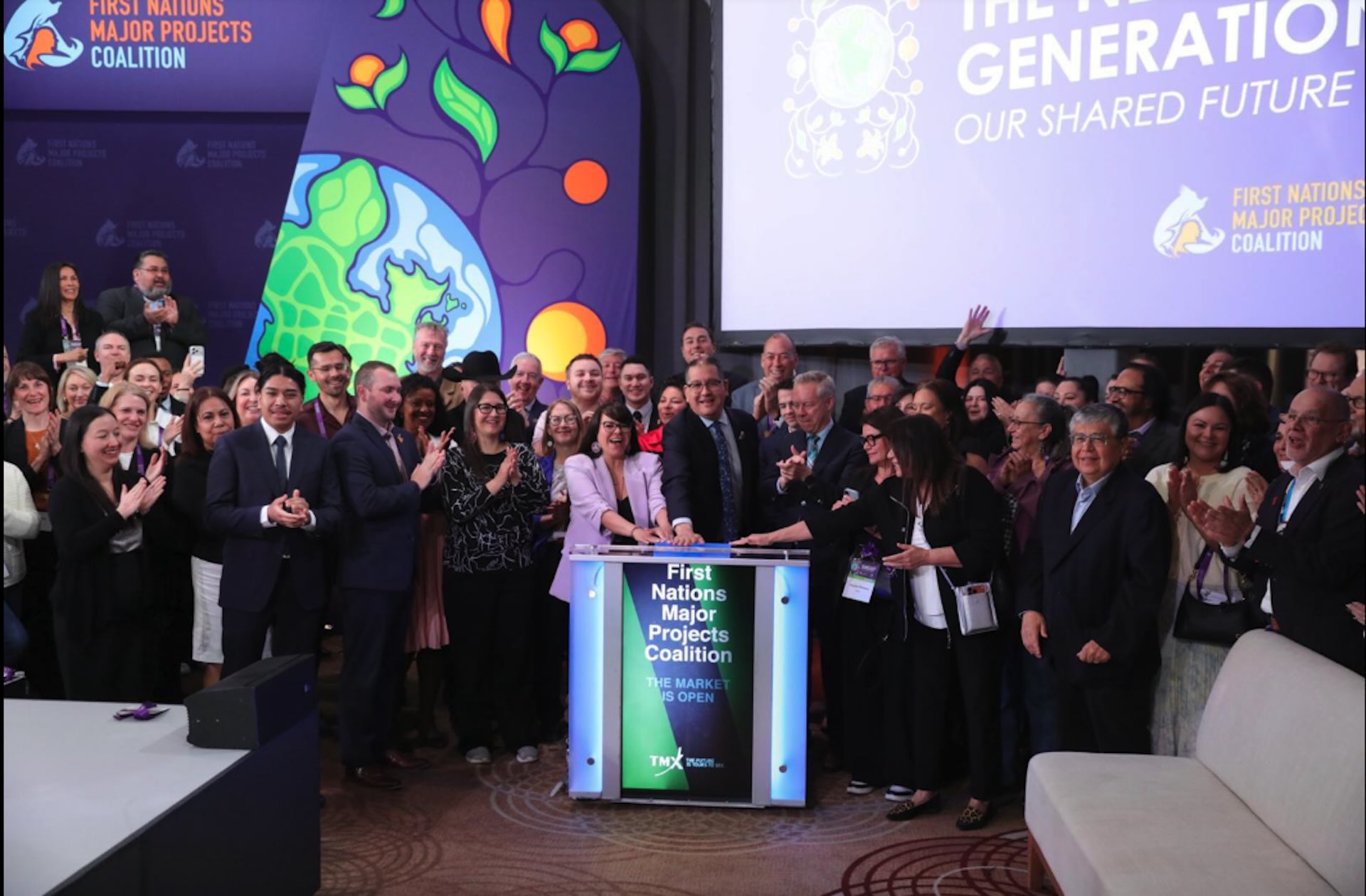
Canada’s first majority-Indigenous-owned public company is working with TMX Group to encourage peers to follow it into the equities market.
Publicly traded stocks are an underused financial tool that could benefit Indigenous investors looking to capitalize on projects in their territories, said Derrick Pattenden, who was previously a director of investment banking at Canaccord Genuity before becoming CEO of Nations Royalty. He hopes to change that with a forthcoming public markets 101 training program for Indigenous communities in Canada.
Talking Points
- Nations Royalty is partnering with TMX Group to pivot Indigenous investors toward more public equity offerings
- The company is testing a strategy to bundle mining benefit payments into a publicly traded portfolio, potentially offering Indigenous investors more liquidity and diversification
Pattenden saw the power of public markets firsthand when Nations Royalty went public in June 2024 on the TSX Venture Exchange. The company debuted with a unique business plan: acquiring Nisga’a Nation’s annual benefit payment entitlements from five mines.
Nearly a year after that landmark public offering, First Nation-owned Selkirk Copper Mines joined Nations Royalty as a majority-Indigenous-owned public company. Still, Pattenden says, they remain too rare.
“The wealthiest people on the planet… pretty much all are connected with publicly traded companies,” Pattenden said. “First Nations are starting to use debt quite a bit, but I would suggest that if you’re not using public equity, you’re probably using debt too much.”
In addition to managing Nisga’a Nation’s portfolio and launching the new TMX training program, it is recruiting other First Nations to bundle some of their benefit payments into the company’s publicly traded portfolio in exchange for shares. The goal, he said, is to diversify nations’ income if one mine fails.
Related Articles

Mining royalties are popular with some investors, like Ontario Teachers’ Pension Plan Board, because they provide exposure to commodity-linked cash flows without the burdens of financing mining operations. First Nations’ Impact Benefit Agreement payments that track revenue have competitive multiples when presented to investors as a royalty, Pattenden said.
“If metal price doubles, those payments double,” he said. Mining financier Frank Giustra helped back the company’s vision.
That business model has pushed Nations Royalty to help other First Nations negotiate better agreements that tie payments from mining companies to revenue, said Pattenden. Older Impact Benefit Agreements between Indigenous Peoples and companies often have less favourable terms, such as fixed payments that don’t increase if commodity prices rise, he said.
Equity is growing in importance as Indigenous communities negotiate agreements for critical mineral mining projects because mining projects can rarely be financed only with debt, said Pattenden, who previously worked on mining mergers and acquisitions.
In recent years, nations like Fort William First Nation, Red Rock Indian Band and the Biinjitiwaabik Zaaging Anishinaabek have negotiated directly with companies for warrants that can be traded for equity stakes. Nations Royalty provides another alternative for Indigenous groups that have negotiated cash payments but want the advantages of public market exposure.
“Instead of waiting for future royalty payments from these mines to come in on an annual basis, what we’re proposing is, ‘Let’s bring all those payments forward to today. Let’s put them into a publicly traded royalty company and let’s get the increased valuations that other royalties have gotten through the years,’” said Kody Penner, vice-president of corporate development at Nations Royalty.
Shawn Blankinship, founder of Seven Generations Analytics, said Nations Royalty’s bundling business model is part of a broader push to build long-term wealth for Indigenous investors. Many are wrangling with the financial fallout of the Indian Act, which has limited using reserve lands as loan collateral, making it harder to finance businesses on reserves. Other models include using bond issuances and venture capital to fund big projects, said Blankinship.
Settlements or benefit agreements that result in one-time payments are “tough to translate” into long-term gains for First Nations communities, Blankinship said, adding that companies like Nations Royalty can help grow the pot. TSX chief commercial officer Robert Peterman told The Logic last year that “the more models that can be tried out, the better” for Indigenous rights holders.
For now, most of Nations Royalty’s $154 million portfolio remains tightly held by Nisga’a Nation and other executives, according to S&P Global Capital Markets data. Still, Pattenden said that being publicly listed is an advantage, even if shares aren’t changing hands at high volume. It’s much easier to liquidate a stake—and get money to invest in new projects—compared with a private mining business that’s specialized and often remote.
About a third of the roughly 200 energy projects with Indigenous ownership in Canada tracked by Fasken were announced in the past two years, the law firm estimates, including a surge of 14 renewable energy projects in Ontario with at least 50 per cent Indigenous equity ownership.
Saga Williams, a lawyer and consultant who is on Nations Royalty’s board, said these projects have “triggered the conversation” about how Indigenous Peoples can use stock exchanges to their advantage.
Nations Royalty, she said, can be an example of how tried-and-true capital structures like royalty stocks can be “practical and reliable tools” for generating wealth.
With files from Catherine McIntyre













