Skip to content

Canada's Business and Tech Newsroom

  • Professional Subscription
  • Partnerships & Advertising
  • Licensing & Syndication
Log In Subscribe
Welcome,
  • My Account
  • Log Out
  • Business
  • Tech
  • National
  • The Big Read
  • Briefings
  • Commentary
Search
Log In Subscribe
Welcome,
  • My Account
  • Log Out
Commentary

Carmichael: This oil shock will hit Canada differently

Listen Now
0:00
Commentary

Carmichael: This oil shock will hit Canada differently

Some of the country’s best economic minds recognize that Canada’s oil industry has fundamentally changed

By Kevin Carmichael
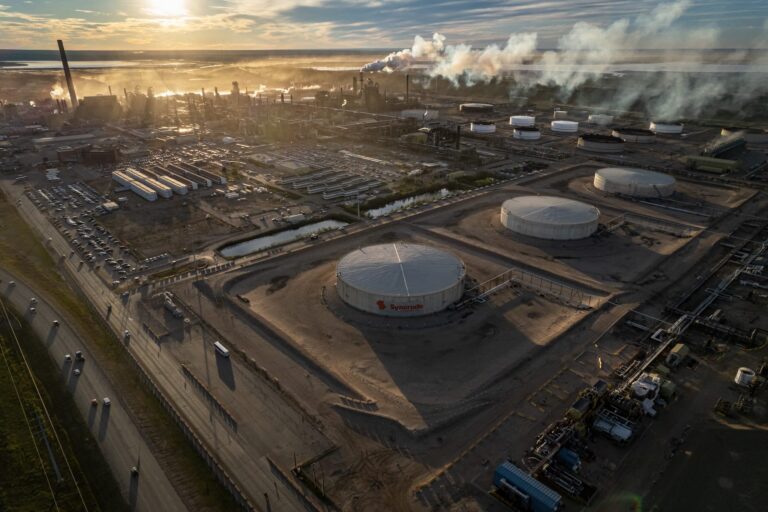
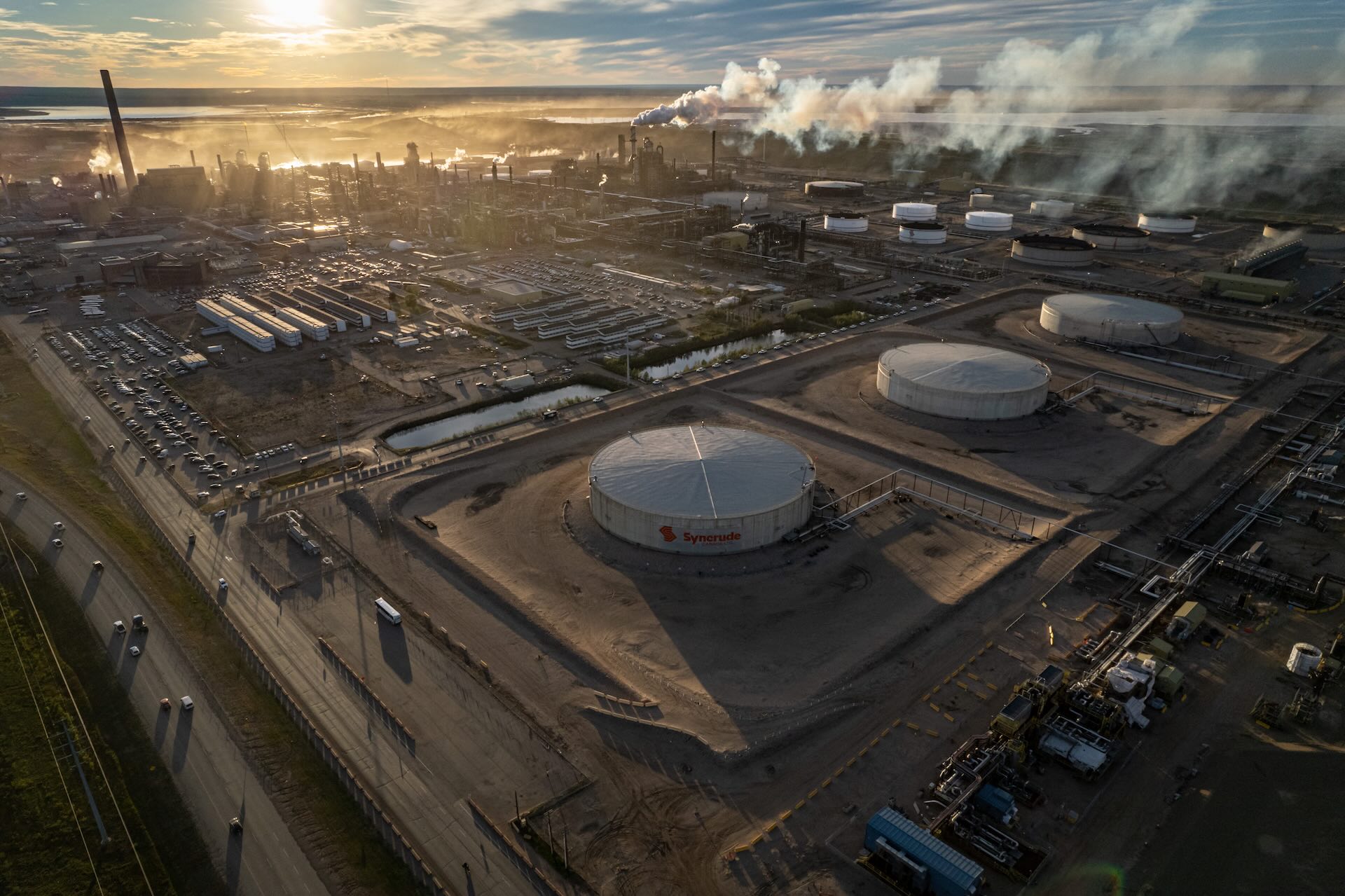
An aerial image of a Syncrude oilsands field in Fort McKay, Alberta.
A Syncrude oilsands mining facility near Fort McKay, Alta., in September 2022. Photo: AFP/Ed Jones
May 2, 2026
A A
A Small A Medium A Large
Share

Gift

Share

Listen Now
0:00

Former Bank of Canada governor Stephen Poloz has a neat way of describing how higher oil prices affect Canada. 

Imagine sticking your head in an oven. That’s Alberta, Saskatchewan and Newfoundland and Labrador, where windfall profits from their oil and gas fields have the effect of turning up the economic heat. 

Related Articles
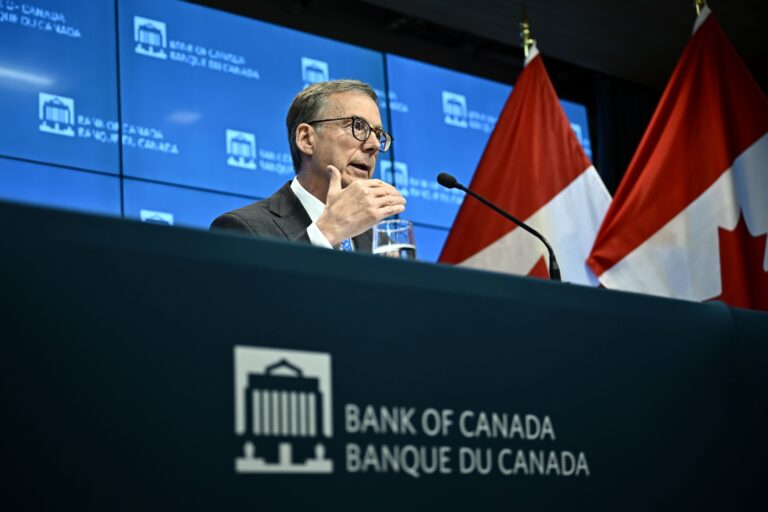
Tiff Macklem, governor of the Bank of Canada, sitting at a desk with the central bank’s logo and speaking into a microphone. There is a big screen and two Canadian flags in the background.

Bank of Canada holds the line on its key interest rate in the face of the oil shock

By Kevin Carmichael
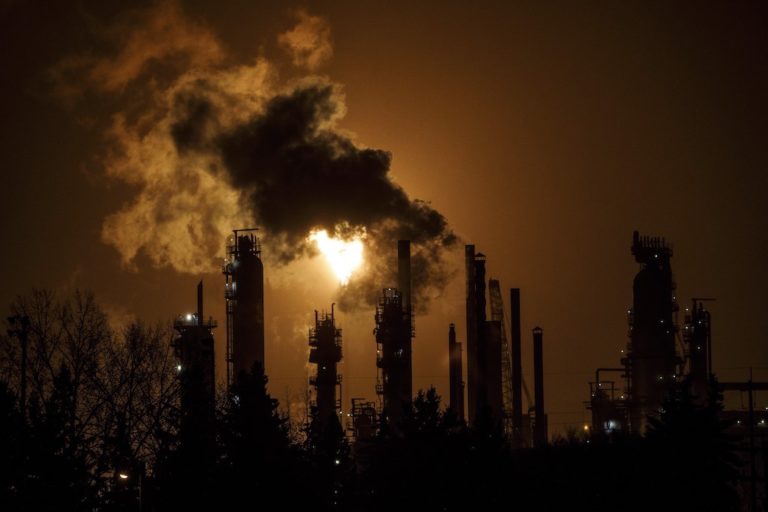
A silhouette shot of column and smoke stacks of a refinery. A bulb of flame is rising from one of the stacks, partially obscured by smoke from the others.

Carmichael: An exercise in creative destruction is playing out in Canada’s oilpatch

By Kevin Carmichael
The image shows the silhouette of a pumpjack drawing out oil from a well head against an orange sunset.

Carmichael: The math has changed for Canada’s oilpatch

By Kevin Carmichael

Now, picture your feet in a freezer. That’s everywhere else. 

The federal government might eventually redistribute the better-than-expected income tax revenue that it collects from the oil and gas-rich provinces during boom times. In the meantime, elevated energy costs destroy demand by absorbing a greater share of disposable income and narrowing profit margins. When that happens in Ontario, which accounts for almost 40 per cent of Canada’s gross domestic product, the entire country feels the chill. 

Boom times in Alberta generally outweigh the negative effects of higher oil prices. The oilpatch becomes a mecca for unemployed workers from Central and Eastern Canada. Factories and wholesalers look west to get a piece of the action. Bay Streeters book flights to Calgary to help CEOs decide what to do with the rush of extra cash. 

The Bank of Canada’s monthly energy cost index rose 34.6 per cent in March, the most on record, excluding May 2020, when global commodity prices rebounded from the crash caused by the COVID-19 pandemic. From a certain distance, that might look like a reason to get excited. Canada’s economy, under siege from U.S. tariffs and weakened by miserable productivity growth, might benefit from a good old fashioned oil boom. Except there’s little reason to expect one, even if elevated prices hold at current levels for a while. That’s because Poloz’s oven doesn’t heat up like it used to. 

Both the Finance Department and the Bank of Canada updated their economic outlooks this week. Each devised scenarios of what an extended period of high oil prices would mean for economic growth. The results were surprising. Their imagined worlds of structurally higher energy costs look a lot like the ones they constructed for their more realistic base case scenarios. 

“The net impact on growth [from higher oil prices] is expected to be small,” the central bank concluded. Finance’s “higher investment” scenario assumes “policy efforts to accelerate major projects and catalyze new private investment” get a boost from a global search for stable sources of oil and gas. Inflation-adjusted economic growth would be 1.9 per cent in 2027, the same as the baseline forecast. Finance emphasized that “rules of thumb” about how oil prices affect economic growth and tax revenue “simplify complex relationships” and that estimates based on “historical relationships and model-based analysis… may vary with the broader economic context.”  

Poloz’s freezer still works fine. Higher energy costs do more than hurt consumption. They also stoke inflation expectations, which can lead to more inflation. The Bank of Canada is categorical that it won’t let that happen, which is why governor Tiff Macklem made a point of insisting that he wouldn’t hesitate to raise interest rates, even if households were hurting from higher living costs. “There may be a need for consecutive increases in the policy rate,” he said. 

An important piece of context when considering a shock like this one is why prices surged. That spike during the pandemic was the result of pent-up demand after most of the world locked down to prevent the spread of the virus. Increased demand for fuel implies increased demand for other goods and services because the global economy is heating up. Factories worry less about rising input costs when the order books are filling up, and households are less sensitive to higher interest rates when the employment rate is high. 

What we’re confronting now isn’t that kind of shock. Oil prices have skyrocketed because the U.S. war on Iran is choking an important source of supply. Demand hasn’t changed from pre-war levels; if anything, the global economy is now weaker because of what higher input costs are doing to energy importers in Asia and Europe. 

Canada exports more energy than it imports, so it is shielded from the worst of it. But there is no tailwind for non-energy exporters to catch. The only benefits outside the oil-producing provinces will come from whatever the federal government decides to do with its revenue windfall. 
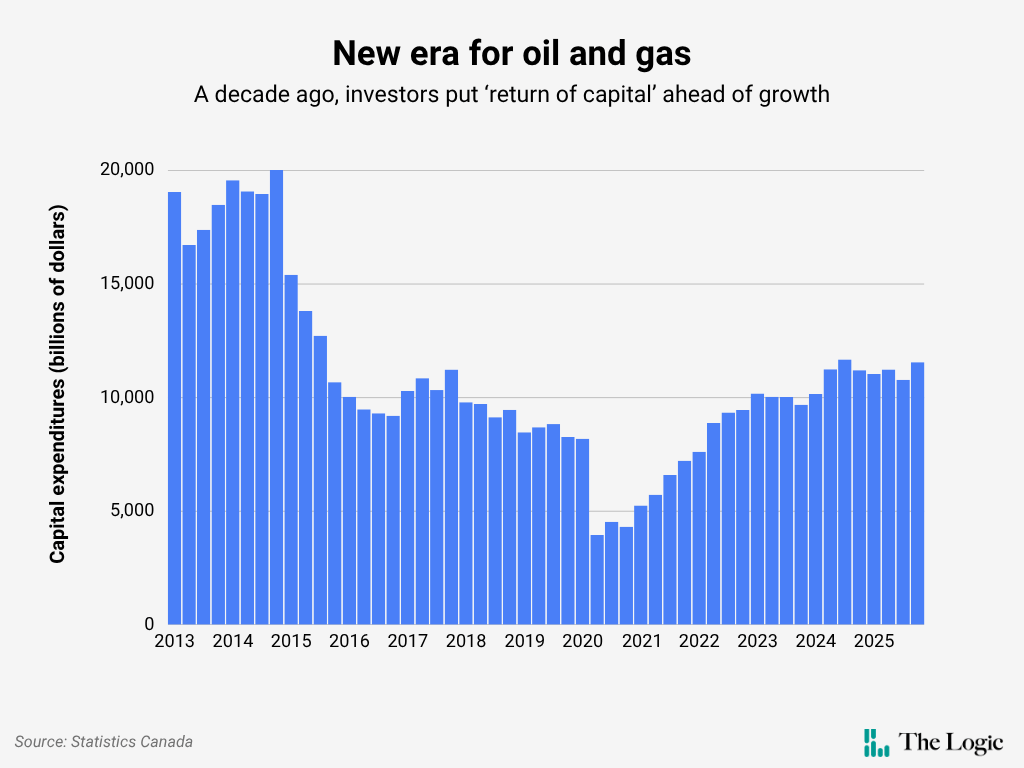
A bar chart that reads: "New era for oil and gas. A decade ago, investors put 'return of capital' ahead of growth." The x-axis shows years between 2013 and 2025. The y-axis shows capital expenditures in billions of dollars. The chart results show that capital expenditure was high between 2013 and 2014, but began to decline between 2015 and 2020. The chart shows that 2025 levels have not yet reached pre-2015 levels.

The spring economic update and the Bank of Canada’s latest monetary policy report showed that some of the country’s best economic minds recognize that Canada’s oil industry has fundamentally changed. The central bank’s base case forecast of 1.2 per cent growth in 2026 and 1.6 per cent in 2027 is based in part on the assumption that investment and employment in the oil sector will be “less responsive” to higher prices because the biggest producers now put a “greater emphasis on dividend payments” and “improved capital efficiency,” rather than greenfield expansion.  

Executives in the oilpatch don’t really hide from what motivates them now. Suncor Energy CEO Rich Kruger said on the ARC Energy Research Institute’s podcast last month that investor sentiment flipped to “return of capital” from a willingness to underwrite growth about a decade ago, as the conventional wisdom was that demand for oil had peaked. 

Gift the full article

The Iran war could prompt a recasting of that story. “We may get back into a period of time where rewarding growth is what investors want,” Kruger said. Currency traders seem doubtful. The Canadian dollar has barely moved despite the outsized jump in oil prices. The Bank of Canada assumes that’s in part because traders expect the gains will lead to “larger dividend payments to foreign shareholders and a smaller rise in foreign direct investment” than in previous oil price surges.    

We’re a net energy exporter, but one that fails to capture all the benefits.  

Kevin Carmichael is The Logic’s economics columnist and editor-at-large. He has spent more than two decades covering economics, business and finance for outlets including Bloomberg News, The Globe and Mail and the Financial Post, where he also served as editor-in-chief.


#commentary #economy #Energy

Loading...

Thanks for sharing!

You have shared 5 articles this month and reached the maximum amount of shares available.

Close
This account has reached its share limit.

If you would like to purchase a sharing license please contact The Logic support at [email protected].

Close
Want to share this article?

Upgrade to all-access now

Close
Gift the full article!

You have gifted 0 article(s) this month and have 5 remaining.

Copy link and gift
Copy Link
Email to a friend
Send Email
Gift on Social Media

Recipients will be able to read the full text of the article after submitting their email address. They will not have access to other articles or subscriber benefits.

An aerial image of a Syncrude oilsands field in Fort McKay, Alberta.

Photo: AFP/Ed Jones

A bar chart that reads: "New era for oil and gas. A decade ago, investors put 'return of capital' ahead of growth." The x-axis shows years between 2013 and 2025. The y-axis shows capital expenditures in billions of dollars. The chart results show that capital expenditure was high between 2013 and 2014, but began to decline between 2015 and 2020. The chart shows that 2025 levels have not yet reached pre-2015 levels.

Most Popular This Week

Exclusive

PCO clerk Sabia stayed on Mastercard Foundation board for a year with no conflict screen

By Joanna Smith
Nakisa CEO Babak Varjavandi in a screencapture from the floor of a tech show. He's wearing a suit jacket and open-collared shirt.
News

Canadian firms are ready to help with digital sovereignty. Their challenge is getting approved

By Laura Osman
A shot of a small rocket sitting on a launch pad attached to its launch equipment. The backdrop is open sea and a light blue sky.
News

Canada’s submarine decision just paid off for Nova Scotia’s spaceport

By David Reevely
An aerial photo of Kearny mine, a mine surrounded by dense forest, with terraced rock walls that surround a deep blue body of water.
News

Canada bets on graphite as allies scramble for critical minerals

By Anita Balakrishnan

In-depth, agenda-setting reporting

Great journalism delivered straight to your inbox.

A shot of a sign bearing the Pfizer logo, with a lowrise office building in the background.
News

So far, foreign-owned firms have dominated Buy Canadian contracts

By Laura Osman

Briefing

National Defence funds drone skunkworks in Mirabel, Que.

By David Reevely   |   Jul 14, 2026 | 3:52 PM ET

Anthropic commits $10M worth of Claude to Canadian research centres

By Murad Hemmadi   |   Jul 14, 2026 | 3:36 PM ET

Thomson Reuters sells majority stake in book business for US$500M

By Anita Balakrishnan   |   Jul 14, 2026 | 3:13 PM ET

Best business newsletter in Canada

Get up to speed in minutes with insights and analysis on the most important stories of the day, every weekday.

Exclusive events

See the bigger picture with reporters and industry experts in subscriber-exclusive events.

Membership in The Logic Council

Membership provides access to our popular Slack channel, participation in subscriber surveys and invitations to exclusive events with our journalists and special guests.

Recent Popular Stories

Commentary: Quebec Ink

Quebec’s era of endless, cheap electricity is coming to an end

By Martin Patriquin   |   Jul 6, 2026
A cityscape featuring two tall buildings; the right one has a large orange "Q" logo and a Quebec flag atop. The sky is clear and blue.
Exclusive

PCO clerk Sabia stayed on Mastercard Foundation board for a year with no conflict screen

By Joanna Smith   |   Jul 13, 2026
News

Canada’s submarine decision just paid off for Nova Scotia’s spaceport

By David Reevely   |   Jul 8, 2026
A shot of a small rocket sitting on a launch pad attached to its launch equipment. The backdrop is open sea and a light blue sky.
News

Canada bets on graphite as allies scramble for critical minerals

By Anita Balakrishnan   |   Jul 7, 2026
An aerial photo of Kearny mine, a mine surrounded by dense forest, with terraced rock walls that surround a deep blue body of water.
News

Meta to spend $13B on sprawling Alberta data-centre complex

By Meghan Potkins   |   Jul 8, 2026
An aerial-style rendering of a massive data centre on a prairie landscape of farm fields and trees.
News

Alberta wants to be a model for government AI and power Canada-wide adoption

By Murad Hemmadi   |   Jul 10, 2026
A shot of Nate Glubish at a lectern, against a backdrop of exposed brick partly covered by a white film screen.

Canada's most influential executives and policymakers are reading The Logic

  • CPP Investments
  • Sun Life Financial
  • C100
  • Amazon
  • Telus
  • Mastercard
  • bdc
  • Shopify
  • Rogers
  • RBC
  • General Motors
  • MaRS
  • Government of Canada
  • Uber
  • Loblaw Companies Limited
logic-logo

Canada's Business and Tech Newsroom

100% human-crafted journalism

Newsroom

  • News Tips
  • AI Policy
  • Editorial Disclosures
  • Story Pitches

Company

  • About Us
  • Terms of Service
  • Privacy Statement
  • Corporate Information

Contact

  • Contact Us
  • Advertise
  • FAQs
  • Work at The Logic

© 2026 The Logic Inc. All Rights Reserved.

Trusted by leaders

Error

Account creation failed.

Please email us at [email protected].

Create Account

[wppb-register form_name=”cozmo-registration-form-for-modal”]

I do have an account
Login
or

[wppb-login]

I don’t have an account