Skip to content

Subscriber Survey
Most of you want a new Alberta pipeline to the B.C. coast
A majority of respondents to The Logic’s latest subscriber survey say it should be built. Far fewer think it will be
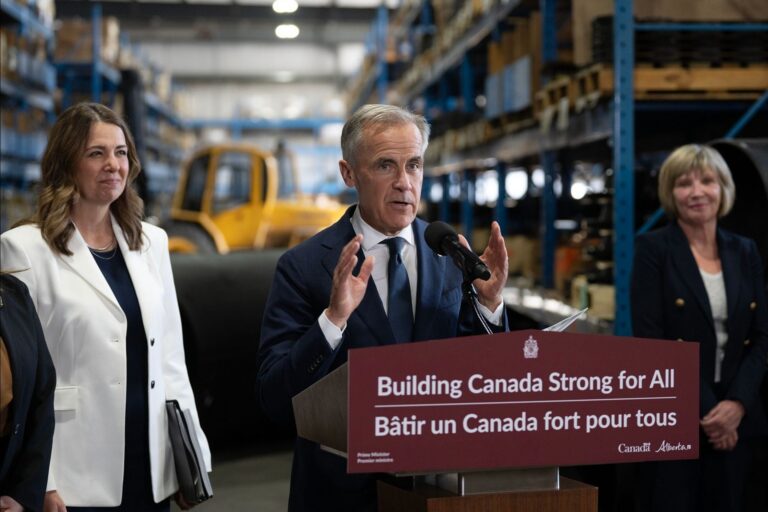
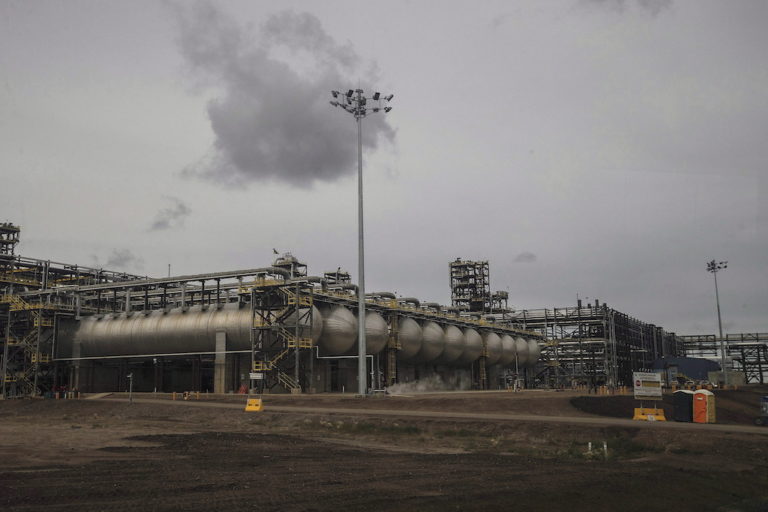
Last November’s “grand bargain” called for a new pipeline from Alberta to the B.C. coast, but the project has numerous hurdles to clear before becoming a reality. Photo: The Canadian Press/Jeff McIntosh
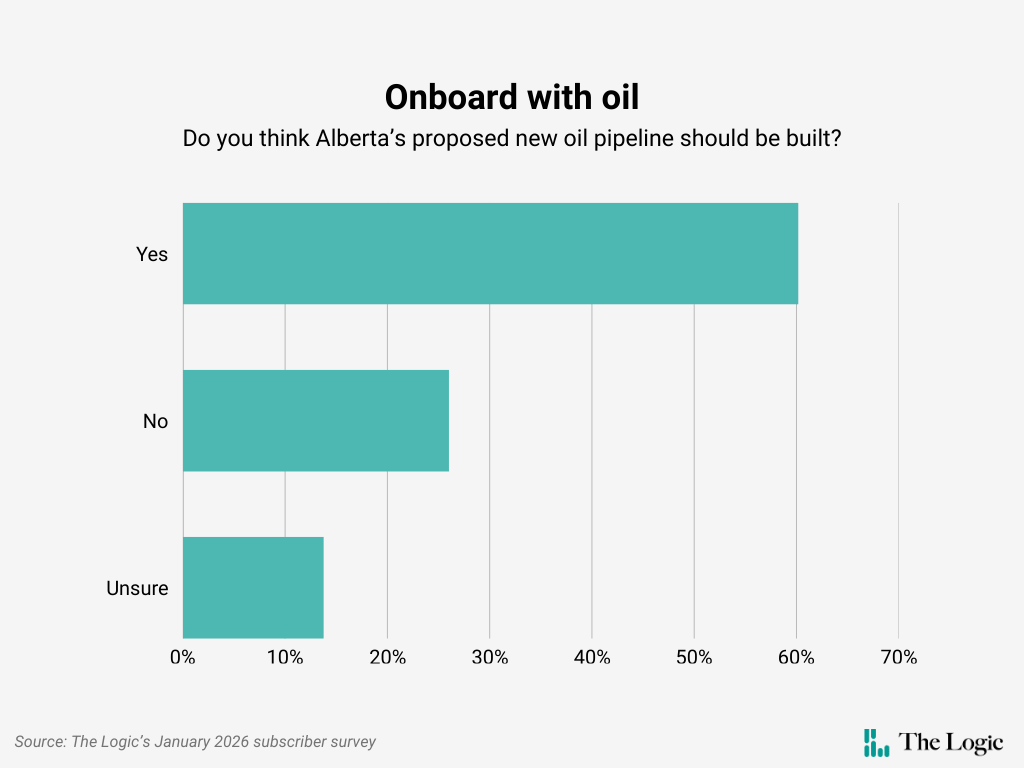
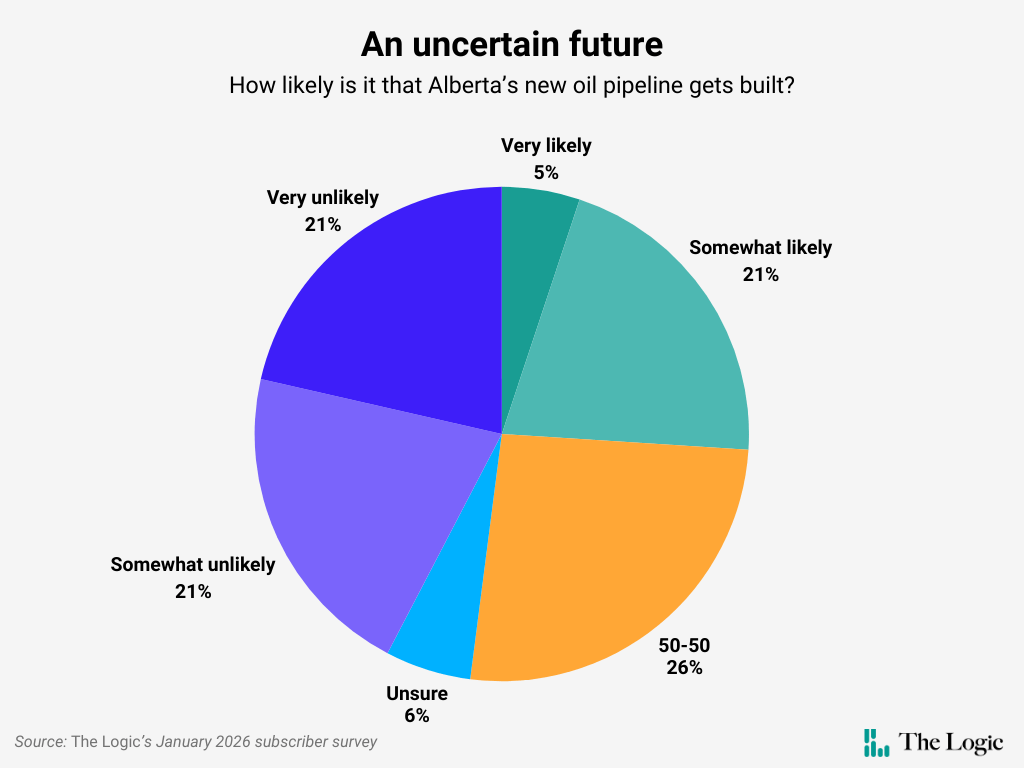
Sixty per cent of respondents to The Logic’s latest subscriber survey think Alberta’s proposed oil pipeline should be built, but only 26 per cent think it likely will be.
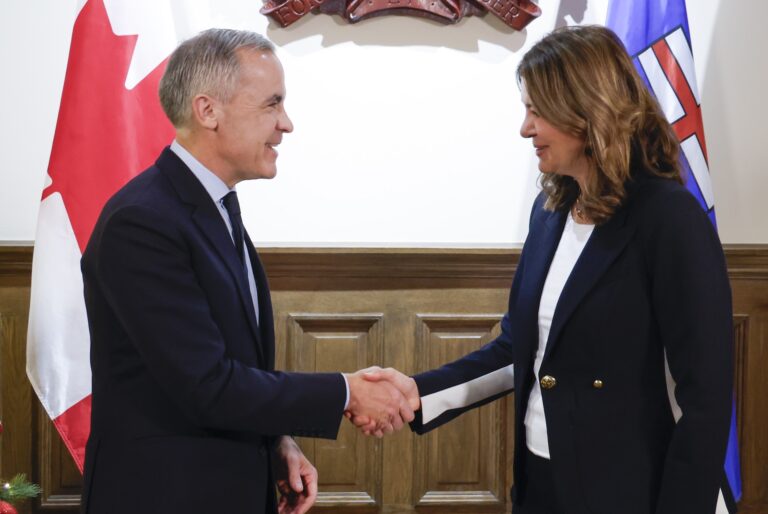
In late November, the federal government signed a memorandum of understanding with the province in support of the pipeline, which still needs a private-sector backer. The project would run from Alberta to the north coast of B.C. and carry one million barrels of oil per day, mainly to markets in Asia.
Related Articles
Those in support of the pipeline cited economic sovereignty and the need to diversify trade from the United States and get Canadian resources to additional markets. Of the 26 per cent of respondents in opposition, one said a new pipeline seems “a very uncertain and risky investment,” with others citing concerns surrounding volatile oil demand, oil spills and climate change. Fourteen per cent were unsure.
Fifty-two per cent of respondents said U.S. President Donald Trump’s military intervention in Venezuela and plans to ramp up oil production didn’t affect their stance on a Canadian oil pipeline, while 39 per cent said it makes a pipeline more urgent.
“This is a long-term game, and the Venezuelan ramp-up is entirely speculative,” said one reader in favour of the pipeline. “This is no time for Canada to sit on its hands and ‘wait and see.’”
But without a proposed route or guaranteed private-sector backer, many readers said they need more information to convince them the project would make sense economically and environmentally. Alberta Premier Danielle Smith has speculated a new pipeline would cost $20 billion dollars, and the Alberta government will need to submit a full proposal to the Major Projects Office by July 1.
Several readers expressed concern with the economics of the project, with one saying taxpayers would “foot a huge bill” for a “money-losing project.” The Trudeau government purchased the Trans Mountain pipeline from Kinder Morgan in 2018 after the company walked away, which ended up costing more than six times its initial estimates and totalling around $34 billion. “Our government has already subsidized one pipeline,” one reader said.
“Putting aside the madness of building out more fossil fuel infrastructure while we’re already barrelling past potential climate tipping points, if no private-sector proponent is stepping up because it’s not a good investment, then that would suggest that not even the oil industry thinks it’s a good idea,” one subscriber said.
The B.C. government opposes Alberta’s proposed new oil pipeline, but said it would support the further expansion of Trans Mountain pipeline by an additional 360,000 barrels per day. Eighty-three per cent of respondents also support the expansion project, some in addition to a new oil pipeline and some as a substitution. The Trans Mountain expansion was part of the Ottawa-Alberta agreement, and would cost up to $4 billion, according to the company’s CFO.
“The pipeline already exists. Expanding it is significantly cheaper than building an entire new one, plus it already has the support of the B.C. government and can be executed more quickly,” one respondent said. “I see no reason not to treat this as Option 1 before we build anything else.”
Coastal First Nations, an alliance of nations on the northwest coast including the Haida and Heiltsuk nations, opposes the pipeline and lifting of the northern coast tanker ban, saying just one oil spill would “destroy” their way of life.
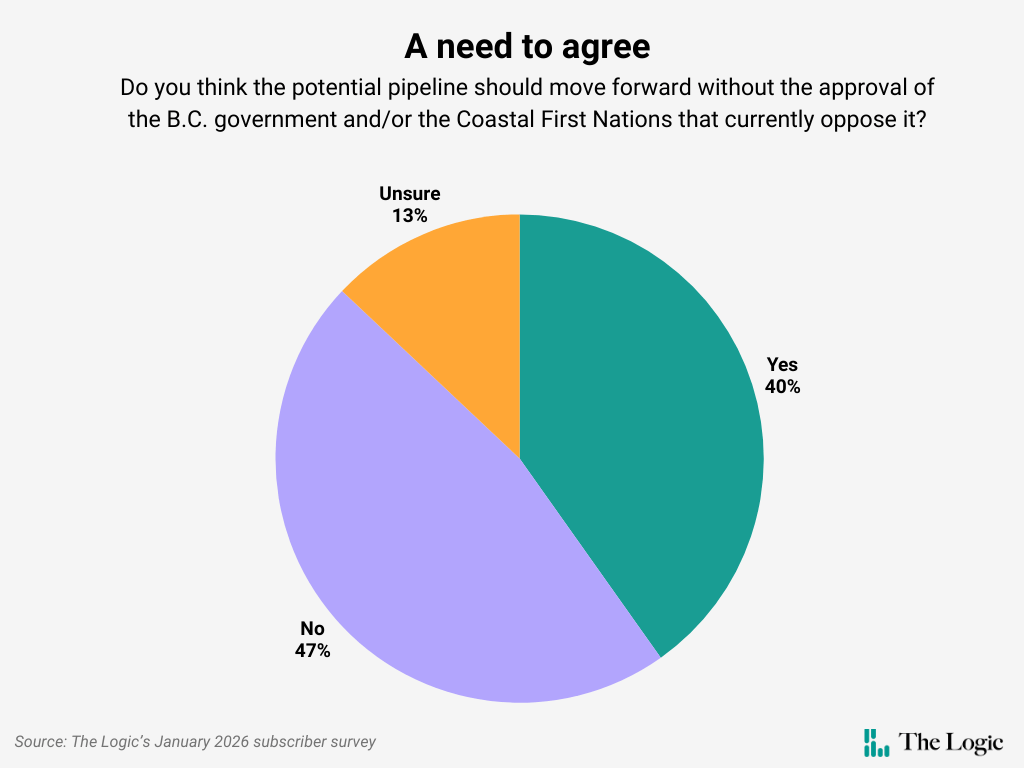
Forty-seven per cent of respondents believe the oil pipeline should be contingent on approval from the B.C. government and/or First Nations, but 40 per cent disagree.
Several readers pointed to potential disruption, including “long delays in courts and possible violence at construction sites,” while some said it would be “legally and morally wrong.” Others said they would ultimately support moving forward without agreement, but are hoping it does not come to that.
“I feel confident that the prime minister will convince both parties that the larger interests of Canada demand approval and further negotiation will provide enough incentive,” another respondent said.
“This one is tough. We could see ourselves hooked between elected and hereditary leaders of First Nations again,” another respondent said. During the 2020 protests of the Coastal GasLink natural gas pipeline to the northwest coast of B.C., different Wet’suwet’en chiefs supported and opposed the pipeline. “How do you navigate that?”
With these hurdles, 42 per cent say it’s unlikely the proposed pipeline is built. Only 26 per cent respondents think there’s a good chance and another 26 per cent say it’s a toss-up. Many expressed skepticism that a private partner would step forward, and several respondents said the recent Alberta separatist movement may also scare away investment. Others said it was simply too soon to tell.
“It’s Canada. We specialize in shooting ourselves in the foot,” said one reader.
“I’ll believe it when I see it,” another subscriber said. “So many grand ambitions and projects never seem to get off the ground.”



Loading...
Thanks for sharing!
You have shared 5 articles this month and reached the maximum amount of shares available.
CloseThis account has reached its share limit.
If you would like to purchase a sharing license please contact The Logic support at [email protected].
CloseGift the full article!
You have gifted 0 article(s) this month and have 5 remaining.
Recipients will be able to read the full text of the article after submitting their email address. They will not have access to other articles or subscriber benefits.
Photo: The Canadian Press/Jeff McIntosh
Most Popular This Week



In-depth, agenda-setting reporting
Great journalism delivered straight to your inbox.
News
Canada’s oil majors eye the next production boom
Briefing
Celestica completes US$3.45B share sale to meet demand for data-centre equipment
Sun Life pitches itself on Wall Street as an alternative to Blackstone, Apollo
MDA revenue jumps 34% in Q2, raises full-year outlook
Best business newsletter in Canada
Get up to speed in minutes with insights and analysis on the most important stories of the day, every weekday.
Exclusive events
See the bigger picture with reporters and industry experts in subscriber-exclusive events.
Membership in The Logic Council
Membership provides access to our popular Slack channel, participation in subscriber surveys and invitations to exclusive events with our journalists and special guests.