CALGARY — Proposals to build power-thirsty data centres in Alberta are multiplying as the province looks to establish itself as an epicentre driving the next generation of AI. The question is whether it can do so without tripping the circuit breaker.
Skip to content


The Big Read
Alberta doesn’t have the electricity to power its AI data dreams
The provincial government’s plan to fast-track “bring your own power” data centres won’t solve its grid limitations, the numbers show
Alberta’s electrical system operator is working on a plan to fill the power demands of new data centres. Photo: The Canadian Press/Jeff McIntosh
CALGARY — Proposals to build power-thirsty data centres in Alberta are multiplying as the province looks to establish itself as an epicentre driving the next generation of AI. The question is whether it can do so without tripping the circuit breaker.
As of last month, companies had proposed 33 data centre projects in the province that, taken together, would consume over 20,000 megawatts of power. That’s about equal to the capacity of Alberta’s entire electricity grid, and points to a large jump in demand from the roughly 12,000 megawatts it currently requires during times of peak use.
Talking Points
- Alberta has big ambitions to make the province a data hub powering the next generation of AI
- Those efforts are running up against the limits of the province’s electricity system, however, as many developers seek access to the public grid
Even under the most bullish scenarios, only a fraction of those projects are likely to be completed. Still, Alberta’s self-evident power capacity limits complicate Premier Danielle Smith’s ambition to position the province as Canada’s top destination for the data plants that will power future artificial intelligence programs.
Early indications are that most companies propose to draw from the grid rather than produce their own power. Within the 20,000 megawatts worth of data-centre capacity under review, companies have proposed only about 4,000 megawatts of their own power generation, according to the Alberta Electric System Operator (AESO).
Faced with the potential shortage, the provincial government last week promised faster approvals for centres with “bring your own power” generation facilities. (Details of the proposals themselves are not made public.)
Related Articles

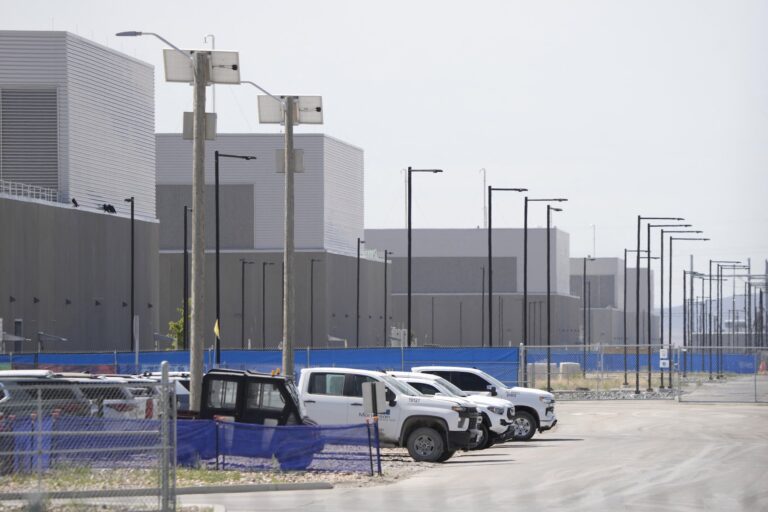

That won’t go far enough to accommodate the spike in demand that data centres could produce, said Kari Hyde, an electrical systems expert at Pembina Institute, a Calgary-based clean energy think tank. Hyperscalers like Meta, Google and Microsoft have proposed tapping into designated power sources to ensure they have the juice needed to power their AI, but will still need grid connectivity as a fallback when their primary supplies are out of service.
“We think we can fast-track these projects if they bring their own generation, but that doesn’t solve the problem,” Hyde said.
Earlier this month, The Logic reported that Meta was near a deal with Calgary companies Pembina Pipeline and Kineticor to build an AI data centre and associated power generation plant near Edmonton. (Pembina Pipeline is not related to the Pembina Institute.) The two Alberta companies first proposed in February to jointly build an 1,800-megawatt natural gas-fired power generation plant in the region, to be constructed in 450-megawatt increments.
Meta, Pembina and Kineticor declined to say whether that facility would power a Meta data centre specifically when The Logic first reported the partnership. Shortly afterward, Pembina announced that AESO had allocated 907 megawatts of grid capacity to the joint venture on behalf of a customer it did not name in its release.
That allocation takes up the majority of the 1,200 megawatts the province’s grid operator set aside over the next three years for projects like AI data centres in an effort to maintain the system’s reliability.
Edmonton-based Capital Power, for its part, has said that it’s been unable to find a data centre partner for its Genesee natural gas generating station in the province, saying the interim allocation set by AESO is too low.
In response to The Logic’s questions, AESO said it is working on a long-term framework to guide how Alberta’s electrical system absorbs demand from data centres. A key part of that, spokesperson Leonardo Tovar said in an email, is to “clarify self-supply and off-site partnerships so data centre developers can better understand how they can bring and use their own power generation.”
“If we don’t get the balance right, electricity in the next 10 years will be impossible for most people to afford without subsidies.”
The grid operator is also working to comply with incoming recommendations from the North American Electric Reliability Corporation, a regulatory authority that ensures the security of the continental power system. In August 2024, it established a task force to analyze how best to manage rising power demands associated with data centres.
In addition to the Pembina and Kineticor facility, companies have proposed a 450-megawatt facility north of Edmonton and a 460-megawatt station near Red Deer, among other projects.
With such steep demands on Alberta’s power grid, though, experts say there are smarter ways to cope with the load.
Blake Shaffer, an electricity market researcher and University of Calgary professor, said the overall demands associated with data centres are only part of the equation. He calls for more focus on controlling when power is used rather than how much. While some data centres need to operate nearly 100 per cent of the time, others won’t, Shaffer said. In such cases, power usage could be curtailed, or shifted to periods when demand is lower.
“If we can get them to be flexible, they can help us spread these fixed costs over more megawatt hours, and that could actually be beneficial,” he said.
The Pembina Institute’s Hyde agrees on the need for a “more elastic” system. While Alberta will need to build major new power generating stations to meet its AI data centre needs, she said, improving energy efficiency and flexibility could do a lot of the heavy lifting. In a recent report, the institute estimated that Alberta could save $1 billion per year by incentivizing building retrofits or otherwise improving how it manages power demand.
“By trimming and shifting demand at peak times, we can avoid billions in new infrastructure and ensure the reliability is still there as large products come online,” Hyde said.
A failure to manage a surge in demand would have catastrophic results. Alberta’s ample supply of cheap natural gas to fuel power stations, among other things, has long helped keep electricity prices relatively low. New strains on the grid could change that in a hurry, Hyde said.
“If we don’t get the balance right, I can tell you right now electricity in the next 10 years will be impossible for most people to afford without subsidies.”



Loading...
Thanks for sharing!
You have shared 5 articles this month and reached the maximum amount of shares available.
CloseThis account has reached its share limit.
If you would like to purchase a sharing license please contact The Logic support at [email protected].
CloseGift the full article!
You have gifted 0 article(s) this month and have 5 remaining.
Recipients will be able to read the full text of the article after submitting their email address. They will not have access to other articles or subscriber benefits.
Photo: The Canadian Press/Jeff McIntosh
Most Popular This Week




In-depth, agenda-setting reporting
Great journalism delivered straight to your inbox.
News
Adam Waterous proposes massive crude exports to Asia by rail through northern B.C.
Briefing
Rivals may be ‘horrified’ to realize how exposed their investments are to AI, Aviva CIO warns
Shopify, Sequoia co-lead US$200M investment in online-selling platform Whop
Amid revenue gains, 1Password bets on tools to protect data from AI agents
Best business newsletter in Canada
Get up to speed in minutes with insights and analysis on the most important stories of the day, every weekday.
Exclusive events
See the bigger picture with reporters and industry experts in subscriber-exclusive events.
Membership in The Logic Council
Membership provides access to our popular Slack channel, participation in subscriber surveys and invitations to exclusive events with our journalists and special guests.