OTTAWA — Rick Pender says he knew very little about health food when an idle canola crushing facility went up for sale in an industrial park on the outskirts of Saskatoon.
Skip to content
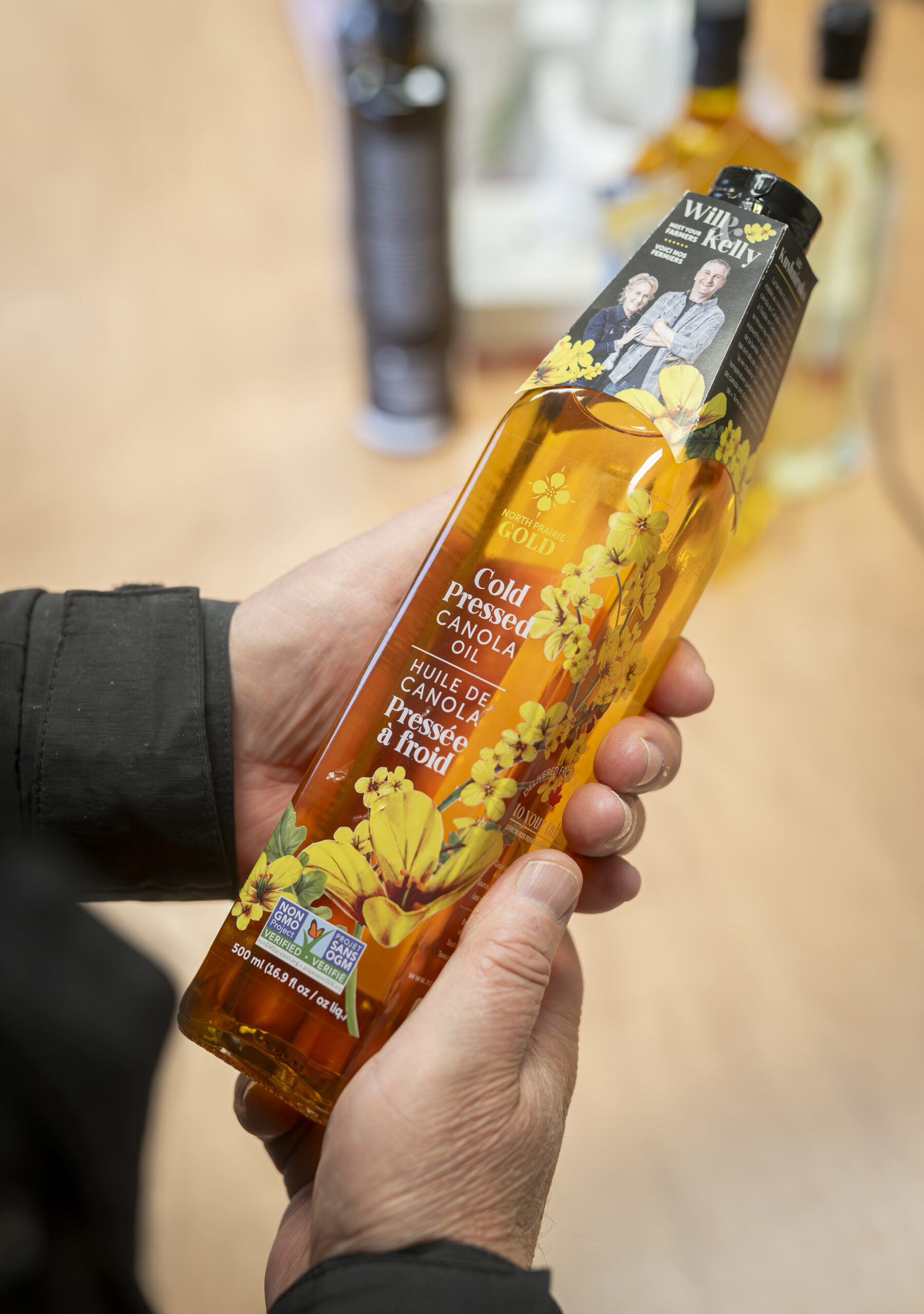 A bottle of cold-pressed canola oil produced by Virtex Farm Foods. Photo: Chris Hendrickson for The Logic

The Big Read
Crushing the trade war: Saskatchewan canola farmers bet on U.S. health-food market
How farmers are using a non-GMO canola product to protect their family legacy, gain independence and boost profits
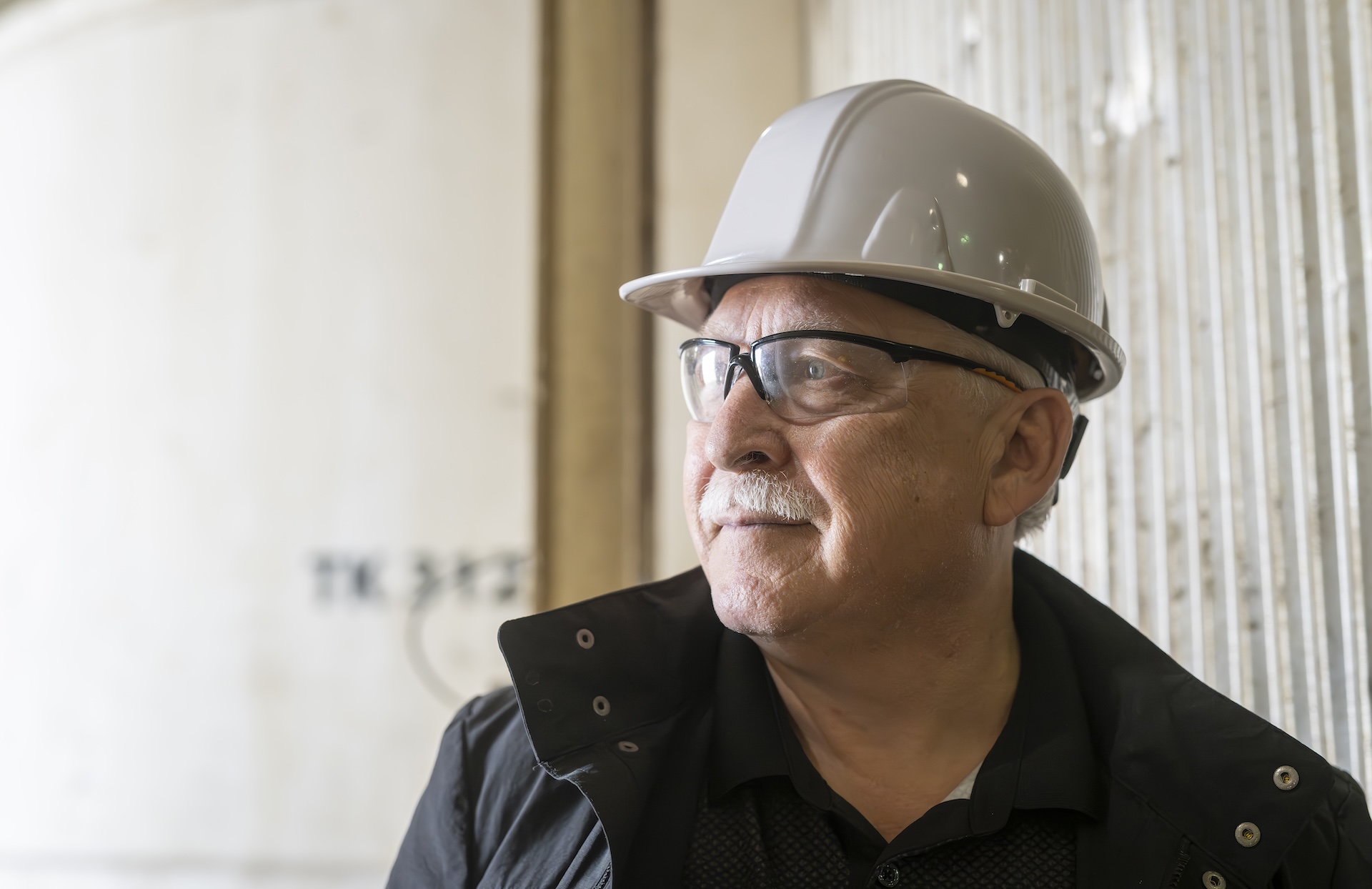
Rick Pender, CEO of Virtex Farm Foods, stands inside the farmer-owned canola crush plant, which sells cooking oil at premium prices. Photo: Chris Hendrickson for The Logic
OTTAWA — Rick Pender says he knew very little about health food when an idle canola crushing facility went up for sale in an industrial park on the outskirts of Saskatoon.
Bioexx, a Canadian firm that later filed for bankruptcy, had set up the plant to use a solvent-free method to extract food-grade protein isolates from canola seeds. The facility shut down in 2013, but the same methods could be used to process those seeds into non-genetically modified (non-GMO) canola oil. Pender, the president and CEO of Virtex Grain Exchange, a farmer-owned grain sales company, researched the benefits of the specialty variety of the popular cooking oil—and its immense market potential.
Talking Points
- Saskatoon-based Virtex Farm Foods owns and operates a non-GMO canola crush facility that ships 95 per cent of its canola oil to the U.S., where customers are willing to pay a premium for health-food products
- CEO Rick Pender says the integrated farm-to-table business sells a premium product that can help smaller producers secure a legacy for the family farm
The farmers at Virtex decided to give it a go. They launched Virtex Farm Foods in 2015 to operate the facility and now sell non-GMO refined canola oil in bulk, often used in food processing, and canola meal. About 95 per cent of it is shipped below the border, although Pender said the company has a new Canadian client that is using its oil in potato chips. They also set up North Prairie Family Farms to produce and package a cold-pressed variety under the brand North Prairie Gold. The unrefined version of canola oil retains more of its nutrients, is low in saturated fats and has a nutty, buttery flavour that Pender says makes the product a competitor to olive oil. The brand is sold in grocery stores across the Prairies and B.C., including Sobey’s and many Co-op locations. Getting into U.S. grocers known for their health-food selections, including Whole Foods and Trader Joe’s, is a longer-term goal.
Related Articles

Consumers are ready to pay a premium for those products, says Pender. (A twin pack of 500-ml bottles of the cold-pressed specialty oil is currently listed at $41 on Amazon.ca.) That helps insulate his company, which makes $25 million in annual sales, from price shocks linked to the U.S. trade war and China’s punishing tariffs on Canadian canola. He also thinks the product is a great way for smaller producers to secure a legacy for their family farms, because they can rely less on external forces—and make more money while doing it too.
“Farmers have to get out of just this commodity business,” Pender told The Logic in early June during a tour of the plant.
Canola oil traces its origins to the desire for a healthier—and better-tasting—seed oil. The word “canola” itself is a portmanteau of “Canadian” and “oil” coined in the late 1970s to refer to newer varieties of rapeseed developed in Manitoba and Saskatchewan through traditional cross-breeding methods. Other varieties produced oil with high levels of erucic acid and eicosenoic acid—fatty acids without nutritional value. They were also high in glucosinolates. Those are sulphur compounds that give mustard and horseradish their bite, but at higher concentrations, they make rapeseed oil unpalatable. Canadian farmers had started growing rapeseed to make oil used as a steam-engine lubricant during the Second World War, but it was not ideal for human consumption. The new varieties resolved those issues, allowing canola oil to become a kitchen pantry staple and a high-protein canola meal fed to livestock. The Canadian canola industry gained new life.
The canola sector contributes some $43.7 billion to Canada’s economy, when including indirect benefits such as transportation and port activity. It is also in trouble. China effectively shut Canadian canola out of its massive market through a series of steep tariffs this year. Last fall, Beijing announced two investigations into Canadian canola imports after Canada slapped 100 per cent tariffs on Chinese-made electric vehicles and 25 per cent duties on steel and aluminum from the country. In March, Beijing imposed 100 per cent tariffs on Canadian canola meal and oil as a result of its anti-discrimination probe. Last month, China brought in preliminary anti-dumping tariffs of 75.8 per cent on canola seed, which accounted for over three-quarters of Canada’s $4.9 billion in canola exports to China in 2024.
The last time China went after the crop was in March 2019, in apparent retaliation for Canada’s arrest of Huawei executive Meng Wanzhou on a U.S. extradition warrant. It cost the industry an estimated $1.54 billion to $2.36 billion by August 2020. China lifted those restrictions in May 2022. Rick White, president and CEO of the Canadian Canola Growers Association, warned the federal government last month to get ready to compensate farmers.
Virtex Foods does not sell any of its canola oil to China. Instead, it is tapping into a lucrative—and growing—demand for health food in both Canada and the U.S., where the market for non-GMO food in particular is booming with potential. Since 2022, the U.S. Department of Agriculture has required food manufacturers to disclose whether a product contains any bioengineered ingredients. It was a controversial move, framed as a transparency measure, as regulators have deemed those ingredients safe. Health Canada has no such rules. “They are labelled like any other food because our safety assessments have found them to be as safe and nutritious as non-[genetically modified] foods,” the department says on its website.
Pender does not want to speak for every farmer in the company, but he is a convert. “I didn’t want to be in something I didn’t believe in,” he said. Polarizing opinions of non-GMO food’s health benefits aside, the money-making potential is clear. A June report from Renub Research estimates the global non-GMO food market is expected to hit US$476 billion by 2033—a 54 per cent increase from last year—according to a summary provided by Research and Markets.
To the untrained eye, little inside the Virtex plant suggests it is different from a facility that processes conventional canola seed. It bears no resemblance to an artisan workshop, for example, but Pender does compare those operating the press to brew masters. The canola seed can have a variety of attributes, so they watch to see whether they need to cool the seed or adjust the speed of the rotor. “Our object here is to get as much oil out of the seed as possible,” said Pender. A conventional plant would use a solvent to remove residual oil from the canola meal. Virtex does not. “The health food crowd will not buy it if it’s been touching solvent.”
The bigger difference is on the input side. The plant uses Clearfield canola—an herbicide-tolerant variety treated as a non-GMO conventional crop because it was developed through traditional plant-breeding methods rather than genetic modification. (The Canola Council of Canada says the genetically modified protein in other herbicide-tolerant varieties is removed when crushed and not found in the canola oil itself.) Virtex also tests the product to ensure it meets the standards required by the Non-GMO Project—a non-profit organization that lets products that pass its verification steps use its butterfly-bedecked label.
The farm-to-table setup also gives farmers more control, says Pender. Crop farmers generally sell their seed to grain elevators at a price set by the commodities market, which leaves them vulnerable to both weather and geopolitical tensions. “I venture to say that the guys that own here and sell canola here probably make more money on their canola than anybody else.”
Will Kushniruk, a 56-year-old farmer, owns about 10 per cent of the company. He is featured on some of the bottles as a marketing effort to showcase the traceability of the product. He took over the 2,000-acre family farm in Tisdale, Sask., from his parents. He hopes one of his sons will run it some day.
“Our farm has no say in the marketplace commodity prices,” he said last week in a telephone interview. He has up to 25 per cent of his field growing Clearfield canola, which he rotates with conventional varieties and other crops. An extra stream of revenue can help a farmer buy some more acres, Kushniruk said, or equipment. “If you can make between maybe 10 and 15 per cent on your commodity going to your [crush] plant on the back end, what’s wrong with that?”
Pender says it could also help the farm survive to the next generation. “Almost every farmer out there wants some kind of legacy. They don’t always want to just shut down and leave or sell to the biggest guy on the block,” he says. “This can give them an opportunity to do that.”



Loading...
Thanks for sharing!
You have shared 5 articles this month and reached the maximum amount of shares available.
CloseThis account has reached its share limit.
If you would like to purchase a sharing license please contact The Logic support at [email protected].
CloseGift the full article!
You have gifted 0 article(s) this month and have 5 remaining.
Recipients will be able to read the full text of the article after submitting their email address. They will not have access to other articles or subscriber benefits.
Photo: Chris Hendrickson for The Logic
A bottle of cold-pressed canola oil produced by Virtex Farm Foods.
Most Popular This Week



In-depth, agenda-setting reporting
Great journalism delivered straight to your inbox.
The Big Read
Beacon is building an AI empire by fixing Main Street’s software
Briefing
EverWind plans $10B data centre and wind development in Nova Scotia
Canada ready to force Stelco to sell its Canadian operations, Joly says
Feds plan a 60 MW defence-oriented data centre for Ottawa
Best business newsletter in Canada
Get up to speed in minutes with insights and analysis on the most important stories of the day, every weekday.
Exclusive events
See the bigger picture with reporters and industry experts in subscriber-exclusive events.
Membership in The Logic Council
Membership provides access to our popular Slack channel, participation in subscriber surveys and invitations to exclusive events with our journalists and special guests.