OTTAWA — As governments around the world look to cut their spending in an increasingly uncertain economy, the United States—and Canada—stand out as examples of what not to do.
Skip to content


News
How to make massive government cuts, according to someone who’s done it
A word of advice for Prime Minister Mark Carney: lean in to the political pain
Former clerk of the Privy Council Jocelyne Bourgon, pictured in May 2006, says Prime Minister Mark Carney will need to make choices, not just cut spending across the board. “It sounds obvious, but it's crucial, and extremely hard.” Photo: AFP via Getty Images/Stephane De Sakutin
OTTAWA — As governments around the world look to cut their spending in an increasingly uncertain economy, the United States—and Canada—stand out as examples of what not to do.
That’s according to the woman who steered the Canadian public service through one of the most dramatic budget cuts in the country’s history.
From 1994 to 1999, Jocelyne Bourgon was Jean Chrétien’s clerk of the Privy Council, the government’s top bureaucrat responsible for advising the prime minister and his cabinet, acting as his general as the country teetered on the edge of market implosion.
“In the 1990s, Canada was facing a fiscal crisis. It was losing its capacity to invest in the future of its choice,” Bourgon said in an interview with The Logic. The government’s debt ballooned to the point that a third of tax revenue was being used to pay it off.
Talking Points
- Jocelyne Bourgon, who oversaw former prime minister Jean Chrétien’s massive budget cuts in the ‘90s, says Prime Minister Mark Carney should avoid across-the-board cuts commonly used by past Canadian governments, and the kind of indiscriminate budget slashing happening south of the border.
- Bourgon, who has advised several governments on how to make big budget cuts, says it’s a political exercise, not just a fiscal one, and that making difficult choices is key.
Bourgon helped lead a massive program review that cut department spending by an average of 20 per cent and, in 1998, allowed then finance minister Paul Martin to table the country’s first balanced federal budget since 1969, with a surplus.
Now, Prime Minister Mark Carney is hoping to pull off a similar feat.
“Today, Canada is facing an economic sovereignty crisis,” Bourgon said. “It is losing the capacity to have the degree of flexibility and independence to make the economic choices that would ensure future prosperity.”
Unlike corporations, which can review their operations, see what’s working, what best services new priorities and cull the rest, governments have another major factor to consider: politics.
Related Articles

In a bid to bolster Canada’s economic sovereignty, Carney has given himself the tall task of balancing the government’s daily spending in three years while at the same time putting billions more into Canada’s military capabilities and housing. He plans to do it with less revenue, after cutting income taxes, removing the GST from the sale of some new homes, and repealing plans for a digital services tax and a capital gains hike. He’s also promised not to touch transfers to provinces and to protect existing social programs.
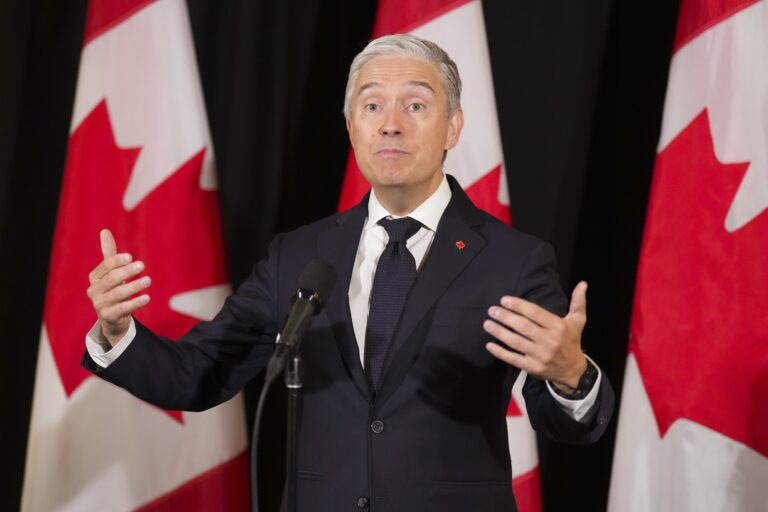
Finance Minister François-Philippe Champagne sent letters to ministers last month to demand they reduce existing spending in their departments by 15 per cent over the next three years, and make sure all programs serve the prime minister’s new economy-focused mandate. The minister will also evaluate new spending against the new priorities.
But Bourgon, who has gone on to advise governments all over the world on how to successfully scale back spending as the founding president of Public Governance International, a consultancy firm focused on public sector capacity building, cautions against the solution Canadian governments lean on time and again: across-the-board cuts. “One common denominator to exercises that have been successful has been the willingness to make decisions. It sounds obvious, but it’s crucial, and extremely hard,” she said.
Making purposeful cuts to things that have fallen down the priority list is a sophisticated political exercise as much as an accounting one, she said. “Behind every program, every service, every line in every law about any program, there is a constituency that will fight to preserve its existing privileges,” Bourgon said. Governments that try to avoid the political consequences will often let a target number drive decisions instead of making intentional choices, she said.
“You’re not strategic, you’re not saying something is more important for the future than others,” she said. Instead, she said, it erodes the capacity of every department.
On the other end of the spectrum, as U.S. President Donald Trump hammers friends and adversaries with punishing tariffs, upending global trade, he’s also overseeing a massive reduction of the government. “I think the U.S. is providing a fantastic example of what not to do,” Bourgon said.
Rather than making choices, the Department of Government Efficiency (DOGE), previously led by billionaire Elon Musk, began making seemingly indiscriminate cuts to the public service shortly after it was created. By the end of April it had terminated thousands of jobs, contracts and grants.
Though DOGE estimates it’s found US$205 billion in government savings as of Aug. 14, Bourgon argued its haphazard approach has threatened public assets in the U.S. that ought to be protected. In other words, knowing what to save is as important as knowing what to cut.
That leaves a narrow path, one that involves unlocking as much spare revenue as possible—Bourgon recommends overhauling the tax code, something that hasn’t been done in Canada since the ‘80s—and encouraging departments to innovate, either through the use of technology or with outside-the-box thinking.
The trick, Bourgon said, is coming up with a way of evaluating new ideas. She said Champagne’s call to ministers for savings proposals is a good start, if the government follows through. “What is the design to make sure that those who are brave, that come forward with creative ideas, will be supported, and those who are less brave will be encouraged to do better?” she said.
It’s yet another political question for Carney, a former central banker, whom Bourgon said should take care not to see the budget process as a strictly fiscal exercise.



Loading...
Thanks for sharing!
You have shared 5 articles this month and reached the maximum amount of shares available.
CloseThis account has reached its share limit.
If you would like to purchase a sharing license please contact The Logic support at [email protected].
CloseGift the full article!
You have gifted 0 article(s) this month and have 5 remaining.
Recipients will be able to read the full text of the article after submitting their email address. They will not have access to other articles or subscriber benefits.
Photo: AFP via Getty Images/Stephane De Sakutin
Most Popular This Week



In-depth, agenda-setting reporting
Great journalism delivered straight to your inbox.
Commentary
Carmichael: Canadian ignorance about India is a strategic weakness
Briefing
Aritzia shares pop after earnings rise 204%
First Nation in Alberta goes to court over fast-tracked oil pipeline
Chinese EV maker Geely Auto Group to launch in Canadian market in 2027
Best business newsletter in Canada
Get up to speed in minutes with insights and analysis on the most important stories of the day, every weekday.
Exclusive events
See the bigger picture with reporters and industry experts in subscriber-exclusive events.
Membership in The Logic Council
Membership provides access to our popular Slack channel, participation in subscriber surveys and invitations to exclusive events with our journalists and special guests.