On Sept. 11, 2001, jets crashed into the World Trade Center towers, the Pentagon and a field in Pennsylvania, killing thousands, shattering the assumption of U.S.-led global security and plunging markets around the world into chaos. Nobody knew what might happen next.
Skip to content

 Mark Carney with former prime minister Stephen Harper, centre, and then-finance minister Jim Flaherty; Harper has said Flaherty made harder judgment calls than Carney during the financial meltdown of 2008. Photo: The Canadian Press/Tom Hanson
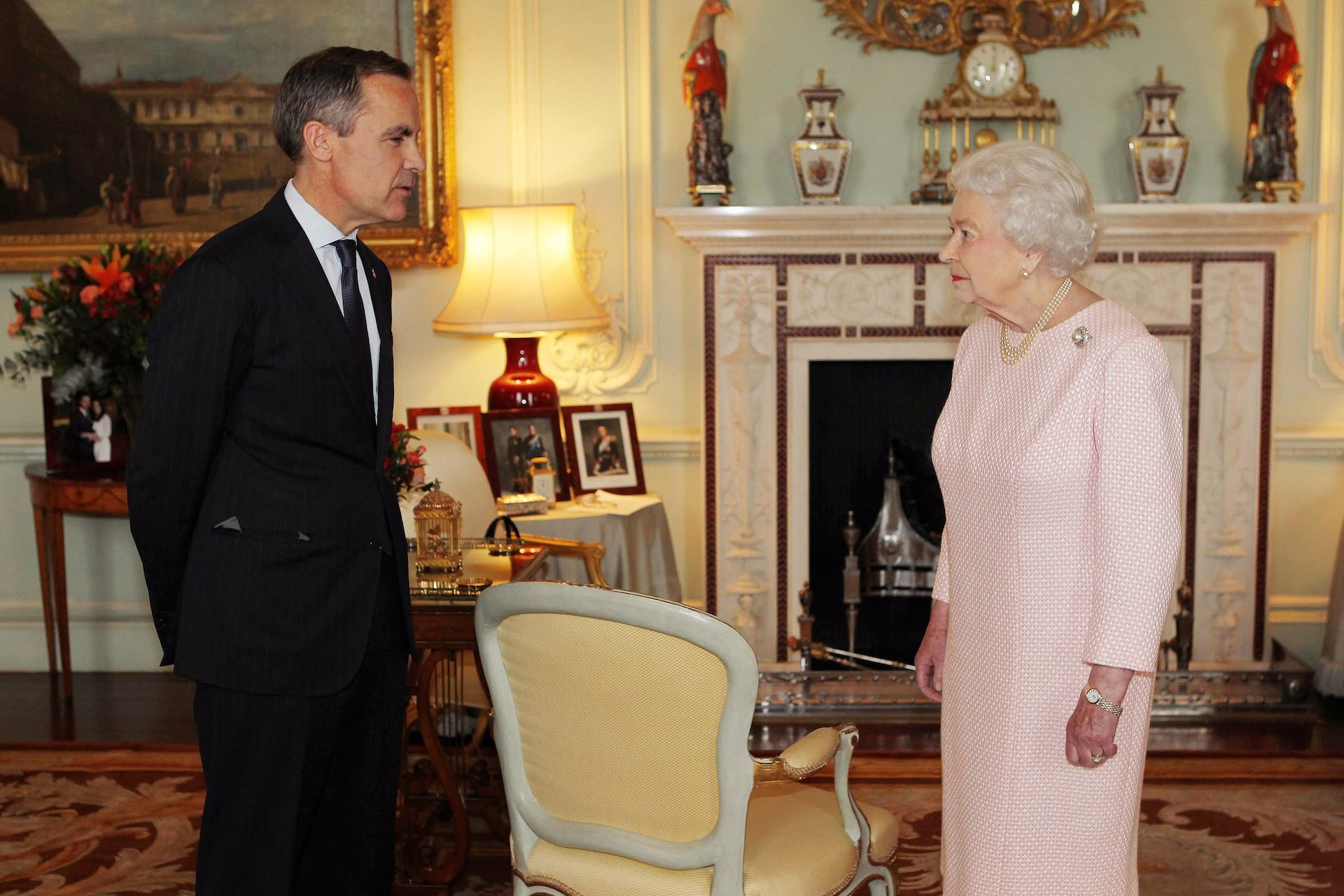 Carney at an audience with Queen Elizabeth II in November 2013 when he was governor of the Bank of England. Photo: WPA Pool via Getty Images/Sean Dempsey
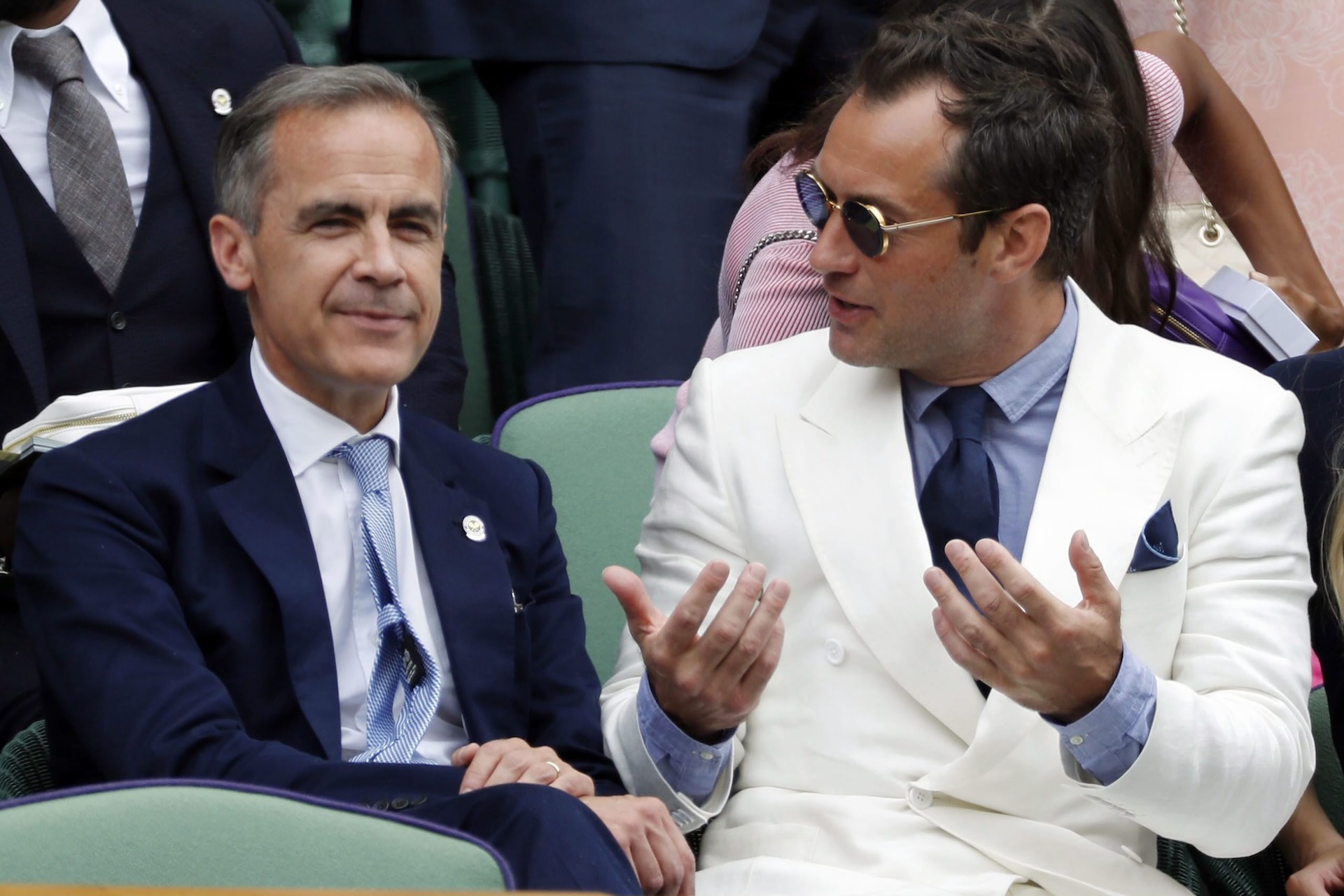 Carney with actor Jude Law at the Wimbledon Tennis Championships in 2016. Photo: AP Photo/Ben Curtis
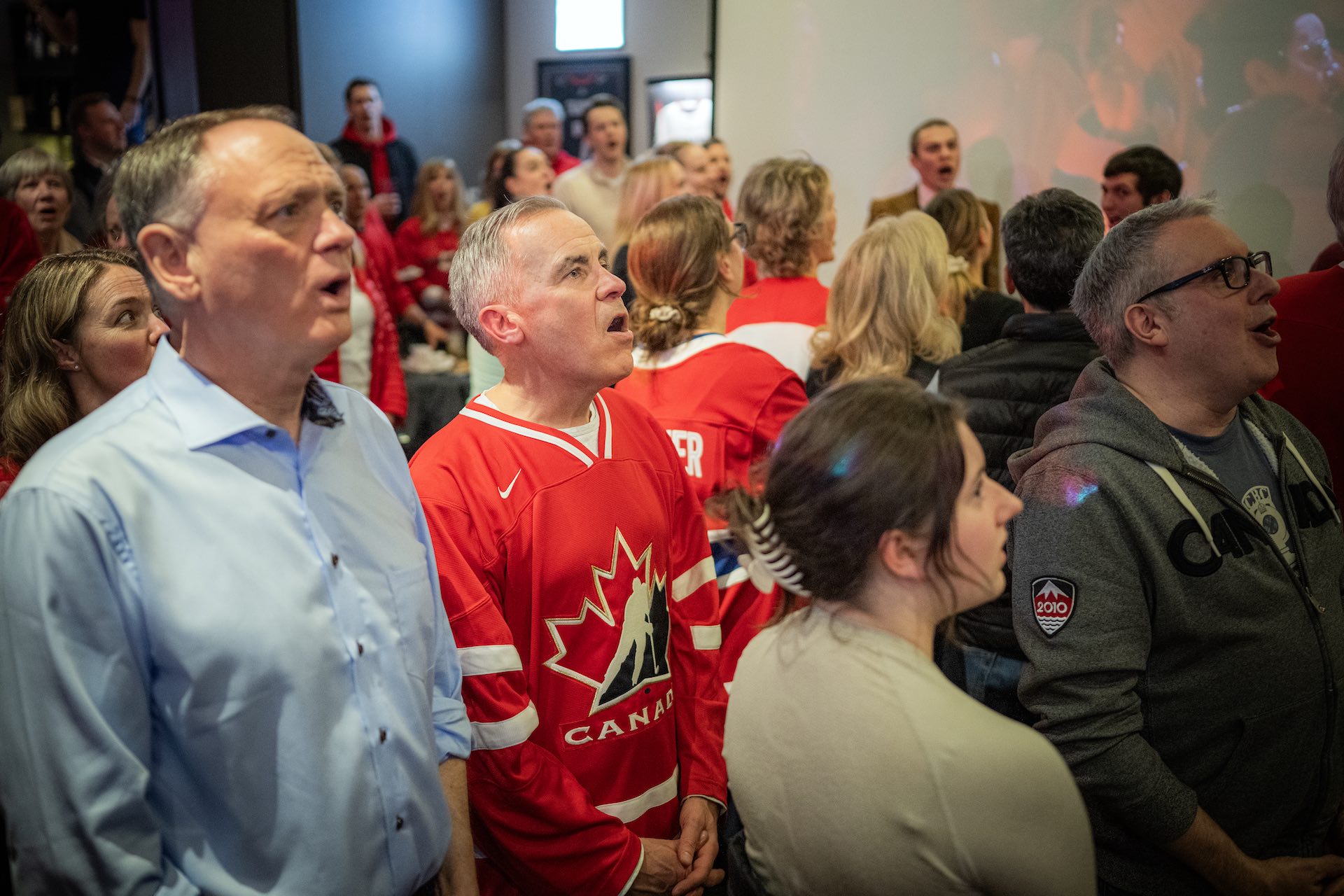 Carney, centre, watching 4 Nations Cup hockey action with Liberal MP David McGuinty, left, at a watch party in Ottawa. Photo: Ashley Fraser for The Logic
 Carney speaking to media in his capacity as prime minister after a March 21 meeting with premiers in Ottawa; the Liberal leader has bristled at times when pressed by reporters. Photo: The Canadian Press/Adrian Wyld
The Big Read
Meet the real Mark Carney
The Liberal leader has steered central banks and investment giants through successive crises, but guiding Canada through the Trump era would be the greatest test he’s faced
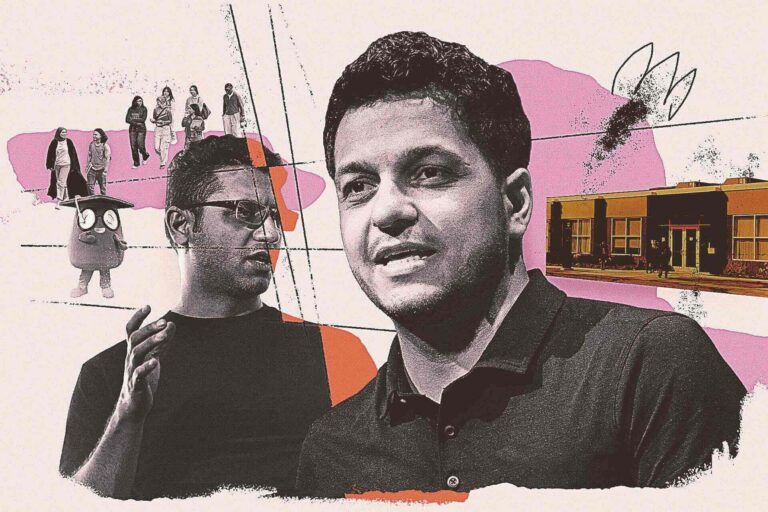
Photo: Illustration for The Logic by Kimberlyn Porter
On Sept. 11, 2001, jets crashed into the World Trade Center towers, the Pentagon and a field in Pennsylvania, killing thousands, shattering the assumption of U.S.-led global security and plunging markets around the world into chaos. Nobody knew what might happen next.
In the financial world, few institutions had a clearer sense of the possibility that the terrorist attacks would lead to economic catastrophe, or more responsibility for stopping it, than the investment house of Goldman Sachs.
Talking Points
- Liberal Leader Mark Carney’s career in finance and central banking is his key asset as he makes the case that he’s the right person to champion Canada against U.S. President Donald Trump
- People who have worked with him praise his mastery of detail, his cool under fire and his economist’s mind, but he’s already had to learn hard lessons in his first months in the political spotlight
That morning, with the city of its own global headquarters under attack, Goldman transferred control of its “book”—essentially its constantly evolving investment ledger—from its head office to the presumed safety of Toronto.
“I looked at the people around, and everyone there … was very upset,” says Jamie Kiernan, who was president of Goldman Sachs Canada at the time. “But one of the five I trusted to work was Mark Carney.”
Goldman Sachs has so much money in so many places that its people get to learn, in detail, what economy-shaking trouble looks like. They handle huge transactions in government and corporate securities. Goldman is a “market maker” that will sometimes trade in shares or bonds not because it necessarily wants to buy or sell, but for the greater good of the global financial system.
The company’s importance to financial stability is one reason why, as the gravity of the 9/11 attacks began to sink in on that Tuesday morning, someone at the Bank of Canada got Kiernan on the phone. “I had a billion-dollar line of credit with the Bank of Canada,” he says. “They called me up at 10 a.m. and said, ‘You have a $15-billion line. If you need more, call us.’”
Fulfilling the public-interest part of Goldman’s work was something Carney knew how to do, Kiernan says. The future prime minister, now campaigning as Liberal leader to keep the job, was still relatively junior at the time, six years out of graduate school at the University of Oxford. He had transferred home to Canada after stints at Goldman offices in London, Tokyo and New York.
Related Articles

But he had seen some things.
Saddam Hussein’s invasion of Kuwait in 1990 was one such menace, says Kiernan. The oil-rich emirate’s vast sovereign wealth fund was in danger and markets began panicking. Carney was a junior banker in London at the time, doing what Kiernan called “dog’s-breakfast back-office” work. “He was in the bowels, but at Goldman Sachs, he was involved in seeing what was freezing up,” Kiernan says.
In Toronto in 2001, Carney’s specialty was corporate finance, Kiernan says. But on 9/11 the Canadian office began what would turn out to be three days of subbing in for New York, and Carney mucked in on the government-securities side of the operation, helping stabilize trading in U.S. Treasury securities and Canadian government bonds.
Much of Carney’s success, which he’s now selling to the people of Canada, has been in averting the worst. It’s what he’s done all his life, in a way—since he was literally a kid.
He was a goalie, you might have heard. It’s part of his campaign shtick—here he is launching his leadership bid at his childhood rink in Edmonton; there he is on the ice with the Oilers; now he’s at a rink with Mike “Elbows up” Myers.
“Carney turned and said, ‘He’s the only one in this room that had a goddamn clue about what was going on. If you have a problem with it, Royal Bank, maybe you can leave.”
But “goalie” is also part of Mark Carney’s persona, a clue to how he sees his place in the world. Last line of defence. Reading incoming plays; reacting to the unexpected; staying cool when there’s a jumble of bodies, sticks and skates in the crease; pulling off the occasional acrobatic save to keep a team in the game.
Carney says little in public about reinventing himself for a new role, and he would not be interviewed for this story, but interviews with eight people who have worked closely with Carney—in his early years at Goldman Sachs, during his time as a central banker on two continents, as he’s moved into the ruder world of politics—suggest that the goalie’s skillset has been key to Carney’s success. But also that it might not be enough.
He’s said that he’s used to coming in at the top, and he emphasizes the strengths and values formed in contending with multiple financial crises with political dimensions. That’s what the federal government faces, with U.S. President Donald Trump aiming at Canada from the south. Carney says his background qualifies him uniquely for the task at hand.
In this election campaign, he faces a populist opponent skilled at exploiting divisions in a time of profound political volatility. If his party wins, Carney must go toe-to-toe with Trump, with nothing less than Canada’s sovereignty on the line.
Carney was born in 1965 in Fort Smith, in the Northwest Territories just north of the Alberta border. His parents were teachers; his dad was principal of what was then called an Indian day school. He grew up mainly in Edmonton, after his father became a professor at the University of Alberta and then, briefly, a deputy minister in the Alberta government.
Young Mark studied at Harvard, where he was a backup goalie on the varsity hockey team. Later he went on to the University of Oxford, where he earned master’s and doctoral degrees in economics; his wife, fellow economist Diana Fox, was in the Oxford hockey club, and Carney co-captained the group with future justice minister David Lametti.
At Goldman Sachs, Carney began accumulating his knowledge in the nitty-gritty of the financial markets, building up the information-gathering and decision-making experience that he’s now trying to sell to Canadian voters.
“You start out one of the kids—to be seen and not heard—but you get to watch what’s going on,” says Kiernan. “He went from watching to then commenting, to then actually being responsible.”
He learned, as he grew up at Goldman, how political disagreements could grow into crises that threatened finance and then the economy. When Quebecers rejected separation by the slimmest margin in October 1995, Carney saw what that meant for the markets’ handling of Canadian public and private debt. There were worries about “whether we were going to have a seizing-up of the Canadian government bond market,” Kiernan says. “We had issues related to the electronic trading of bankers’ acceptance on the Montreal exchange—and all of this we were looking at as [the referendum result] came in at 50.1 to 49.9.”
Labour MP Pat McFadden memorably compared the Bank of England to an “unreliable boyfriend” during Carney’s tenure as governor.
Six years later, when terrorist attacks physically destroyed the twin symbols of American finance in Manhattan and sent the more ephemeral markets they represented into chaos, Carney’s background was helpful for the grinding but critical work Goldman’s Toronto office was suddenly in charge of, making sure things like government bond transactions cleared.
That nitty-gritty knowledge of the hidden pipework of economies, and coolness under pressure, are central to Carney’s pitch to Canadians now, as they face growing damage from a tariff-happy Trump.
“I have seen this movie before,” Carney said at a campaign stop near Toronto in early April. “I know exactly what’s going to happen.”
Read More

In memory, the financial panic of the late 2000s might be a long awful blur. Trouble in the U.S. mortgage industry kept spreading until the meltdown had taken out mighty Wall Street institutions, cost almost one in six U.S. workers their jobs and put two of the Big Three American automakers into bankruptcy protection. British banks needed rescuing. A mighty Canadian insurance provider teetered.
This crisis, too, Carney watched from an insider’s perspective—but from the other side of the business-government divide. By 2003, he’d been feeling the pull of public service. He had fallen into private-sector finance after once imagining himself contributing to economic policymaking, and the job at a central bank was more in line with his original career dreams. So he applied to the Bank of Canada after seeing an ad for the position of deputy governor, and got the job.
Not long after he and his family got to Ottawa, though, he was seconded to the Finance Department, and the placement stuck. It was there, in the throes of another global crisis, that he made his reputation.
In his book Value(s), Carney recalled a hot August long weekend in 2007 when Kiernan called to clue him in to the brewing chaos. He was in the backyard with his kids when the phone rang, he wrote, and answered only because it was so weird for Kiernan to be phoning.
“As would become a pattern over the next two years, I answered a call to hear palpable fear on the other end of the line,” Carney wrote. “Jamie told me that the asset-backed commercial paper market was freezing up and might not reopen the following Tuesday.”
Kiernan had left Goldman Sachs by then but was still in the investment business. He remembers the call as more of an early heads-up to Carney. On Aug. 3, 2007, a New York-based lender called American Home Mortgage said it was doomed; it filed formally for bankruptcy days later. Among other problems with its business, it was having trouble transferring selling securities—asset-backed commercial paper—built from the mortgages it issued, which was how it funded new mortgages.
This might have seemed like a shame but nothing to be too worried about, especially north of the border. It was actually a crack in the side of a barely contained pressure vessel.
Kiernan had been talking to people at a subsidiary of a Canadian bank in New York, and believed they were doing “extremely risky things” with asset-backed commercial paper. “I smelled a rat,” he says.
There was a rat. Canadian investors and companies owned about $32 billion of that paper. Well, it had once been worth $32 billion; with doubts about the mortgages inside the packages, buyers shied away. If nobody would buy it, maybe the paper was worth nothing, and if its value on their books vaporized, whole institutions could be in trouble.
Carney organized a conclave of bankers in Toronto, Kiernan recalls, that included about 20 people in a Royal Bank conference room. Before the meeting got going, the nominal host asked what Kiernan was doing there.
“Carney turned to him and said, ‘You know what? He’s here because he’s the only one in this whole room that had a goddamn clue about what was going on. And if you have a problem with it, Royal Bank, maybe you can leave the room,” Kiernan says.
Just how big a role Carney played in shielding Canada from the global catastrophe is contested. Former prime minister Stephen Harper sent an open letter to Conservatives in March accusing Carney of stealing valour from Harper’s finance minister, the late Jim Flaherty. “Carney’s experience is NOT the day-to-day management of Canada’s economy during the global financial crisis,” Harper’s letter said. Flaherty made the hard calls then, not Carney, he wrote.
All three men were essential, and worked together seamlessly, says Chisholm Pothier, who was a top aide to Flaherty at the time. (He has since fallen out with the Conservatives.) “That was a very serious crisis a year before the big crisis that we all remember, and Flaherty and Carney worked hand-in-glove,” Pothier says. Flaherty was the finance minister; he was in charge and was critical in cajoling and coercing politicians into the roles they needed to play in the resolution. But Carney, says Pothier, was Flaherty’s point man.
Together, they got the Canadian owners of asset-backed commercial paper into talks to restructure their holdings. The owners would ultimately give up some of the investments’ value to keep an unguessable amount from going to zero permanently and blowing holes in their balance sheets.
Whatever level of credit Carney deserves, his role in this early intervention was pivotal to the next step-change in his career, putting him in the running to head the Bank of Canada when then-governor David Dodge left in 2008.
Carney had spent just a few months at the central bank, several years before; his name was in the mix, but so were plenty of others. Dodge’s No. 2, senior deputy governor Paul Jenkins, would have been the natural pick. Tiff Macklem, who would become governor in 2020, was one of several other deputy governors. Kevin Lynch, an economist who had been deputy finance minister and then Ottawa’s top bureaucrat as clerk of the Privy Council, was on the list of possibles, too.
“I think Flaherty really put some capital into getting Mark named Bank of Canada governor,” Pothier says. “Flaherty recognized Carney’s abilities and effectiveness and really wanted him there.”
“Central banker” isn’t a traditionally exciting job, like “fighter pilot” or even “stockbroker.” Maintaining stability is the point. The saying goes that a central bank’s job is to take the punch bowl away just when the party’s getting good.
When Carney returned to the Bank of Canada in the top job, the party house next door was on fire, the flames were spreading and the people who’d knocked over the candles there were trampling each other to get out. Carney and his fellow central bankers around the world suddenly did have the most exciting jobs around, and how he handled his new post would propel him toward the prime ministership.
The global financial crisis was hitting the Canadian economy: exports plunged, GDP shrank, companies laid off workers. Several U.S. financial institutions were headed for bankruptcy or last-moment bailouts. But the Canadian financial system—the banks and similar institutions that make up the plumbing—stayed relatively stable.
“One of the skills of being a politician is suffering fools. There’s 40 million people in Canada. They’re not all Rhodes Scholars.”
Until late 2008 and the Manulife panic. Pummelled by the year’s falling stock markets, credit downgrades and writeoffs, the insurance giant was facing a steep fall in profits. It was still making money, but in a panicky time, a diminished balance sheet could make people with insurance policies—or those considering buying them—question whether Manulife would be there to cover them. That risked the insurance-company version of a bank run.
Canada’s Big Six banks came together to lend Manulife $3 billion, buying it time to shore up its capital structure by selling nearly $2.3 billion in new shares. Gordon Nixon, who was the chief executive of RBC at the time, credits Carney’s mix of practical banking experience and economics knowledge for making it happen. “Having that combination and an ability to bring it down to a very common-sense approach really distinguished him during a period of crisis,” says Nixon, who is now chair of Bell and on the boards of BlackRock and George Weston.
Insurance companies aren’t the Bank of Canada’s responsibility, but Nixon says Carney pulled bankers together to head off a systemic risk to Canada’s financial system and economy, much as he had the ABCP owners the previous year.
“It was basically a Team Canada effort, and Mark orchestrated that,” Nixon says. “There were a lot of those situations in Canada that the average person wouldn’t have been aware of, but were critical to preventing what was happening in other parts of the world from happening in Canada.”
Canada emerged with a reputation for financial solidity. The economy suffered, but no big banks or institutions failed. When crises loomed, the financial community—with Carney in a critical role—handled them. The U.K.’s chancellor of the exchequer, Conservative George Osborne, was impressed. When he was looking for a new governor for Britain’s central bank, Osborne looked across the pond to the Oxford-trained economist running the smaller institution in the kingdom’s former colony.
Carney first turned him down. But in time, Osborne’s persistent recruitment efforts proved irresistible. Carney took the bigger, more prestigious job.
The move to London cut short his term heading the Bank of Canada. Flaherty and Harper were irritated, according to Pothier. “They all said the right things in public, but I don’t think anybody on our side was overly impressed by that,” he says.
The Bank of England was a more open institution than the Bank of Canada. It already published summaries of its interest-rate meetings—closed-door sessions where internal and external experts debate the immediate economic future and decide whether borrowing should be cheaper or more expensive. Early in Carney’s stint, it announced it would begin posting full transcripts of those meetings, albeit after a delay of years.
One former member of the Bank of England’s monetary policy committee, London School of Economics professor Silvana Tenreyro, raved about Carney: “He is a stellar economist,” she wrote in an email. “And he cares about people, about improving lives and livelihoods; this is what makes him a great economist and also politician.”
Another former member, economics professor David Miles of Imperial College London, praised Carney for speaking off the cuff in meetings even knowing his words would eventually be public. “I thought this was good and it reflected confidence and a faith in one’s ability to make sensible economic points without reading from a script,” Miles wrote in an email to The Logic after declining an interview. “He is a good economist and has a quick mind able to think through issues as they arise. It is a useful skill and one he knows he has.”
Carney took across the Atlantic a policy of “forward guidance,” trying to indicate publicly what would drive future interest rate decisions and in what direction. When the unexpected happened, in the form of a sudden fall in unemployment, the bank ditched its guidance; Labour MP Pat McFadden memorably compared the Bank of England to an “unreliable boyfriend.”
Carney drew fiercer criticism in the weeks before the Brexit referendum in 2016 for saying that leaving the European Union could harm the British economy and might even trigger a recession.
“Leave” campaigners charged that the central banker was barging into politics; in one particularly tense Commons committee exchange with the Leave side’s Jacob Rees-Mogg, Carney scorned the idea he was doing the Remain side’s bidding and concealing it by not keeping notes of his dealings with Osborne. “There is no possibility of undue influence,” Carney told Rees-Mogg, scoffing at the MP’s impertinence.
Britain ultimately left the EU on Jan. 31, 2020; the Brexit effect on Britain’s economy—and therefore who was right—is hard to judge, given that COVID-19 struck at the same time and massive government economic intervention followed. Brexit didn’t produce an instant crisis when it happened, but maybe only because it was swamped by an even bigger one.
The U.K. press played up apparent disagreements Carney had with Theresa May, who took over as prime minister after David Cameron’s resignation, but she supported a term extension for him. When Carney left the bank, Boris Johnson kept him close as an adviser on climate change finance. So even if Carney sometimes annoyed Conservatives, the party’s leaders seemed to trust him.
Carney turned over the keys at the Bank of England on March 15, 2020. That was precisely as COVID-19 was hitting like a hurricane, but Brexit had already led the government to extend his term and his successor had been announced the previous December.
A few months later, Carney signed on with Brookfield, the trillion-dollar Canadian asset-management titan.
At Brookfield, Carney co-led a pair of global energy transition investment funds, which have raised US$25 billion between them (the second is shooting for US$5 billion more). Canadian pension funds and public investment vehicles—the Ontario Teachers’ Pension Plan, PSP Investments and the Investment Management Corporation of Ontario—are significant participants.
Carney brought his international reputation to Brookfield when he joined in August 2020, but he had not worked in corporate finance since 2003 and never directly in a climate business. He had a partner at Brookfield who did that: Connor Teskey, who doubled as chief executive of Brookfield Renewable, the component of the Brookfield empire that actually invests in renewable energy companies and projects.
The funds’ philosophy, Teskey has said, is not to finance the cleantech equivalent of moonshots, but to put up money for projects using mature technology such as solar and wind farms, and occasionally to invest in heavy emitters that can make more money by greening their operations. Slow but steady.
Notably, when Carney left Brookfield in December to enter politics, the company didn’t replace him. Teskey took over Carney’s half of the transition investing duties, and CEO Bruce Flatt also became Brookfield’s chair.
It’s early yet to say how successful Brookfield’s big transition funds might be. The first fund is investing in a U.S. company producing low-carbon aviation fuels and bought a controlling interest in an Indian renewables company. It bought 51 per cent of Westinghouse Electric Company, the venerable maker of nuclear reactors.
On the other hand, one early attempt to invest several billion of those transition dollars in an Australian power company, Origin Energy, failed when not enough Origin shareholders agreed to the deal. Two tries to buy another Australian energy company, AGL, also bore no fruit.
Carney’s Brookfield stint has probably caused him more trouble than anything else in his brief political career. The company’s latest annual report said he had about $6.8 million worth of unexercised stock options; although it aggregated Carney’s salary with two other senior figures’, it said they made a combined $4 million in salary, $3.5 million in bonuses and about $67,000 in retirement contributions. They also got private executive health-care services.
Opposition leaders call his stock options a source of conflicted interests—if Brookfield does well, Carney will benefit, and as prime minister he can set policies to Brookfield’s advantage. The New Democrats are hammering at Brookfield’s use of Caribbean tax havens. The Conservatives made a whole “documentary” about a Brookfield-controlled insurance company’s treatment of sick coal miners.
Political operatives call this “framing,” and even if Carney overcomes it in the election, it could make governing difficult. Carney has promised, for example, to balance Canada’s federal operating budget. If that means cutting social spending, he’ll be doing it as a rich guy whose company used a Bermuda address to avoid Canadian taxes that fund social spending.
When you’re the chair of one of the biggest investment managers in the world—and it’s not even your only job—you can’t possibly know everything every company with a Brookfield dollar in it is up to, but you can certainly be held accountable for it.
Welcome to politics.
Carney’s own mouth, like any politician’s, can be a Pandora’s box of trouble. His French is only passable and sometimes embarrasses him. He often seems unready for questions, like those about his personal wealth and connections, that his own party’s vetters would put to him if he were a first-time candidate seeking permission to run for a local nomination.
On the leadership campaign trail in Kelowna, B.C., Carney said he’d use federal powers to push through major projects. Then, in a Radio-Canada interview, he said he’d never force a petroleum pipeline across Quebec over the province’s objections. Whether it was clumsy expression, weak French or knowingly saying different things to different audiences, his campaign spokesperson acknowledged he needed to “tighten up” his messages.
In the English-language leadership debate in Montreal, Carney said it was a privilege for him “to work with Paul Martin when he balanced the books and kept the books balanced.” As Conservatives were quick to point out, the former Liberal finance minister balanced the federal budget in 1998, when Carney was nowhere near the federal government.
But if you stretch the words until they groan, what Carney said about his role was true-ish, arguably—Martin was at the head of the government, Carney was at Finance, and the federal budget was in surplus.
After that same debate, Carney deflected a question about Brookfield’s decision to transfer its head office from Toronto to New York when he was chair of the trillion-dollar asset manager’s board, saying that was done after he left the board to run for Liberal leader. It was true that shareholders voted on the final decision Jan. 27, once Carney had resigned. But the board had announced the move in October and Carney sent a letter in December urging shareholders to ratify it.
In his speech upon winning the Liberal leadership, Carney cracked a joke about how much Conservative Leader Pierre Poilievre likes “full disclosure.” He was making light of the Tories’ complaints that he had never had to disclose his finances and potential conflicts of interest. Within hours, the Conservatives had turned the clip into an attack, because Carney might have lots of conflicts.
Besides his Brookfield gig, Carney has been a UN climate finance envoy. He chaired Bloomberg and was a board member at Stripe. He advised Justin Trudeau on the economy. He wrote Value(s) and a yet-to-be-published successor, The Hinge.
More than reminding Canadians that Carney is rich—even if he’s not global-oligarch rich, he’s made a lot more money than most people—these professional and social connections put him very much in the global ruling class, and have for a long time. In the last couple of years of growing populism, that might have been practically disqualifying in Canadian politics.
Carney was among the customers who bought works of art costing tens of thousands of dollars through the arrangement that cost former journalist Evan Solomon his gig at the CBC in 2015. Maclean’s quoted an email in which Solomon referred to Carney, who was still leading the Bank of Canada, as “the Guv” and a gateway to the “highest power network in the world.” Solomon is now running as a candidate for MP in Toronto Centre, under Carney’s Liberal banner.
Value(s), Carney’s book, opens not with a morning skate, say, or an anecdote about Fort Smith, but with a car ride to the Bank of England, where he was met by “pink-jacketed stewards.” There’s an extended comparison of unrestrained capitalism to harsh Italian grappa when mellower wine would be preferable—a metaphor Carney picked up over lunch at the Vatican with the Pope.
Some of Carney’s associations have proven problematic. Early on as U.K. bank governor, he was pictured hanging around the Wilderness festival—a kind of Burning Man for the English gentry, sometimes called “Poshstock”—with well-heeled sex-trafficker Ghislaine Maxwell. The festival was on the grounds of a former royal hunting estate, which belongs to Diana Fox Carney’s then brother-in-law, a hereditary peer.
Closer to home, a good friend of Carney’s is Dan Goldberg, chief executive of Telesat. Telesat is a Canadian telecom champion, and the recipient of massive federal support for its next-generation satellite constellation. The Conservatives have called for Canada to hire Elon Musk’s Starlink to deliver satellite broadband instead, and pointed to the Carney-Goldberg friendship as a red flag.
Carney is running for a seat in Nepean, a riding outside downtown Ottawa that mixes older suburbs and brand-new subdivisions abutting farmland. The Carneys’ home, however, is in old Rockcliffe Park—Ottawa’s Rosedale, its Westmount or Shaughnessy. On Manor Avenue, even, a few blocks from the interim prime ministerial residence at Rideau Cottage. The neighbourhood community hall has hosted lectures by former ministers and prime ministers, captains of industry and generals, and Mark Carney.
The Carney house cost $1.27 million in 2003, according to public records; at the time, that was nearly six times the price of an average house in the capital. Despite Mark Carney’s Goldman Sachs years, the records show he and his wife took out a $600,000 mortgage when they bought it.
They seem attached to it. They kept the place during their London stint and returned afterward, even though Toronto would probably have been more convenient for Carney’s work at Brookfield. What’s more, noted Nixon, just about anywhere else is a better option for someone with designs on the prime minister’s office.
“I don’t think moving to Ottawa helps you politically,” Nixon says. “I think you’re better off to move back to Edmonton or to somewhere else, if you’re a political person. I think it was just because it was home.”
Whether his time among the plutocrats is to Canada’s advantage in its fight with Donald Trump remains to be seen. Kiernan, for one, thinks it’ll help: “Trump is basically a real estate guy from New York and he listens to people that are wealthy,” he says. “Carney is friends with or has worked with some of the billionaires that Trump listens to.”
Outside was a blizzard. Inside, Ottawa’s Hometown Sports Grill was hot and so was the crowd.
“Who’s ready to watch Team Canada kick some American ass?” Mark Carney demanded, to whoops and cheers.
Team Canada would lose that game in the NHL’s Four Nations tournament, falling to the U.S. 3–1, before winning a rematch in the final with national pride on the line. But Carney was not at that Bank Street bar to watch the game. He was there to show he had chops as a retail politician. He was there to be seen watching the game for a while, then to court votes from Liberals in the party leadership campaign.
He did both adroitly. He spent the first 10 minutes of the first period sitting with Telesat’s Goldberg and their wives, with his eyes on the big screen—on his feet for the fights and goal-scoring chances, giving a pained ooooh! when the Americans potted one—then beginning a circuit of the room.
Attended by a cellphone-juggling aide ready to take photos, Carney (in a Team Canada jersey) grinned, posed, embraced, handshook and jollied his way gradually through the crowd while the game played in the background. He sipped his way through most of two pints of beer.
It was a very different Carney from one who had delivered a snooze of a talk on “transformational leadership” in November at a sustainable-finance conference at Ottawa’s convention centre, then bolted out of the place behind a flying wedge of aides without saying a word more.
At the bar, Carney seemed at ease—less the global financier and central banker than the kid from the Northwest Territories who played hockey on Edmonton rinks as a teen.
Carney was plenty familiar with dealing with politicians, long before becoming one. His experience working with ministers, preparing documents for them and testifying to parliamentary committees will serve him well, says Catherine McKenna, a former Liberal environment and infrastructure minister.
Dealing with the rank and file in his own party, especially as a novice leader, is different, she says. “If you haven’t been in politics, you may not know the personalities around your own caucus particularly well,” says McKenna, who endorsed Carney for Liberal leader and is door-knocking in the current campaign. “That will be something that he will need to develop.”
Carney’s first move as prime minister was to order the federal carbon charge cut to zero at the end of the month. The tax was the centrepiece of the Liberals’ climate policy, and Carney praised it in his book as a model for the world.
McKenna backed the policy fiercely, but now says Carney made a political compromise in the broader national interest by repudiating it. “It’s not that it didn’t work. It does work,” she says of the tax. “Mark knows this—he’s written this in his book. But I do believe it is divisive at a time when we really need to bring the country together.”
On a single-issue level, the move seemed to work, quieting some of the general anger toward Ottawa and cauterizing a gushing wound the Conservatives inflicted on the Liberals through years of attacks. Yet some following Carney’s transition into political life are waiting to see whether he can tie his policies into a unified vision. At a time when the country is under economic attack, with its longstanding regional tensions out in the open, those elements of leadership—ideas, ambitions, the ability to rally people with disparate interests—are more crucial than ever.
Gordon Nixon, for one, has little doubt about Carney’s ability to carry out a plan. “Mark is smart. If you’ve got the right policies, he’s got the ability to execute. I think the real question is, what are his policies going to be?” he says.
And can he keep a cabinet, a caucus and the country behind him? Pothier, the former Flaherty aide, says Carney’s people skills will be tested, dealing with workaday, sometimes boring, things—that are always important to the people who bring them to him. “He never struck me as a guy who suffered fools particularly well. And quite frankly, one of the skills of being a politician is suffering fools,” says Pothier. “There’s 40 million people in Canada. They’re not all Rhodes Scholars.”
Carney’s impatience flashed in an exchange with reporters a few days into his prime ministership. Asked about his so-far-undisclosed personal investments—including the millions in stock options tied to Brookfield’s vast business—he bridled at the idea that he might have conflicts of interest. There are ethics requirements of the prime minister and he was following them, he said. “I’m complying with the rules in advance. Point final,” he said. When the CBC’s Rosemary Barton pressed him, he advised her to “look inside yourself” for her motives.
That was the same Carney who took offence at Rees-Mogg’s implications of impropriety years before. He seems very happy to take questions asking him to explain his thinking, and swiftly offended by questions about his motives.
Those moments have not yet derailed his campaign—superseded, perhaps, by the sense of crisis facing the country, and the hope that Carney’s talents are part of the solution. Being qualified for a job is not the same as being good at it, but few prime ministers have risen to power in Canada with résumés better suited to the immediate issues they must handle.
“I feel like everything in my life has helped prepare me for this moment,” Carney said when he won the Liberal leadership in a blowout in the first round of voting.
He has brought his party back from the brink of electoral catastrophe. With the campaign in its final week, he’s gotten a taste of political life defined by impertinent questions, opposition attacks and a president who isn’t waiting patiently for Canada to sort itself out. If he gets to stay prime minister, his term will define Canada’s future for a long time, and put him in the history books for better or worse.
Canadians, Liberals and Mark Carney himself are about to find out whether this goalie can be the franchise-defining centre the country needs.
Loading...
Thanks for sharing!
You have shared 5 articles this month and reached the maximum amount of shares available.
CloseThis account has reached its share limit.
If you would like to purchase a sharing license please contact The Logic support at [email protected].
CloseGift the full article!
You have gifted 0 article(s) this month and have 5 remaining.
Recipients will be able to read the full text of the article after submitting their email address. They will not have access to other articles or subscriber benefits.
Photo: Illustration for The Logic by Kimberlyn Porter
Mark Carney with former prime minister Stephen Harper, centre, and then-finance minister Jim Flaherty; Harper has said Flaherty made harder judgment calls than Carney during the financial meltdown of 2008.
Carney at an audience with Queen Elizabeth II in November 2013 when he was governor of the Bank of England.
Carney with actor Jude Law at the Wimbledon Tennis Championships in 2016.
Carney, centre, watching 4 Nations Cup hockey action with Liberal MP David McGuinty, left, at a watch party in Ottawa.
Carney speaking to media in his capacity as prime minister after a March 21 meeting with premiers in Ottawa; the Liberal leader has bristled at times when pressed by reporters.
Most Popular This Week

In-depth, agenda-setting reporting
Great journalism delivered straight to your inbox.
News
Toronto and Vancouver aren’t getting a World Cup bookings boom
Briefing
Beleaguered Goeasy removed from Canada’s main stock index
Manitoba judge dismisses lawsuit against Winnipeg businessman Sandy Riley
Ottawa piloting use of AI tool to profile prisoners
Best business newsletter in Canada
Get up to speed in minutes with insights and analysis on the most important stories of the day, every weekday.
Exclusive events
See the bigger picture with reporters and industry experts in subscriber-exclusive events.
Membership in The Logic Council
Membership provides access to our popular Slack channel, participation in subscriber surveys and invitations to exclusive events with our journalists and special guests.