Swap out the maple leaves for stars and stripes, and the Conservative rally in Canada’s automotive capital had all the hallmarks of Donald Trump’s signature events.
Skip to content

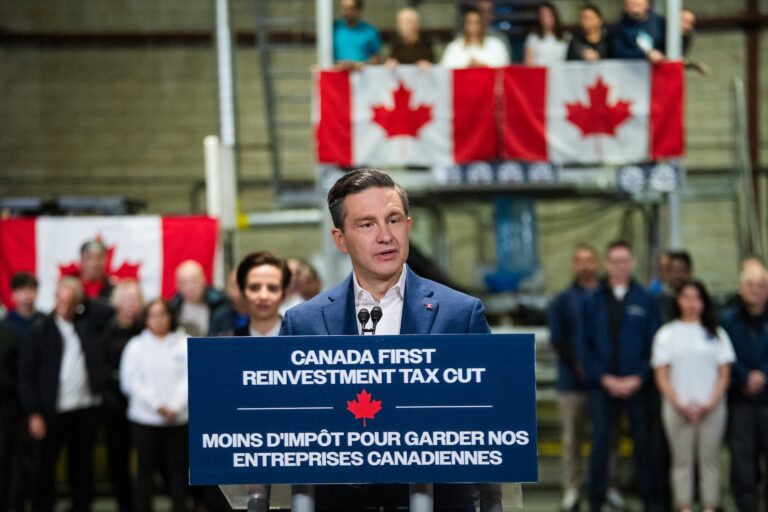
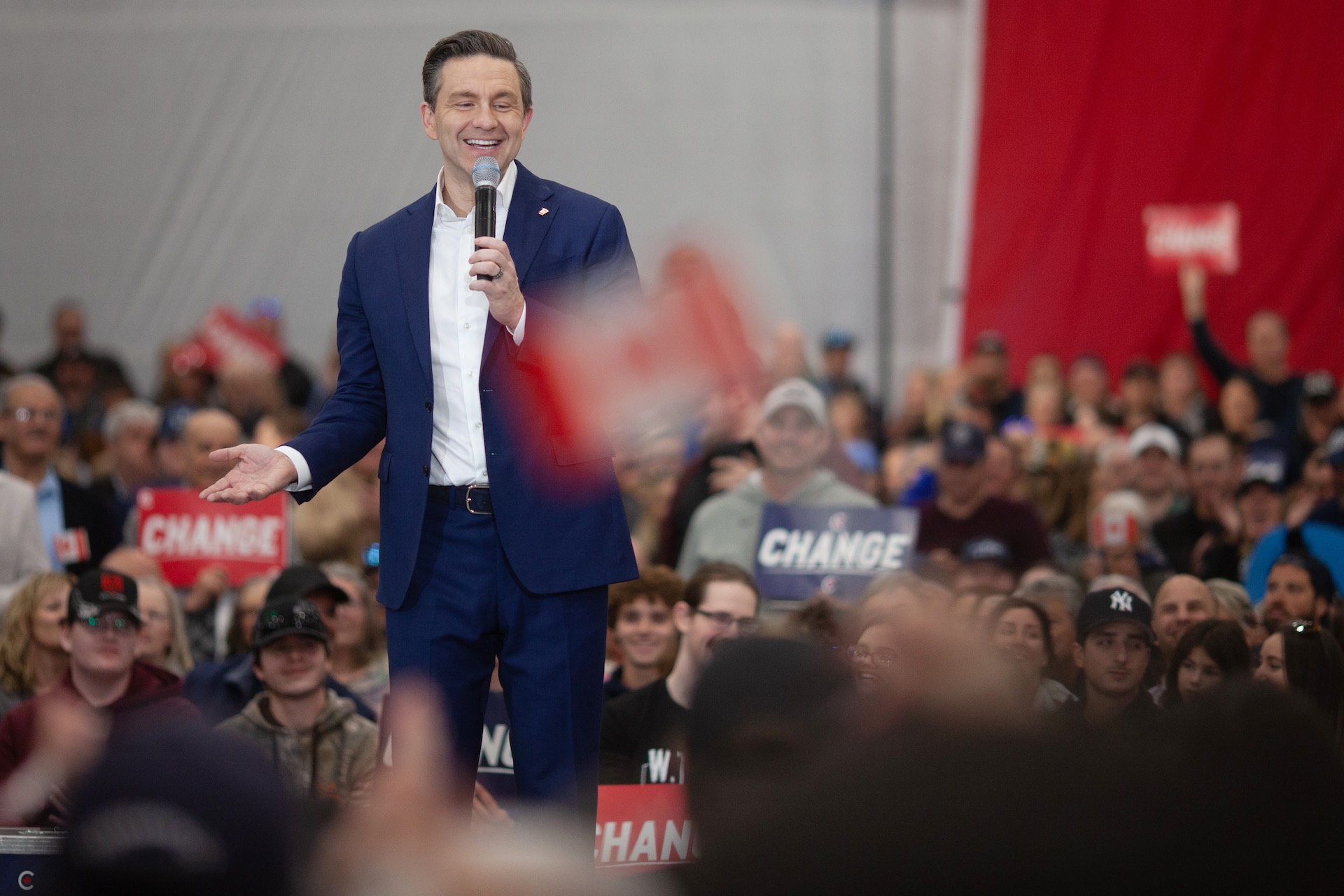 Pierre Poilievre uses wordplay and patriotic slogans to stoke up crowds at events like his recent rally in Windsor, Ont. Photo: The Canadian Press/Dax Melmer
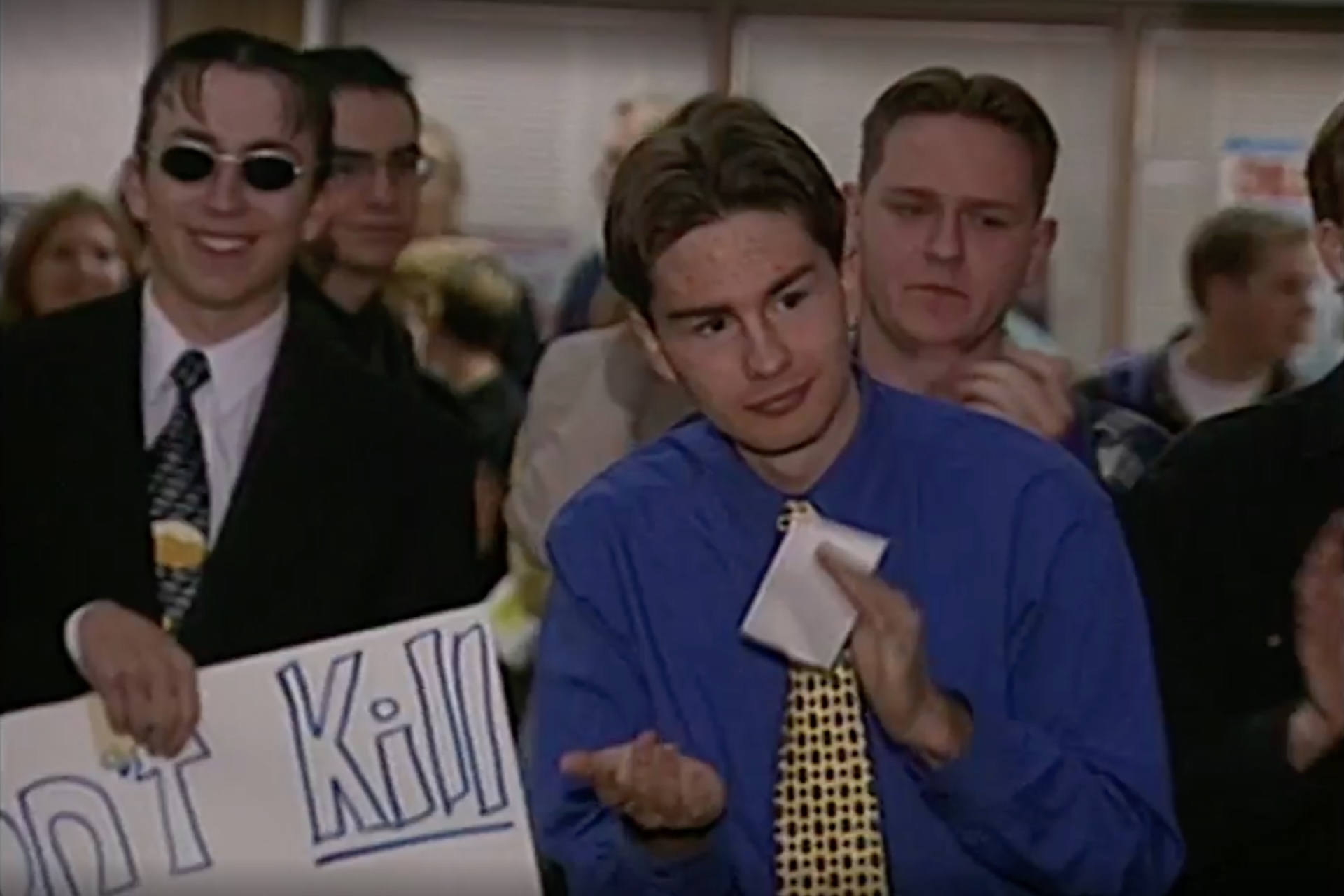 Poilievre clapping during a Reform club speech at the University of Calgary in 1998. Photo: Screengrab via CBC News
 Poilievre, far left, at a conference in 2000 with Tara Katrusiak, centre, and other young conservatives including Andrew Scheer, second from right. Photo: Republished with express permission of Ottawa Citizen, a division of Postmedia Network Inc.
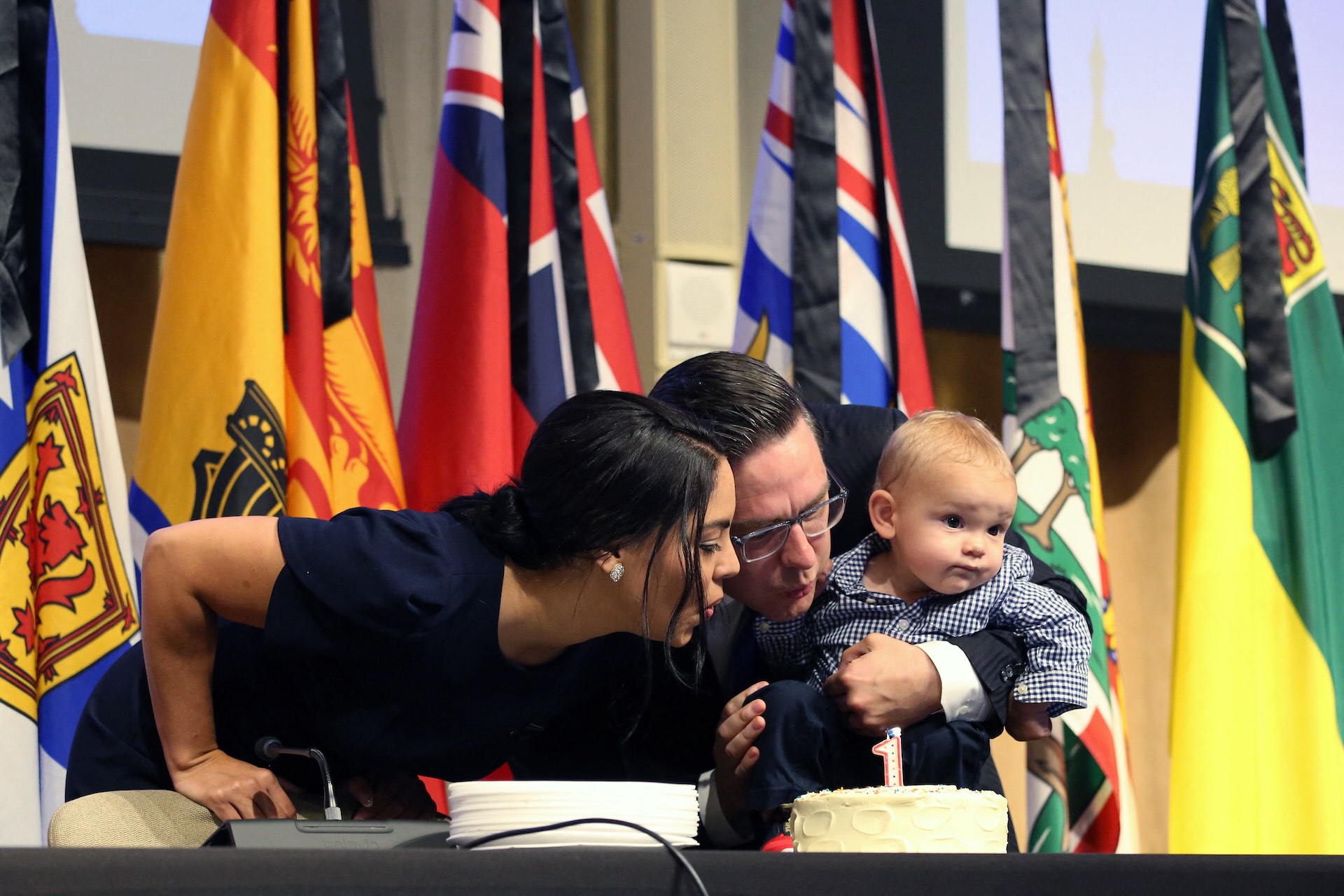 Poilievre and his wife Anaida celebrate their son Cruz's birthday during a Conservative national caucus gathering in Ottawa. Photo: Getty Images/Dave Chan
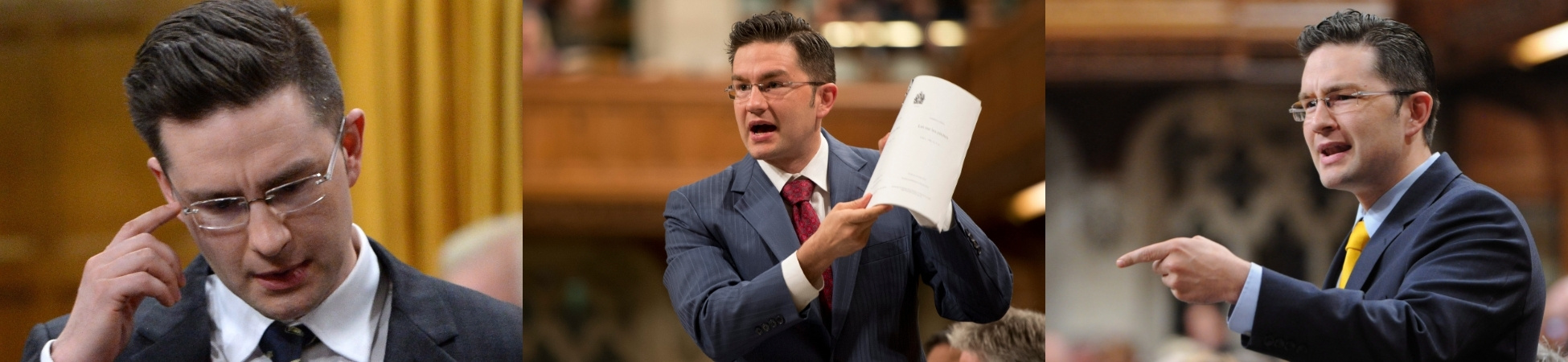 Poilievre quickly made himself indispensable to his party in the House of Commons. Photo: The Canadian Press/Sean Kilpatrick and Adrian Wyld
 Poilievre's leadership run tapped an appetite among party members for undiluted strain of conservatism. Photo: Getty Images/Nurphoto

The Big Read
Pierre Poilievre’s 25-year quest to make Canadians see things his way
The Conservative leader’s tax-chopping, anti-government agenda harks back to his days as a right-wing campus activist. He’s not about to give it up now.
Photo: Illustration by Remie Geoffroi for The Logic
Swap out the maple leaves for stars and stripes, and the Conservative rally in Canada’s automotive capital had all the hallmarks of Donald Trump’s signature events.
A massive crowd packed an unfinished warehouse in Windsor, Ont., down the street from the Stellantis assembly plant where workers had been idled by the U.S. president’s trade war. Some supporters arrived with flags draped over their shoulders, or wearing sports jerseys as a show of national pride. Others showed up waving signs carrying the oft-repeated slogans of their leader, who got a rock star’s reception as he stepped onto the riser at the centre of the room.
Talking Points
- Conservative Leader Pierre Poilievre’s dedication to ideas he’s held since he was young has defined his political career and the campaign he hopes will carry him to the Prime Minister’s Office
- Those who’ve worked with closely with him say he’s known exactly what he’s wanted to accomplish for decades, and he’s not likely to deviate from that plan—even if political fate seems intent on blowing him off course
“Great sign,” Poilievre said, pointing to a bristol board with his “Axe the Tax” motto scrawled across it. “We’ve got some good signs, very smart people in Windsor.”
Most, though, waved signs carrying a single word: change. Surrounded by supporters on all sides, and framed by a massive Canadian flag, the word hung over him. “Who is voting to put Canada first, for a change?” he asked the hundreds of fervent supporters.
Though his events are drenched in Canadian symbols, Poilievre’s words are a reminder of the high-wire act he is attempting on his way to Monday’s federal election. His promise to counter Trump’s “America First” agenda with a “Canada First” plan carries undeniable echoes of the thing it purports to oppose—and the callbacks don’t stop there.
Like Trump, Poilievre’s most potent messages are crafted as rhyming or alliterative slogans and insulting nicknames (Spike the hike! Carbon Tax Carney!) and he’s much more likely to reach for a metaphorical sledgehammer than a scalpel to make a point. Like Trump, he’s promised sweeping cuts to taxes and foreign aid and plans to shrink the public service.
Related Articles

Poilievre’s refusal to shift in tone and message stirred dissent among Conservatives from the start of the campaign. How can they claim to be an antidote to Trump, veteran Conservatives have asked, when their leader sounds so much like the U.S. president? But it also highlighted a feature of Poilievre’s temperament that has shaped his political career, and is likely to influence how he’d govern should his party win. Far from pivoting, he has insisted that his combative style and affinity for catch phrases predate Trump’s presidencies, and are deeply rooted in Canada’s own political history.
The “Canada First” slogan isn’t a ripoff of Trump’s rallying call, but an homage to a 1904 speech by the Liberal prime minister Wilfred Laurier, appealing to Canada’s young men to boldly pursue Canadian development and freedom in the 20th century. And while Poilievre, 45, has struggled against comparisons to Trump for years, the same populist policy ideas laid out in that hour-long speech in Windsor, and at rallies across the country, have been driving him since he was a young man.
Poilievre did not respond to a request for an interview for this story, and his office would not allow anyone on his team to speak publicly. The Logic did, however, speak with more than a dozen of Poilievre’s current and former political colleagues and staff. Many refused to comment on the record, for fear of rebuke from the campaign. Yet all agreed he’s pursued his ideas with a single-minded zeal in preparation for this election and the highest elected office in the country. Poilievre shows no sign of wavering, they say, even as it’s become unclear whether the same ideas that propelled him through the ranks of his party to the top of the polls will deliver victory now that the moment has changed.
Since MPs departed Ottawa in December, after all, the political landscape has transformed. Poilievre’s years-long nemesis Justin Trudeau made way at the helm of the Liberal party for former Bank of Canada governor Mark Carney, undermining the Conservatives’ call for change at the top. Trump’s crushing tariffs and threats against Canadian sovereignty turned attention away from the issues of affordability and taxation that served as the foundation of Poilievre’s message. Seemingly overnight, the Conservatives became underdogs in an election they’d been poised only months earlier to win in a landslide.
Pundits and party insiders have called for a strategy shift to respond to the new political reality. But in a February speech to supporters in Ottawa, Poilievre scoffed at the idea of altering course. “The media is now saying that I should change my entire platform because of the tariff threat,” he said, soliciting jeers from the crowd. “In fact, the Trump tariff threats have proven Conservatives right on everything.”
Read More

Poilievre’s ideas are traceable farther back than those of most politicians, to a now famous essay he submitted to Magna International’s 1999 contest under the title “Building Canada Through Freedom.” In it, a 20-year-old Poilievre told Canadians for the first time what he would do as prime minister. The winning essays appeared in a book called @stake, accompanied by photos of young Poilievre and his pet corgi, Champ.
Some passages read like early drafts of his current campaign speeches. “A growing number of our brightest young people are fleeing to the United States, where they see more opportunity. To reverse these trends, Canada must capitalize on its innovation by allowing investment to flow unhindered through the economy,” Poilievre wrote. “If we are to retain our brightest minds, we must allow skilled workers to earn rewarding salaries, without losing half of their earnings to a punitive tax regime.”
“They were literally sleeping on mattresses in people’s basements as they’d go from city to city. They saw themselves as a sort of ragtag group of revolutionaries.”
The essay’s core ideas, including drastic tax cuts on income and capital gains, are now central pillars of Poilievre’s platform. His devotion to them goes back even farther, though, as does his contempt for what he describes as the neglected state of Canadian institutions and, most especially, government getting in the way of individual freedoms.
Poilievre was born to a 16-year old mother and adopted and raised by two school teachers in the Conservative heartland in Calgary. By the time he got to the University of Calgary he was already politically active—a gawky but outspoken member of the school’s conservative clubs and the Model United Nations, cutting his political teeth by trying them on his classmates.
The university was home to the so-called Calgary School, a group of four political science professors—Tom Flanagan, Rainer Knopff, Ted Morton and Barry Cooper—who shaped a brand of Conservative thought that informed the policies of the Reform party, the right-wing populist movement born in the late 1980s of western alienation and desire for small government and low taxation.
The school’s Reform club announced it would take the student union to court in 1998 after its club privileges were revoked over unauthorized posters and stickers on campus. While the student union decried the court threat as “legal terrorism,” Poilievre, the club’s vice-president, protested the sanctions at a rally where supporters delivered eulogies to freedom and democracy. The club members and their supporters marched through the halls of the campus past “speakers’ corner,” an unofficial debate ground where Poilievre honed his sparring skills and knack for political communications.
There, news cameras recorded a young Poilievre applauding the speeches while wearing a kind of young conservative uniform: a bright blue-collared shirt and golden-yellow patterned tie. The event attracted the notice of Jason Kenney, a Reform party MP for whom Poilievre went on to intern in Ottawa.
Poilievre later recalled the quarrel as one of his early battles with the “far left,” and he has been dedicated to that ideological struggle ever since. As a young, ambitious foot soldier, he looked to Alberta cabinet minister Stockwell Day as his first general.
In 2000, Poilievre and a group of likeminded college kids attempted to recruit Day to run for leader of the new Canadian Alliance party—the Reform party successor meant to unite the country’s schismatic conservative movement—and promised to help him get elected. Day says he was struck by Poilievre’s “lack of fear.”
Breaking from the party’s founder, Preston Manning, was a renegade move in Poilievre’s circle at the time. The young university upstart was drawn to Day’s genuine distaste for overtaxation and regulation. Day recalls thinking: “Here’s a guy who really feels strongly about something. He has a sense of purpose.”
Even then, Poilievre was certain about the kind of government he wanted in Ottawa and was willing to hustle for it. He and his group of young, conservative male teammates, many of them still too young to vote, posted up in what The Globe and Mail described at the time as a nondescript Calgary office building filled with banks of telephones to make fundraising calls for Day’s campaign. Day’s devotees even branded their efforts with a nickname.
“Boys and girls, we got $500 here!” Poilievre hollered when 19-year-old Oliver Bladek scored a donation from Ponoka, Alta., the Globe said. “Way to go, Ollie. You’re in Fight Club.”
“It’s the view that politics is more than just a debate over policy and values, it’s something more than that. The stakes are higher.”
The team’s moniker was a reference to the David Fincher film that came out the year before, and Poilievre filled Brad Pitt’s role of Tyler Durden, the charismatic ringleader of a group of disaffected men who join an underground fight club. Presumably, the comparison did not extend to the later half of the film, when the club devolves into a violent, anti-consumerist terrorist organization dedicated to overthrowing modern civilization.
“At the start—the early days, you know—some of these guys, they were literally sleeping on mattresses in people’s basements as they’d go from city to city, setting up the organization and working late into the night,” says Day, who wound up winning the leadership. “They saw themselves as a sort of ragtag group of revolutionaries.”
That sense of mission never seemed to fade for Poilievre, even after Day led the Alliance to defeat in the 2000 federal election, winning the Liberals a third straight majority. Stephen Harper took over the Alliance shortly after, and united the party with the Progressive Conservatives in 2003 to form the Conservative Party of Canada.
It was in that period of uncertainty and political transformation that Poilievre arrived in Ottawa. In 2002, he had dropped out of his international relations program just a few credits shy of graduation. He’d instead gone to work for Day, who was serving under Harper as foreign affairs critic. The young staffer would go on to finish his courses in 2008, but never left Parliament Hill.
“Even in days of yore, when we were all like 20-something young politicos, he always had that particular drive and focus that made him stand apart,” says Yaroslav Baran, the co-founder of political consultancy firm Pendulum. The two got their starts in Ottawa as eager young political staffers at about the same time. But Poilievre, says Baran, “was always something of a ringleader among young conservatives.” His peers knew he was aiming for the heights of Canadian politics.
A photo from those days, taken at a conservative conference, captured a young Poilievre sporting frosted tips in his hair but wearing a blue shirt and yellow tie strikingly similar to the one he wore years earlier at the campus rally. He and fellow future Conservative leader Andrew Scheer are seen chatting with Baran’s future wife, Tara Katrusiak. Poilievre has often told Baran and Katruskiak’s children that he introduced their parents at that conference. Baran isn’t sure, but says with a laugh: “He has said it so many times now that I second-guess myself … I’ll take his word for it.”
Poilievre’s tight-knit group of fellow Reform party volunteers and Canadian Alliance staffers included not only Scheer—now one of the few Conservative members trusted to address the public on the party’s behalf—but other stalwarts of his current, rather selective inner circle. Chief among them is Jenni Byrne. His girlfriend during those early years on the Hill, Byrne is now his most senior adviser and campaign manager.
Byrne was a fierce political operative who eventually served as Harper’s deputy chief of staff. They shared a view of politics and the world, and Poilievre even got her a corgi of her own, named Ty.
Like Byrne, Poilievre hails from the populist tradition of the Reform party, which Baran says targets elite institutions, big corporations and big government. He describes the outlook thusly: “Just because government tells you something, doesn’t mean it’s true. Just because the big banks tell you they’ve got your back, doesn’t mean they do, you know, and being sensitive to ordinary people getting squashed by large economic or political or governmental forces.”
Though Poilievre and Byrne broke up after about a decade, they emerged as a political power duo again years later when Poilievre sought a like-minded team to run his leadership bid. “He had a very strong vision for what he wanted to do, and therefore attracted those types of people,” says Ginny Roth, who worked as Poilievre’s director of communications during the leadership campaign. “We were all kind of clear on the mission from day one.”
Roth hadn’t formally met Poilievre when he reached out to hire her. “I thought he was sort of calling around for support,” she says. “It was a conversation that, in retrospect, is totally him. There were not a lot of pleasantries. We just jumped right into a really substantive conversation about what he should be running on, what the opportunity was, how we win the next election as Conservatives.”
While some politicians expand their influence by building personal connections throughout their career, Roth says Poilievre isn’t a “relationships person” in the same sense. “I think he’s very seriously in love with his wife [Anaida] and obsessed with his children, and I think he has a few old friends that he has remained very, very close to, and that’s sort of it,” she said. “I think his life is very, very optimized towards his singular obsessions.”
It’s been clear what Poilievre’s most singular obsession has been over the last few years, as he’s campaigned to become the prime minister. To that end, Roth says, he pushes himself to connect with people at his rallies and public appearances—something she said she admires because it doesn’t come naturally to him.
Roth was living in Toronto and had been working for Poilievre for months before she met him in person. He was in town for a rally at the Steam Whistle brewery, shaking hands and taking photos with a long line of supporters. Roth stopped in to see the crowd, and walked past the photo line with a wave before heading back out into the rain. She heard someone yell her name and turned to see Poilievre sprinting toward her to give her a hug.
“I thought it was just funny at the moment,” she recalls, “because it was like, ‘You’re such an automaton, almost, about how obsessive you are on your various things that you’re focused on, and your performance in a given day.’ It was extra meaningful for that reason.”
Since he took over, the party has been steered by Poilievre and a small group of advisers in an approach that Alex Marland, a politics professor at Acadia University, describes as top-down even by today’s standards. “I think the expression that some people would use is command and control,” says Marland, who holds Acadia’s Jarislowsky chair in trust and political leadership.
Building parties around their leaders and centralizing decision-making in their offices has become a mainstay of modern politics, Marland says, and was a feature of both the Harper and Trudeau governments. It has allowed Poilievre to shut out political noise to calibrate his messaging, Marland says, but can leave elected MPs without a voice, contributing to political polarization. “The real problem is the fact that we end up electing so many MPs who are terrified to say the wrong thing, who rarely ever question anything.”
The election campaign has provided a preview of that risk to Poilievre, whose strategy seemed sound until Trump upended Canadians’ priorities and Carney entered the race. The Conservatives’ slide in the polls was met with alarm bells among senior party members outside Poilievre’s team. Several spoke out anonymously about the campaign’s continued focus on the Liberal government’s record rather than on Trump. Though Poilievre made subtle adjustments, taking more direct aim at Trump’s trade threats and “51st state” talk, critics inside the party are frustrated that his small circle seems unwilling to listen to their concerns.
Poilievre sounds unswayed. “All the things that we need to do to respond to the economic aggression of the Americans are things I’ve been talking about for 10 years,” he said recently on the campaign trail. “I’ve stood up for tax cuts that will unleash growth in our economy over the last 10 years—in fact, over my entire career. The unjustified threats by President Trump further strengthen the argument in favour of the Canada-first agenda that I’ve been fighting for my whole life.”
Poilievre does occasionally look outside his immediate circle for advice, Baran says, especially to political veterans with enough distance to reflect. Day has received such calls. So did the late Brian Mulroney, the prime minister who set Canada on a course of liberalized trade by signing a deal with the U.S. in 1988.
“He often turned to my dad for political counsel,” Mulroney’s daughter and Ontario Treasury Board President Caroline Mulroney said 11 days into the campaign, as she introduced Poilievre for a speech in Toronto. Her father was one of the first people to contribute to Poilievre’s first election campaign, Mulroney said. In his speech, Poilievre remarked: “I wish I could pick up the phone and seek his advice right now.”
As the election campaign neared the halfway point, another former Conservative prime minister lent a hand. Some 12,000 supporters by the party’s count crammed into a massive warehouse not far from the Edmonton airport in Nisku, Alta., in what may have been the biggest political rally since Trudeaumania gripped Canada in 1968. That night, Stephen Harper made his first campaign stop in a decade to endorse Poilievre for prime minister.
“I have known Pierre Poilievre for a quarter of a century, since he was a very young man,” said Harper. He rattled off the progression of positions Poilievre has held, in a way that framed the leader’s status as a lifelong politician as a positive. “In all of those roles, he worked, he fought and he learned. Because it is not just that Pierre excelled in all of those roles. In all of them he grew, he got better and better,” Harper said.
Still, Poilievre is better known for following his own judgment when it runs counter to conventional wisdom—and doggedly seeing it through. Day recollects him as a young staffer stopping by on a January evening after working late to discuss running for Parliament.
“I said, ‘Well, that’s great. You’re well known in Calgary,’” Day recalls. But Poilievre said he wanted to run in Ottawa, in a riding held by a popular Liberal cabinet minister, David Pratt. He spotted an opportunity to unite right-leaning constituents in Nepean-Carleton in west Ottawa, whose votes had previously been split between the Alliance and the Progressive Conservatives, effectively handing the Liberals easy wins. Still, even winning the party nomination against five other candidates, experienced politicians among them, was a long shot for Poilievre, Day thought. “I asked a quiet prayer of forgiveness to myself, and said, ‘Sure, it’s a great idea.’”
According to Day, Poilievre worked long hours at his regular job on Parliament Hill and then drove to the rural and suburban neighbourhoods in Carleton to knock on doors. That was the last time Poilievre ran an underdog campaign. His slogan at that time was “Rock Solid Conservative.” He referred to his opponent by the dismissive nickname “Liberal Pratt.”
“He was willing to put up with hardship to get his message out,” says Day, “and he did it, won the nomination, won the election, and the rest is history.”
At 25, Poilievre was among the youngest MPs elected in 2004. Poilievre’s first speech in the House of Commons, usually reserved for lauding a constituent or local cause, was a scathing condemnation of then-prime minister Paul Martin and his political appointments. “Since taking office the prime minister has engaged in a smorgasbord of patronage that is so impressive it would make even his predecessor blush,” Poilievre said, adopting a rhythm now familiar to his opponents. “If this new king of cronyism will not stop the Liberal bonanza, the only thing Canadians will condemn to history is his government.”
Without private sector experience or even a university degree, Poilievre made himself indispensable with his sharp tongue and undiluted partisanship. Andrew Lawton, Poilievre’s biographer and now a Conservative candidate, wrote in his book that when the Conservatives formed government in 2006, Poilievre became part of a semi-secret club of MPs within the party’s ideological right. It was known by several names, but “ultimately came to be known as the ‘Khmer Bleu,’ a tongue-in-cheek play on the Khmer Rouge, the Cambodian communist regime of the 1970s.”
The group’s goal was to offset the influence of Red Tories and Quebec Conservatives, who Poilievre felt had an outsized influence in caucus meetings. The group of staunch conservatives claimed credit for Harper’s decision to cut the GST to five per cent, Lawton said.
Poilievre’s ardour for fiscal restraint has remained constant through his decades in Parliament. At his campaign rally in Windsor, he delivered a well-practised economic lecture on inflation like a veteran rock act performing its greatest hit. “You see, the costs are not going up. The buying power of your money is going down. That is what inflation is, and it’s all the result of massive overspending in Ottawa,” he said, to a swell of cheers.
Carney, a former central banker twice over, accused Poilieve at the outset of the campaign of preaching about the economy without the knowledge to back it up, having spent years in Ottawa earning a living from the public purse. “He’s that type of lifelong politician, and I have seen this type around the world, who worships at the altar of the free market despite never having made a payroll,” Carney said in his first speech as Liberal leader. He argued Poilievre lacked the real-world experience to steer Canada’s economy and take on Trump’s trade war.
Poilievre countered that he has “quite a lot” of experience that prepared him for the prime minister’s office. “I was the minister of jobs and housing in the Harper government, during which time housing cost half as much as it does today,” he said at a press conference before the official start of the election. “I helped Mr. Harper cut the GST, cut income tax, cut business tax and balance the budget. Over my time in Parliament I’ve been scrutinizing and studying the books on the public accounts committee, the operations committee, the finance committee.”
Without question, he’s been charged with some of his party’s thorniest files. In 2013, as Harper’s minister of state for democratic reform, Poilievre had to stickhandle changes to the Senate to impose fixed terms on senators and consult provinces on appointments (which were ultimately deemed unconstitutional) amid a scandal involving inappropriate expenses of three Harper-appointed senators. That meant trying to put a positive spin on the prime minister’s chief of staff cutting Harper-appointed Sen. Mike Duffy a $90,000 personal cheque to cover inappropriate expenses billed to the government.
He ushered in controversial reforms to crack down on election fraud in what came to be known by critics as the “unfair elections act.” The legislation eliminated the ability for people without identification to vote even if they were on the voters’ list and had someone to vouch for them. The bill raised constitutional concerns, but in hearings and debates, Poilievre kept on the rhetorical offensive, frustrating opposition members. Wayne Easter, the Liberal MP for Malpeque, P.E.I., likened dealing with him to playing chess with a pigeon. “He flaps his wings all over the place, knocks the pieces off the table, messes all over the table, then struts around like he won the game,” Easter said in the House, flapping his arms like a bird.
Baran says Poilievre’s style in the House has mellowed, noting the leader has adopted a more “deadpan” tone, infuriating his opponents without raising his voice. In Baran’s view, that could prove useful: “He’s a glib and sharp communicator. I think that’s going to be very important in facing off with Donald Trump and his economic attacks on our country.”
Others argue that Poilievre’s sharp tongue, personal attacks and hyperbolic style still make him seem like the U.S. president. “On important issues, Poilievre, like Donald Trump, sees politics as a zero-sum game,” wrote another Poilievre biographer, Mark Bourrie, in his book Ripper: The Making of Pierre Poilievre.
His reflexive instinct to score a point has been known to land him in trouble. On the same day as Harper’s historic 2008 apology for residential schools on behalf of the Canadian government, Poilievre told an Ottawa talk-radio host he wasn’t sure the government was “getting value for all of this money” spent to compensate residential school survivors. “My view is that we need to engender the values of hard work and independence and self-reliance,” he continued. “That’s the solution in the long run—more money will not solve it.” He apologized in the House of Commons the next day.
If there was one moment when Canadians noticed a change in Poilievre, it was in 2023 when he launched onto the summer BBQ circuit as Conservative leader. The collared shirt and tie he’d sported since university had been replaced by a sport coat and T-shirt. His specs were replaced with aviator sunglasses.
“My wife says I look better without glasses, so I have to keep her happy,” Poilievre joked at a stop in Niagara Falls, Ont. After more than a decade in the public eye, the difference was so stark it made headlines and inspired sketch comedy bits.
The Conservatives had struggled to find their footing after being cast back into opposition in 2015, when Trudeau led his party to a comeback victory. After Scheer led the party to defeat in the 2019 election, Poilievre considered running to succeed his longtime friend, according to Lawton, but ultimately decided against it for family reasons.
Eighteen months after that leadership race, though, and a Conservative election loss under Erin O’Toole, Poilievre mounted his campaign for the helm of the party, tapping an appetite within it for uncompromising conservatism. With a chance at last to put his ideas to work, he decisively won.
The following summer, 2023, saw Poilievre surge in opinion polls as the public soured on Justin Trudeau. His message was built on foundational principles he developed early on as a political volunteer and activist in the reform movement: supply-side solutions like lower taxes and less regulation; and conservative mainstays like getting tough on crime. He summed them up in a list of pithy slogans: “Axe the tax, build the homes, fix the budget, stop the crime.” As the Conservatives’ lead over the Liberals widened, he rattled off the list almost daily.
His approach to policy is much more involved than those few words imply, says Roth, who does not have a role in his current campaign. “If he confronts a new challenge, he first goes back to, what are the first principles here?” she says. “Then he kind of goes into data- and evidence-gathering mode, and really tries to consume a lot of information from trusted sources.” Often, Poilievre does that data gathering himself until he feels like he’s personally on firm footing, she adds. Lastly, Roth says, he thinks about the politics.
The housing issue is a prime example, she says. “A lot of politicians, for a long time, might have thought it’s the right thing to do to increase housing supply, but the boomers will get mad at us,” she says. “I think Poilievre was like, ‘No, the principle and evidence are so compelling that if we can make the politics work, we should.’”
That put Poilievre into a position not of simply following the votes, but convincing the public of his position and finding new demographic groups, like millennials, to grow his tent. Even after his poll numbers softened at the start of the current campaign, his support among young men remains strong.
That process, based on Poilievre’s ingrained principles and worldview, is likely to inform how he would run his office if his party wins, says Dan Robertson, Harper’s former director of strategic communications. The two worked closely together during Robertson’s time in government under Harper, and again under O’Toole in 2020. They had a weekly standing phone call until a few years ago, when O’Toole demoted Poilievre from his role as finance critic. Poilievre’s current campaign bears a close resemblance to the ideas the two used to chat about in those calls, says Robertson, who is now a political strategist and co-founder of Orb Advocacy.
Watching him put those ideas to work now makes Robertson think a prime minister Poilievre would take cues from Harper, who resolutely kept his government focused on core economic priorities amid upheavals like the war in Afghanistan and the Senate expense scandal. “As this whirlwind was taking place above it all, you could discern that constant narrative, and I think that you’ll see that with Poilievre, maybe even to a greater extent,” Robertson says.
There’s a risk, though, over-indexing on consistency and planning, he says. Unexpected crises—like, say, the election of a U.S. president bent on taking shots at Canada’s economy— can knock governments off track. Robertson quotes the boxer Mike Tyson’s famous axiom: “Everybody has a strategy until you punch them in the face.”
The rigidity is born of an understanding of politics as “bloodless civil war,” says Robertson—an outlook he believes Poilievre shares with Harper. “It’s the view that politics is more than just a debate over policy and values, it’s something more than that. The stakes are higher,” he says. Poilievre, perhaps more than any politician the country has seen, relishes political combat, he adds. “His leadership style as prime minister would be characterized by discipline, intensity and an uncompromising laser-sharp focus on execution.”
The country’s business establishment got a taste of those battle-ready instincts when the Liberal government proposed last year to hike capital gains taxes. Corporate leaders, Poilievre said, were “blowing up” his phone. “They yelp: ‘What are you going to do about this?’ My answer: ‘No. What are you going to do about it?’” the Conservative leader wrote in a National Post op-ed that scorned business groups for crying to him about unfavourable policy instead of making their own case to the public.
“Most are stunned silent by the question,” he wrote. “They had been planning to do nothing except complain and hope their useless and overpaid lobbyists meet Chrystia Freeland or Justin Trudeau to talk some sense into them while the Opposition hounds the government to reverse course.”
The rebuke was published after the Liberals announced plans to hold a separate vote on the tax measure in hopes of forcing the Conservatives to publicly oppose a tax hike on the wealthy. To say the least, Poilievre’s response broke from the long-standing Conservative tradition of representing business interests. In the op-ed, he called for companies to cancel their lunch plans at the exclusive Ottawa Rideau Club, fire their lobbyists and “go to the people.” It was a throwback to his Reform party aversion to the clubby nature of Parliament Hill. Then, having inoculated himself against the charge that he’s a stooge for big business, he led his party in quietly voting against the measure.
In government, however, not every challenge would so clearly play to Poilievre’s strengths—especially dealing with Trump. From the moment the U.S. president began launching broadsides against Canada, Poilievre looked uncertain. Conservative elders like Harper’s former director of communications Kory Teneycke criticized him for failing to meet the moment; the leader was slow and grudging to move off the anti-tax, anti-Trudeau messaging that no longer preoccupied voters, Teneycke warned, and his words sounded borrowed from Trump.
In other ways, though, Trump’s threats have opened a door to Poilievre’s key policies. In the face of the U.S. president’s attacks, public opinion in Canada swung sharply in favour of more oil and gas production, and even the prospect of an east-west pipeline. When Poilievre finally did speak out against the U.S. president—calling his tariffs unjustified and confirming his plans to retaliate—Trump took notice. At the end of February, he took a shot at Poilievre when asked about the Canadian Conservatives’ prospects. “I think his biggest problem is he’s not a MAGA guy, you know? I mean, he’s really not, he’s not a Trump guy at all,” the president told British news magazine The Spectator.
Poilievre seized on those remarks on March 4, just as the U.S. was imposing its first round of tariffs on Canada. In the foyer outside of the House of Commons, where he’s spent his entire professional career, he stood flanked on both sides by Canadian flags. Prepared for the election that stood between him and the goal he’s worked toward for decades, he declared: “It is true, I am Canada first.”
Make what you will of the meaning of those words, or the implications for the country should Poilievre become prime minister. Just don’t ask him to change.



Loading...
Thanks for sharing!
You have shared 5 articles this month and reached the maximum amount of shares available.
CloseThis account has reached its share limit.
If you would like to purchase a sharing license please contact The Logic support at [email protected].
CloseGift the full article!
You have gifted 0 article(s) this month and have 5 remaining.
Recipients will be able to read the full text of the article after submitting their email address. They will not have access to other articles or subscriber benefits.
Photo: Illustration by Remie Geoffroi for The Logic
Pierre Poilievre uses wordplay and patriotic slogans to stoke up crowds at events like his recent rally in Windsor, Ont.
Poilievre clapping during a Reform club speech at the University of Calgary in 1998.
Poilievre, far left, at a conference in 2000 with Tara Katrusiak, centre, and other young conservatives including Andrew Scheer, second from right.
Poilievre and his wife Anaida celebrate their son Cruz's birthday during a Conservative national caucus gathering in Ottawa.
Poilievre quickly made himself indispensable to his party in the House of Commons.
Poilievre's leadership run tapped an appetite among party members for undiluted strain of conservatism.
Most Popular This Week




In-depth, agenda-setting reporting
Great journalism delivered straight to your inbox.
The Big Read
Alberta’s referendum is just the start of the turmoil
Briefing
EverWind plans $10B data centre and wind development in Nova Scotia
Canada ready to force Stelco to sell its Canadian operations, Joly says
Feds plan a 60 MW defence-oriented data centre for Ottawa
Best business newsletter in Canada
Get up to speed in minutes with insights and analysis on the most important stories of the day, every weekday.
Exclusive events
See the bigger picture with reporters and industry experts in subscriber-exclusive events.
Membership in The Logic Council
Membership provides access to our popular Slack channel, participation in subscriber surveys and invitations to exclusive events with our journalists and special guests.






