Sponsored Content
Collaborative transformation, in real life
Four key decisions enabling Canadian business leaders to work together and innovate through complex times

Erin Elofson welcoming business leaders and executives at the the inaugural Mastercard Innovation Forum on April 23, 2026. Photo: Uptown Media provided by Mastercard

Sponsored by:
Sponsored by:
The Canadian economy in 2026 is a study in complexity. Global trade is fluctuating and bifurcating, causing unease among businesses of all stripes. The rising cost of living has many consumers changing their behaviours. Artificial intelligence is taking hold, and transforming industries, at an exponential pace. (Consider that it took ChatGPT only five days after launch to reach one million users, one-fifteenth of the time it took Instagram in 2010.)
It’s a lot for any one business to navigate. Especially if they’re trying to gain market share and build consumer affinity. And especially if they’re going at it alone.
As the business leaders and executives assembled in Toronto for the recent Mastercard Innovation Forum shared, isolation and fragmentation have become material risks to progress. This new economic reality demands collaboration, non-linear solutions, and leaders willing to ask consequential questions about how they do business.
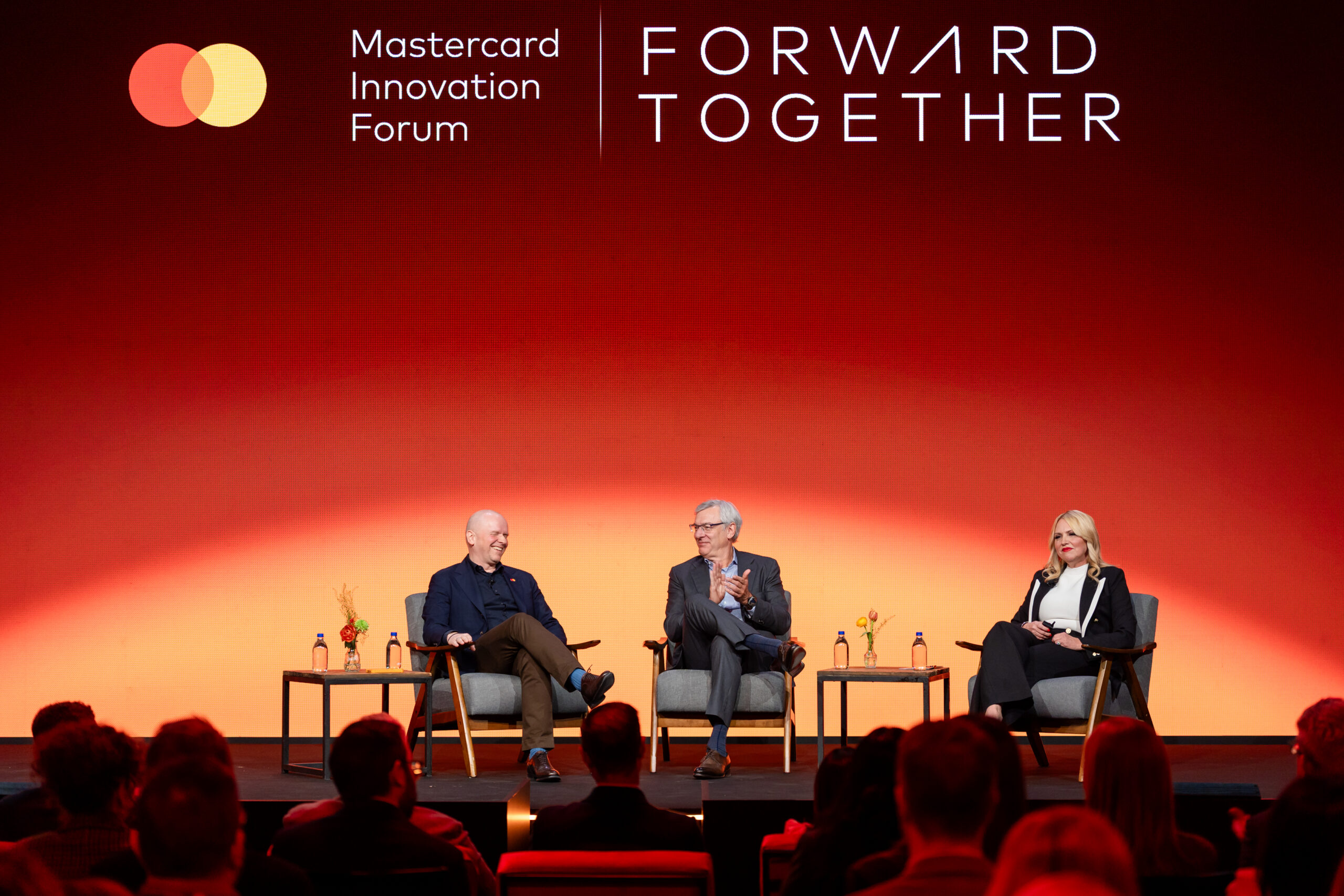
“The moment calls for leaders who are willing to work together, across ecosystems and countries, to succeed,” said Erin Elofson, President of Mastercard in Canada. “This leadership is what turns uncertainty into opportunity and business performance. It’s what turns technology into advantage, and expectations into loyalty.”
In practice, this kind of transformation requires innovators to make bold choices that sharpen focus, stoke trust, and encourage collaboration. Here are four decisions experts said can be differentiators in the age of complexity.
Related Articles


Recognize the opportunity
Amid a torrent of alarming economic and geopolitical developments, the first instinct of many business leaders is to rag the puck, stalling investments and initiatives until conditions are a little less volatile. As experts pointed out, such caution now carries its own risks.
That’s because a clear-eyed assessment of the landscape reveals a different picture than the daily news might suggest, according to Michelle Meyer, Chief Economist at the Mastercard Economics Institute. “These headlines can be scary, but they’re not unusual,” Meyer said. “We’ve been in a world of high uncertainty for a while, and consumers, businesses, have been adapting. They have been shifting behaviour and investments, and we think that will continue this year.” Indeed, even in the context of volatility, Meyer’s team expects Canada’s future growth to be supported by accelerating use of AI within companies, investments in major energy, defense, and infrastructure projects, and warm demand for Canadian goods and services (both domestically and abroad).
Meyer wasn’t the only leader identifying growth indicators. “If we want to talk about opportunity, we are seeing a seminal moment in our trajectory,” said Dave McKay, President and CEO of RBC, pointing to an 11-year high in foreign direct investment in Canada, driven largely by interest from Europe and the Middle East. “Right now, it’s risk-on Canada.” McKay stressed that two key variables will be needed to keep momentum going: The renegotiation of Canada-United States-Mexico Agreement, and the acceleration of major federal projects. “I think we’re on the right track, but there’s a couple of big steps that we need to get right,” he said.
Fundamentally, experts advised leaders to focus less on the chaos and noise surrounding this period of transformation, and more on the potential within it. “We see this moment as a really important inflection point,” said Elofson. “This is an era of defining what Canada stands for, how we compete, and how we lead this enormous opportunity for growth, innovation, and leadership.”
Get ahead of consumer needs
Modern consumer behaviour is a true rainbow, comprising everything from the optimism of Gen Zs and Gen Alphas, to the stresses facing sandwich-generation Gen Xers, to the legacy concerns of affluents of all ages. But experts identified some indelible traits common among all consumers in the post-pandemic world: People are increasingly drawn to experiences, especially those that are personalized. They’re deliberate in their choices. And they are highly inclined to reward the organizations that facilitate unforgettable moments with loyalty.
“Canadian consumers increasingly attach value to experiential benefits, as opposed to just cost,” confirmed Samantha Taylor, WestJet’s Executive Vice-President and Chief Experience Officer. “So, we’re asking, ‘How do we lean into this shift?’” In practical terms, at WestJet, that means ensuring that the basics are well funded and working smoothly, so everything from booking to de-boarding is as seamless as possible. It means reinforcing practices and processes that make guests feel great, the number-one reason the airline’s customers recommend it to others. It also means understanding that the rules of the past may no longer be relevant. “Younger consumers care more about travel than previous generations, and they want an experience,” Taylor said. “We look at that as an opportunity, which means we’re starting to sunset some older ideas of what types of product meet the needs of people who are just entering the market. It’s actually much more complex than that.”
Companies now have an imperative to provide great, and tailored, experiences to people across all income brackets, added Nick Bednarz, CEO of Rogers Bank. For some, that means granting VIP access to concerts (a perk available to Rogers Red World Legend Mastercard holders); to others, it’s less-flashy, but equally valuable, behind-the-scenes improvements. “Removing friction is a big focus for us,” Bednarz said, pointing to the need to reduce cumbersome fraud detection processes as an example. “I think we all lean in to what we know, and that’s how we stop bad things from happening. That’s something we need to collaborate on.”
Collaborative partnerships can help organizations identify the moments that matter to customers, and, as a result, design consistent experiences that keep people coming back, said Bunita Sawhney, Mastercard’s Chief Consumer Product Officer, Mastercard. “Together with our partners, we’re creating experiences that are relevant, human, and impactful.”

Leverage intelligence intelligently
With AI set to become the foundational infrastructure of business, and agentic commerce rapidly gaining traction, experts agreed that data-driven intelligence is becoming the new currency of certainty. “We emphasize the importance of high-frequency data,” said Meyer. “That’s because it’s important to be flexible, to be nimble, and to respond to what you see on the ground, knowing it’s an economy that is shifting fast.”
This is evident at Canada’s largest bank, which is investing billions of dollars in bolstering its data and AI capabilities, and which currently ranks third globally on Evident AI’s annual index of AI adoption in banking. “The more data you have, and the better organized it is, the better performance you’ll get from your LLMs,” said RBC President and CEO Dave McKay. “That makes a huge difference in value creation.”
Having spent more than a decade collecting and connecting data, and having used it as a foundation for organization-enhancing tools (including RBC Assist, the bank’s in-house GenAI, and Lumina, its internal enterprise data and AI platform), McKay’s focus is now on probing how AI can underpin a more substantial evolution at RBC. “How do you use these elements to radically transform your organization?” he asked. “How do you rethink your entire model?”
Collaborating with trusted partners can help unlock the possibilities inherent in these questions, in McKay’s view. “We learn from each other, we can move faster and create scale,” he said. “You see the results from partnering across so many different dimensions.”
It was a sentiment shared by Michael Miebach, CEO of Mastercard. “We focus on working with partners to create even greater value, ‘What can your data set and our data set do together?’” he said. While collaborating on matters of intelligence requires care, to optimize data, to establish rigorous governance of its use, and to ruthlessly prioritize areas of potential impact, Miebach said the potential upside is significant: “If we all do the work [to develop AI responsibly], there’s a significant opportunity there.”
Act now, and act together
Indeed, experts reinforced that the moment calls for more models born from lateral thought processes. “Right now, progress is built when we choose to do the hard work together, across sectors, roles, and even, sometimes, across competitive lines,” Elofson said. “The next chapter in Canada won’t be defined by individual success. It will be defined by how our ecosystem works together.”
This kind of collaboration is a choice, Elofson continued, and it takes leaders willing to lean into the discomfort of new and unfamiliar ways of doing things. “It’s about challenging the assumptions that keep us in silos, making connections, and exploring what’s possible,” she explained. “That’s where the magic happens.”
This content was paid for and directed by Mastercard and was produced independently of The Logic’s newsroom in consultation with the advertiser. You can read our policies on advertising, sponsorships and partnerships here.



Loading...
Thanks for sharing!
You have shared 5 articles this month and reached the maximum amount of shares available.
CloseThis account has reached its share limit.
If you would like to purchase a sharing license please contact The Logic support at [email protected].
CloseGift the full article!
You have gifted 0 article(s) this month and have 5 remaining.
Recipients will be able to read the full text of the article after submitting their email address. They will not have access to other articles or subscriber benefits.