Last year, Netflix laid off about 450 North American employees as the streaming service saw its first subscriber loss in over a decade. CFO Spence Neumann told investors the company experienced slower growth after the pandemic.
Skip to content

News
Why Canadian tech companies are keeping up the perks in a season of cuts
‘It’s way cheaper to give everybody a free lunch than to give everybody an adjusted salary based on inflation’
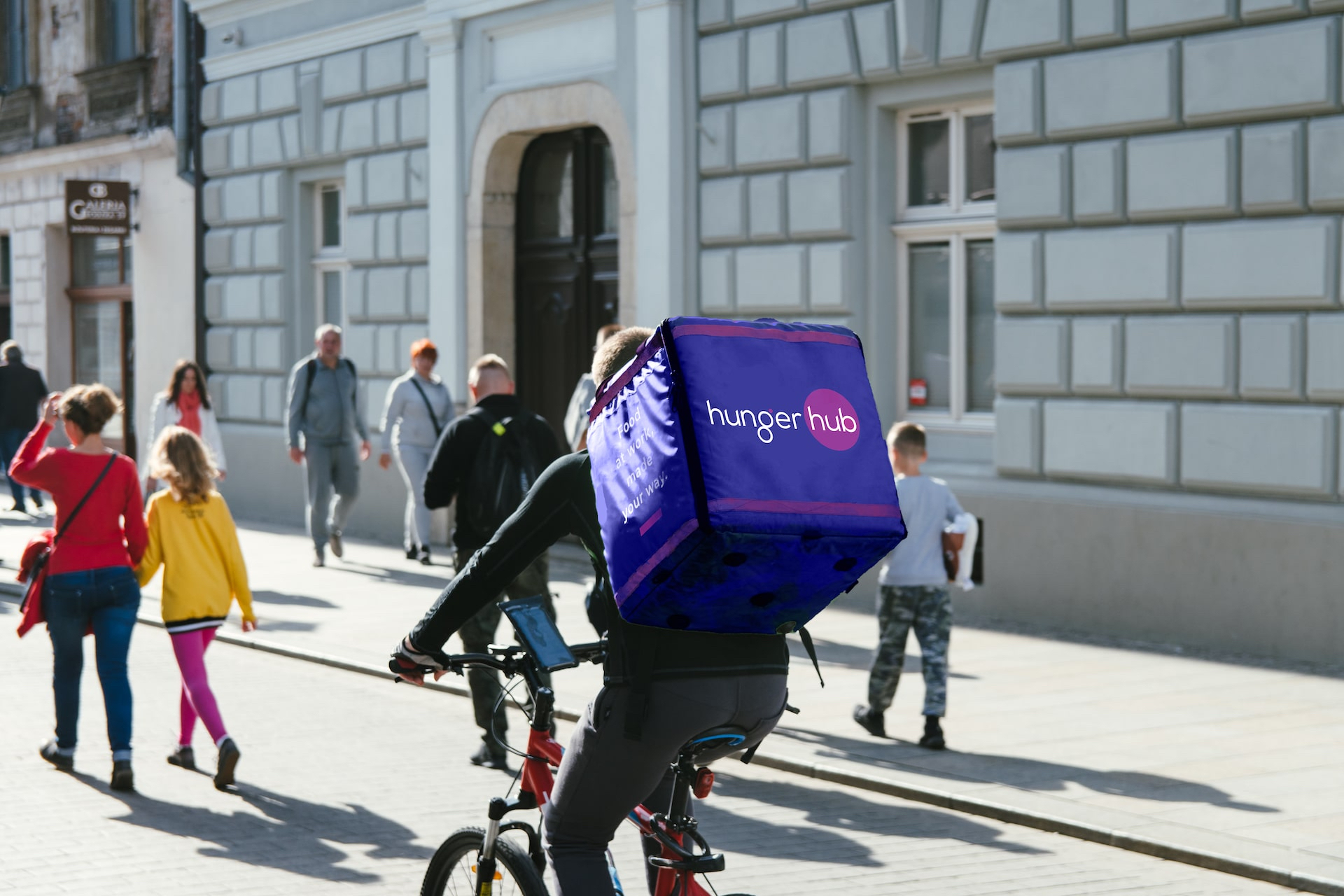
A Hungerhub delivery worker on a bicycle. Photo: Hungerhub/Handout
Last year, Netflix laid off about 450 North American employees as the streaming service saw its first subscriber loss in over a decade. CFO Spence Neumann told investors the company experienced slower growth after the pandemic.
Cost-cutting and revenue-generating measures would follow, in Canada and around the world. Over the last six months, Netflix has cracked down on password sharing in several countries, including this one, and cut prices in more than 30 others, while launching an ad-supported tier in Canada—a significant break with its longstanding ad-free subscription model. By late-March, the company’s stock had lost half its value, falling from its US$690.31-per-share peak in October 2021 to US$345.48 at the end of March.
Talking Points
- Canadian companies offer employee perks to retain employees, boost morale after layoffs and attract them back to the office despite the slower economy
- The perceived value of perks and benefits is higher than the actual costs, proponents say, and Canadian perks providers are bullish on the year ahead
Through all the austerity and financial headwinds, though, employees at Netflix’s Toronto office continue to enjoy a significant vestige of the boom times: an uncapped meal program provided through workplace catering service Hungerhub, where employees can order as much as they want (within reason), all paid for by their employer. Individual meals, each averaging around $18, come from a selection of local restaurants.
“It’s way cheaper to give everybody a free lunch than to give everybody an adjusted salary based on inflation,” said Sari Abdo, Hungerhub’s CEO (Netflix did not respond to an interview request). The perceived value of subsidized food to employees is so high that it’s one of the first things that companies do to keep workplace culture and retention, he added.
Netflix’s willingness to preserve the program reflects a continuing use of perks among tech employers in Canada, even as they reduce headcounts and other costs—a trend perk providers and human resource professionals attribute to the need to retain talent in a still-competitive labour market, and the goal of encouraging employees to return to the office.
Related Articles


Toronto-based Perkopolis, a one-stop-shop for companies to offer employees access to a variety of pre-negotiated discounts, has seen “incredible” growth over the past three years, said vice president of sales Richard Joynt. The company serves about 4,500 Canadian employers, receives roughly 20 applications for its service a week and plans to launch in the U.S. this summer, he said. “We’re trending up on all fronts for engagement and new companies coming on.”
It costs companies nothing to sign up—Perkopolis receives a commission every time an employee makes a purchase through the platform. Benefits of the service range from entertainment and lifestyle discounts to preferred rates on insurance and travel. Modest as those might sound, said Joynt, they’re a useful option for companies that want workers to feel appreciated but can’t afford to bump up salaries.
For other firms, especially in the tech sector, retaining valued employees means keeping an eye on what the competition offers. In many cases, that entails countering significant perks like daycares, free laundry and catered lunches provided by U.S. firms that go headhunting north of the border, said Andrea Bartlett, vice president of people at Humi, a Toronto-based HR software company. “Your likelihood of losing them to competition, whether it’s local or international, is pretty significant,” she said.
Food has proven a lasting attraction. About 45 per cent of Hungerhub’s 100-plus clients in Toronto are tech companies like Snapchat, Zynga and Airbnb, Abdo said. While many have been through recent layoffs, only one firm pulled out of Hungerhub, Abdo said. He believes companies are using subsidized food as a cost-effective way to boost staff morale after rounds of layoffs. On average, Hungerhub’s clients spend $1,800 a year per employee on food, estimated Abdo.
All of which has kept the company’s prospects bright. Having expanded to Calgary, Vancouver, Kitchener and Waterloo by the end of 2021, Abdo said he’s eyeing Ottawa and Montreal this year.
‘Once that month [of free food] was done they shut down the program, people stopped going back to the office and people started complaining.’
It also helps some companies cope with the paradox of today’s economy, where unemployment has held near five per cent for the last 12 months, yet a stagnant economy puts pressure on firms to cut costs. The larger the company in question, noted Abdo, the greater the cost implication of a pay raise. Compared to the cost of free food, he said, a 10 per cent across-the-board salary hike would be “an insane amount of money for a company that has 500 employees.”
Still, companies must be creative in delivering incentives, especially in an environment where many employees work remotely. At Humi, whose own workforce tripled from 45 in 2020 to 155 at the beginning of 2023, Bartlett took a “grassroots” approach to find out what workers wanted, developing novel perks like a “work from anywhere in the world” policy that staff can take advantage of for four weeks a year.
Karyn Xiong, an administrative associate with the company said flexible work policies make employees feel trusted, adding: “We’ve built a culture where you don’t have to clock in right at 9 a.m. or you’re going to get in trouble. As long as you get your work done, you meet your deadlines, then there’s no questions asked.”
The next test of the perk economy may be whether it can lure workers back to the office. A Colliers report in January found nearly two in five managers prefer to be fully in-office compared to just one-fifth of employees. Some 13 per cent of employees prefer fully remote work, compared to just four per cent of those in management. For some managers, closing that gap, and re-staffing the physical office, has proven a challenge.
One financial company offered free lunches at its Mississauga office through Hungerhub every day to its 250 employees in a month-long pilot program designed to attract workers back into the office, said Abdo. “Once that month was done they shut down the program, people stopped going back to the office and people started complaining,” he said. Two weeks later, the company reinstated free lunches, and the program has lasted for more than a year, Abdo said, adding: “It was a carrot and stick approach and we were the literal carrot.”
It was also a lesson in the difficulty of removing a perk once a company provides it. “Cutting costs signals to employees that things are bad for the business, which is usually what triggers them to either start looking elsewhere [for a] career cushion,” said Humi’s Bartlett. She suggested that companies look into cost sharing programs and figure out the cost-benefit of flexible work arrangements before cutting them off entirely.
“Ultimately, it all impacts the employee experience,” she said “So, if you are making changes without first understanding what your employees are looking for, that’s typically a signal to employees that my employer doesn’t value what’s important to me.”



Loading...
Thanks for sharing!
You have shared 5 articles this month and reached the maximum amount of shares available.
CloseThis account has reached its share limit.
If you would like to purchase a sharing license please contact The Logic support at [email protected].
CloseGift the full article!
You have gifted 0 article(s) this month and have 5 remaining.
Recipients will be able to read the full text of the article after submitting their email address. They will not have access to other articles or subscriber benefits.
Photo: Hungerhub/Handout
Most Popular This Week




In-depth, agenda-setting reporting
Great journalism delivered straight to your inbox.
Commentary
Carmichael: Canadian ignorance about India is a strategic weakness
Briefing
Aritzia shares pop after earnings rise 204%
First Nation in Alberta goes to court over fast-tracked oil pipeline
Chinese EV maker Geely Auto Group to launch in Canadian market in 2027
Best business newsletter in Canada
Get up to speed in minutes with insights and analysis on the most important stories of the day, every weekday.
Exclusive events
See the bigger picture with reporters and industry experts in subscriber-exclusive events.
Membership in The Logic Council
Membership provides access to our popular Slack channel, participation in subscriber surveys and invitations to exclusive events with our journalists and special guests.