Lightspeed, just over two years after going public, doesn’t want to be just a point-of-sale company. On Thursday, the Montreal-based company’s shareholders voted to approve a name change from Lightspeed POS to Lightspeed Commerce, reflecting its growing suite of products beyond its payment terminals for brick-and-mortar retailers.
Skip to content

Why Axis
Lightspeed looks beyond point-of-sale for future growth
Lightspeed CEO Dax Dasilva in Montreal in September 2019. Photo: Christinne Muschi/Bloomberg via Getty Images
Lightspeed, just over two years after going public, doesn’t want to be just a point-of-sale company. On Thursday, the Montreal-based company’s shareholders voted to approve a name change from Lightspeed POS to Lightspeed Commerce, reflecting its growing suite of products beyond its payment terminals for brick-and-mortar retailers.
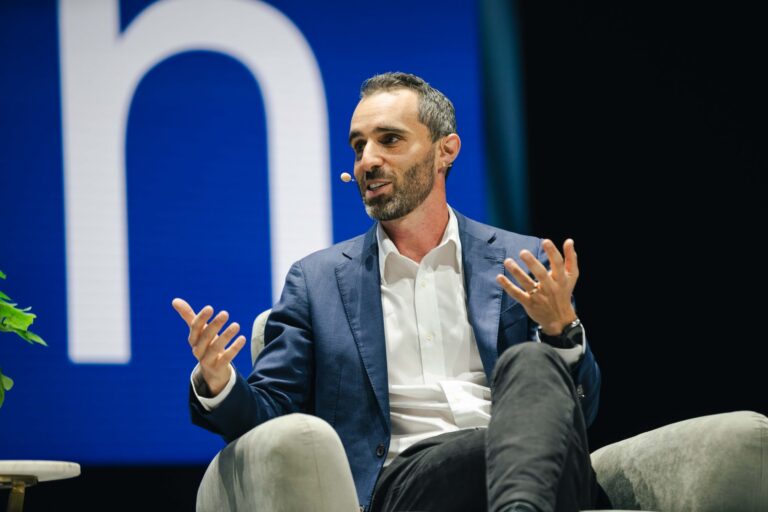
“Point-of-sale is one part of what we do for our customers,” CEO Dax Dasilva told The Logic. “We are a one-stop commerce platform.”
The vote comes as Lightspeed’s reported results for its first quarter that surpassed analysts’ expectations, benefiting from the reopening of many economies around the world and growth in its payments business. Shares hit an all-time high on Thursday, rising more than eight per cent to $121 on the Toronto Stock Exchange. Here are some highlights from the earnings report:
- Total revenue in the quarter was US$115.9 million, a 220 per cent increase year over year, driven by a combination of organic growth and acquisitions of NuOrder and Ecwid, the latter of which is seen as a potential competitor to Shopify. The revenue beat analysts’ consensus estimate of US$92.8 million.
- Net loss widened to US$49.3 million, from US$20.1 million. On an adjusted basis, Lightspeed lost US$6.9 million, or six per cent of revenue, compared with 7.5 per cent the previous year.
- Transaction-based revenue, which includes revenue from payments, was US$56.5 million, up 453 per cent.
On a call with analysts Thursday morning, Lightspeed’s management team highlighted its success in payments and lending over the last quarter. About 10 per cent of the total volume Lightspeed processed went through payments, a rapidly growing business segment for the company.
It eventually wants to have half of its customer base using its payments product, giving it more transaction-based revenue on top of the subscription fees that customers pay to use its products. This week, Lightspeed announced it’s launching payments in five additional markets in Europe—Germany, Switzerland, France, Belgium and the Netherlands—after launching in the U.K. in April. The company expects to become more profitable in proportion with the number of customers using payments.
Lightspeed said its lending business, Lightspeed Capital, is beginning to gain traction. The company made almost 430 loans to its customers in the quarter, with revenue from Lightspeed Capital up 68 per cent from the previous quarter, the company said.
“Lightspeed Capital had its best quarter so far, and we are starting to see numbers that are becoming meaningful,” Dasilva said on the earnings call. “We believe capital can become a very meaningful driver of growth, and especially profitability, in the long term.”
Lending and payments are just a part of what could eventually be an even larger stable of financial-services products Lightspeed offers its customers. Dasilva told The Logic that Lightspeed is considering how to offer tax services and payroll to its customers, either through acquisitions or partnerships. That said, the company’s next acquisition would likely be focused on technology rather than scale, president JP Chauvet said. Lightspeed spent nearly US$1 billion acquiring Ecwid and NuOrder this year, which allowed it to expand into e-commerce and supply-chain management.
As for making a foray into the rapidly growing buy-now, pay-later sector, Chauvet said Lightspeed won’t roll out anything in the next 12 months. Still, the company is gauging interest in BNPL through its partnerships with PayBright and Affirm, Dasilva said. Rival point-of-sale provider Square said this month that it was acquiring Australia-based Afterpay for US$29 billion, giving it a foothold in the BNPL market.
Lightspeed also signed some big deals in the most recent quarter:
- SpaceX and Telluride Ski Resort in Colorado are among the largest customers that have signed up to use Lightspeed for their operations.
- Lightspeed struck a partnership with OpenTable, allowing restaurant customers to make reservations that go directly into Lightspeed’s system. The integration also gives restaurants access to customer data such as the last dish they ordered, which business owners can use to tailor their customer experience, Dasilva said.
The strong results came with a note of caution: The spread of the Delta variant of COVID-19 could complicate Lightspeed’s operations in the near term. Still, the company is optimistic that the reopening will continue at an accelerated pace. It raised its outlook for its 2022 fiscal year to between US$510 million and US$530 million in revenue, from between US$430 million and US$450 million, and its adjusted EBITDA loss to roughly US$35 million, from US$30 million.



Loading...
Thanks for sharing!
You have shared 5 articles this month and reached the maximum amount of shares available.
CloseThis account has reached its share limit.
If you would like to purchase a sharing license please contact The Logic support at [email protected].
CloseGift the full article!
You have gifted 0 article(s) this month and have 5 remaining.
Recipients will be able to read the full text of the article after submitting their email address. They will not have access to other articles or subscriber benefits.
Photo: Christinne Muschi/Bloomberg via Getty Images
Most Popular This Week




In-depth, agenda-setting reporting
Great journalism delivered straight to your inbox.
News
Ottawa is softening its ban on stablecoin yield
Briefing
Rio Tinto gets nearly $165M in additional federal funds for Quebec aluminum
U.S. to lift tariffs on some Canadian products crucial to Maine: Collins
Carney warns of tech dependence after Starlink disruptions in Ukraine
Best business newsletter in Canada
Get up to speed in minutes with insights and analysis on the most important stories of the day, every weekday.
Exclusive events
See the bigger picture with reporters and industry experts in subscriber-exclusive events.
Membership in The Logic Council
Membership provides access to our popular Slack channel, participation in subscriber surveys and invitations to exclusive events with our journalists and special guests.






