Crypto Quarterly is The Logic’s recurring series assessing the overall state of the crypto market, with a focus on Bitcoin, Ethereum, Flow and Cosmos’s Atom, four cryptocurrencies with strong ties to Canada.
The crypto winter continued to place a chill on the sector in the third quarter of 2022, but signs suggest this downturn may not be as painful as previous ones.
Crypto assets have lost about two-thirds of their value from a peak of almost US$3 trillion in November 2021, with the asset class now worth a total of about US$1 trillion, according to CoinGecko. But big names on Wall Street including Nasdaq, BlackRock and Depository Trust & Clearing Corp. all announced major crypto moves in the third quarter. The White House released a framework for regulating the sector. Meanwhile, Ethereum, the second-largest cryptocurrency by market capitalization behind only Bitcoin, pulled off a technically complex switch away from energy-intensive mining to a different system for determining which transactions are valid, called proof of stake.
“You’re seeing progress, you’re seeing development, you’re continuing to see positive signs of regulation,” said Dean Skurka, head of exchanges at Vancouver-based crypto company WonderFi, which owns the cryptocurrency-trading platforms Bitbuy and Coinberry. “Compared to prior cycles, it seems like advancements are continuing to be made, which gives me hope for the other side of this when markets can settle down.”
One such sign of progress is divergence in the price of major cryptocurrencies. Of the four digital assets that The Logic tracks, three—Ether, Atom and Flow—ended the quarter with gains, with Bitcoin finishing roughly where it started. Atom, the native cryptocurrency of the Cosmos ecosystem, was a particular outperformer, surging about 60 per cent since July 1 to just over US$13 on Sept. 30. Cosmos is planning its own major upgrade, called Interchain Security, in January 2023.
Boris Wertz, founder of Version One Ventures, whose crypto-company investments include Coinbase and Dapper Labs, said the price of different crypto assets used to move more or less in lockstep. The fact they are diverging based on their merits is a sign of maturity, he said.
“The market is starting to recognize growing ecosystems that have dedicated developers and see tons of innovation happening,” he said. “The more people understand the underlying quality of these assets, the more that will be reflected in diverging price developments.”
Counterintuitively, based on that principle, Ether has lost about seven per cent of its value since the Merge on Sept. 15. Many analysts attributed this to the longstanding trading axiom “Buy the rumour; sell the fact.” The price of Ether started trending downward about a month before the well-publicized expected date of the Merge.
Ethereum uses 99.95 per cent less energy now that the Merge is complete, removing a major obstacle for investors trying to meet carbon-reduction goals. However, many of the network’s challenges, such as expensive fees, remain.
WonderFi’s Skurka said Ether’s price struggles since the Merge demonstrate the challenges posed by broader economic factors, such as rising interest rates and declining tech stocks. “The lack of general interest in the price of Ethereum leading into and following the successful Merge is just an indication of how difficult it is right now for crypto assets to break from the broader global narrative,” he said.
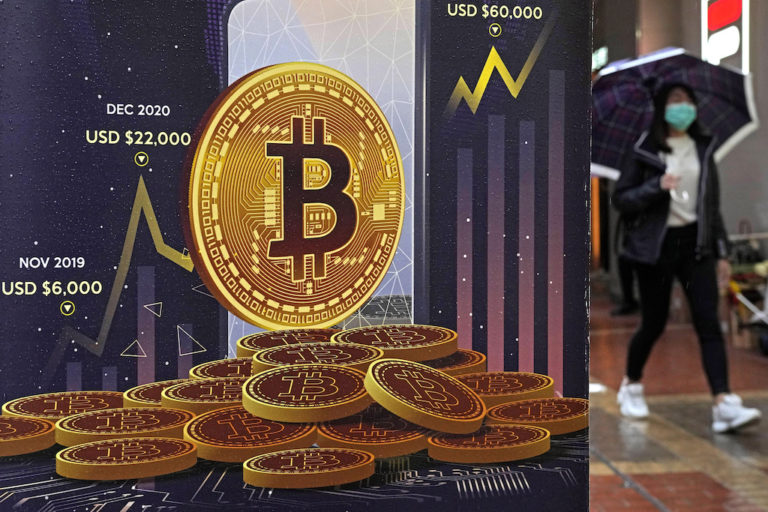
Bitcoin, the original and largest cryptocurrency by market cap, had an even tougher time. The digital asset finished the quarter at US$19,477, less than one per cent higher than three months earlier, but 71 per cent down from its all-time high of US$67,617 in November 2021.
In a note on Bitcoin in the third quarter from the crypto-research firm Messari, analysts Sami Kassab and Kunal Goel called the bear market “a narrative breaker and reality check for the top crypto asset.” They noted that Bitcoin has failed to act as a hedge against inflation, a key claim made by boosters including Conservative Leader Pierre Poilievre, who said in March that holding the digital asset would allow Canadians to “opt out” of the rising cost of living. Bitcoiners theorize the digital asset’s fixed supply and hard-money policy will one day allow holders to retain the value of their investment better than government-issued currencies in times of high inflation, a claim that has not held up so far.
Some publicly listed crypto companies had a tough third quarter, while others, such as Toronto Stock Exchange-listed Galaxy Digital, Ethereum ecosystem investor Ether Capital and Bitcoin miner Hut 8, saw some price recovery. Shares in competing crypto miner Bitfarms and Vancouver-based WonderFi, which owns the cryptocurrency-trading platforms Bitbuy and Coinberry, declined compared to the beginning of the quarter.
At Toronto’s Elevate tech festival in September, panelists including executives from Wealthsimple, Coinsquare and the crypto-storage firm Balance discussed how Canadian companies can weather the crypto winter and expressed optimism for the industry. They agreed there are more signs of staying power and long-term interest in the sector in this downturn than others. “All of the capital, the talent, the interest that has proliferated in this ecosystem is still here,” said Wealthsimple’s head of crypto Danish Ajmeri.
Wertz said he’s actually enjoyed the break afforded by the summer crypto crash. Bear markets can be where the real work happens, he said.
“I always felt like in bear markets, we saw the most interesting innovation, because the tourists left—both investors as well as entrepreneurs,” he said. “I’m super excited about the next year or two years.”