Skip to content

News
U.S. tech groups want to use USMCA to end the AI copyright fight
Industry associations representing the likes of Amazon, Google and OpenAI are asking Washington to include exemptions to IP laws for AI training in the continental trade deal
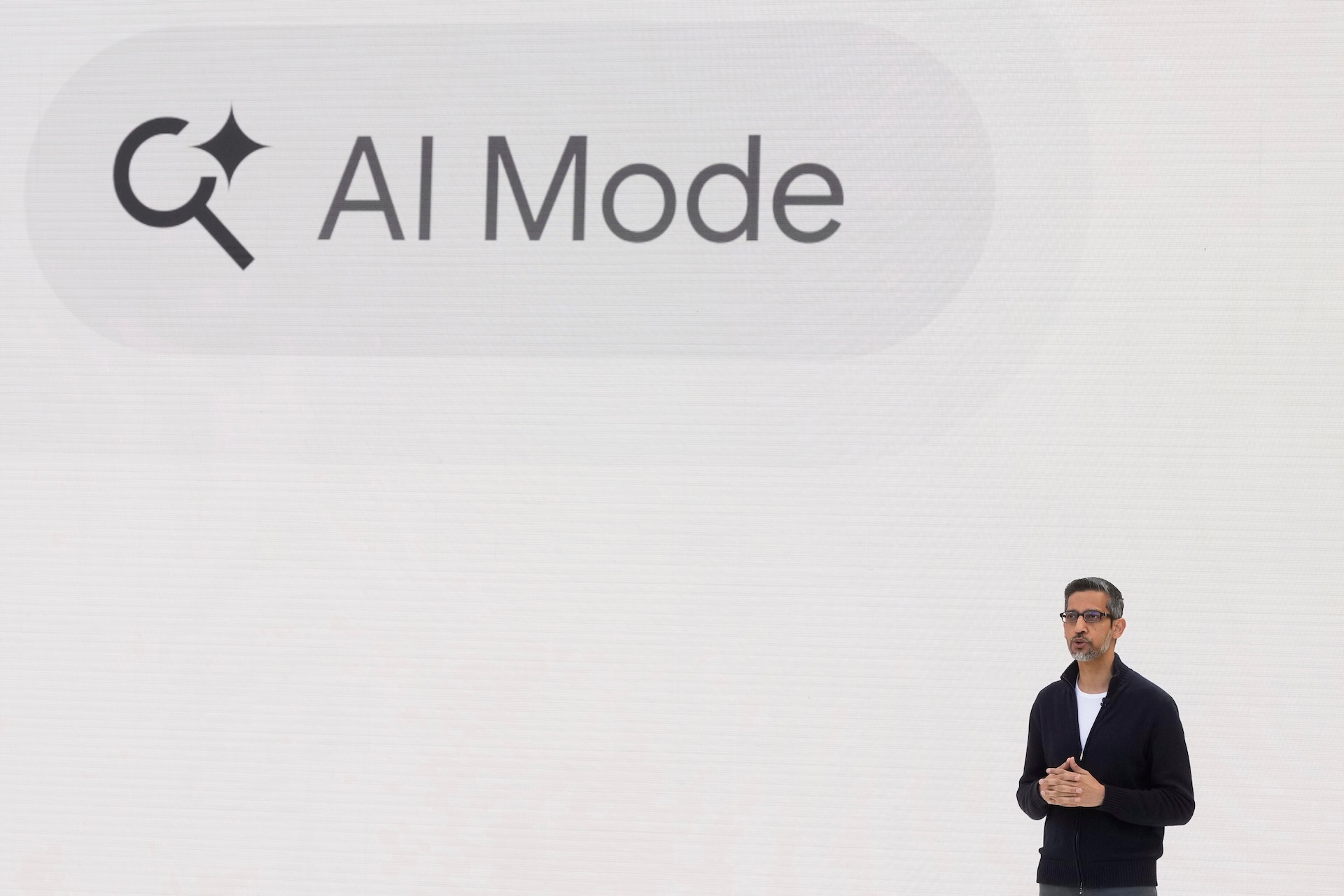
Alphabet CEO Sundar Pichai. The firm is one of several U.S. tech giants calling for carve-outs that would allow AI developers to train their models on copyrighted material. Photo: AP Photo/Jeff Chiu, File
TORONTO — U.S. tech lobby groups are pushing for Washington to include a carve-out in upcoming USMCA negotiations that would let AI developers train their models on copyrighted material without permission or payment.
Industry associations representing some of Silicon Valley’s largest firms called for new exemptions or clarifications to intellectual property laws during the Office of the U.S. Trade Representative’s (USTR) consultation ahead of a possible review of the trade deal with Canada and Mexico.
Talking Points
- U.S. tech industry associations are calling for the Trump administration to include a carve-out in the USMCA to let AI developers train their models on copyrighted material without having to consult or compensate rights holders
- Media groups are pushing back, arguing that the pact’s existing intellectual property provisions should be maintained and that it’s unfair to grant AI an exemption
In its submission, the Computer and Communications Industry Association (CCIA) said the U.S. should negotiate a new AI annex to the USMCA that includes a requirement that national laws “support the ability of AI developers to train models without incurring copyright liability.” That could include letting firms use the material under fair use rules, or making specific exceptions for text and data mining, which pull information from websites and documents to help develop machine learning systems.
The CCIA has previously argued that generative AI models don’t store the data they’re trained on, and that requiring developers to license content would slow innovation.
Related Articles


In their submissions, industry groups TechNet and the Technology Trade Regulation Alliance (TTRA) also called for an AI annex to the USMCA, including copyright exemptions and limitations for the development of the technology. IBM’s filing, meanwhile, said Canada, the U.S. and Mexico should commit to not imposing restrictions on “using lawful accessible commercial text for AI training and data mining.”
Tech giants Amazon, Apple, Google and Meta are members of both CCIA and TechNet, as is Canadian commerce firm Shopify. TechNet also represents leading generative AI developers including OpenAI, Anthropic, ElevenLabs and Runway, as well as Toronto-based AI firm Cohere.
The USTR held hearings and sought input from U.S. businesses on the USMCA late last year. Ottawa is concerned that the Trump administration will use the opportunity to try to renegotiate key details. Canadian innovation economy executives have criticized the IP and data provisions in the original pact, arguing U.S. firms would benefit most from extended copyright terms and other protections.
Other submissions to the USTR opposed AI exemptions. The National Music Publishers’ Association and Recording Industry Association of America both said they support USMCA’s current copyright provisions, and called for the U.S. to reject exceptions to IP rights for the training of AI models.
In a separate filing, the International Intellectual Property Alliance—an umbrella group of publishers, video game developers, film producers and music labels—also pushed the Trump administration to avoid addressing the use of copyrighted materials by AI models in the trade deal. “There is no evidence that would support the introduction of a broad exception for this purpose,” it claimed.
The duelling recommendations threaten to drag the fight around AI and copyright into international trade negotiations. In Canada, tech firms including Cohere, Google and Microsoft have called on Ottawa to introduce a text and data mining exception, arguing that training doesn’t hurt the market for creators’ work and that requiring developers to license or pay for its use would curb the growth of the AI industry. Media groups like the Canadian Publishers’ Council and Association des professionnels de l’édition musicale have urged the federal government to reject those proposals and to force generative AI developers to respect copyright.
Last June, AI Minister Evan Solomon told The Logic that the Liberal government’s regulatory framework for the technology will include copyright provisions. “In principle, we support the idea that creators have rights to be compensated for usage of their work,” he said, but added that Ottawa would not pre-empt court decisions on the issue. News publishers are suing Cohere and OpenAI for copyright infringement.
The legal and policy fight is also playing out in the U.S. In a May 2025 report, the U.S. Copyright Office concluded that using AI models trained on copyrighted works for research or analysis may be fair use, but generating content that competes with those creations isn’t. Shortly after, U.S. President Donald Trump said it was “not doable” to require AI developers to pay for all the books, articles and other media on which they train.
Gabriel Brunet, a spokesperson for Canada-U.S. Trade Minister Dominic LeBlanc, declined to say whether Ottawa would be open to an AI copyright carve-out in USMCA, citing the need to “protect the integrity of past and future engagements with the U.S.” The USTR did not respond to a request for comment.



Loading...
Thanks for sharing!
You have shared 5 articles this month and reached the maximum amount of shares available.
CloseThis account has reached its share limit.
If you would like to purchase a sharing license please contact The Logic support at [email protected].
CloseGift the full article!
You have gifted 0 article(s) this month and have 5 remaining.
Recipients will be able to read the full text of the article after submitting their email address. They will not have access to other articles or subscriber benefits.
Photo: AP Photo/Jeff Chiu, File
Most Popular This Week




In-depth, agenda-setting reporting
Great journalism delivered straight to your inbox.
News
Cohere plans to acquire cyber startup Aisle and set up a new security division
Briefing
Banks should have kill switches, IDs for AI agents, says global finance watchdog
B.C. First Nations decry rushed consultations as Major Projects Office CEO promises to do better
Feds pledge $100M to back Nova Scotia’s plans for offshore wind farms
Best business newsletter in Canada
Get up to speed in minutes with insights and analysis on the most important stories of the day, every weekday.
Exclusive events
See the bigger picture with reporters and industry experts in subscriber-exclusive events.
Membership in The Logic Council
Membership provides access to our popular Slack channel, participation in subscriber surveys and invitations to exclusive events with our journalists and special guests.