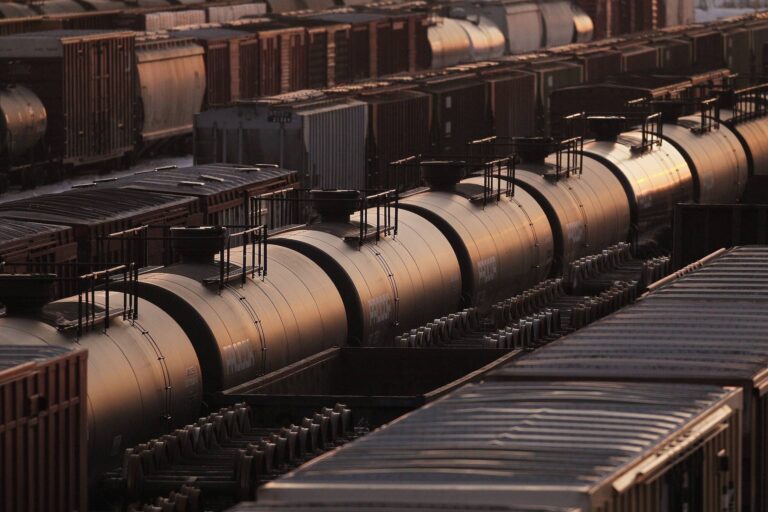
OTTAWA — U.S. President Donald Trump and British Prime Minister Keir Starmer announced a trade deal Thursday that would see the U.S. lift some tariffs on U.K. goods—including a carve-out for British cars unlikely to make its way into agreements with other countries.
Skip to content
News
United Kingdom’s trade deal with U.S. offers little guidance to other countries
Trump says deal to lower auto tariffs for British cars is a rare exception, and leaves ‘reciprocal’ tariffs in place
OTTAWA — U.S. President Donald Trump and British Prime Minister Keir Starmer announced a trade deal Thursday that would see the U.S. lift some tariffs on U.K. goods—including a carve-out for British cars unlikely to make its way into agreements with other countries.
Expanded access for U.S.: The U.S. exported nearly US$80 billion worth of goods to the U.K. in 2024. The finer details of the deal are still being discussed, but the White House said it would open new U.K. market access for American machinery, ethanol, beef and other agricultural goods that amount to an “opportunity” worth US$5 billion. A White House fact sheet said it would also create “a secure supply chain for pharmaceutical products” and make it easier for U.S. firms to compete for public contracts. U.S. Commerce Secretary Howard Lutnick suggested the U.K. would shift some trade away from other countries. “We have new access, but the U.K. workers are protected,” he said.
Aerospace: The deal would also give U.S. aerospace manufacturers preferential access to parts made in the U.K. “They sell Rolls-Royce engines to Boeing. We’ve agreed to let Rolls-Royce engines and those kinds of plane parts come over tariff-free,” Lutnick said. Bloomberg News reported Thursday that IAG, the British-Spanish parent company of British Airways, is set to buy 30 planes from Virginia-based Boeing.
Related Articles
No tariffs on steel or aluminum: The agreement would exempt the U.K. from the 25 per cent tariffs on steel and aluminum—in exchange for joining the U.S. fight against global overcapacity that Trump has blamed for the decline of domestic steel production. “They’ll put tariffs on, they’ll put quotas on,” Lutnick said. The British government took control of British Steel last month over concerns that Jingye, its Chinese owner, would shut down production.
A ‘luxury’ car carve-out: The first 100,000 British autos imported into the U.S. would face the baseline “reciprocal” tariff of 10 per cent, instead of the 27.5 per cent duty currently placed on U.K. autos. Trump said this would be rare in future deals, and is aimed to accommodate luxury cars the U.K. exports to the U.S. “Rolls-Royce is not going to be built here,” he said. “I wouldn’t even ask them to do that.”
A ‘template’ for future deals: Notably, the 10 per cent levy that Trump imposed on U.K. goods as part of his April 2 “Liberation Day” announcement will remain. Asked whether this is what to expect from deals with other countries, Trump said no, but then suggested a version of that would be true. “That’s a low number. They made a good deal,” he said. “The template of 10 [per cent] is probably the lowest.”
What it could mean for Canada: The Trump administration has said its fentanyl-related tariffs on goods from Canada and Mexico will eventually be replaced with a 12 per cent “reciprocal” tariff on anything traded outside the United States-Mexico-Canada Agreement (USMCA). Energy products and potash would get a full exemption. It is possible that could be the baseline rate in a deal with Canada.
Still, the U.S. and the U.K. did not already have a trade agreement. Canada and the U.S. have had one for decades. The continental trade pact Trump reached during his first term should have stopped him from hitting Canada with any extra tariffs, but did not.



Loading...
Thanks for sharing!
You have shared 5 articles this month and reached the maximum amount of shares available.
CloseThis account has reached its share limit.
If you would like to purchase a sharing license please contact The Logic support at [email protected].
CloseGift the full article!
You have gifted 0 article(s) this month and have 5 remaining.
Recipients will be able to read the full text of the article after submitting their email address. They will not have access to other articles or subscriber benefits.
Most Popular This Week




In-depth, agenda-setting reporting
Great journalism delivered straight to your inbox.
News
Canada faces a satellite-launch crunch as SpaceX retires its workhorse rocket
Briefing
Cohere says it caught an Alibaba model trying to send data to a server in China
Feds and First Nations to work on sharing resource revenue, with a sovereign wealth fund one option
Zafin buys U.S. fintech Naehas in nine-figure deal
Best business newsletter in Canada
Get up to speed in minutes with insights and analysis on the most important stories of the day, every weekday.
Exclusive events
See the bigger picture with reporters and industry experts in subscriber-exclusive events.
Membership in The Logic Council
Membership provides access to our popular Slack channel, participation in subscriber surveys and invitations to exclusive events with our journalists and special guests.