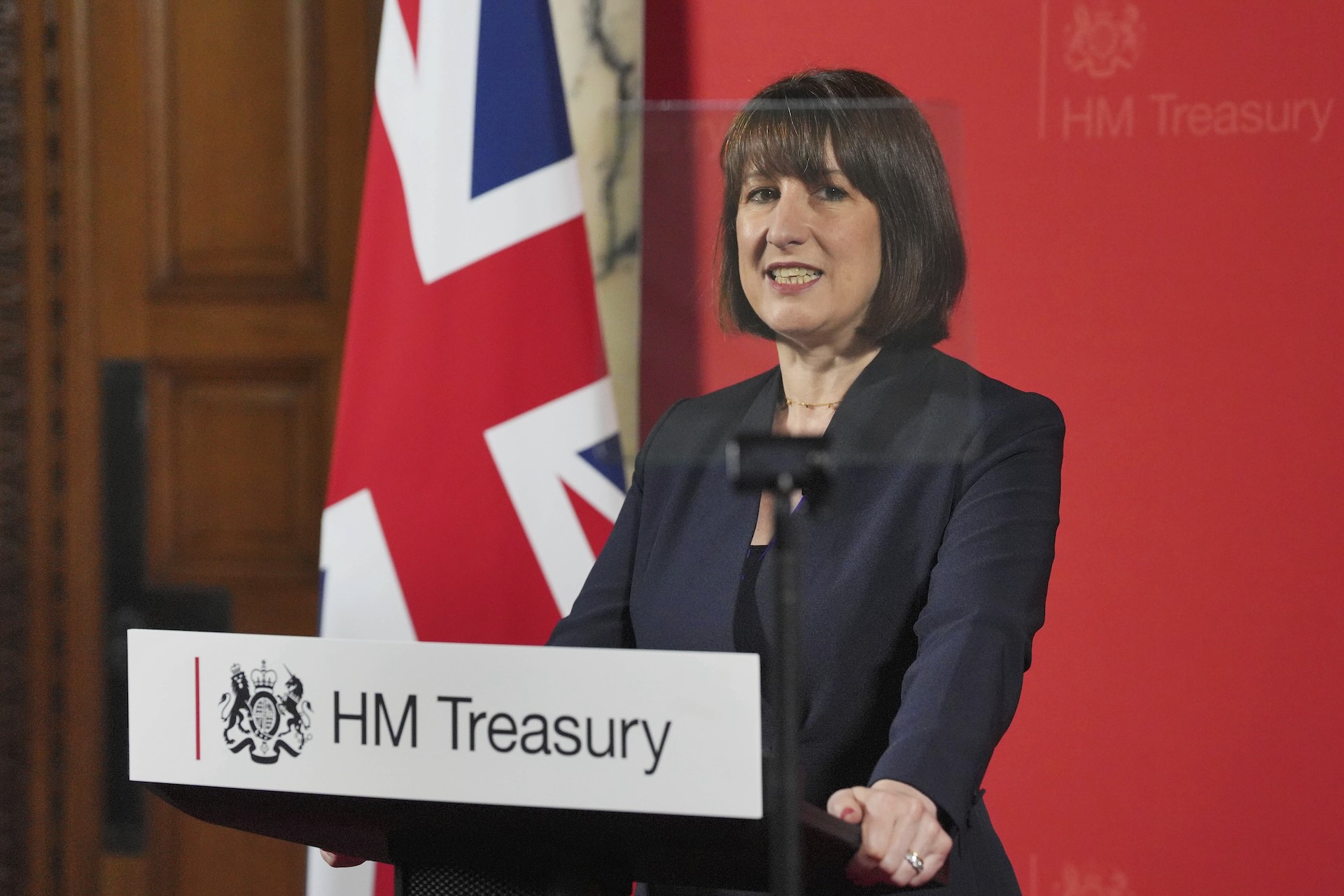
U.K. Chancellor Rachel Reeves is looking to Canada’s pension funds for ways to revamp her country’s retirement system and boost its economy.
Reeves, a month into her job after the Labour Party’s landslide election victory last month, hosted a roundtable meeting in Toronto Wednesday with representatives from Canada’s top pension funds, collectively known as the Maple 8. She hoped to solicit their advice on how to bring the Canadian pension model to the U.K.—and entice them to invest more in Britain.
The common wealth: Reeves is interested in consolidating small pension schemes run by local U.K. governments into larger funds, taking inspiration from Canada’s model. Her goal isn’t just to strengthen British pension plans themselves, but to position them to invest more into U.K. companies and infrastructure.
While Canada’s pensions generally outperform their international peers, the country is having its own debate about striking the right balance between encouraging the big pension funds to invest more domestically amid a productivity crisis, and respecting their mandates to maximize returns for retirees.
Meeting the guv’nor: Reeves is also meeting with Mark Carney, former central bank governor for England and Canada, and now Brookfield Asset Management chair and head of transition investing, to discuss the National Wealth Fund that Reeves announced in June. Carney consulted on creating the £7.3-billion fund, which is meant to attract private capital for low-carbon investments in the U.K. Justina Crabtree, a spokesperson for the chancellor’s office, told The Logic Reeves is also meeting “names from the world of clean energy,” though she would not say exactly whom.
Along with clean energy and infrastructure, Reeves is touting her country’s push into data centres—a hot investment space.
The special relationship: Her Toronto meetings follow two days in New York, where Reeves met with Wall Street investors and CEOs with the message that “Britain is open for business,” said Crabtree. Reeves is also “building momentum” for the government’s International Investment Summit in October, the spokesperson said. CEOs of three New York firms that met with Reeves—BNY Mellon, Blackstone and CyrusOne—confirmed they’ll attend the summit. At the time of this article’s publication, the Canadian investors with whom Reeves met had not confirmed whether they would attend.
Water under the bridge?: The pitch to invest in U.K. infrastructure comes as investors, including some in Canada, cut their losses on Thames Water, the country’s largest water utility. The company has been struggling financially for two years, as higher interest rates make it harder to pay its more than £15 billion in debt. OMERS, one of the pensions that met with Reeves in Toronto, was Thames’s biggest shareholder until it wrote off its entire stake in the company—once worth $1 billion—in May. Bank of Montreal reportedly sold about £300 million in senior debt it held in Thames at a 30 per cent discount. And this week, the company was fined £104 million for failing to manage its sewage system, causing effluent to flow into the ocean and rivers.
Thames Water aside, Reeves is under pressure to make a compelling case for U.K. assets. The government has pledged to grow the economy by 2.5 per cent. The National Institute of Economic and Social Research, an independent think tank, estimates that such a feat would require doubling infrastructure investments to about £50 billion in a year.