In the depths of a crypto winter, with venture capital funding for tech startups slowing down, Vancouver’s LayerZero bucked the trend.
Skip to content

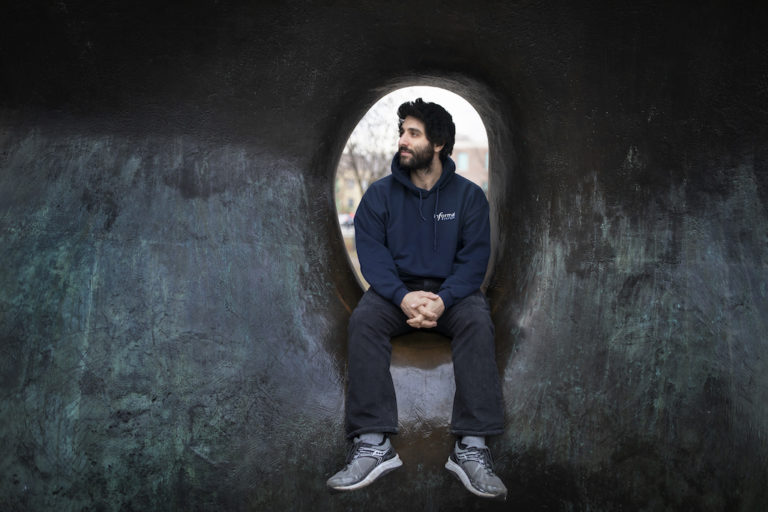
 “Most people need to raise a round to keep the company alive,” says Pellegrino. “That’s not a position we were in.” Photo: Jimmy Jeong for The Logic

The Interview
With LayerZero, Vancouver’s Bryan Pellegrino goes all in
Former pro poker player, AI whiz has ‘no regrets’ about launching US$3B crypto startup
LayerZero co-founder Bryan Pellegrino at his Vancouver office in May 2023. Photo: Jimmy Jeong for The Logic
In the depths of a crypto winter, with venture capital funding for tech startups slowing down, Vancouver’s LayerZero bucked the trend.
The company announced it had raised US$120 million at a US$3-billion valuation in April. The mega-round came just one year after a US$135-million one that made the company a unicorn.
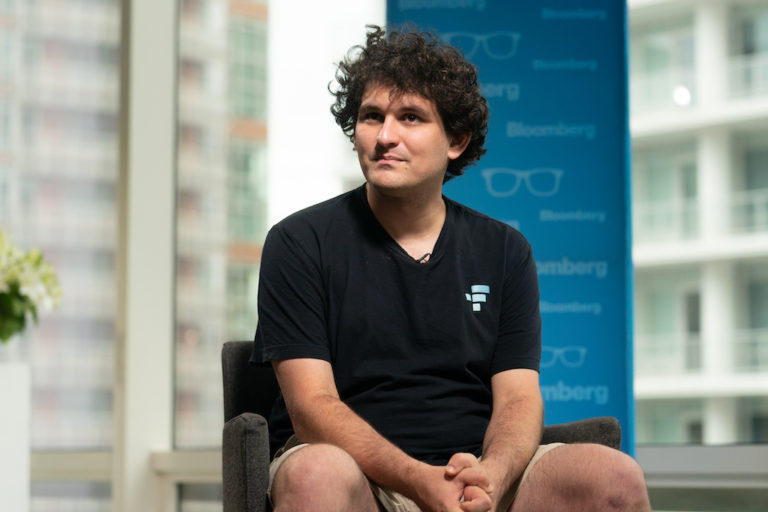
In an interview with The Logic, chief executive Bryan Pellegrino said LayerZero closed the more recent round in late 2022. At that time, the very survival of the sector was uncertain following the collapse of crypto giant FTX—which happened to be an investor in Pellegrino’s company.
Talking Point
- Vancouver’s LayerZero raised US$120 million at a US$3-billion valuation at a time when venture capital funding for tech startups was slowing down—and the collapse of investor FTX had rendered the very survival of the sector uncertain
The way Pellegrino tells it, the eye-watering sums of money from the likes of Andreessen Horowitz, Sequoia Capital and the auction house Christie’s essentially fell in his lap, without LayerZero ever creating a single pitch deck and despite the meltdown happening in the crypto world. If that’s not enough of a flex, he also said he didn’t even really need it.
“We were in a very fortunate position where we had excess capital from the round before,” he said. “Most people need to raise a round to keep the company alive.… That’s not a position we were in.”
Pellegrino said he was able to get LayerZero into that position because the idea behind it—in March 2022, the company launched a protocol based on technology it designed to make it easier for blockchains to share assets and communicate with each other—was enough to pique investors’ interest through word of mouth. His quirky backstory probably helped, too.
Before the 36-year-old New Hampshire native was a crypto founder, he was a professional poker player. After meeting his two co-founders while working at a computer network research lab at the University of New Hampshire, Pellegrino dropped out to travel the world and play poker full time.
He eventually settled in Vancouver because he and his wife wanted to send their children to a school in the city and it was close to family. “In terms of raising a family, [Vancouver] kind of indexed the highest on everything,” Pellegrino said. “It’s pretty nice.”
Related Articles
Pellegrino and his co-founders got the idea for LayerZero after building a gladiator fighting game on a blockchain called Binance Smart Chain, which culminated in an NFT a player could earn by winning 10 fights. The process of moving that NFT to Ethereum—the blockchain that hosts the most prominent marketplaces for digital collectibles—was not smooth.
Blockchains are like apps on a smartphone—they can’t share data or communicate with each other easily and smoothly. LayerZero—along with a handful of other companies and protocols, some of which are based in or have strong links to Canada—is aiming to solve that problem.
The Logic talked to Pellegrino about raising money in tough times, the pros and cons of being based in Canada and the surprising reason why a lot of online poker players got into Bitcoin in the early 2010s.
This interview has been edited and condensed for length and clarity.
It sounds like you essentially got into crypto because you were bored of being a professional poker player. Can you elaborate on that?
I played professionally for eight years, went to 80 countries, traveled the world, then moved to Austin, Texas. And within a year of me moving, online poker was banned in the US. So I wake up one morning and my money is locked up in these accounts that are now frozen. And so I’m out of a job, I don’t have any money. I had to figure out what to do.
At that moment in time, everybody in poker found out about Bitcoin. This is April 15, 2011. The payment processors all stopped working, they wouldn’t work with any poker sites anymore. But the kind of shadier poker sites started accepting Bitcoin. So all the people who continued to play poker started to use Bitcoin.
It wasn’t until 2013 that I really started to get into it. I slowly learned more and more over time and went fully down the rabbit hole.
You raised that round that valued LayerZero at US$3 billion in late 2022, after the collapse of FTX, in the depths of the crypto winter. What was it like raising during that time?
It was still a very, very hotly contested round. Given the market turmoil and everything that was happening, some investors stepped back, other people were very anxious. For us, it didn’t really matter. It wasn’t a round we felt we had to raise. It was more something that came to us. And there were some strategic partners in there that we wanted to create a deeper relationship with.
FTX was an investor in LayerZero. After it collapsed in November 2022, the company bought it out of its stake. What did you learn from that experience?
I learned that it pays to be super, super, super decisive. We really believe in what we’re doing here and we just don’t want any negative association at the end of the day. We’re like, let’s just get ourselves free of this. It was just immediate action, an immediate decision that, “Let’s just be done with this.” I think speed in those situations matters a lot.
I’m curious about what you’re going to do with all the money you raised. Are you expanding your team?
We’re up to 56 people. The team has been steadily growing. We were seven in November of 2021. And probably 25 in the fall of last year. Our team has basically doubled in the last eight months. The goal for us, though, it’s never going to be to just blow the money. We have an extremely long amount of runway, which gives us a very privileged and fortunate position to just build the thing that actually matters and has maximum utility. We can focus on building amazing products, on growth and not on, “Oh my God, we need to find a way to monetize right now.” Our goal is not to spend all the money in the next two to three years and raise another round. The goal is to do the thing right: build a real company.
What do you like and what are the challenges of being a crypto company based in Canada, particularly regarding our regulatory approach?
For a company like us building infrastructure, Canada has taken a reasonably measured approach. We’re going to, ideally, try to figure out what is the framework that this fits into, how do we apply it, how do we work with the business leaders across the country to make sure this is done well. We keep emerging technology here and great companies here. We’ve found it great so far.
Before starting LayerZero, you dabbled in AI, selling a machine-learning tool you built to Major League Baseball teams in 2016 and writing a research paper describing a poker-playing AI with Meta AI’s Noam Brown. With all the AI hype right now, do you think going into crypto was the right move?
I think there are a lot of things that will be disrupted from AI. I think the technology is already at the point where it’s as good as humans at many things. But I just don’t think we will continue to see the rate of growth that people are pricing in right now. I think AI is fascinating, but I have no regrets, ultimately, about everything I’ve done my entire life. I took zero dollars of salary ever from age 19 until two years ago. I work on things because I’m passionate about them. There’s never a moment that I wake up and I wish I was working on something else. To me, this is still the most interesting problem that I could be working on.



Loading...
Thanks for sharing!
You have shared 5 articles this month and reached the maximum amount of shares available.
CloseThis account has reached its share limit.
If you would like to purchase a sharing license please contact The Logic support at [email protected].
CloseGift the full article!
You have gifted 0 article(s) this month and have 5 remaining.
Recipients will be able to read the full text of the article after submitting their email address. They will not have access to other articles or subscriber benefits.
Photo: Jimmy Jeong for The Logic
“Most people need to raise a round to keep the company alive,” says Pellegrino. “That’s not a position we were in.”
Most Popular This Week




In-depth, agenda-setting reporting
Great journalism delivered straight to your inbox.
Commentary
Carmichael: Canadian ignorance about India is a strategic weakness
Briefing
Aritzia shares pop after earnings rise 204%
First Nation in Alberta goes to court over fast-tracked oil pipeline
Chinese EV maker Geely Auto Group to launch in Canadian market in 2027
Best business newsletter in Canada
Get up to speed in minutes with insights and analysis on the most important stories of the day, every weekday.
Exclusive events
See the bigger picture with reporters and industry experts in subscriber-exclusive events.
Membership in The Logic Council
Membership provides access to our popular Slack channel, participation in subscriber surveys and invitations to exclusive events with our journalists and special guests.





