TORONTO — As buy now, pay later grows in popularity, consumer watchdogs in both the U.S. and Canada have probed the use of the instalment loans popularized by fintech companies.
Skip to content


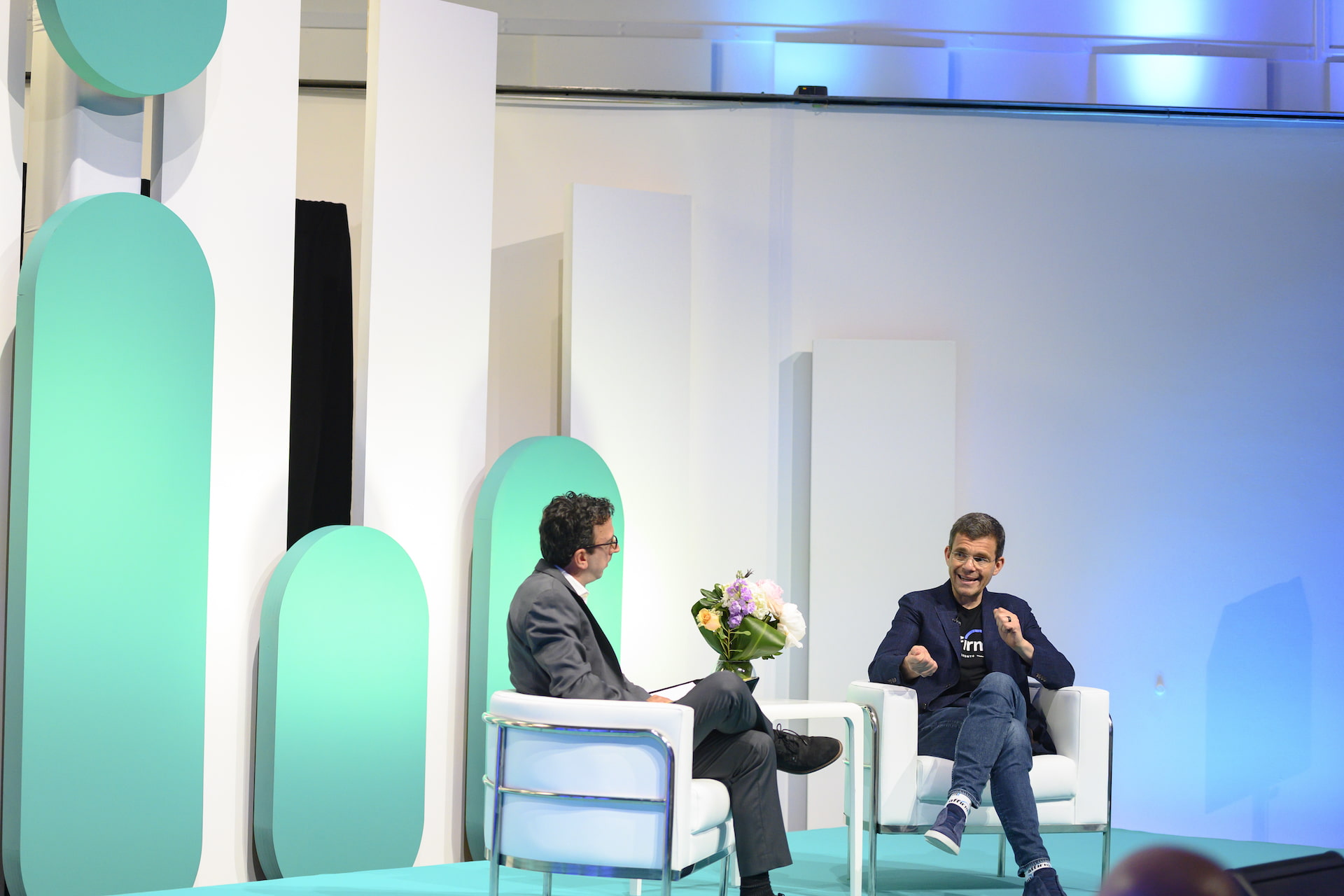 “The company has in its DNA that we’re fundamentally improving your financial life, which means we should not be lending you money if you can’t afford it,” says Levchin. Photo: Christopher Katsarov Luna for The Logic

The Interview
‘A financial institution with a moral backbone’: Affirm CEO Max Levchin on his company’s approach to buy now, pay later
‘I don’t think we need to regulate BNPL out of existence, but a cap would be nice’
Affirm CEO Max Levchin speaks with The Logic’s CEO and editor-in-chief David Skok during The Logic Summit in Toronto on June 26, 2023. Photo: Christopher Katsarov Luna for The Logic
TORONTO — As buy now, pay later grows in popularity, consumer watchdogs in both the U.S. and Canada have probed the use of the instalment loans popularized by fintech companies.
Max Levchin, co-founder and CEO of the San Francisco-based fintech Affirm, doesn’t believe they have any reason to be concerned.
“I describe the company as a financial services institution with a moral backbone,” Levchin said at The Logic Summit in Toronto this week.
He dismissed claims that BNPL, as the offerings are commonly known, is predatory, saying there are no fees and interest doesn’t compound on loans. “If we think you are not going to pay us back on time, we are screwing ourselves by lending you money because we are inherently creating a negative financial outcome for ourselves,” he said.
Since launching Affirm in 2012, the former PayPal co-founder and chief technology officer has steered the company through an IPO, which raised US$1.21 billion in January 2021, and forged partnerships with the likes of Stripe, Shopify and Amazon.
Related Articles


In an onstage interview with The Logic’s CEO and editor-in-chief David Skok, Levchin talked about where he stands on regulation, the benefits of “coopetition” and why he’s optimistic about AI.
This interview has been edited for length and clarity.
We are in a time of high interest rates and an uncertain macroeconomic environment. When you started, interest rates were likely lower. How have the last few years changed the business?
The interest rates change our business in a long-term impact way. So, here’s a super fast crash course in how Affirm works: We lend money to people to buy things. Our primary business is capital point-of-sale. We’re not a depository, which means that we borrow money so we can lend it to others. With the cost of capital and things like interest rates, the business ran really, really well in the world of non-zero interest rate policy that we had when we started the company and [runs] just fine in the current higher interest rate environment.
The vast majority of our contracts, because we borrow money to fund our loans, are longer deals, so if the Fed changed the fund rate tomorrow, it’s not as if everything has to shift 25 [basis points] for us. It’s never a shock to the system.
What has been a challenge for us, and what we’re getting good at figuring out with a little help from the Fed, is that while they were raising the rates with a sort of extreme ascent curve, it was very hard to figure out what the next set of contracts needs to look like for the business to make financial sense. Now that we understand the trajectory and everything is slowing down in terms of the degree of change, it’s perfectly fine.
High interest rates are the result of the Fed trying to fight inflation in the U.S., and that’s when we have the most value to deliver to our customers. If you are borrowing from Affirm to buy your Peloton bike it compares more favourably to credit cards. At the moment, the demand for our service is up because the [number of] people who need to use credit is increasing, and our ability to create differentiated outcomes for consumers is a better product opportunity than it was a year ago.
That naturally leads to the contrarian question: if rates are higher, are you not being predatory to consumers by tantalizing them with an offer that they might not be able to pay off?
The short answer is that we charge no late fees and don’t compound the interest to pass the total amount of dollars that we communicate upfront. So, if you borrow $1,000 to buy a couch and it’s zero interest, it will be $1,000. If it’s not zero interest, it will be $1,000 and $20 in interest. If you take a year or 10 years to pay it back, it will be $1,000 and $20 in interest. There’s no late fees. There’s no other charges. There’s no other penalties.
Read More from The Logic Summit:
In other words, if we think you are not going to pay us back on time, we are screwing ourselves by lending you money because we are inherently creating a negative financial outcome for ourselves.
But the company has in its DNA that we’re fundamentally improving your financial life, which means we should not be lending you money if you can’t afford it. And, if we think there’s a chance of you not being able to afford it, we tend to not go back to hurt ourselves if we’ve over-extended. This has served us extraordinarily well. We’ve been around for almost 12 years. We’ll do US$20 billion in transactions this year and [have done] tens of billions over the last 12 years.
The Logic reported in February that one of your competitors, Afterpay, was lobbying the Canadian government to get regulators to understand BNPL. Do you feel like regulators understand your business?
I describe the company as a financial services institution with a moral backbone. That’s a powerful company to be. I think at this point the regulators understand.
Generally speaking, clarity around new markets is a good idea. I’m not quite as laissez-faire as a libertarian as some of my PayPal brethren but I do believe in free markets. I just think that sometimes free markets take too long to figure out what is the most appropriate behaviour for all parties. I don’t think we need to regulate BNPL out of existence, but a cap would be nice. Like we can’t make more than X dollars or X percent of the margin.
In April, you launched a partnership with Stripe for Canadian users and your firm works with Amazon, Shopify and other partners. You’ve made your bed on the “coopetition” side versus the zero-sum game side. Why is that?
It’s pretty pragmatic and a little bit specific to our sector. We’ve never been a monopoly in financial services. It’s too big of a market. If you live in the world where you look left or right and think “these are all my enemies,” you’re not going to get as far as if you look around and say, “How can I work with you?”
In the world of financial services, we’re still mostly competing with cash. We’re still kind of trying to convince people to not carry around pieces of fabric in their pocket. So long as commerce is growing, and Toby [Lütke] is taking good care of that, I think coopetition is way more intelligent.
What are your thoughts on AI? Are we at the end of times or are you more optimistic about generative AI?
I’m optimistic, but I also tend to be very optimistic about everything.
We’re going to go through a massive disruption, but we’ve done that a bunch of times in my lifetime so I think we’re quite adaptable. The one place where I’ve spent a little bit of time thinking is that I have kids, 11 and 13, and 10 years ago when they were tiny, I thought to myself: I’m not going to force them into it, but want to make sure they understand programming languages, computer science, and benefit from where the centrepoint of technology is headed. I think these days it should be in philosophy and ethics and creative arts.



Loading...
Thanks for sharing!
You have shared 5 articles this month and reached the maximum amount of shares available.
CloseThis account has reached its share limit.
If you would like to purchase a sharing license please contact The Logic support at [email protected].
CloseGift the full article!
You have gifted 0 article(s) this month and have 5 remaining.
Recipients will be able to read the full text of the article after submitting their email address. They will not have access to other articles or subscriber benefits.
Photo: Christopher Katsarov Luna for The Logic
“The company has in its DNA that we’re fundamentally improving your financial life, which means we should not be lending you money if you can’t afford it,” says Levchin.
Most Popular This Week



In-depth, agenda-setting reporting
Great journalism delivered straight to your inbox.
The Big Read
Alberta’s referendum is just the start of the turmoil
Briefing
EverWind plans $10B data centre and wind development in Nova Scotia
Canada ready to force Stelco to sell its Canadian operations, Joly says
Feds plan a 60 MW defence-oriented data centre for Ottawa
Best business newsletter in Canada
Get up to speed in minutes with insights and analysis on the most important stories of the day, every weekday.
Exclusive events
See the bigger picture with reporters and industry experts in subscriber-exclusive events.
Membership in The Logic Council
Membership provides access to our popular Slack channel, participation in subscriber surveys and invitations to exclusive events with our journalists and special guests.