Listen Now
0:00
TORONTO — Canadian software firm Thentia has been put up for sale after entering creditor protection. The search for a saviour comes as investors, lenders and executives do battle in the courts over why the firm faltered and what should happen next.
Publicly, it marks a dramatic decline in fortunes for the Toronto-based firm, which sells regulatory software and payment-processing services to government agencies and professional licensing boards. As recently as January 2024 the firm touted US$38-million in new funding that it said would help scale its operations and allow it to serve a “rapidly expanding global client base.”
Talking Points
- Thentia, a Toronto-based software company, is for sale under court supervision after running out of money and entering creditor protection. The firm, which sells tools and services to government departments and licensing boards, was founded in 2014 and has raised over US$80 million from investors including BDC Capital and Toronto-based First Ascent Ventures.
- In November 2025, Espresso Capital pushed the company into receivership over a failure to repay over $20 million in loans. Investors, executives and lenders are now fighting in court over why Thentia failed, and what to do next, as the SaaS-pocalypse depresses the value of tech firms.
Behind the scenes, Thentia was in trouble. In November 2025, lender Espresso Capital pushed the company into receivership after it failed to repay $20.8 million in loans, interest and fees. Espresso has since lent Thentia at least another $850,000 to help keep it going.
Court documents reviewed by The Logic paint a picture of a company struggling to grow or turn a profit as debts have piled higher, with the majority of staff already cut and a messy legal battle playing out over who is to blame for its demise. Thentia Global Systems, the firm’s primary corporate entity, owed over $21.3 million to its creditors as of February 9, while its subsidiaries owed almost $9.9 million to vendors.
Founded in 2014, the firm raised more than US$80 million from investors such as BDC Capital, Toronto-based First Ascent Ventures, and New York-based Spring Mountain Capital. Thentia’s backers also included TTA Investments, a Delaware corporation controlled by Tom Jenkins, the prominent Canadian technology executive who chairs OpenText. Jenkins was previously chair of First Ascent, which originally launched as a venture offshoot of OpenText in 2015.
Related Articles

As the court-supervised sale process gets underway, First Ascent and TTA Investments are suing Thentia’s last CEO, Brian Utley, in Texas. The two Jenkins-linked investors claim Utley tried to ruin Thentia financially so his investment firm could buy it on the cheap. TTA Investments is also threatening to sue Espresso, claiming it worked with both Utley and Thentia’s founder Julian Cardarelli against investors’ interests. Meanwhile, Thentia and Cardarelli are suing each other over his departure. None of the claims have been tested in court, and all the parties dispute the accusations against them, while making counterclaims against each other.
The U.S. is Thentia’s largest market, with 83 contracts bringing in $4.5 million in annual recurring revenue. Thentia has a cluster of customers in Oklahoma, where it opened an office in June 2022, including the state licensing bodies for accountants, architects and realtors. Agencies in Alaska, Arizona, New Mexico and Oregon are also using Thentia’s software.
The firm also generated more than $1 million in annual recurring revenue from 25 Canadian contracts. Customers have included the colleges of dental assistants in Alberta, paramedics in Manitoba and social workers in Nova Scotia.
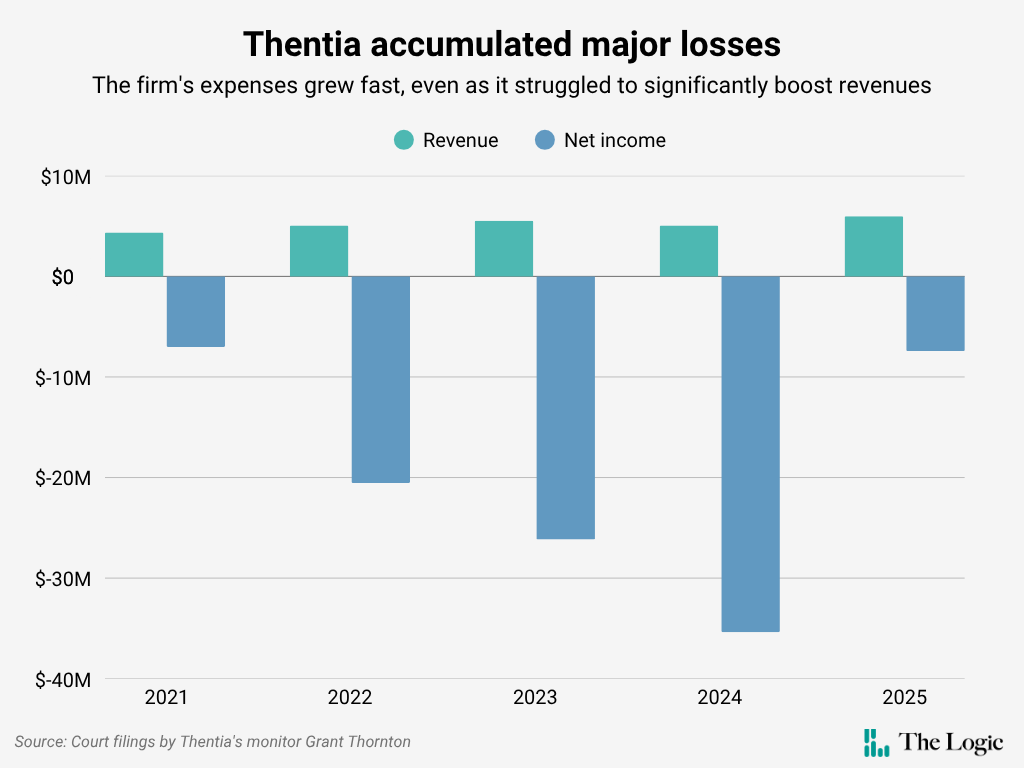
Despite landing major clients, Thentia continued to lose money. The firm lost US$35.4 million on US$5.1 million of net revenue in 2024. After coming under new management and laying off staff, Thentia pared its losses to US$7.4 million on about US$6 million of revenue last year. Still, the company’s inability to turn a profit and land new investors left it in a precarious position.
In October 2025, one month before lender Espresso Capital pushed Thentia into receivership, the firm’s board ousted Utley, and furloughed most of its remaining employees. Speaking to The Logic, Utley, who has sought to dismiss the Texas lawsuit, claims he had begun to turn the company around after inheriting a mess when he took the top job a year earlier, and always acted with investors’ approval.
First Ascent, Spring Mountain, and Jenkins did not respond to multiple requests for comment. Thentia’s corporate communications team also did not respond. TTA Investments’ lawyer declined to comment on its behalf, citing the ongoing litigation.
For now, Thentia remains a going concern under the supervision of a court-appointed monitor, and several customers told The Logic they haven’t experienced any major service outages. The company continues to burn cash, and its future is uncertain amid market concern that many software firms won’t survive disruption by AI, a narrative sometimes dubbed the “SaaS-pocalypse.” Meanwhile, key figures in Thentia’s history remain locked in a complex, messy legal battle.

Software developer Julian Cardarelli started Thentia in 2015 as a one-person operation selling government technology. In its early years, the firm sold products that helped businesses track statutory requirements and manage their own board meetings. Thentia also had a consulting business that built technology for regulatory bodies.
Over time, Thentia staffed up and focused on the licensing and regulatory market. In September 2018, it borrowed from Espresso for the first time, funding that Cardarelli claimed at the time would “enable Thentia’s growth into new jurisdictions worldwide.”
As it grew, Thentia was raising and losing more and more money. In May 2021, the firm announced it had raised an initial US$10-million Series B round from Spring Mountain and BDC Capital, then another US$10 million from the same investors the following April. Court records show Thentia lost US$7 million in 2021, and US$20.5 million in 2022.
By early 2024, the firm had almost 200 employees, and was once again searching for new investors. In January of that year, Thentia announced US$38 million in new funding, in yet another extension to its Series B.
Investors claim the eye-catching raises were a facade. In the Texas case against Utley, First Ascent and TTA also accuse Cardarelli—who served as CEO until May 2024—of fraud and financial mismanagement, including artificially inflating the company’s annual recurring revenue. The inflated value helped justify aggressive hiring and spending beyond its means, creating what the investors claimed in the lawsuit was “a formula for financial disaster.” Investors only discovered the alleged violations after Cardarelli’s departure, according to court documents.
Cardarelli told The Logic the claims were “false and defamatory.” He said Thentia’s financials were maintained by a “preeminent” external accounting firm, and that they were reviewed and audited. He added that multiple investor groups did due diligence on the company, and that investors were aware of the risks.
Thentia also alleges that shortly after leaving the company, Cardarelli launched a competing startup called GovCore and tried to lure away the firm’s clients and employees. Court filings claim Cardarelli contacted Thentia staff and told them the company was going bankrupt and they would soon lose their jobs, while also warning clients that their services would be cut off.
In court documents, Thentia claims such statements were intended to undermine confidence in it and steer its customers toward the new venture. Thentia also alleges GovCore used confidential company information, including client contacts and proprietary software code, to build competing products and solicit business.
Cardarelli declined to say whether his new company had hired Thentia employees or signed contracts with its clients. “To the extent GovCore has approached any party about potentially working together, it is legally entitled to do so,” he said.
Cardarelli is now embroiled in multiple lawsuits with the company he founded and led for nearly a decade. In a 2024 claim against Thentia and two board directors, he alleges the company forced him out under severe stress. Cardarelli claims that during a March 2024 financing round, lead investor First Ascent pressured him into an agreement that promised him millions of stock options, some of which would vest immediately, in exchange for co-ordinating his votes with the investor, allowing them to make governance changes. In court documents, Cardarelli claims he believed the arrangement was unethical and created a conflict of interest but was told refusing to sign could jeopardize the company’s solvency. Cardarelli claims the company didn’t hold up its end of the deal, and the stress of the situation led him to resign, he claims—a decision he later tried to reverse, though the board refused to reinstate him.
He is seeking about $1.7 million in damages, plus more than eight million vested options, or cash for what they’re worth. Thentia denies the allegations and has launched a counterclaim in which it is seeking over $40 million in damages against Cardarelli and former chief legal officer and chief of staff Natasha Giuffre.
Meanwhile, in a separate legal notice to Espresso, Jenkins’ TTA Investments accused the lender of encouraging Cardarelli to cover up Thentia’s financial troubles in an attempt to lure in new investors. Cardarelli and Espresso reject those claims.

In early 2024, an investment broker trying to drum up backers for Thentia approached Brian Utley, a veteran of public sector technology.
Utley and his partner at AV Capital—an Austin-based private equity firm—considered putting money into Thentia, with court documents suggesting the two sides discussed a 30 per cent stake for US$10 million.
When AV Capital began doing its due diligence on Thentia, however, it discovered financial problems including overstated revenues and undercounted expenses, Utley said in an interview with The Logic. He claimed Jenkins asked for a few months to fix the firm’s books, in the hopes that they could still do a deal. While Jenkins wasn’t on Thentia’s board, his firm, TTA Investments, was its largest shareholder. Court records show investors, executives and lenders disagree on almost everything that happened from that point on.
In September 2024, Utley met with Jenkins and First Ascent managing partner Richard Black, who’d been serving as Thentia’s interim CEO, in Naples, Fla. In the Texas lawsuit, First Ascent and TTA Investments claim Utley pitched himself as the CEO to turn Thentia around. Utley claims Jenkins asked him to take the job.
Thentia announced Utley as its new CEO in October 2024, alongside another US$10-million add-on to its Series B round. Under his contract, filed in court, he was engaged by the company as a consultant on a part-time basis to serve as interim CEO for up to four years, at a fee of US$40,000 a month. Utley’s contract also shows that Thentia was considering reincorporating in the U.S.; ultimately, it did not.
In their lawsuit, First Ascent and TTA Investments claim that Utley had promised to step down from AV Capital when he took over Thentia, to avoid potential conflicts of interest. Utley said Thentia’s investors always knew he was keeping his role at AV Capital. Speaking to The Logic, he cited an email sent days before the CEO announcement in which Jenkins told him and Black that he’d drafted the press release to mention that Utley was “still a partner at AV Capital” to avoid any “confusion.”
First Ascent and TTA Investments blame Thentia’s subsequent troubles on Utley’s continued commitment to AV Capital. Utley took the CEO job to “run Thentia into the ground so that it could be cheaply acquired” by AV Capital, according to the investors’ lawsuit. They allege he planned to make the firm’s “financial situation so dire—so desperate for capital and financial salvation—that Thentia would agree to any terms.”
To pull it off, First Ascent and TTA Investments claim, Utley hired several former colleagues from old jobs into top executive roles at Thentia with high salaries, cementing his control over the firm while damaging its bottom line. The investors claim he then failed to stick to the budget he had proposed, and to meet revenue targets.
Utley rejects all the accusations First Ascent and TTA Investments make in their lawsuit. Speaking to The Logic, he claimed to have led “a heck of a turnaround” at Thentia, cutting the firm’s expenses by US$3.5 million and increasing annual recurring revenue by 22 per cent. The board and Jenkins approved all the new hires, who were accounted for in Thentia’s cost projections, he claimed. The firm also laid off much of its workforce, dropping from nearly 200 people in early 2024 to 72 towards the end of Utley’s tenure as CEO.
Utley blames Thentia’s failure to meet revenue targets on the way sales were handled before he took over, which he said involved too-rosy projections and a failure to check whether potential customers were really interested. He claims his staff found a number of deals in the pipeline that weren’t real.
First Ascent and TTA Investments also claim Utley sabotaged Thentia’s fundraising efforts, scaring off three “serious investors” by lying to them about the state of the business. They claim he did this to ensure AV Capital would be left as “Thentia’s only salvation.”
Utley told The Logic that fundraising for Thentia wasn’t part of his job as CEO, and claims all he did was tell potential investors the truth about the firm’s financials.
First Ascent and TTA Investments claim AV Capital then tried to buy Thentia on the cheap in May 2025. They say shareholders rejected the Texan firm’s informal US$7-million bid for a 51 per cent stake. In an affidavit in the insolvency proceedings, Utley cited discussions over similar deal terms. In the interview with The Logic, he disputed that AV Capital ever made an offer to reject, claiming he and his partner only had informal talks with Jenkins about an investment.
Rather than dragging Thentia down to acquire it cheaply, Utley claimed he was “trying to fix the company” so AV Capital could invest in it.
In the fall of 2025, Thentia was once again running out of money.
On Wednesday, Oct. 8, First Ascent’s Black and Spring Mountain managing director Jamie Weston told Espresso managing director Will Hutchins and several colleagues that Thentia was short US$525,000 to make its next payroll. According to the lender’s court filing, Black and Weston said that Jenkins was willing to help fund the firm—but only if Espresso wrote down its loan to Thentia from about US$19 million to US$4 million. Hutchins and his colleagues refused.
The next day, most of Thentia’s board met and decided to conduct what it described as a “furlough” of staff. The firm cut 53 of its 72 employees across Canada, the U.S., the U.K. and Croatia, including CEO Utley and the CFO and COO, court records show. Espresso says it was not invited to the meeting, despite having two observer seats on the board.
First Ascent and TTA Investments claim in their lawsuit that Thentia’s board had already fired Utley for “his failures to execute on the turnaround plan as promised.”
Utley claims he’d already decided to leave the firm at the end of the year over the board’s failure to raise growth capital and what he characterized as Black interfering in day-to-day operations. In court records, Utley also contests his dismissal in October, saying he was not informed of the board meeting even though he was a director, and that he never received the 30-day termination notice required by his contract. Instead, his email access was simply revoked at the end of the day Friday, he claimed.
Thentia’s $20.8 million in loans from Espresso were coming due at the end of the month. On Friday, Oct, 17, the lender filed to push Thentia into receivership and put restructuring firm Grant Thornton in charge. The Ontario Superior Court of Justice granted the request a month later.
Thentia also lost several directors. BDC Capital had been represented on the board by partner Mark Smith. The federal funding agency gave up its seat in October, and its investment in Thentia is “significantly diluted,” spokesperson Phil Taylor told The Logic. Spring Mountain Capital’s Weston and Sean Brownlee, an ex-BDC partner now at the True North Venture Fund, resigned as directors days after Thentia entered receivership, court records show.
Espresso and Utley claim the staff furlough caused chaos at Thentia, with the firm struggling to support its customers. Grant Thornton said both sales and collections slowed after the cuts. “Thentia has furloughed the people that it needs most to stay in business,” Utley said in an October affidavit supporting Espresso’s receivership filing.
Grant Thornton was also concerned that the furlough may have violated employment law. To head off lawsuits, the receiver and Thentia’s executive team decided to pay the laid-off workers any unpaid wages as well as the minimum severance required. That payout, which Thentia made at the end of December, cost just over US$440,000, according to financials filed in the insolvency proceeding.
Meanwhile, the legal battle surrounding Thentia’s near-collapse has intensified. On December 18, First Ascent and TTA Investment, the two Jenkins-linked firms, filed their lawsuit against Utley and AV Capital in a Texas district court. First Ascent and TTA Investments claim they put in $20 million and $14.6 million, respectively, via equity capital and debt, and helped recapitalize the firm in mid-2024.
Beyond their claims about how Utley ran Thentia, First Ascent and TTA Investments also accused Espresso of working with the CEO to force the firm into insolvency so it could “cut out the investors.” The goal, the lawsuit claims, was to drive Thentia into AV Capital’s hands, where it would assume the debt owed to Espresso.
Both Utley and Espresso deny they had any agreement to tank Thentia. “Indeed, it would have been irrational for Espresso to join in such a conspiracy,” Espresso’s lawyer wrote to TTA Investments, adding that the lender’s “only goal is to be repaid its loans to Thentia.”
In early February, the Ontario Superior Court moved Thentia under the protection of the Companies’ Creditors Arrangement Act (CCAA) and brought Utley back as chief management officer at Grant Thornton’s recommendation. First Ascent and TTA Investments opposed both moves. Meanwhile, both the Texas and Ontario courts have stayed their lawsuit against Utley and AV Capital until Thentia’s CCAA process is complete. TTA Investments also claims Thentia owes it $7.7 million in outstanding loans.
Grant Thornton’s finance unit is now looking for a buyer for Thentia. Under the court-approved sales and investment solicitation process, interested parties have until May 15 to make their initial bids, which must include proof of their finances and the price tag they’re willing to put on Thentia. Potential buyers then have until June 12 to make a binding proposal and deposit 10 per cent of their offer.
Utley told The Logic that he and AV Capital have no plans to bid for Thentia or its assets. Court records show that he and two other executives are in line for a set payout if another investor acquires the firm, plus a cut of any purchase price over US$15 million.
First Ascent and TTA Investments say now isn’t the right time to try to sell Thentia. The process is “doomed to produce the worst possible result,” both investors warned in filings earlier this month. Fears of AI disruption have led investors to devalue firms like Thentia that make their revenues from software-as-a-service (SaaS), a writedown that’s been dubbed the “SaaS-pocalypse.” First Ascent and TTA Investments instead want Thentia to appoint a new management team to run it on a breakeven basis and wait out what may be a “short-term overreaction.”
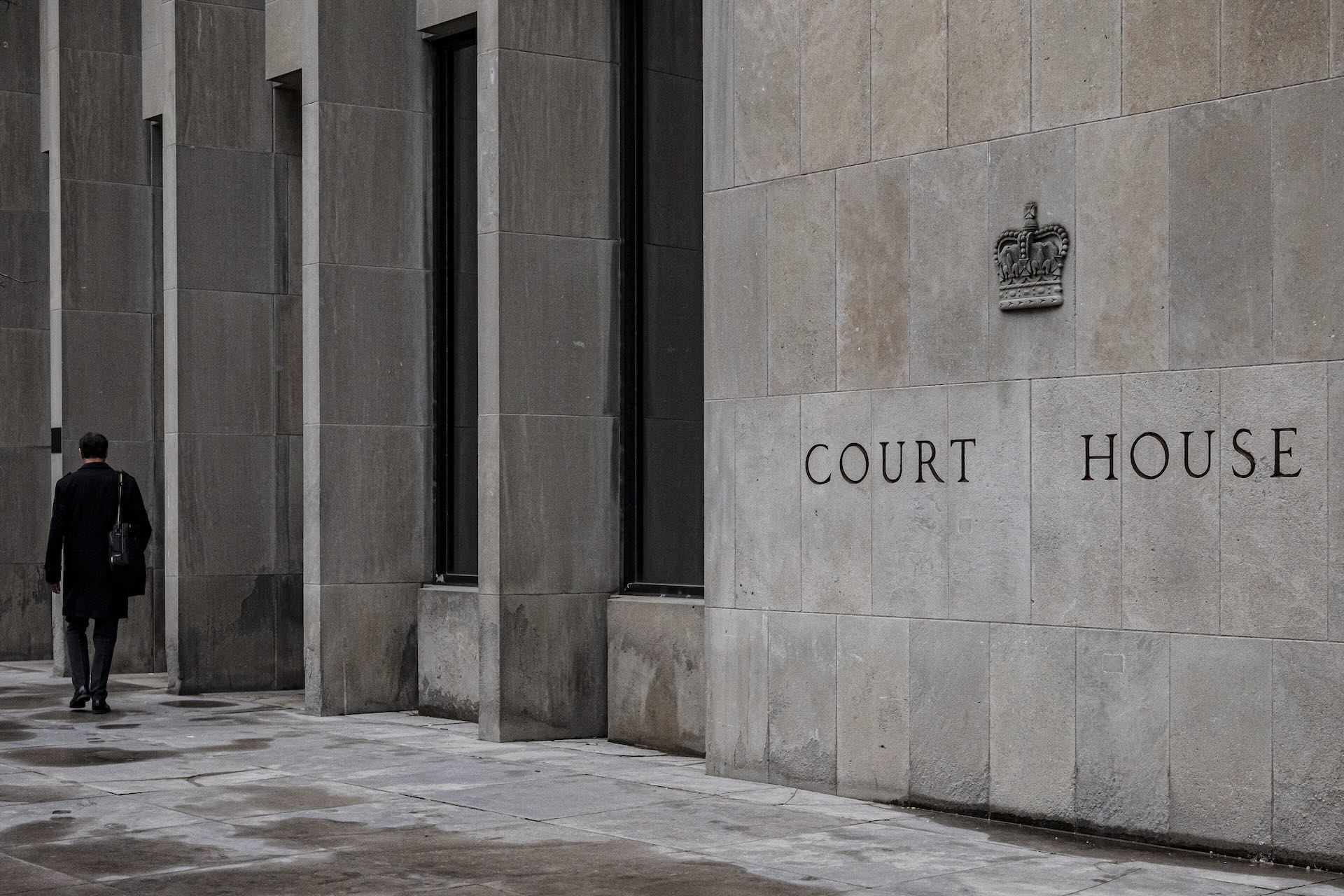
As Thentia awaits its fate, dozens of government agencies and licensing boards still rely on its technology to manage crucial work.
The College of Chiropractors of Ontario used Thentia’s software to manage its renewal cycle for members and professional corporations last October. Despite the furlough and receivership, the program launched as scheduled and “proceeded smoothly,” college registrar Jo-Ann Willson told The Logic. Departments and boards in Alaska, Ireland, New Mexico also said they have ongoing contracts with Thentia and have experienced no or limited service disruptions.
Utley claims Thentia has lost business due to the recent turmoil, with former CEO Cardarelli’s new firm GovCore using the situation to try to poach clients. Thentia has seen “massive churn because of the furlough,” Utley said, adding that customers were “just tired of the drama.”
Thentia has great bones in the form of its technology, intellectual property and contracts with “large, sophisticated, sticky customers,” claimed Espresso’s Hutchins. The lender is continuing to fund the business through its insolvency in the hopes of making its money back when Thentia finds a buyer. “A great outcome would be a successful recoupment of investment for stakeholders,” Hutchins said, “and the continuation and growth of a great Canadian technology company.”
Update: Thentia’s corporate communications team did not respond to multiple requests for comment. This story has been updated.