Skip to content
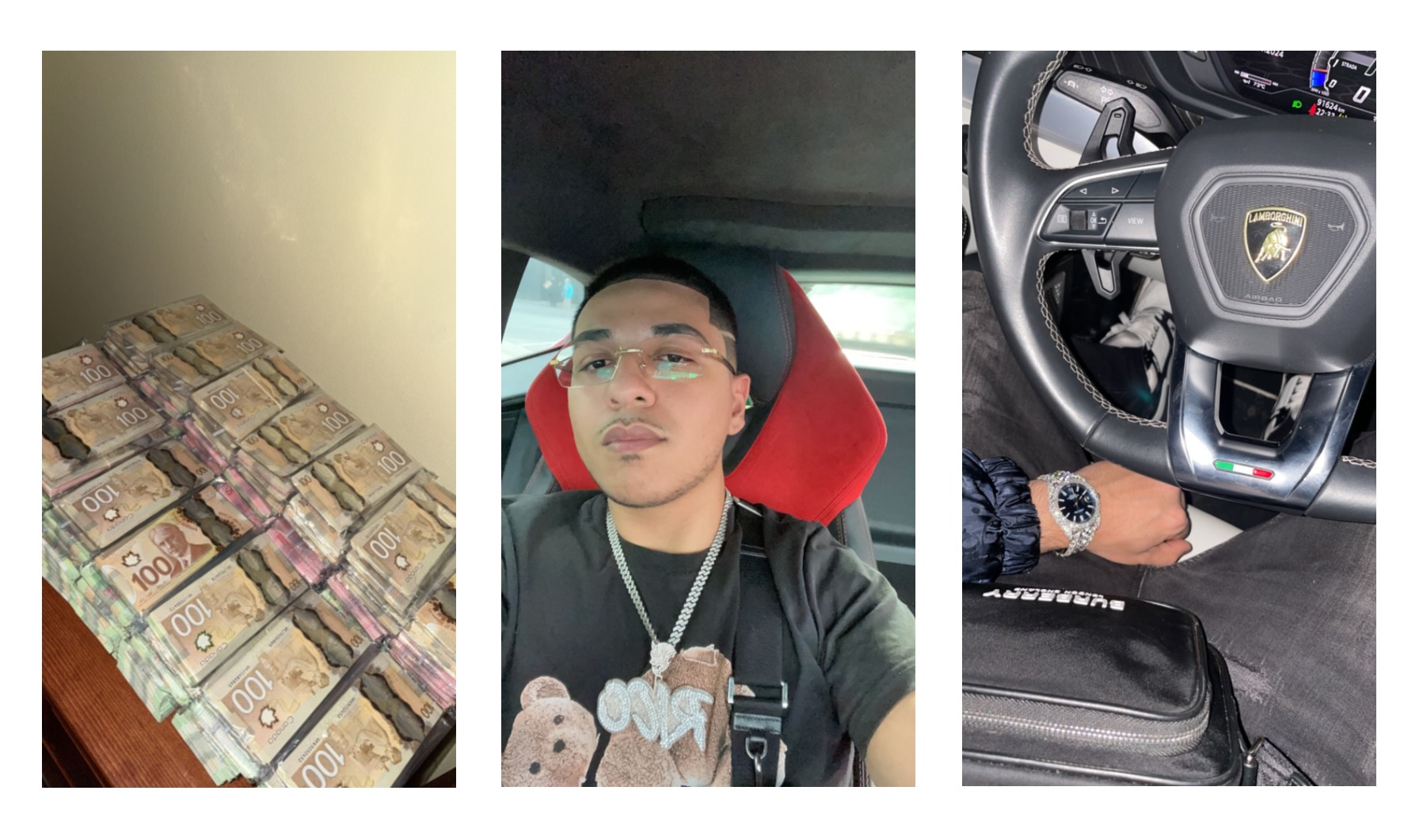 Mirshahi, centre, regularly shared photos and videos on social media of him driving luxury cars or flaunting designer watches. Photo: Instagram/Snapchat/The Logic
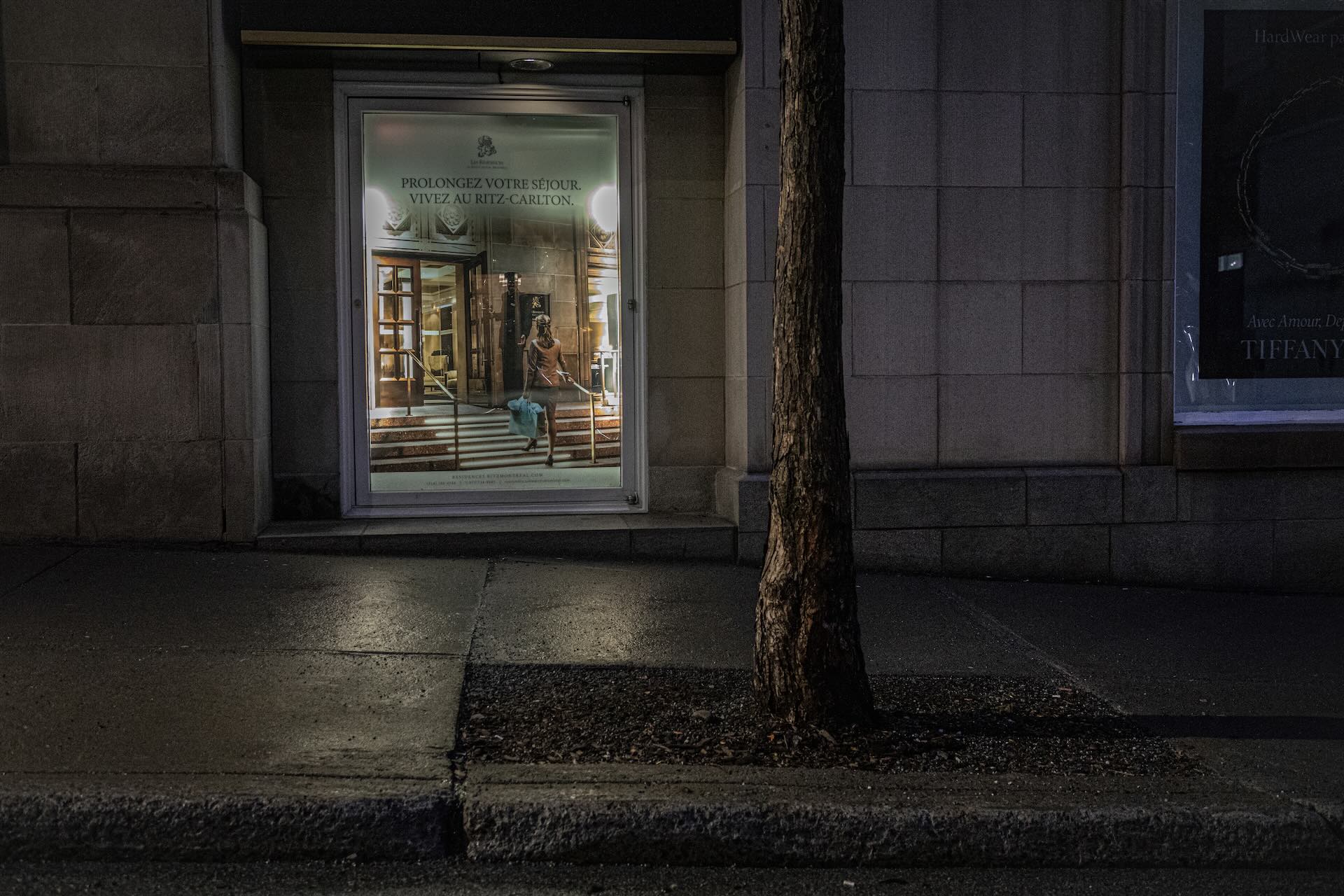 The Ritz-Carlton in downtown Montreal. Mirshahi’s social media, which he used to promote his crypto business, was littered with posts about luxury cars and expensive hotels. Photo: Roger Lemoyne for The Logic
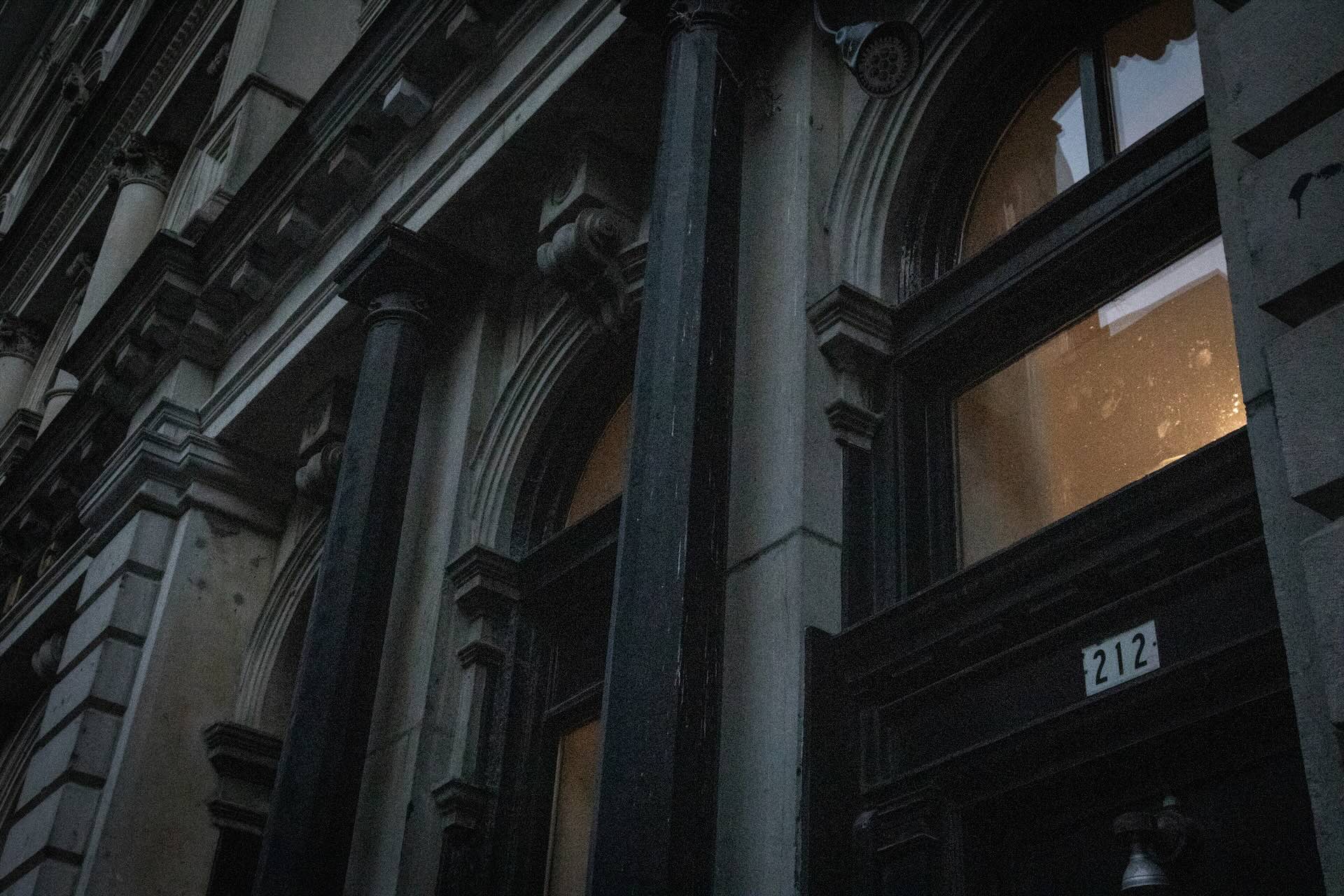 The entrance to the 212 nightclub in Old Montreal. In the months before his death, Mirshahi had resolved “to not be sober for a single second.” Photo: Roger Lemoyne for The Logic
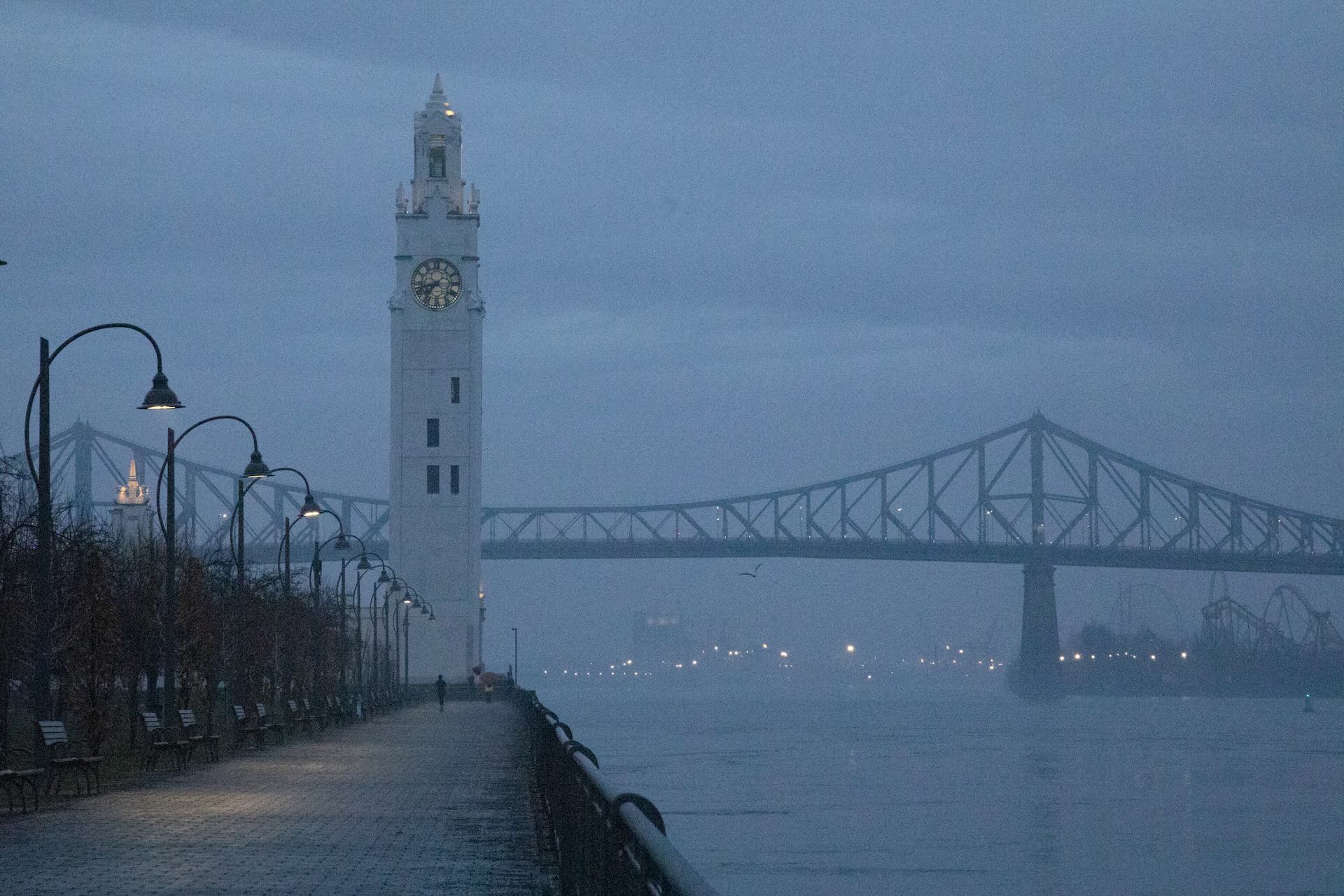 The clock tower on the Quai de l'Horloge in the Old Port of Montreal. Photo: Roger Lemoyne for The Logic
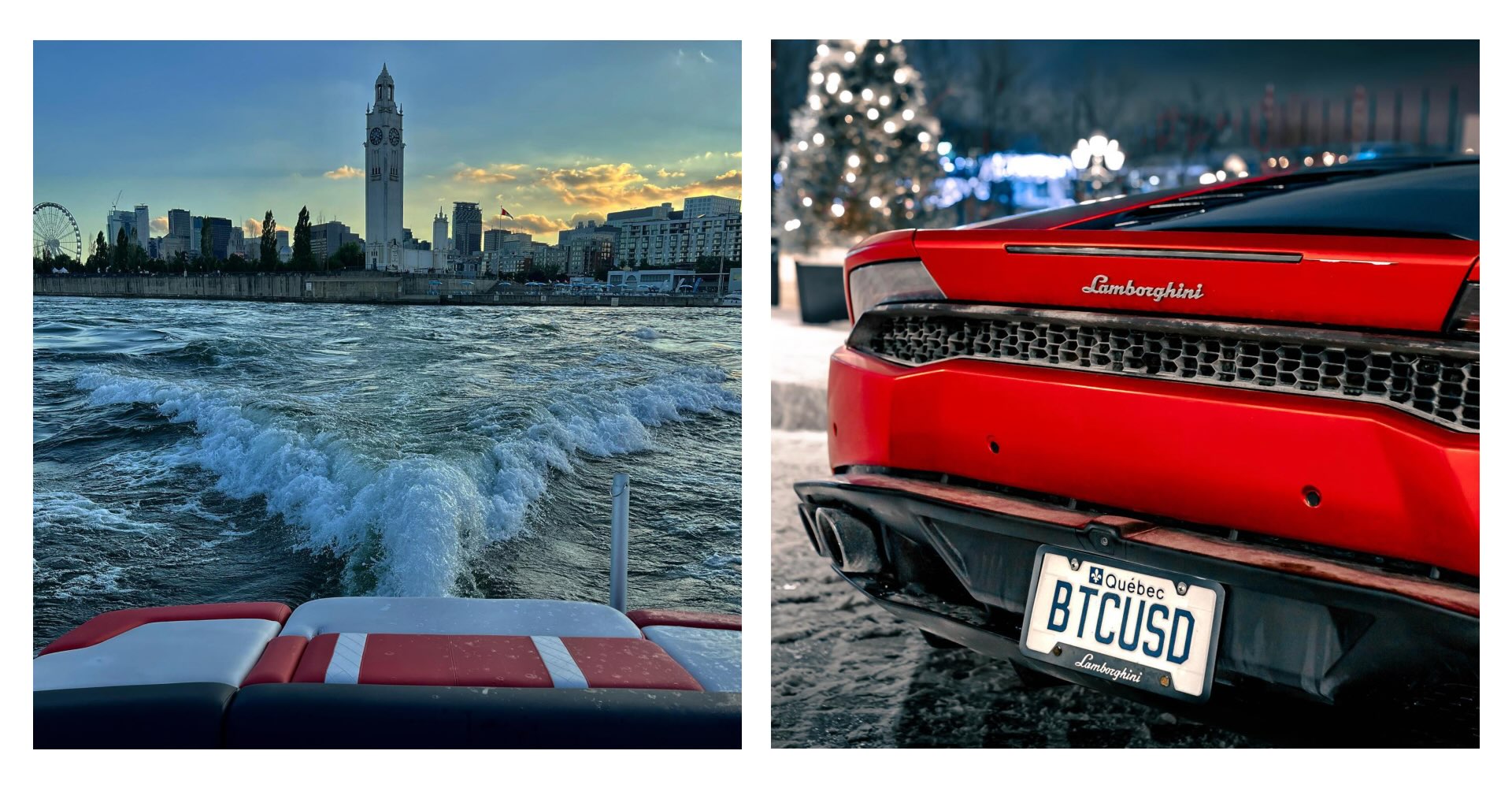 Mirshahi used his social media accounts to show off his lifestyle as a way of promoting his crypto business. Photo: Instagram/The Logic
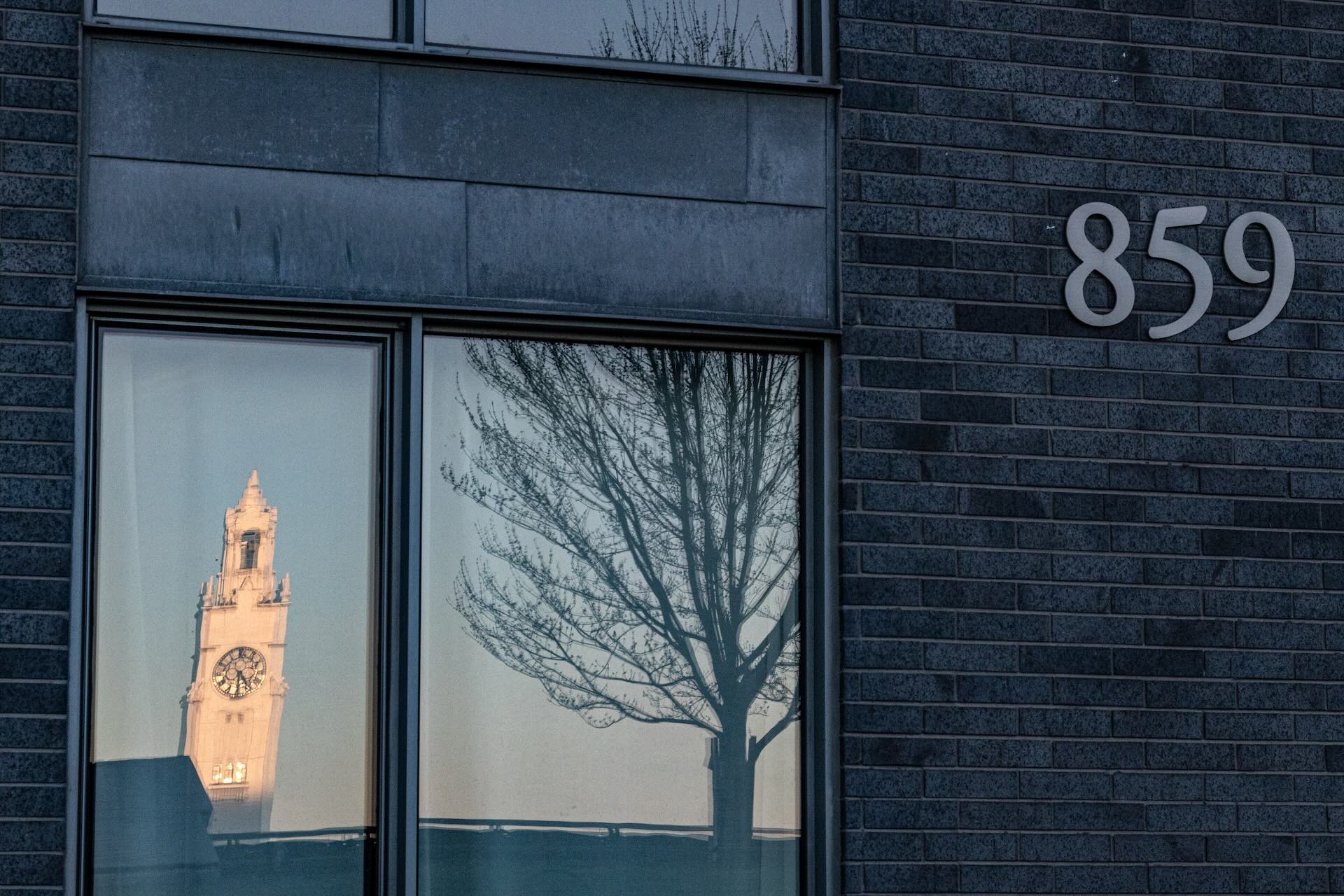 The condo building in Old Montreal where Mirshahi lived. Photo: Roger Lemoyne for The Logic
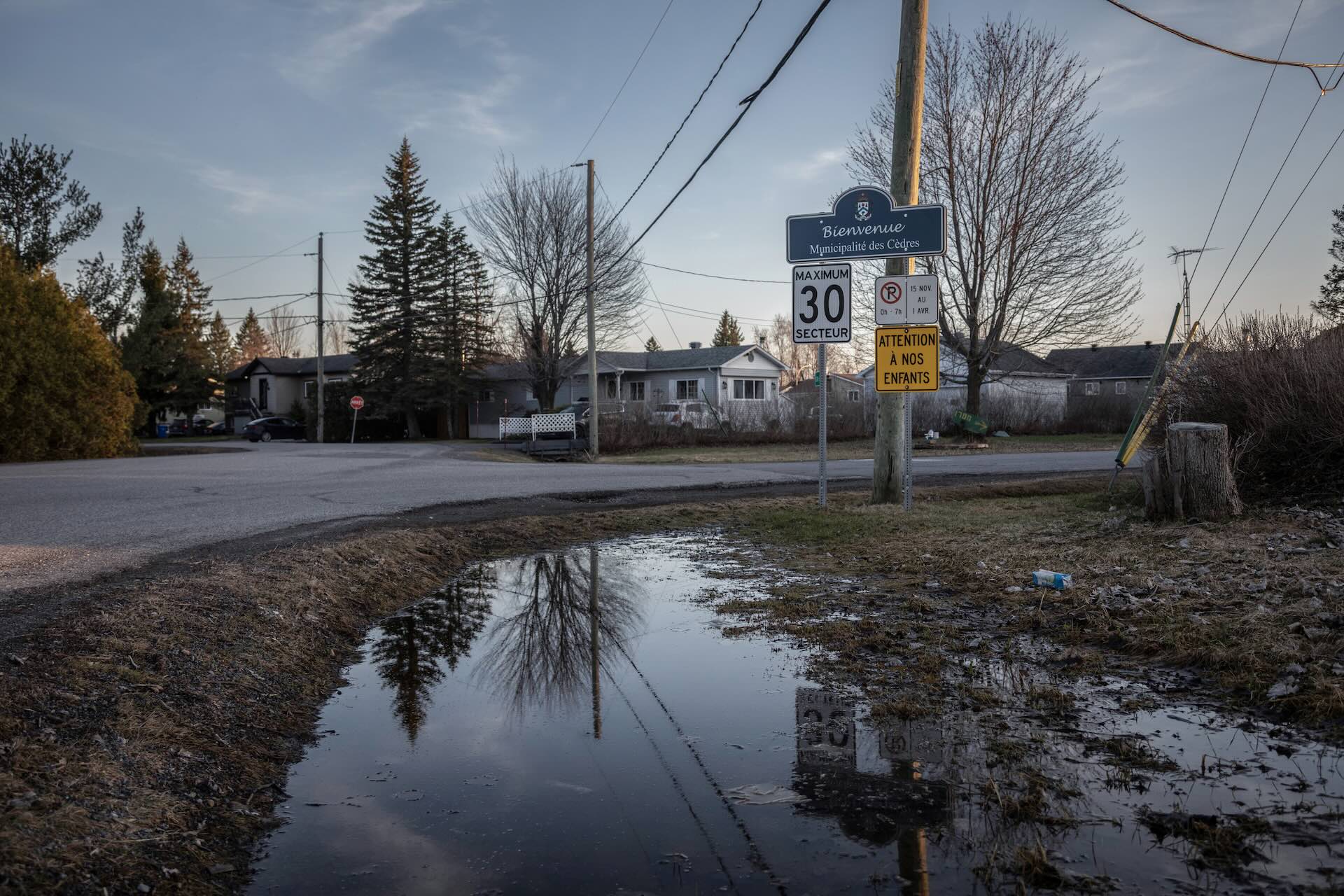 A road in the town of Les Cèdres, a few hundred metres from the house where Mirshahi was tortured and killed. Photo: Roger Lemoyne for The Logic
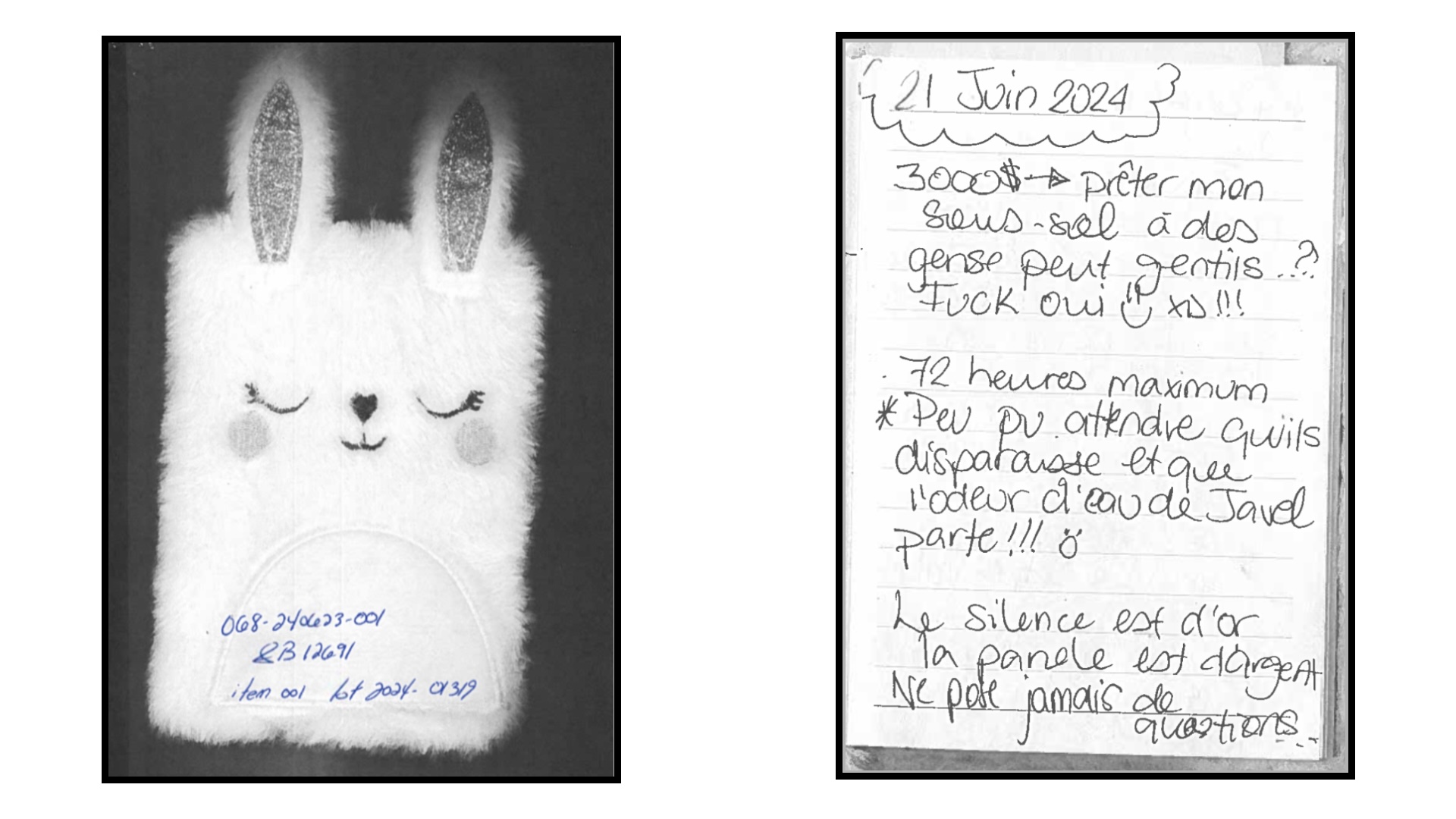 “Silence is golden, words are silver, don’t ask questions,” Lepage had written on the second page of her notebook, just below what seemingly amounted to a confession. “$3,000→lend my basement to some not very nice guys? Fuck yes.” Photo: Photo submitted as evidence
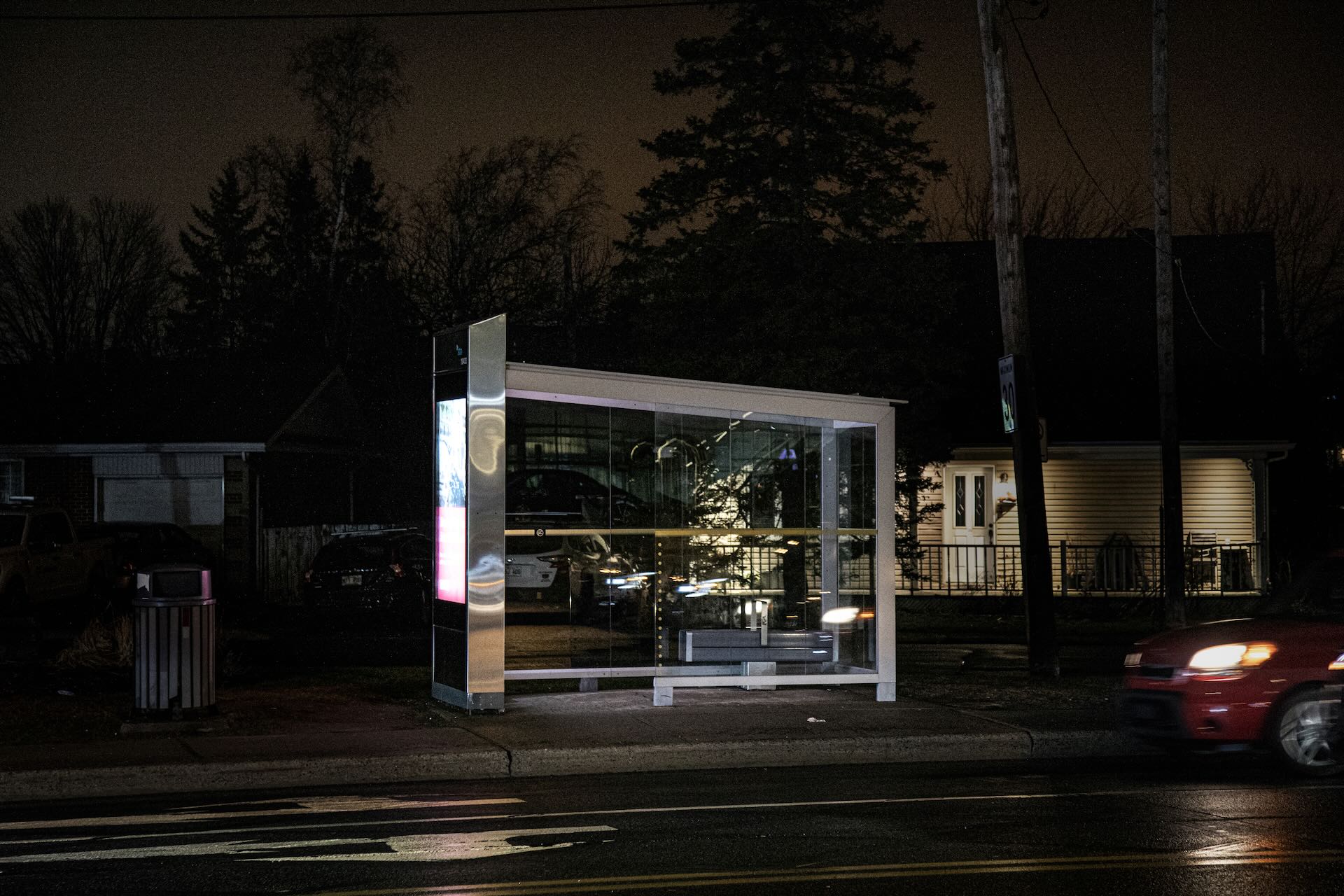 The bus stop in the Montreal suburb of Pierrefonds where Mirshahi’s kidnapped friends were dropped after his murder. Photo: Roger Leymoyne for The Logic
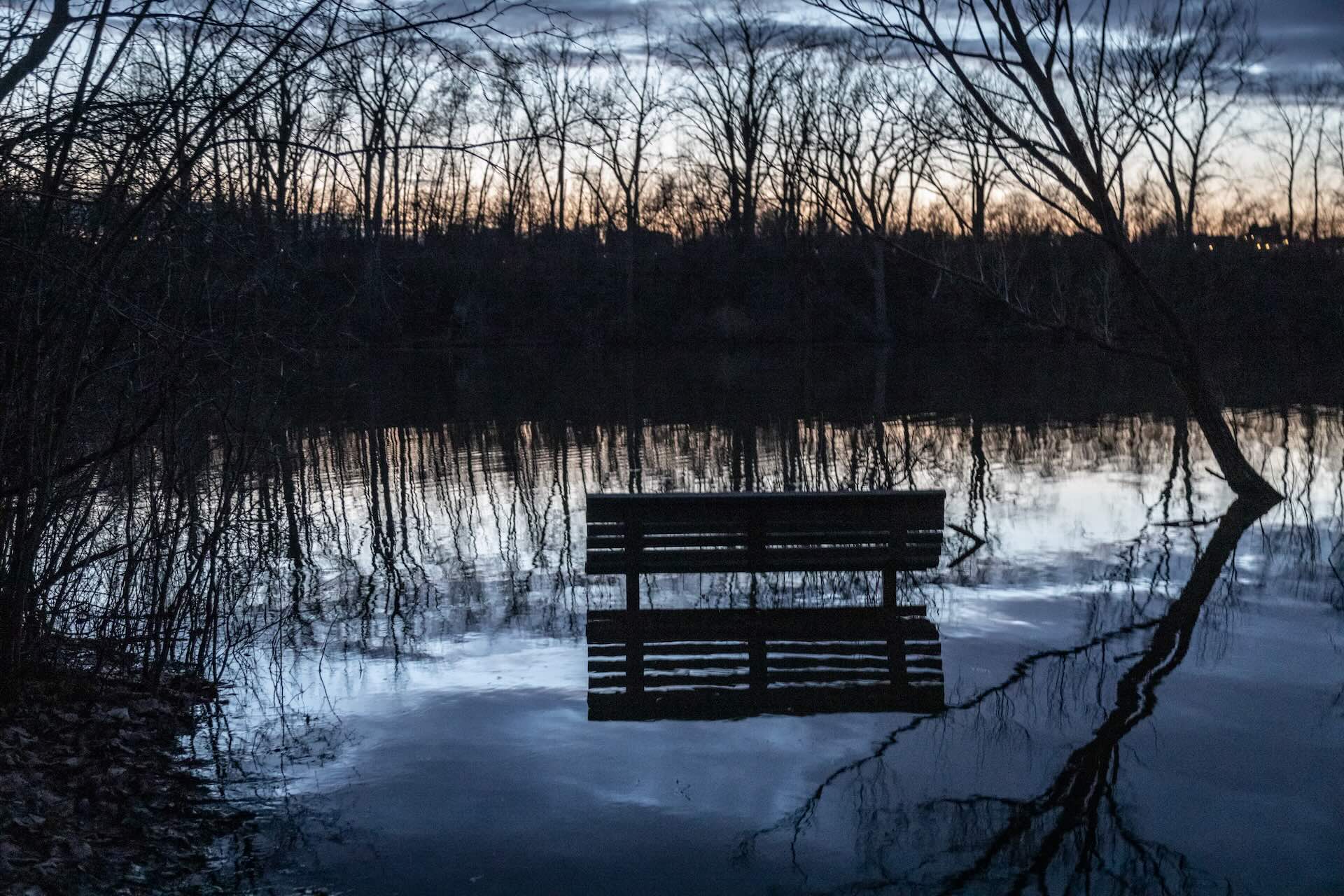 A bench in l’Île-de-la-Visitation nature park near where Mirshahi’s body was found by city employees. Photo: Roger Lemoyne for The Logic

The Big Read
The wild life and brutal death of a crypto hustler
Kevin Mirshahi was living the crypto dream. Then it became a nightmare.
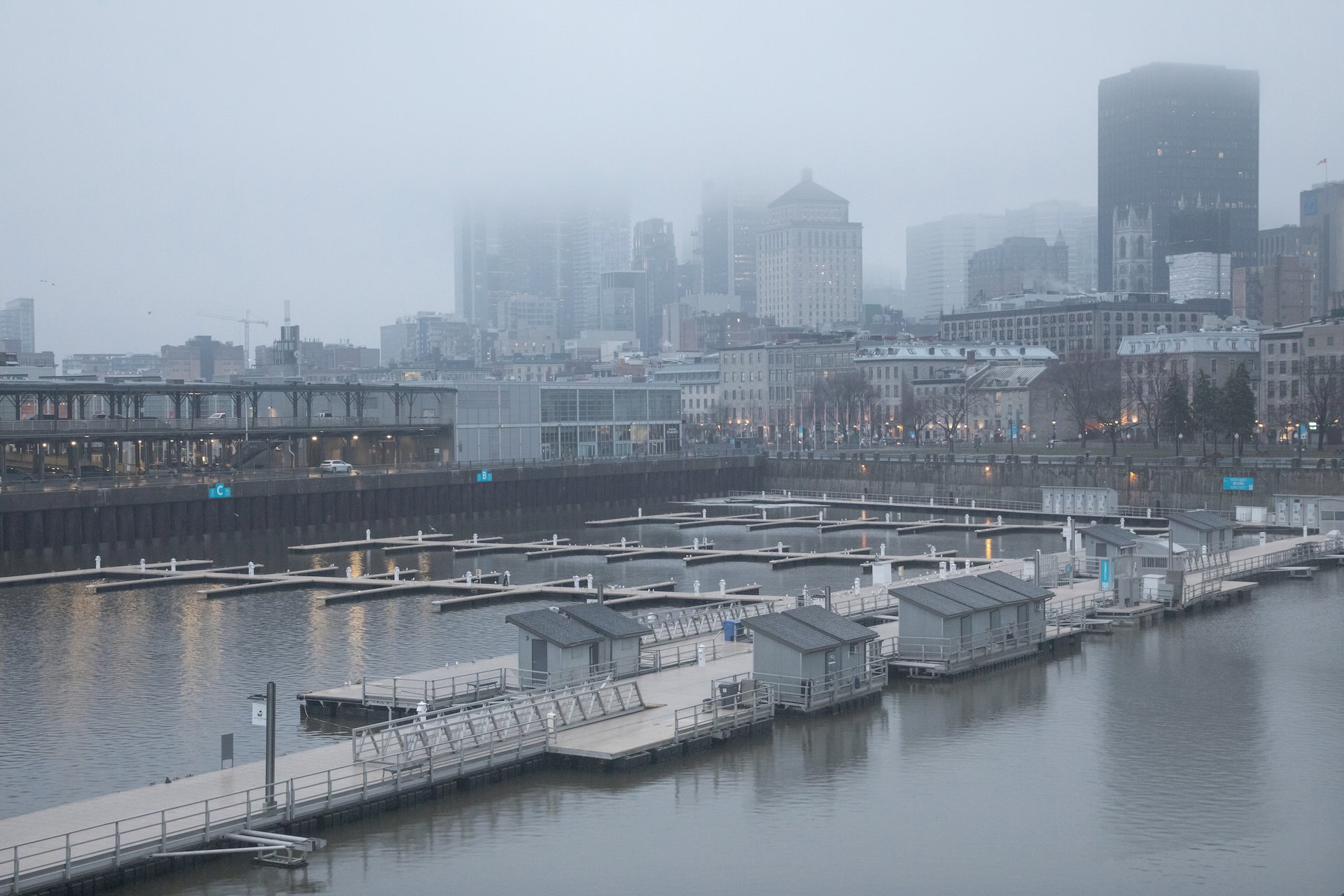
The marina in Montreal’s Old Port. In the summer months, Kevin Mirshahi would often head out on his powerboat and share photos and videos on social media. Photo: Roger Lemoyne for The Logic
Kevin Mirshahi has nine months left to live.
It’s September 2023 and the sun is setting in Montreal. In an Instagram video, Mirshahi’s powerboat creeps through the darkening waters of the Old Port before roaring across the St. Lawrence, leaving the city in its wake. Mirshahi’s hand turns the wheel, his wrist sporting a diamond-encrusted watch. Two supercars languish by an overpass, glistening side by side. “Life begins at the end of your comfort zone,” Mirshahi writes. “What are you waiting for?”
Mirshahi is at the height of his powers. A handsome man with olive skin and sculpted black hair, the 24-year-old is one of Montreal’s biggest cryptocurrency influencers. He has more than 2,500 paying subscribers on Crypto Paradise Island, his private Telegram channel, where he doles out advice on buying and selling crypto.
He boasts about annual returns of up to 2,500 per cent, and his social media feeds serve as real-world proof of this absurd promise. The supercars, the shopping sprees, the swanky condos, the trips to Paris and Dubai, the clubs, the women, the wads of cash wrapped in elastics sitting in sacks and stuffed in envelopes. Mirshahi has it all.
The personalized licence plate on his cherry-red Lamborghini Huracan is at once a mantra and a calling card: BTCUSD. On the passenger side window, the letters BTCUSDLIFE are emblazoned in white italicized letters, a not-so-subtle advertisement for his Instagram account.
To the outside world, Mirshahi is living the dream. The following December, he’s partying in Miami, then back in Montreal at the club École Privée, where a bottle of Hennessy goes for $700. In April 2024 he’s in Dubai. Supercars. Nightclubs. The palm tree-lined infinity pool at the Five Palm Jumeirah resort.
It’s June 5, 2024. Kevin Mirshahi has less than a month left to live. He’s changing the exhaust on one of his Lamborghinis. The day after he’s driving into the garage of the Ritz-Carlton. Days later he’s partying at the 212 nightclub in Old Montreal. On June 20, he’s back in his powerboat. “I’ve been spending my life on the water since yesterday,” he writes on Snapchat.
It’s 1:58 a.m. on June 21. Kevin Mirshahi is on Snapchat, showing off his social media stats for the last month: nearly 130,000 views on Snapchat alone, with the Ritz-Carlton video the most popular. At about 3:30 a.m., four armed men in masks grab him and three friends as they emerge from his car in the garage of his condo building. They are hustled into a Honda and driven west.
Kevin Mirshahi has three hours left to live.
A few weeks before, Joanie Lepage got an offer she couldn’t refuse. A mutual friend had put her in touch with a man Lepage knew from elementary school. The man, who can’t be identified because of a court-ordered publication ban as he has yet to stand trial, needed to rent a basement. Lepage, then 32, lived in Les Cèdres, a town of roughly 7,000 people about 60 kilometres west of Montreal. The man came by the house to take a few pictures. He said the basement, a cluttered, unfinished space with concrete floors and two rooms, suited his needs, but he needed to get the okay from someone else. If it went ahead, he’d give Lepage $3,000 to use her basement for three days at most.
It would be a lot of money for Lepage, who worked at an automotive parts manufacturer in nearby Valleyfield. In 2019, when she and her boyfriend split, Lepage decided to buy him out of the bungalow they had purchased together. She made $23 an hour at her job. After paying her mortgage, she was left with just $150 a month on which to live. According to court documents, Lepage figured the man wanted to use her basement for something drug-related or, as she later told her mother, “to make someone talk.” Despite this, she didn’t ask any questions. After all, as Lepage later wrote in her journal, $3,000 was more than enough to pay her municipal taxes and credit card, buy groceries and fix a window at the back of her house.
Lepage never met Mirshahi or the three people who were kidnapped along with him. She didn’t see him when he was tied to a chair in her basement, bloodied and beaten. She didn’t see him die, or watch as his lifeless body was hauled away in a tarp.
Two months later she was charged with his murder.
Kevin Mirshahi didn’t set out to be a crypto influencer. Born in Paris, France in 1999, Mirshahi, an only child, grew up in the Montreal suburb of Dollard-des-Ormeaux. A photo of him on a 2013 family vacation to Paris shows a shy-looking kid with dark short hair and glasses standing under the Arc de Triomphe.
By 2016, Mirshahi, now aged 17, had a new haircut—a high fade and eyebrow slits—and a new online persona. On social media he’d taken to calling himself “iPhone 7 God” and was peddling discount cell phones and Snoop Dogg-branded vape pens. By 2018, he’d added cigarettes and fake designer watches to his portfolio. He’d also discovered crypto.
He now went by Versace Trading. “19 years old from 9k to 120k in 7 months!” read the bio of his Instagram account at the time. Wads of cash populated his feed. He launched Crypto Paradise Island in the spring of 2019.
Mirshahi’s timing couldn’t have been better. Long the currency of the paranoid fringes, crypto’s move into the mainstream has attracted a new generation of aficionados. YouTubers, celebrities, tech bros, momfluencers and misogynistic scourges, not to mention central banks and entire countries. Part cheerleaders, part self-professed gurus, Mirshahi and his ilk are a crypto dream wrought in flesh, blood and luxury cars. Their social media profiles are at once a lifestyle choice and an advertisement for their apparent skill in picking winners, avoiding losers and knowing when to buy the dip and sell the rip.
But being crypto-conspicuous can be dangerous. Hard to claw back and easy to move, cryptocurrencies can lend themselves to thievery, with assailants often resorting to so-called wrench attacks—using brutal violence to try and force people to cough up the passwords protecting their fortunes. Globally, there were 79 such attacks in 2025 according to data compiled by crypto developer Jameson Lopp. That number is nearly double from the year before and is likely to increase again in 2026.
In 2022, self-styled Crypto King Aiden Pleterski was kidnapped in downtown Toronto and tortured for three days. In Manhattan, two 30-something crypto bros have been arrested and charged with multiple offences. Prosecutors allege they kidnapped an associate and tortured him for 17 days in an attempt to gain access to his crypto-wallet. WonderFi CEO Dean Skurka, who has worked to bring Bay-Street credibility to crypto, was also kidnapped in downtown Toronto in 2024, and only released when someone reportedly paid a $1-million ransom.
Mirshahi wanted to ride the crypto wave, risks be damned. Crypto Paradise Island’s launch coincided with a bear-to-bull swing during which Bitcoin’s value swelled after crashing the year before. The turmoil made it easy for Mirshahi to sell his pitch: for $400, investors could join his Crypto Paradise Island Telegram channel, on which Mirshahi doled out his signals for when and what to buy and sell. For $800, Mirshahi’s automated bot did all the work for you.
“It’s the lazy way of doing things, and you have nothing to do but add or take out money from your account when you feel like it,” he wrote to one prospective client on Snapchat, Mirshahi’s business platform of choice.
By the spring of 2019, Mirshahi had about 30 paying clients. Two years later, he had 2,500, many of them eminently satisfied. “Bro you’re a fucking genius,” wrote one Crypto Paradise Island client who had apparently reaped 57 per cent returns thanks to Mirshahi’s guidance. On social media, Mirshahi bragged of making over $40,000 in a month. His cash-and-supercar laden lifestyle was his own best advertisement.
Crypto Paradise Island nearly crashed and burned just as it was taking off. In March 2021, Mirshahi began promoting a new crypto token on Telegram and Snapchat. Shrouded in secrecy, Mirshahi would only say that the token would be released the following month—and Crypto Paradise Island members would have an exclusive opportunity to invest. Many clamoured to get in on the action, with one investing $20,000, the sum total of their life savings.
That token, known as MRS, was the brainchild of Montreal-based crypto entrepreneurs Antoine Marsan and Bastien Francoeur. Marsan, who didn’t respond to an interview request, paid Mirshahi a total of 150,000 MRS tokens to promote it. In turn, Mirshahi recruited other influencers to pump up the token’s value.
On Facebook, Marsan and Francoeur’s company claimed MRS would go “to the moon” when it launched, along with a rocket emoji. In less than two months, its value soared by 1,400 per cent, to $30 million. On April 17, about six weeks after MRS’s launch, an anonymous investor sold 20 per cent of the total number of MRS tokens, causing its value to collapse. By the time several investors contacted the Autorité des marchés financiers (AMF), Quebec’s financial regulator, the value of MRS had dropped 90 per cent. It was a classic pump and dump.
In July 2021, the AMF banned Mirshahi, along with Marsan and Francoeur, from acting as investment promoters or advisors for a year. The AMF never divulged the identity of the investor who dumped their share and caused the value of MRS to collapse. In an exchange on Snapchat, a recruiter for Crypto Paradise Island accused Mirshahi of having “made 400k” on the MRS pump and dump. “You made money, you know it, all of Montreal knows it,” the person claimed in a voice message to Mirshahi. “I wasn’t the one who told you to recruit influencers to promote a scam.”
Mirshahi denied dumping his MRS stock, telling another investor that he still held the near-worthless tokens in his wallet. Still, Mirshahi suddenly had a lot of enemies. “I’ve gotten too many threats and everything is under surveillance,” he wrote on Snapchat in the days after the MRS dump. Concerned for his safety, he moved to a new address.
Others urged Mirshahi to stay in the crypto game. “The people who threatened you have completely lost their minds. I really hope that it won’t stop you from continuing in the future and that you’ll continue your activities with Crypto Paradise,” one investor wrote to him on Snapchat.
It’s exactly what Mirshahi did. After a year of court-imposed limbo, during which he sold crypto mining machines and charged $1,000 to promote products and services to his 20,000 Snapchat followers, Mirshahi the crypto influencer was back—“legally, with real permits,” he promised a prospective investor. He once again started chronicling his outsized lifestyle on Instagram and Snapchat. In April 2024, he bought a one-bedroom apartment overlooking the Dubai marina, unveiling it to his followers with a 12-second tour set to the thumping electronic beats of “One Night In Dubai.”
Online, it was the same old Mirshahi. Offline something had changed, according to Leo, one of Mirshahi’s closest friends, who asked that his real name not be published for privacy reasons. Anti-drug for most of his life, Mirshahi began to indulge heavily, in part because he had become a prisoner of his own image, Leo claimed. There were “two Kevins,” according to his friend. The one most people knew was the flesh-and-blood incarnation of his Instagram feed—the guy who was bent on making a show of making money. “People wanted to go out with Kevin because he had the Lambo and the jewels, and they wanted to be cool as well. So going out with him validated them, like they were hanging out with the millionaires of Montreal,” Leo said. “He was lost in the fake character of luxury and money.”
The other Kevin, the one Leo knew, wasn’t the clubbing crypto-baller with a garage full of Lamborghinis. When he was away from his entourage, Leo said Mirshahi was quiet and timid, with a head brimming with business ideas. It was that version of Mirshahi who filled out an application for the winter 2024 market finance program at HEC Montréal, a university-level business school.
It was that Mirshahi who, shortly before his death, envisioned developing a crypto exchange project similar to Shakepay with Leo, as well as a Wix-like website-building platform. Leo served as the tech guy while Mirshahi was to provide the business “flex,” using his status to promote the new companies as he had done with Crypto Paradise Island. For Leo, it was as though Mirshahi pursued these side projects to prove he wasn’t all cars and bling. “He had a lack of self-confidence,” Leo said. “I think he believed that people did not see his value.”
Mirshahi also had a girlfriend whom he rarely if ever mentioned online. They shared smoothie recipes, dinner ideas and heart emojis. On April 9, the day he closed on the Dubai condo, he texted her. “I miss you a lot,” he wrote.
Something soon changed. “You betrayed me, you lied and manipulated me,” Mirshahi’s girlfriend wrote to him on April 27. “And yes I still love you, but you yourself told me that we can no longer be together. You stopped fighting for us because you wanted to live your youth.”
Mirshahi messaged her again five days later from a Montreal hospital. He needed his mother’s phone number. “They tried to kidnap me. I’m bleeding everywhere,” he wrote. “Don’t respond on Insta and don’t write anything because they have my cell.”
That night, Mirshahi detailed his attempted kidnapping in a series of messages to friends. Four men had pulled up beside him in a car, punched him in the eye, nose and mouth and pulled him inside the vehicle. According to the messages, Mirshahi jumped out of the car as it sped away, hitting the ground hard.
In the following days he posted pictures and videos on Instagram of himself lying in a hospital gurney, arms scraped, eye black, eyeball hemorrhaged red. “I busted my ass,” he wrote in an Instagram message punctuated with two laughing emojis. Within days, his reddened eyeball had become a jokey meme amongst him and his friends. He smiled as he showed off his injuries.
Mirshahi, paranoid by nature, had barricades and an extra lock on the front door of his condo. Yet after the first kidnapping attempt, Leo felt that fatalism subsumed paranoia. “When you’re paranoid all the time, it just becomes your reality,” Leo said. “He knew it would happen, that he was going to get kidnapped again.”
All there was left to do was to party. Recovered from his beating, another Montreal summer awaited Mirshahi, and he was going to go all out. In a Snapchat voice message, he made a resolution “to not be sober for a single second.”
In June 2024, Leo texted Mirshahi to tell him that the website-building project was off the ground. It was a small venture, nothing like Crypto Paradise Island, but they had already made four sales. “He was super happy when I told him,” Leo said. “But we never got to celebrate.”
The Honda left Mirshahi’s condo building in Old Montreal at 3:32 a.m. on June 21. Mirshahi and his three friends were driven to a parking lot, where they were moved to a black Dodge minivan. As they drove, the alleged kidnappers stripped Mirshahi down to his boxers, put duct tape over his face and beat him.
The minivan arrived at Joanie Lepage’s house less than an hour later, with the man Lepage had been speaking to arriving separately in a blue Dodge pickup truck. The minivan backed up and the kidnapping victims were brought into Lepage’s basement through a back door. There, the men divided Mirshahi and the three other victims into separate rooms, the two women in one and Mirshahi and another male victim in another.
Court documents reveal the details of Mirshahi’s final hours. According to one of the victims, who can’t be identified because of a publication ban to protect their identity, the alleged kidnappers used a belt and a taser on Mirshahi, as well as kicking and punching him. They ordered him to give them the code to his phone in order to gain access to his crypto wallet. Mirshahi stopped breathing shortly after the beating stopped. He died between 6 and 6:30 a.m. on June 21, evidence would later reveal.
Lepage arrived home at 7:05 a.m., after working an overnight shift in Valleyfield. Driving up to her house, she saw the blue Dodge Ram parked in the driveway and the black minivan in the backyard. “I didn’t really look because I didn’t want to know,” she later told police. She continued driving to her parent’s house where she tried to sleep for a few hours.
Two other male suspects, who can’t be identified due to a court-ordered publication ban because they have yet to stand trial, showed up at Lepage’s house at 9:40 a.m. They came into the basement, wearing masks and hoods, and confirmed that Mirshahi was dead. The two men, who allegedly have gang affiliations, allowed the three kidnapping victims into the same room together, away from Mirshahi’s body. Shortly after 4 a.m., about 30 minutes after Mirshahi and his friends were kidnapped, police arrived at his condo building in response to a call about a disturbance. The Honda used for the kidnapping was found in flames that afternoon on a cul-de-sac in the suburb of Laval.
In Lepage’s basement, one of the suspects showed the victims the news on his phone: police were searching for Mirshahi and the three of them. Leo had also read the news, and was frantically texting Mirshahi’s phone offering money for his friend’s release, hoping the kidnappers would see the messages.
Lepage returned to her house that afternoon. The man gave her some money and instructed her to buy garbage bags, disposable hospital gloves and bottles of bleach. She left the supplies, along with water bottles and a washcloth, on the landing of her basement stairs. She also left sanitary napkins, tampons and a makeup case containing skin-care products for the women in her basement, who had asked for them. “I felt I had to as they were in my home,” she later told police.
Lepage never went past the basement landing, and, save for the man she had spoken to beforehand, she only saw one other person in her house: another man in a white T-shirt with a bandana over his mouth. He seemingly didn’t want Lepage to see him, and the feeling was mutual. “I didn’t want to know anything,” Lepage told the police. After delivering the supplies, she closed the basement door and drove to La Cage aux Sports to watch the Oilers beat the Panthers in game six of the NHL playoff finals.
At about 10:30 p.m., with the game in the third period, Lepage got a call from her neighbour: the police were at Lepage’s house. It took her roughly 15 minutes to drive home. She’d spent the afternoon with friends, she told police. Everything was normal in her house. As for the truck that had aroused suspicions, it belonged to a childhood friend, she said. The officers thought Lepage seemed nervous. Nevertheless, they left. Lepage went back inside and fell asleep on her couch.
Less than an hour later, police stopped a car as it was turning off Lepage’s street. Inside were two of the alleged suspects. Police brought the men to the station, where one suspect was arrested for breaching conditions on another charge. The other left in a taxi, eventually returning to Lepage’s house. Police noticed something peculiar in the pictures they took: both men had bleach stains on the cuffs of their pants.
At four that morning, Lepage, who thought she was alone in her house, heard coughing. She texted the man, who said he was still in the basement. In a text to Lepage, the man said he was “scared stiff” because of all the police activity. He was with the three kidnapping victims and Mirshahi’s body. The man had told the kidnap victims that they wouldn’t be able to leave until the next morning because the neighbourhood was crawling with cops. Later that morning, Lepage told police, she left her house for her mother’s or to run some errands.
The next day, the alleged kidnappers forced the victims to stand facing the wall as they brought Mirshahi’s dead body outside through the basement door, wrapped in a large white tarp. The men forced the victims to divulge personal information about their family members, threatening to harm them if the police were notified.
The suspects bound and blindfolded the victims, then escorted them to a black van parked in Lepage’s backyard. They were driven east and dropped off at a bus stop on a leafy bend in the Montreal suburb of Pierrefonds roughly 30 kilometres from Lepage’s house. Passersby called the police, who arrived just after 3 p.m. The man had kept part of his deal with Lepage—he was out of her house in less than 72 hours. Lepage, though, never got the $3,000.
Though blindfolded throughout much of their ordeal, the victims knew enough to help police to locate where they had been held. At 2:34 a.m. on June 23, a Sûreté de Québec tactical squad raided Lepage’s house. No one was there, and the place stunk like bleach. Sitting on the living room table was a fluffy notebook with a bunny face and ears.
“Silence is golden, words are silver, don’t ask questions,” Lepage had written on its second page, just below what seemingly amounted to a confession: “$3,000→lend my basement to some not very nice guys? Fuck yes.”
Mirshahi’s body was found in Parc de l’Île-de-la-Visitation, a Montreal nature park, on October 30, 2024. He was wrapped in a white tarp, hands and ankles bound and duct tape around his neck.
Police had charged Lepage with first degree murder two months earlier, in part on the strength of evidence gathered in an undercover operation. During that operation she had confessed to undercover agents that she had rented her basement. On a wiretapped call to an unknown acquaintance, Lepage admitted to knowing Mirshahi was dead.
Lepage was granted bail and released into her parents’ care on December 10, 2024. In July 2025, while she awaited trial, Lepage, who has struggled with drugs and alcohol for much of her life, was arrested for drunk driving. She was committed to a detox centre a month later, though was kicked out after a week for punching the walls and getting into arguments with other residents. After a stint in a psychiatric unit, she returned to jail in October 2025. Through her lawyer, Patrick Davis, Lepage and her family declined comment.
As the investigation into Lepage continued, it became clear that prosecutors were unable to place her in the basement of her home in the early hours of June 21. Two of the kidnapping victims say they only heard a woman’s voice upstairs, though never saw her. In December 2025, Lepage’s first degree murder charge was dropped. Lepage’s “willful blindness” made her guilty of forcible confinement of the three living kidnapping victims, according to an agreed upon set of facts. With time served, Lepage will likely be released from prison later this year.
Police arrested two of the alleged kidnappers on November 19, 2024. Three days later they issued a warrant for the man who had rented Lepage’s basement. Whether the alleged kidnappers were able to extract Mirshahi’s crypto wallet information before he was killed remains an open question. Mirshahi’s parents didn’t respond to an interview request, while several of his friends either didn’t respond to messages or did only to later vanish.
Online, Mirshahi lived on—for a time. “I miss you my brother,” a friend of Mirshahi’s wrote to him on Instagram, six days after the kidnapping. In a private group chat where Mirshahi used to post, someone shared a tasteless meme about kidnapping. “Be quiet, it’s not the time for those kinds of jokes,” someone else responded minutes later. A real estate agent in Dubai also pinged Mirshahi with good news: his Dubai condo was ready for handover.
“It would have been goddamn crazy for Kevin’s birthday,” a friend wrote in an Instagram message on June 29, when Mirshahi would have turned 25. The next day, someone else messaged Mirshahi on Instagram. “I don’t know you that much but hope you are at least alive and okay,” they wrote.
Soon, the messages slowed to a trickle. What’s left of Mirshahi are his social media accounts, where diamonds sparkle, palm trees sway and fast cars idle, ready to roar into the night.



Loading...
Thanks for sharing!
You have shared 5 articles this month and reached the maximum amount of shares available.
CloseThis account has reached its share limit.
If you would like to purchase a sharing license please contact The Logic support at [email protected].
CloseGift the full article!
You have gifted 0 article(s) this month and have 5 remaining.
Recipients will be able to read the full text of the article after submitting their email address. They will not have access to other articles or subscriber benefits.
Photo: Roger Lemoyne for The Logic
Mirshahi, centre, regularly shared photos and videos on social media of him driving luxury cars or flaunting designer watches.
The Ritz-Carlton in downtown Montreal. Mirshahi’s social media, which he used to promote his crypto business, was littered with posts about luxury cars and expensive hotels.
The entrance to the 212 nightclub in Old Montreal. In the months before his death, Mirshahi had resolved “to not be sober for a single second.”
The clock tower on the Quai de l'Horloge in the Old Port of Montreal.
Mirshahi used his social media accounts to show off his lifestyle as a way of promoting his crypto business.
The condo building in Old Montreal where Mirshahi lived.
A road in the town of Les Cèdres, a few hundred metres from the house where Mirshahi was tortured and killed.
“Silence is golden, words are silver, don’t ask questions,” Lepage had written on the second page of her notebook, just below what seemingly amounted to a confession. “$3,000→lend my basement to some not very nice guys? Fuck yes.”
The bus stop in the Montreal suburb of Pierrefonds where Mirshahi’s kidnapped friends were dropped after his murder.
A bench in l’Île-de-la-Visitation nature park near where Mirshahi’s body was found by city employees.
Most Popular This Week



In-depth, agenda-setting reporting
Great journalism delivered straight to your inbox.
Commentary
Carmichael: Canadian ignorance about India is a strategic weakness
Briefing
Aritzia shares pop after earnings rise 204%
First Nation in Alberta goes to court over fast-tracked oil pipeline
Chinese EV maker Geely Auto Group to launch in Canadian market in 2027
Best business newsletter in Canada
Get up to speed in minutes with insights and analysis on the most important stories of the day, every weekday.
Exclusive events
See the bigger picture with reporters and industry experts in subscriber-exclusive events.
Membership in The Logic Council
Membership provides access to our popular Slack channel, participation in subscriber surveys and invitations to exclusive events with our journalists and special guests.





