The entry appeared in Canada’s federal lobbying registry in June. A man named Darryl Williams, a B.C.-based businessman with little to no profile in Ottawa, had signed up as an official representative of the Saudi Investment Bank, a necessary step toward meeting on the bank’s behalf with Canadian politicians and government officials.
Skip to content

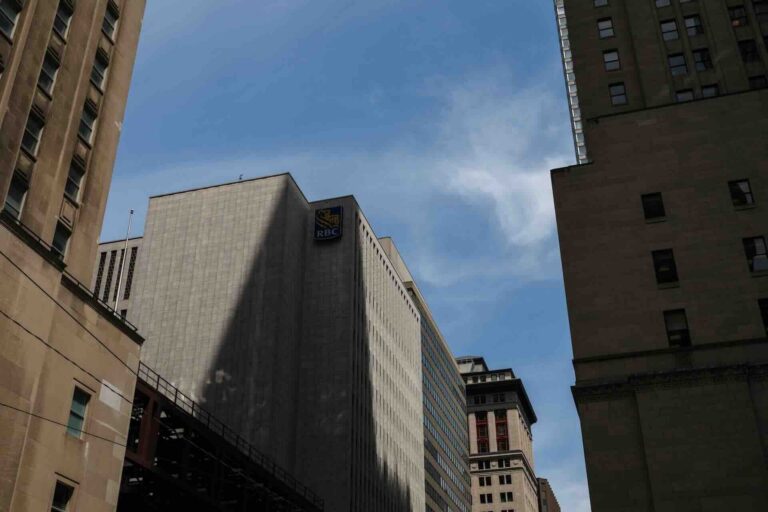
 The Saudi Investment Bank, which is headquartered in Riyadh, focuses its services on people and companies inside Saudi Arabia, says a spokesperson. Photo: Saudi Investment Bank/YouTube
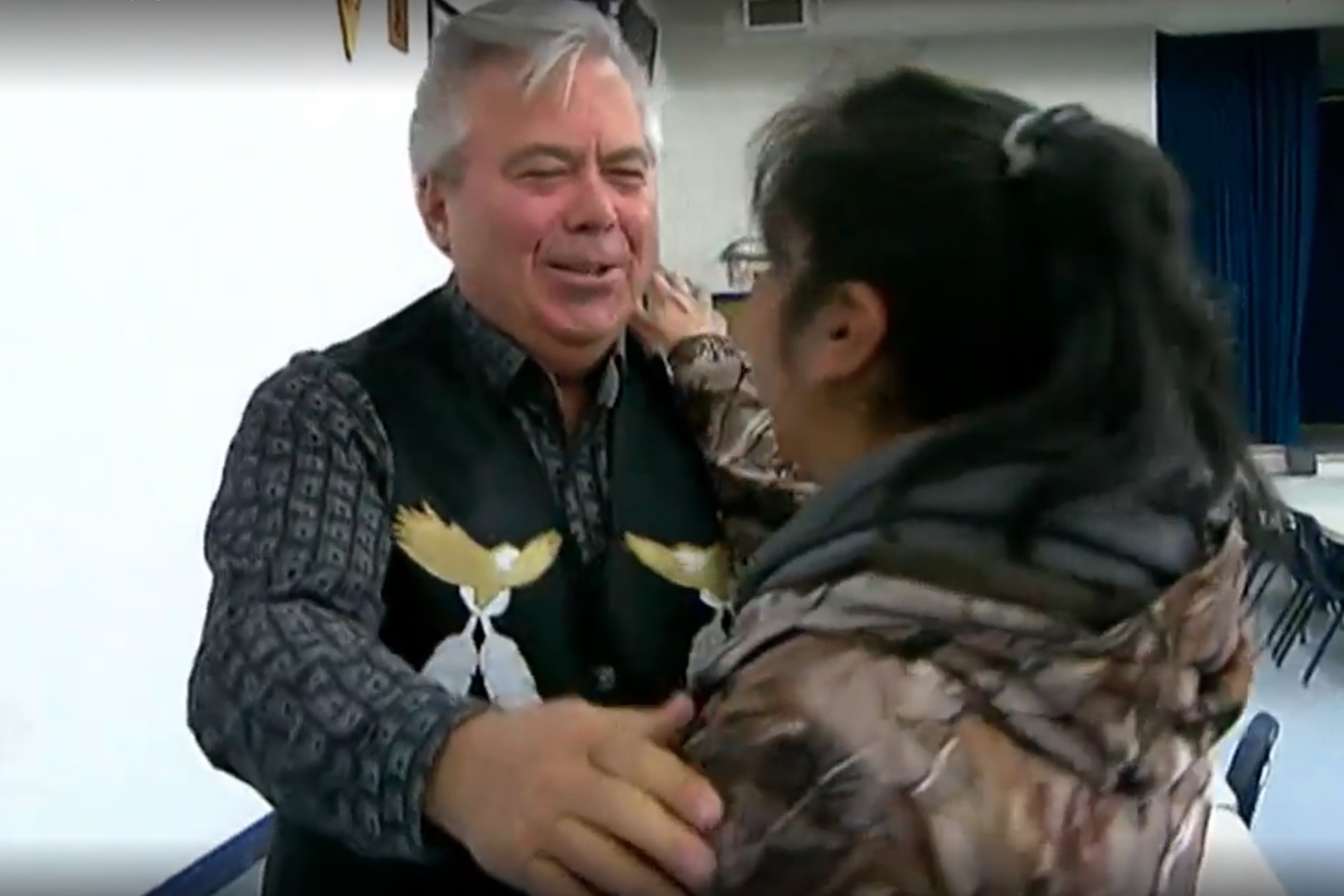 Darryl Williams receives a hug on CBC News from a woman on the Sandy Bay First Nation in Manitoba; Williams had said his company would build a new house for the woman and her family. Photo: CBC/Screenshot

The Big Read
Saudi Investment Bank says it has nothing to do with mysterious Canadian lobbyist
A B.C. man claiming to represent the bank raised hopes of Saudi money pouring into major projects in Canada. A bank official now calls the claims ‘gibberish.’
Photo: Photo illustration by Paul Kim for The Logic; Photo: CBC/screenshot.
The entry appeared in Canada’s federal lobbying registry in June. A man named Darryl Williams, a B.C.-based businessman with little to no profile in Ottawa, had signed up as an official representative of the Saudi Investment Bank, a necessary step toward meeting on the bank’s behalf with Canadian politicians and government officials.
News of the registration emerged amid reports that Prime Minister Mark Carney had invited Saudi Arabia’s Crown Prince Mohammed Bin Salman to attend the recent G7 summit in Alberta. The oil-rich kingdom was known to be eyeing deals in AI, data centres and tech, areas in which Canada was pushing for growth as it scrambled to expand its trade horizons beyond President Donald Trump’s suddenly unreliable United States.
In subsequent interviews with The Logic and other media, Kelowna-based Williams, 72, boasted of an impressive network of global business contacts, including a personal relationship with the bank’s vice-chair, who Williams said had been the best man at his wedding decades ago. His clients at the Saudi Investment Bank (SAIB) wanted to finance millions, even billions, worth of projects in Canada, Williams said—and quickly.
Talking Points
- A man named Darryl Williams, living in Kelowna, B.C., has registered to lobby the federal government on behalf of the Saudi Investment Bank, which he says wants to debt-finance major projects in Canada
- The bank, however, says it has no connection to Williams and no interest in lending money to Canadian governments or businesses
- An investigation by The Logic uncovered what fraud experts say could be an attempt to mislead Canadian businesses
By his own account, Williams—who is also the owner of a business that sells steel buildings—has since facilitated low-interest loan applications from about two dozen Canadian businesses eager to unlock funding from the SAIB, a Riyadh-based retail and corporate financial institution with nearly $60 billion in assets.
However, details uncovered in an investigation by The Logic reveal the opportunity Williams pitched may not be what he made it out to be.
The SAIB told The Logic last week it has no relationship with Williams, nor has it any interest in lending money to Canadian governments or businesses. “The bank is a Saudi-based bank,” Arpit Singh, the SAIB’s associate vice-president of market intelligence, said July 8 in a telephone interview. “Our interest is in Saudi Arabia only.”
That contradicts the story that dozens of Canadian businesspeople apparently bought into in recent weeks, a story lent legitimacy by unverified and ultimately inaccurate details published by the office of an independent parliamentary watchdog.
Confronted with the bank’s claims, Williams denied that he tried to mislead anybody, and suggested he himself has been the victim of a con. He said he has told the would-be SAIB clients he recruited—at least one of whom was apparently set to travel to the Middle East to complete the paperwork to secure a promised loan—to hold off until he has a better handle on the situation. “I’m borderline upset that this could be an illegal scam,” he said in a call with The Logic on July 5.
Related Articles


In a series of interviews, Williams has tried to explain the situation with an array of strange and shifting stories, including unverified claims about his purported business dealings in the Middle East and with Canadian politicians. An investigation into Williams’s career reveals a history of alleged deception—allegations Williams has denied or attempted to explain away.
If nothing else, the affair raises questions about the oversight of the information in Canada’s lobbying registry and its vulnerability to being abused, and offers a cautionary tale for Canadian businesses and governments as they rush to strike deals beyond their familiar trading networks.
The Office of the Commissioner of Lobbying maintains a public registry of lobbyists and their communications with parliamentarians, ministerial staffers and federal public servants. An entry in the registry, dated June 1, said the SAIB was looking to finance projects across Canada ranging in scale from $5 million to $100 billion, in sectors as varied as agriculture, housing, mining and energy. It lists Mohammed Saleh Alkhalil, vice-chair of SAIB’s board of directors, as the client representative, and Williams as the consultant lobbyist. The registration names 18 federal departments and agencies Williams intended to speak to about debt financing being offered by the SAIB—including the Prime Minister’s Office.
To support the claim he was authorized to represent the bank, Williams gave The Logic a letter dated June 4, 2025—three days after the lobbying registration became active. It features a logo resembling the one on the SAIB website. It bears signatures purported to be those of chief executive Faisal Abdullah Al-Omran and chief financial officer Ahmed Abdulrahman Almohsen.
“We believe this is fake and we completely deny this information,” Singh said after reviewing the document provided by Williams and showing it to the bank’s CFO. The format of the letter, the bank’s address and the signature of the CFO are all wrong, said Singh, who added: “It’s like gibberish.”
Email addresses on correspondence that Williams shared with The Logic, which he said came from his contacts at the SAIB, are also inauthentic, said Singh. The domain name in the addresses matches that used by the bank, but there are hyphens where the bank uses none.
Williams told The Logic none of the Canadians who applied for loans have provided any banking details or other sensitive information to anyone linked to the proposal—including him. He also said he is not the one who started this.
“Absolutely not,” Williams said July 8 in an interview.
When Williams first spoke to The Logic on June 10, he said his working relationship with SAIB began after he received an out-of-the-blue email from Saleh Alkhalil, SAIB’s vice-chair. The note asked if he was interested in borrowing from the bank to expand one of his businesses, Williams said, adding that he assumed Saleh Alkhalil was going through his contacts for anyone he knew in Canada.
“We believe this is fake and we completely deny this information. It’s like gibberish.”
Saleh Alkhalil, he said, was the best man at his wedding 40 years ago. While he told his friend he was not interested in a loan, Williams said their communications turned to the prospect of him helping promote the SAIB and its desire to finance Canadian projects to business owners and government officials.
The next time Williams spoke to The Logic, on July 3, he said he had not spoken to his old friend in at least 35 years when he got that unsolicited email. Williams said the voice at the other end of the line sounded “gravelly” when they later spoke by phone, which he figured was due to his age. He said he thought it was the same friend who had been the best man at his wedding all those years ago, but was unsure. “Sounds like it, but I can’t swear to it.” (Singh, the SAIB associate vice-president, did not answer directly when asked about Williams’s claim that Saleh Alkhalil had been his best man.)
On July 5, Williams told The Logic his best man was someone by the name of John Chapman. A few years after the wedding, Williams said, Chapman moved to Saudi Arabia and started working for an investment fund there. When his friend came to Toronto for a visit, Williams said, he was wearing a long white robe and had grown a beard and a mustache. He was also converting to Islam, Williams said, and changing his name to Mohammed, though he could not remember the new surname his friend planned to use. The person who introduced himself as the vice-chair of the SAIB did not mention their friendship in that first email, Williams said, but he assumed it was his best man from decades ago. Otherwise, he said, he cannot figure out why a stranger would contact him out of the blue.
Williams said he did not know the registration he submitted to the lobbying commissioner had been accepted until he was contacted by Politico, which was the first to report on June 10 that the Saudi bank had asked Williams to pitch its plans in the corridors of power. The Logic also published a brief story that day based on the lobbyist registration and an interview with Williams.
Kelley Love, the director of registration, policy and public affairs at the lobbying commissioner’s office, said in an email on July 8 that the office reviews registrations to ensure they meet the requirements of the federal Lobbying Act. “This includes ensuring that the registration is complete and that the subject matters and details are clear,” she wrote, while saying she could not go into detail about individual registrations. The office will also “read through the registration and ensure that nothing unusual is identified in the registration,” she added, such as listing health as a subject matter without mentioning Health Canada.
Asked whether the office spoke with the SAIB during the review, Love wrote: “We do not contact clients listed in consultant registrations prior to approving them. The consultant lobbyist is responsible for certifying that the content of the registration is accurate.” In a previous email, the office said it can fix errors after entries are posted. “If we become aware of incorrect information, whether through our monitoring and compliance activities or through external sources, we request that corrections be made,” spokesperson Manon Dion wrote July 7.
Williams said he assumed the message came from his best man from decades ago. Why would a stranger contact him out of the blue?
Whether Williams has lobbied elected officials about the SAIB remains unclear. Williams said on July 3 that one of his “agents,” whom he refused to identify, had spoken to Alberta Premier Danielle Smith about the SAIB three different times in the span of a week: on June 1, at a reception ahead of the first ministers’ meeting in Saskatoon; a couple of days later in Lethbridge, Alta.; and again in Calgary. In a subsequent interview, however, Williams said this individual was representing his own business interests and did not mention the SAIB in any of those conversations.
Smith’s press secretary Sam Blackett said the office has no records showing the premier met with anyone affiliated with the SAIB. “We cannot confirm that such a meeting occurred,” said Blackett. A public itinerary for the premier, meanwhile, shows she was in Washington, D.C., on the days Williams said his agent met her in Lethbridge.
As of Monday afternoon, Dion said, the federal lobbying commissioner’s office did not have any record of Williams making contact with federal politicians or officials. Williams had initially claimed he had received a response from federal Housing Minister Gregor Robertson, whom he described as “extremely interested” in the SAIB proposal. Williams said he expected to set up a meeting with him soon. In a subsequent interview, Williams again said he had been in contact with Robertson, but not about the Saudis. A spokesperson for Robertson contradicted both claims. “After an expansive search to the best of our office’s efforts, no records of communication can be found,” said Mohammad Hussain. “We can confirm that no meeting is planned between the minister and this individual.”
Williams said he co-ordinates his work on the debt-financing plan with an individual, whose name could not be independently verified, at a Dubai-based firm called Al Tawasut EST. His contact there has been facilitating the background checks on Canadian companies, he said, which come with a fee and other paperwork, and require would-be borrowers to travel to Dubai to access the SAIB loans. After The Logic told Williams the SAIB was denying any interest in Canada, he said he has told anyone planning to travel there to hold off.
Williams sent The Logic a document he said was a loan agreement—for US$21 million—between the SAIB and a potential client, a company based in Canada. (The owner of the company named as the potential borrower in the document would not comment for this story.) The 11-page document outlined the steps needed to receive the funding. That includes setting up a special-purpose vehicle (SPV) in Dubai through its accredited provider, “Al Tawasut Project Management Services,” to receive the funds.
The Logic sent Al Tawasut a list of detailed questions after the SAIB denied any connection to Williams. An email from the company, signed by a spokesperson named D.N. Patel, who did not provide a title, said Al Tawasut was unaware Williams was not a representative of SAIB and severed ties with him upon learning he was not associated with the bank. Patel did not answer direct questions about whether Al Tawasut agreed to set up SPVs for Canadian companies seeking SAIB loans with Williams’ involvement, or whether the firm agreed to travel to Canada to conduct quality assurance checks on companies that formed those SPVs.
Toronto-based forensic accountant Al Rosen said the loan document looks “skimpy” and pointed out signs it could be fake. The interest rate for the loan, which is two per cent, seemed too low, he said, and it’s odd only one person from the bank signed the agreement. Rosen also found it strange that a loan that size would not include renewal terms. “Insufficient signatures. Insufficient detail,” he said. “These are incompetent people, or it’s a fake.”
Matthew Burgoyne, a financial lawyer and partner with Osler, Hoskin & Harcourt LLP in Calgary, said the agreement raises several red flags. He said requiring a borrower to pay for a special-purpose vehicle before getting the loan is “extremely unusual.” He called it “a hallmark of the ‘advance-fee’ fraud model,” where the victim pays an amount up front, thinking they’ll obtain a larger benefit. “It makes no commercial sense,” he said.
Burgoyne also noted grammatical mistakes, inconsistent terms and formatting errors throughout the document. While this alone doesn’t mean the agreement is fake, he said, there are other, more obvious clues.
He said it’s odd there’s no discussion about whether the loan is secured or unsecured, and what security, if any, the borrower is providing the lender. The document is also missing information on how, when and where the money will be transferred. There’s also no mention of compliance with anti-money laundering laws. “The absence of these is glaring and likely indicative of a scam,” he said.
Williams has repeatedly expressed surprise when told of the troubling signs that the work he said he was doing for the SAIB might not be as it initially appeared. He said he was eager to answer questions and share documentation to help set things straight. “I’d be devastated to feel that something I participated in was dodgy,” Williams said on July 3.
It would not be the first time, though, that business ventures Williams has promoted in the media went sour. In July 2008, the Toronto Star published a story about a new company based in Markdale, Ont., that was selling beef as a health food. It quotes Williams describing how he and his business partner fed their cattle an “all-natural diet” that improved the taste and health benefits of the beef. They pitched the plan as a business opportunity for local farmers, who could sell the specialty beef at a premium. The member of provincial parliament for the area praised the venture at Queen’s Park.
Then it began to collapse. In February 2009, Better Farming magazine reported the company owed farmers money. Six months later, Williams and his business partner were charged with 13 counts of fraud, though provincial court records show the Crown withdrew the charges in April 2010. Williams told The Logic their company was the victim of a supplier that he alleges switched the beef for a lower-quality version of the product that fetched a lower price. “There [were] not sufficient funds to pay the farmer who had given the beef to send,” he said.
Williams was back in the headlines in November 2016. He had said his Ontario-based construction company would donate a new house to a woman who had been living with her seven children and one grandchild in a rat-infested trailer on Sandy Bay Ojibway First Nation. A CBC News video shows the grateful recipient hugging Williams as they met for the first time in the community on the western shores of Lake Manitoba. The next year, Williams blamed the local chief for delays and said he would instead donate the promised home to a family in Kawacatoose First Nation, Sask., about 500 kilometres away. The Sandy Bay First Nation chief at the time told the CBC there were delays but denied being difficult. Williams told The Logic he was concerned someone other than the woman and her family would benefit, so he revoked his offer. “That’s where it ended,” he said. “For some reason, I started looking like the bad guy.”
The 2008 article about the cattle feed business in the Toronto Star reported Williams said he was a medical doctor in Mississauga, Ont., when his wife encouraged him to move to the country. There is no record of his name in the register of both active and inactive doctors maintained by the College of Physicians and Surgeons of Ontario.
There are, however, numerous examples of Williams using the honorific of “Dr.” ahead of his name. These include the email address used to communicate with the contacts he said were based in Dubai and at the bank in Riyadh.
The details that Williams has shared about his medical training and experience are vague, and have shifted throughout several interviews. Williams said he is not licensed to practise medicine, but is a medical doctor by training. He said he went to a medical school in Abu Dhabi that was affiliated with the University of Miami in the early 1980s. In a subsequent interview, Williams said his degree was a research-focused “doctor of science in medicine,” and that his training was actually at a hospital in Abu Dhabi linked to a local university—he couldn’t recall the name of either institution. He trained physicians on new equipment, he said, which had him assisting at eye surgeries in Mexico, India and France. He said he never worked as a doctor in Canada.
Williams does have a bachelor of science in agriculture degree, with a focus in microbiology, which he obtained in 1975 from the University of Guelph.
Williams said he is not licensed to practise medicine, but there are numerous examples of him using “Dr.” ahead of his name.
In the mid-2000s, Williams was working at Rocklyn Academy, a private boarding school near Meaford, Ont., that has since shut down. An archived version of its website said Rocklyn welcomed teenage girls with behavioural issues, poor academic performance or who were drinking or using drugs. It said many of the students had ADHD. An archived page listed Williams as the medical director of the institution and said his services were available at any time of the day or night.
“Dr. Williams holds a Ph.D. in medicine and has direct relationships with local hospitals and physicians involved in the medical care and support of Rocklyn’s students,” the website said on Jan. 5, 2007. “Because of Dr. William’s association with the school, Rocklyn Academy can accommodate students with medically challenging conditions.” By May 2007, those details had disappeared from the site, and Williams’s title had changed to “admissions officer.”
Allie Buffone, 33, said she attended Rocklyn Academy from September 2006 until March 2007, when she went home to B.C. for a school break and refused to return. She was in the ninth grade at the time and remembers Williams being introduced to students as “Dr. Darryl.” Buffone recalls going to see Williams in his office about a medical issue. “I remember a stethoscope around his neck. I remember him listening to my breathing,” she said July 8 in an interview from Saskatchewan, where she now lives.
Williams confirmed his employment with Rocklyn, describing his role as running the admissions process. “They hated me, boy, I’ll tell ya, because I’m the one that signed the paperwork to admit them,” Williams said July 5, referring to the students he interacted with there. In a follow-up interview, Williams said he never wore a stethoscope or performed medical exams on students. He said the school had a rule against male employees being alone with a student without another female present. “I never issued medications,” he said July 8.
Rocklyn co-founder Dale Stohn told The Logic her relationship with Williams didn’t end well, and she has not spoken to him since the school shut down 15 years ago. Initially, though, she was impressed by the man who introduced himself as “Dr. Williams”: he had an incredible memory, she said, and an impressive range of knowledge.
Stohn, who ran Rocklyn with her husband Robert Shaw, does not recall Williams explicitly telling her he was a medical doctor, and said he never performed medical exams on students. She said Williams’ title changed to admissions officer after someone from a medical association—she doesn’t recall which one—got in touch to say the honorific was misleading. Stohn said Williams was a “smooth talker” who had a knack for recruiting. “He could talk anyone into anything,” Stohn said. “But if you ask me directly if I trust him? Not a chance.”
It is fair to describe Williams as a talker. He spoke to The Logic for nearly four hours across four telephone interviews between the initial call about the lobbyist registration in June and the last interview he gave on July 8. By that point, Williams said he could tell from the nature of the questions that The Logic was trying to figure out whether he was complicit. He stressed he still wanted to help uncover the bigger picture and agreed to keep answering questions about his past. He acknowledged there were bumps in the road, but in each case suggested someone else was to blame. They also did not discourage him. “I’ve always been able to pick up my socks and carry on,” he said.
Williams told The Logic he is pausing his recruitment efforts for his latest venture. He said he would not approach potential new clients or advance the loan applications of the ones he recruited until he received more clarity. He also said he is thinking about going to the RCMP, or CSIS—or whichever national authority would be right “for people who are trying to pull fast ones in Canada.” Maybe he would go to Interpol, he said, before wondering aloud whether it even matters. He has spent time going through paperwork, travelling and setting up offices, he claimed, but no harm has come to would-be clients. “At this point, nobody’s spent any money,” he said, “other, oddly enough, than me.”



Loading...
Thanks for sharing!
You have shared 5 articles this month and reached the maximum amount of shares available.
CloseThis account has reached its share limit.
If you would like to purchase a sharing license please contact The Logic support at [email protected].
CloseGift the full article!
You have gifted 0 article(s) this month and have 5 remaining.
Recipients will be able to read the full text of the article after submitting their email address. They will not have access to other articles or subscriber benefits.
Photo: Photo illustration by Paul Kim for The Logic; Photo: CBC/screenshot.
The Saudi Investment Bank, which is headquartered in Riyadh, focuses its services on people and companies inside Saudi Arabia, says a spokesperson.
Darryl Williams receives a hug on CBC News from a woman on the Sandy Bay First Nation in Manitoba; Williams had said his company would build a new house for the woman and her family.
Most Popular This Week



In-depth, agenda-setting reporting
Great journalism delivered straight to your inbox.
Commentary
Carmichael: Canadian ignorance about India is a strategic weakness
Briefing
Aritzia shares pop after earnings rise 204%
First Nation in Alberta goes to court over fast-tracked oil pipeline
Chinese EV maker Geely Auto Group to launch in Canadian market in 2027
Best business newsletter in Canada
Get up to speed in minutes with insights and analysis on the most important stories of the day, every weekday.
Exclusive events
See the bigger picture with reporters and industry experts in subscriber-exclusive events.
Membership in The Logic Council
Membership provides access to our popular Slack channel, participation in subscriber surveys and invitations to exclusive events with our journalists and special guests.