The only warning that a law making Bitcoin legal tender was about to be introduced in El Salvador’s Congress on June 8 was a tweet from an elected official, reading “1 BTC = 1 BTC.”
Skip to content

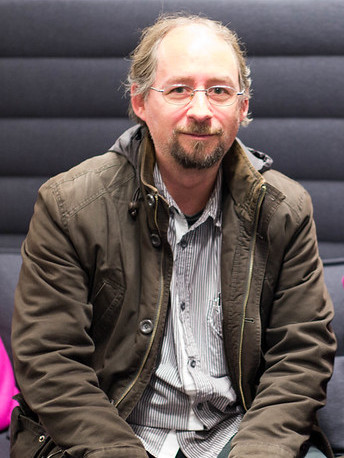 Adam Back in December 2014. Photo: Joi Ito | Flickr
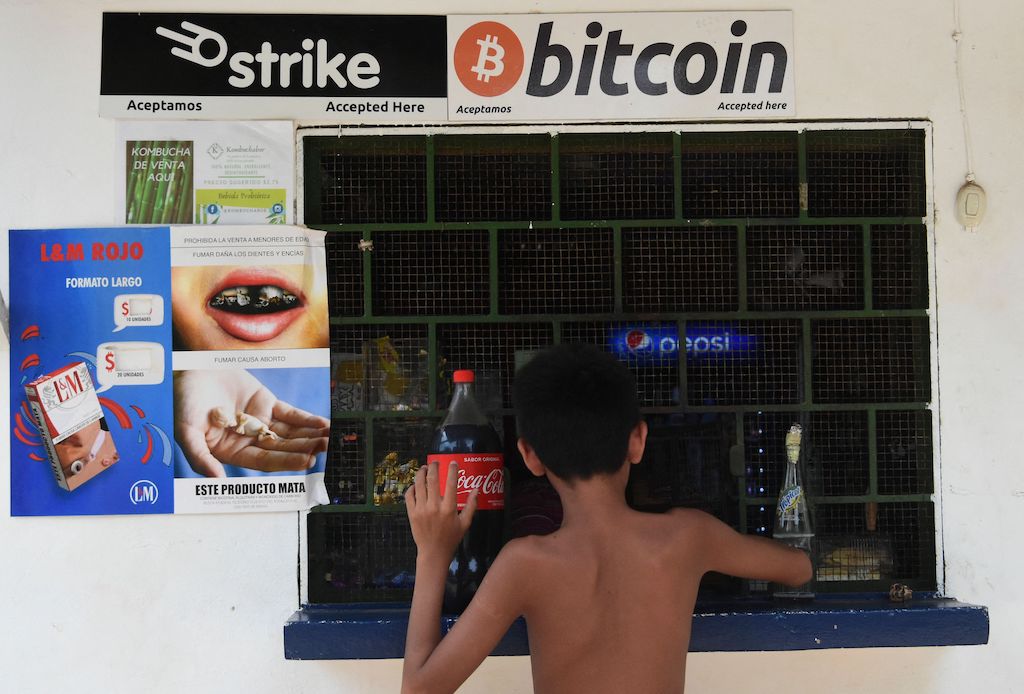 A store that accepts bitcoins in El Salvador in June 2021. Photo: Stanley Estrada/AFP via Getty Images

The Big Read
Blockstream: The Victoria-based company behind El Salvador’s Bitcoin revolution
Salvadoran presidential candidate Nayib Bukele during the closing rally of his campaign in San Salvador on Jan. 26, 2019. Photo: Oscar Rivera/AFP via Getty Images
The only warning that a law making Bitcoin legal tender was about to be introduced in El Salvador’s Congress on June 8 was a tweet from an elected official, reading “1 BTC = 1 BTC.”
Three days earlier, in a video presentation at the Miami Bitcoin Conference, the country’s authoritarian president, Nayib Bukele, had announced plans to make El Salvador the first sovereign nation to adopt the digital currency, although no one was sure exactly when he’d make the move. To provide software and advise the country on the transition, the government tapped two private vendors: Chicago-based digital-wallet company Zap, and Victoria, B.C.-based Blockstream.
Talking Point
El Salvador’s authoritarian president has passed a law making it the first country to accept Bitcoin as legal tender and he’s getting help from an unlikely source—Blockstream, a Victoria-based company headed by Adam Back, a “cypherpunk,” freedom activist and early correspondent with Bitcoin creator Satoshi Nakamoto.
Blockstream has mostly flown under the radar since raising US$80 million from prominent investors within a few years of launching in 2014. Behind the scenes, it’s been working on the infrastructure it believes will power Bitcoin’s mass adoption, realizing the company’s founding vision of enabling financial freedom for those poorly served by the status quo, without the interference of governments or banks.
Carmen Tatiana Marroquín, an economist based in El Salvador’s capital San Salvador who was in the assembly chamber for the vote, said the passage of the law didn’t feel particularly free. She said the law passed quickly and with little debate, the only thing slowing legislators down being a glitch in the electronic voting system that forced them to vote for a digital future by raising their hands.
“Most of them were just repeating that this is the most amazing law they’ve ever seen,” Marroquín said. “In one hour, they passed the law.”
With a supermajority in Congress, Bukele can take such swift, decisive actions, as he demonstrated when he dismissed El Salvador’s attorney general and five judges from the Supreme Court in May. Bukele made the move after ignoring warnings from the court to respect rights when enforcing pandemic shutdowns, earning himself a rebuke from Human Rights Watch. In Blockstream chief executive Adam Back—a “cypherpunk,” freedom activist and early correspondent with Satoshi Nakamoto—Bukele has an unlikely ally.
“Back was out there in the early ‘90s printing PGP code on T-shirts to tell the U.S. government that they couldn’t stop open source,” said Alex Gladstein, chief strategy officer at the Bitcoin-friendly Human Rights Foundation, referring to shirts Back used to sell, protesting a U.S. government decision to regulate privacy software, as if it were munitions. “He’s a businessman, but you also have to understand his philosophical background.”
Back, whom The Logic interviewed before news of the company’s involvement was announced, said he applies his privacy and security-minded principles to Blockstream’s media strategy. “We don’t like to talk about things until we’ve done them and they’re production ready, generally speaking,” he said. “That’s possibly why we’re not so loud in the news.”
To those familiar with Bitcoin’s history, however, Back is an important figure. He was active on the Cypherpunks mailing list, a discussion forum for libertarian-leaning privacy activists that had thousands of subscribers in the ‘90s.
In a 1996 posting, Back expounded on his views on crypto anarchy, a philosophy that supports the use of digital cryptography to enable freedom of speech, freedom of trade and anonymity.
“To me, crypto anarchy is a means to achieve a more libertarian government,” Back wrote. “It is a pivotal tool to reduce government power, and enable freedom and privacy.”
Back used the list to debut an idea he developed called Hashcash, which limited email spam by requiring senders to expend electricity and computational power to guess a random number over and over before finally landing on a valid one that allowed the email to go through, disincentivizing mass nuisance messages.
Hashcash would go on to become the inspiration for Bitcoin mining, with the cryptocurrency’s pseudonymous creator mentioning it in his 2008 whitepaper. Back and Satoshi corresponded about the concept before it was widely circulated.
Six years later—when the price of Bitcoin was in the US$300 range and it was still considered a curiosity by most—Back, then-chief executive Austin Hill and a group of Bitcoin developers launched Blockstream. The company raised US$22.35 million in seed funding, followed by nearly US$58 million in Series A funding two years later, from prominent investors including LinkedIn’s Reid Hoffman, Khosla Ventures and AME Cloud Ventures.
A blog post from Hoffman said he saw Blockstream playing a similar role for Bitcoin as the Mozilla Corporation does for open source internet tools like the Firefox browser.
“Bitcoin is the platform where users, merchants, and entrepreneurs are congregating. It’s where the momentum is,” Hoffman wrote. “That’s why it’s so important to promote development efforts that increase the power and flexibility of Bitcoin Core, and to do so in a way that keeps Bitcoin open, accessible to all users and developers, a public good.”
Today, Blockstream continues with activities that fit that role, employing prominent Bitcoin developers, funding research and deploying satellites that make it possible to use Bitcoin in areas with poor internet. The company has also expanded into a variety of revenue streams, including mining, wallets and the Liquid network, which speeds up the settlement of large transactions.
With the exception of an undisclosed amount of angel funding in 2019, Blockstream hasn’t raised any additional financing since its large Series A and seed rounds. In an interview, Back said that’s because it doesn’t need to—thanks to a treasure trove of Bitcoin the company has accumulated by adding it to its balance sheet since 2014, something other companies such as Tesla and MicroStrategy have recently started doing as well.
“We ended up with probably a B-round worth of value growth due to Bitcoin price appreciation, as it really added up in dollar terms,” Back said. “We’re not in position to talk about funding plans at the moment, but you would expect us to continue to grow in that way.”
Jalak Jobanputra, founder and managing partner at Future\Perfect Ventures and an investor in Blockstream’s seed round, said the company has “exceeded expectations,” and that she’s thrilled to see the company become self-sufficient through treasury investments in Bitcoin. “They’ve really put their money where their mouth is, in terms of growing the business and then investing accordingly,” she said.
Despite his radical cypherpunk origin story—and penchant for lobbing insults on Twitter—Back is a measured speaker, becoming most animated when discussing Quebec’s moratorium on new Bitcoin mining operations. (“Canada’s basically sitting on a digital goldmine, and choosing not to economically benefit from it.”) He described a steady-as-she-goes long-term vision for the company: “Our strategy has been pretty much the same since 2014, which is to build infrastructure for lots of use cases around Bitcoin.”
Robert Le, a fintech analyst at PitchBook, said Blockstream’s business model is unusual. Despite the attention that Tesla and MicroStrategy have brought to the idea of putting Bitcoin on corporate balance sheets, Le said it remains an uncommon move, because of the risk and volatility.
It’s also unusual for a company to have as many products and services as Blockstream offers, Le said. “It’s not very common. Typically, the companies or startups in the space, they really focus on a niche area and they try to do that very well.”
Another way Blockstream is taking a contrarian approach is by developing software intended to expand Bitcoin’s functionality beyond payments or storing value. The company’s Liquid network hosts an NFT marketplace, a decentralized exchange and other DeFi products similar to those more commonly found on competitor blockchain Ethereum.
Ethereum is more flexible and easily programmable, but Back said those features come at the cost of security. He said he’s confident Bitcoin will eventually be the blockchain of choice for large institutions.
“I think people are rightly excited about the potential for open innovation and financial-instrument execution that normally happens in a back office of an exchange, but that promise is being let down today by a continuous stream of hacks and programming mistakes,” Back said. “I think the more serious players, who are handling other people’s money, don’t want to take those kinds of risks.”
The partnership with El Salvador will be the biggest test yet of Back’s faith in Bitcoin’s reliability. Blockstream declined to provide details about what the arrangement will entail beyond public statements the company has made, which suggest it will use its satellite network to improve access to Bitcoin, advise the country on developing a mining industry and help modernize financial infrastructure.
Gladstein, the Human Rights Foundation Bitcoin proponent, has a theory that sheds some light on why a cypherpunk like Back might be willing to work with an authoritarian leader to promote Bitcoin adoption. Gladstein wrote an article in Bitcoin Magazine in April titled “Bitcoin is a Trojan Horse for freedom,” where he argued dictators enticed by Bitcoin’s price appreciation will unwittingly lay the groundwork for their own downfalls, which will come once their citizens adopt it and lose reliance on the government and financial system.
“The ‘number-go-up’ technology, which is sort of a tongue-in-cheek way of saying that over time the price goes up, you can’t separate it from what I call the ‘freedom-go-up’ technology,” Gladstein said. “It doesn’t matter what their intentions are. Whether they like it or not, they’re powering it.”
Marroquín, the Salvadoran economist, is less convinced about Bitcoin’s potential to spread freedom regardless of the president’s intentions.
“People are very concerned about this law, whether it is going to be an open door to make the state more powerful,” she said. Marroquín said the irony of the government imposing a law about the mandatory acceptance of Bitcoin—effectively forcing people to embrace the “freedom-go-up” technology whether they like it or not—is not lost on her. “It’s an absurdity.”
Marroquín said a lot of the arguments the government is using for moving to Bitcoin as legal tender sound familiar. In 2001, El Salvador adopted the U.S. dollar as its official currency—a move that failed to solve the country’s systemic financial problems at the time, leaving many Salvadorans skeptical another currency change will improve things today, she said.
“It’s like a nightmare. We are just going crazy, because it’s the same arguments—freedom, people who are poor are going to be able to have money,” Marroquín said. “It’s just the same speeches we heard 20 years ago.”
The World Bank and the International Monetary Fund have raised concerns as well. On Wednesday, the World Bank cited Bitcoin’s carbon footprint and transparency shortcomings as reasons to decline El Salvador’s request for technical assistance with the transition, while the IMF raised “macroeconomic, financial and legal issues.”
While a few voices in the Bitcoin community have also come out in opposition of the portion of the law that makes it mandatory for businesses to accept Bitcoin if they are technically able, most are celebrating it as a massive step forward. Bukele’s pledge to use energy from the nation’s volcanos to power Bitcoin mining is proving particularly memeable, with Back tweeting he “wouldn’t say no to a Blockstream mining El Salvadorian volcano lair.”
Once again, the “number-go-up” part of the technology worked fabulously. The price of Bitcoin popped after the El Salvador vote, and the value of Blockstream’s treasury along with it. Salvadorans are about to find out whether the “freedom-go-up” part works as advertised.



Loading...
Thanks for sharing!
You have shared 5 articles this month and reached the maximum amount of shares available.
CloseThis account has reached its share limit.
If you would like to purchase a sharing license please contact The Logic support at [email protected].
CloseGift the full article!
You have gifted 0 article(s) this month and have 5 remaining.
Recipients will be able to read the full text of the article after submitting their email address. They will not have access to other articles or subscriber benefits.
Photo: Oscar Rivera/AFP via Getty Images
Adam Back in December 2014.
A store that accepts bitcoins in El Salvador in June 2021.
Most Popular This Week



In-depth, agenda-setting reporting
Great journalism delivered straight to your inbox.
News
Tech firms want AI models to create better versions of themselves
Briefing
Lightspeed cuts 250 jobs through layoffs and attrition
Oil tycoon Adam Waterous aims to build new Canadian energy player with US$1B fund
Data centre infrastructure firms 3C and Datalec merge, plan Calgary expansion
Best business newsletter in Canada
Get up to speed in minutes with insights and analysis on the most important stories of the day, every weekday.
Exclusive events
See the bigger picture with reporters and industry experts in subscriber-exclusive events.
Membership in The Logic Council
Membership provides access to our popular Slack channel, participation in subscriber surveys and invitations to exclusive events with our journalists and special guests.