OTTAWA — When patients in Newfoundland and Labrador are treated by faraway physicians working for Teladoc Health Canada, the company’s managing director Joby McKenzie wants them to be assured the doctors are Canadians, working for a company with deep roots here in spite of its American parentage.
Skip to content

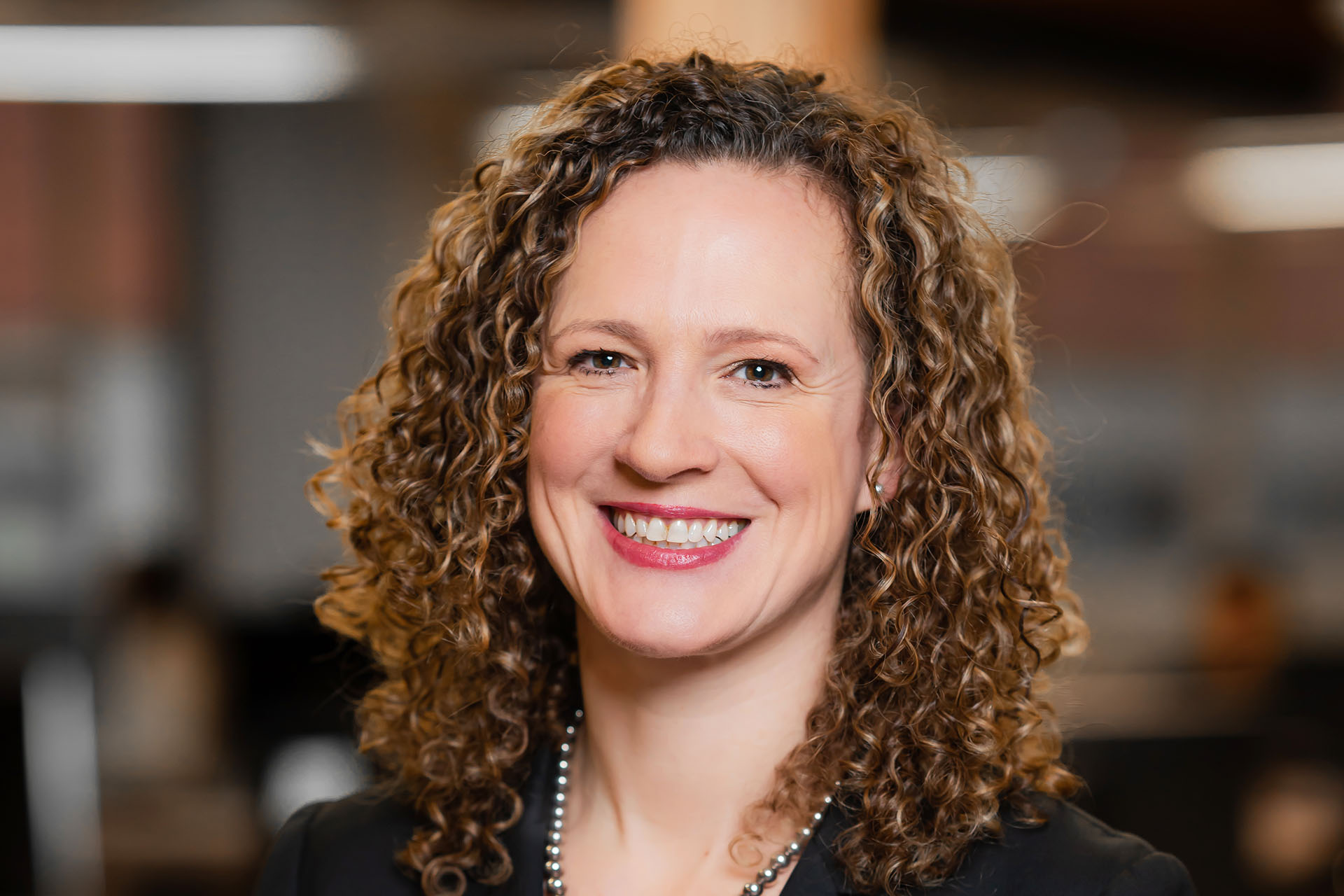 Joby McKenzie, Teladoc’s managing director in Canada, at the company’s Toronto office. Photo: Teladoc Health/Handout

The Big Read
Arm of U.S. virtual-health giant begins serving ‘tens of thousands’ in N.L.
Teladoc says it has global knowhow and Canadian values; critics say it’s a foreign raider
A boat tour operation in Twillingate harbour in Newfoundland. Twillingate and other communities in the province have used virtual emergency-room services to address staffing shortages. Photo: Education Images/Universal Images Group via Getty Images
OTTAWA — When patients in Newfoundland and Labrador are treated by faraway physicians working for Teladoc Health Canada, the company’s managing director Joby McKenzie wants them to be assured the doctors are Canadians, working for a company with deep roots here in spite of its American parentage.
Critics, including homegrown Canadian competitors, see Teladoc’s new contract with Newfoundland as an incursion by an American goliath that’s not only making money off Canadian health care but harming a growing industry in which Canada can excel.
Talking Points
- Teladoc Health Canada is starting to provide virtual emergency-room services and primary care to underserved communities in Newfoundland and Labrador, under a two-year, $22-million contract
- Teladoc’s managing director in Canada says its global scale means better care; critics say it’s harming a fledgling Canadian industry
“We operate in 190 countries around the world. And because we invest hundreds of millions in R&D every year, we have the ability to build [and] scale comprehensive solutions,” McKenzie said in an interview with The Logic. “Canada pays the localization fee. They don’t pay the full R&D costs, which is great.”
Under the $22-million deal Teladoc Canada signed with the province in November, it’s providing virtual family medicine and emergency room services for the next two years.
“That’s tens of thousands of people in Newfoundland and Labrador that otherwise didn’t have access to care before we arrived to support [it] in partnership with the province,” McKenzie said.
McKenzie has been with the company since December 2020. She’s a former executive at LifeLabs and at Babylon Health, a U.K.-based virtual-care company. (Telus bought Babylon’s Canadian operation in early 2021, a few months after McKenzie left, and the rest of the company went bust last year.) Besides that, she has a PhD in molecular and medical genetics from the University of Toronto and used to play on Canada’s national basketball team.
Related Articles

Teladoc Canada’s U.S.-based parent, Teladoc Health, reported more than US$2.4 billion in revenue in 2022. It moved into Canada in 2017 when it acquired Best Doctors, a virtual-care platform that had specialist physicians serving Canada. It added InTouch Health, a more generalist virtual service, in 2020.
This is a bad development, said Dr. Dante Morra, a Toronto-area internist and chair of CAN Health, a federally funded group that aims to commercialize Canadian healthtech innovations by getting them used in Canadian health settings.
“We have to use new virtual platforms to supplement and make our system more efficient,” Morra said. “We should be doing that with Canadian companies that are Canadian owned, and employ Canadians, and build out our Canadian infrastructure.”
If a foreign-based provider is clearly better, so be it, he said. But if a Canadian one is competitive, hiring it means “the prosperity stays in Canada, the tax revenue stays in Canada, the innovation economy stays in Canada, and our companies become the companies that export to the rest of the world.”
If he had to pick, Morra said, the platforms are even more critical than the practitioners using them to deliver health care. “Everyone has to be eyes-wide-open that the value of Disney and Netflix is larger than the value of the actors.”
Unlike, say, Maple or Telus Health, Teladoc Canada does not offer one-off appointments for individual patients paying out of pocket, McKenzie said, but its technology is the invisible enabler for other care across the country.
“Hundreds of clinicians use our platform to see their patients,” she said. “We support many communities, in particular rural and remote communities, where we have devices across the province and a provider is in an urban city.”
That is essentially the service that Teladoc is spinning up in Newfoundland and Labrador, the first time it’s done virtual emergency-room work in Canada—though virtual ERs aren’t new.
One of the deal’s critics, Dr. Todd Young, spoke to The Logic while he was on call as a virtual ER doctor himself, covering emergency rooms in Harbour Breton on Newfoundland’s southern coast and Brookfield in the northeast—more than four hours’ drive apart, and neither of them anywhere near Young’s physical practice in Springdale.
Teladoc is rolling out its services over the next few months.
Young, through his company Medicuro, had sought the contract himself. He opened Medicuro in 2017, charging patients out of pocket for “a premium medical service” that used new technology—much the same as with bigger operations based elsewhere in Canada, like Telus Health and Maple.
“Currently, we have 30 physicians, we have three nurse practitioners, we have a physiotherapist, we have a naturopathic doctor, we have a bunch of specialists,” Young said.
A shortage of ER doctors is a big problem, he said. “There are many emergency rooms that, over the past three years, have had extended times of closure just because there was no physician,” Young said.
A virtual ER ameliorates that. Typically, a paramedic is with the patient in person and follows the remote doctor’s instructions.
“I’ve given TNK [a clot-busting drug for strokes], I’ve delivered babies, we’ve run cardiac arrests—I’ve pretty much done it all through virtual,” Young said, “Outcomes, I would suggest, are equal to if I was in the room.”
A spokesperson for Newfoundland and Labrador’s health ministry didn’t respond to The Logic’s questions about the agreement. Young said Medicuro’s bid was for $7 million, and was so much cheaper than Teladoc’s because it would have relied on the province’s existing ER equipment rather than rolling out its own gear. The details of each bid are not public, but the Newfoundland and Labrador government’s documents said the financial element would be worth just a quarter of the available points.
Young’s professional history is complicated. In 2016, he was disciplined after admitting having a sexual relationship with one patient and to “inappropriate kissing and hugging” with another. The province’s physician regulator suspended him for 19 months then, though Young’s licence has been fully restored and his hospital privileges reinstated.
(Could that have record been a factor in the province’s decision on the virtual-care contract? “I don’t know,” Young said. “I wasn’t at the table. It may have.”)
In 2017, he founded Medicuro. In 2018, he began treating patients with opioid addictions in multiple remote communities by flying in for clinic hours, checking regularly on how they were doing on opioid replacement treatments that local practitioners didn’t feel comfortable prescribing.
Young said he understands part of Teladoc’s appeal is that its health providers are in other provinces (which McKenzie confirmed) so they’ll augment the numbers in Newfoundland and Labrador. Indeed, the provincial call for bids said plainly that the doctors providing virtual services can’t start doing that at the expense of time they were already working in the province.
Young’s view is that the public money would be better spent on local practitioners. “The money that we will be paying those folks, they would spend in our province,” he said. “We will be contributors to the economy, and our tax base will be better utilized.”
Doctors and other professionals from Newfoundland and Labrador are also better able to serve patients in Newfoundland and Labrador, Young added.
“When it comes to someone else telling us about what our needs are or how to do things—that self-determination, being a participant in solving problems, having local resources providing services such as this, I think is a critical thing,” he said.
Teladoc Canada has been building that expertise, said McKenzie. “What are the resources that exist in that community? What are the pathways of ambulatory [care], other sites that might have different levels of resources?” she said.
Teladoc has technology and know-how but knows it needs to connect those to the other services available in the places where its new patients live, she said. “We are part of a global company, yes, but we are a Canadian company that invests in solutions and innovations and technologies that are unique to the company that we have,” McKenzie said.
Previously, Ontario-based Maple had been racking up contract after contract in Atlantic Canada.
Besides its more widely known virtual primary-care appointments, Maple provides the platform for virtual ER services in Nova Scotia and both the platform and practitioners for Prince Edward Island, CEO Dr. Brett Belchetz told The Logic in an email.
Maple answered Newfoundland’s request for proposals but didn’t get past the first cut, he wrote: “Maple applied to participate in the RFP process and were surprised to learn we were not invited to present, given our track record as the only company that has implemented similar provincial-scale programs in Canada.”
The outcome clearly irks him.
“Services originating outside of Canada lack a proven track record of successful operation at a provincial scale, which carry the risks of implementation failure, unnecessary government expenditure, and, most importantly, the potential for harm to those in need of care. It’s also important to note that health data is sensitive, and patient information needs to be protected and managed responsibly,” Belchetz wrote.
That’s where Teladoc’s international scale helps, McKenzie said. Besides that, because the company doesn’t offer individual fee-for-service appointments, it doesn’t compete with the publicly funded system.
“I think what Canadians demand with their tax dollars and as recipients of health care is the highest-quality care. Let’s move our dollar as far as it can go,” McKenzie said.



Loading...
Thanks for sharing!
You have shared 5 articles this month and reached the maximum amount of shares available.
CloseThis account has reached its share limit.
If you would like to purchase a sharing license please contact The Logic support at [email protected].
CloseGift the full article!
You have gifted 0 article(s) this month and have 5 remaining.
Recipients will be able to read the full text of the article after submitting their email address. They will not have access to other articles or subscriber benefits.
Photo: Education Images/Universal Images Group via Getty Images
Joby McKenzie, Teladoc’s managing director in Canada, at the company’s Toronto office.
Most Popular This Week




In-depth, agenda-setting reporting
Great journalism delivered straight to your inbox.
News
India wants to buy less Canadian uranium. Canada’s nuclear lab is helping
Briefing
Aritzia shares pop after earnings rise 204%
First Nation in Alberta goes to court over fast-tracked oil pipeline
Chinese EV maker Geely Auto Group to launch in Canadian market in 2027
Best business newsletter in Canada
Get up to speed in minutes with insights and analysis on the most important stories of the day, every weekday.
Exclusive events
See the bigger picture with reporters and industry experts in subscriber-exclusive events.
Membership in The Logic Council
Membership provides access to our popular Slack channel, participation in subscriber surveys and invitations to exclusive events with our journalists and special guests.