American authorities have arrested a Canadian entrepreneur named Klaus Pflugbeil, accusing him and business partner Yilong Shao of trying to sell battery manufacturing technology that they’d taken from a former employer now owned by Tesla.
Skip to content

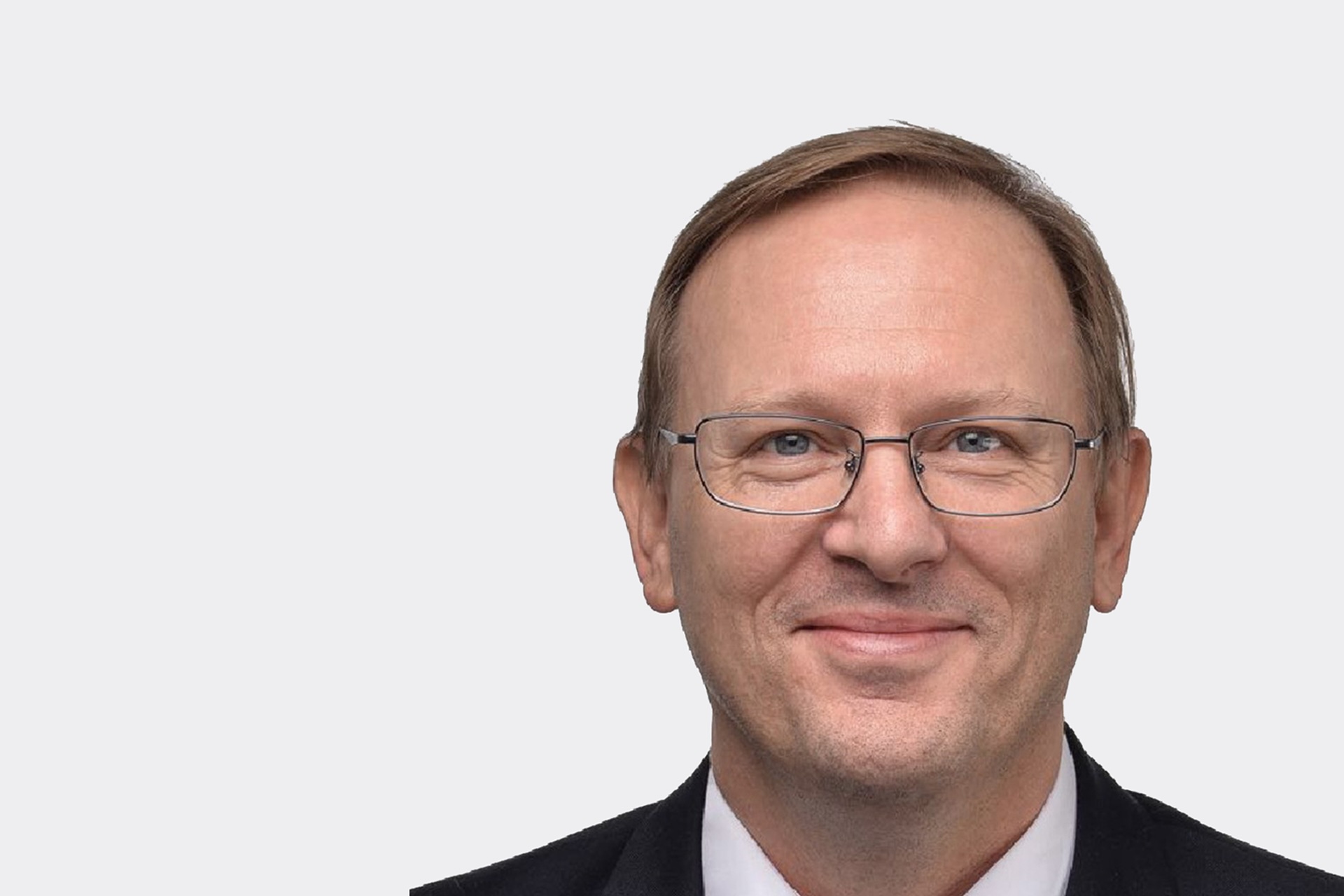 U.S. authorities arrested Canadian Klaus Pflugbeil this week, accusing him of trying to sell battery manufacturing technology taken from a former employer now owned by Tesla. Photo: Xing | Handout

News
How a Canadian entrepreneur ended up in legal crosshairs over Tesla battery tech
A Canadian startup is at the centre of an international IP war
The Tesla exhibit at the Toronto International Auto Show in Toronto, in February 2024. Photo: Christopher Katsarov Luna for The Logic
American authorities have arrested a Canadian entrepreneur named Klaus Pflugbeil, accusing him and business partner Yilong Shao of trying to sell battery manufacturing technology that they’d taken from a former employer now owned by Tesla.
Pflugbeil and Shao are leaders of a China-based company called Hife Systems, but both can be traced back to Hibar Systems, a former Richmond Hill, Ont., startup whose technology is helping Tesla pump its batteries full of juice at a faster rate, at a time when there’s heightened pressure for North American companies to compete with China’s supercharged EV industry.
Talking Points
- Former employees of Canadian startup Hibar Systems, which was acquired by Tesla, have been accused by U.S. authorities conspiring to profit from trade secrets that don’t belong to them
- The former employees’ new China-based firm, Hife Systems, openly sold equipment and parts billed as identical to Hibar’s, after Tesla tightened its grip on technology that speeds up battery manufacturing but has numerous other uses
A look at their history and technology reveals a pair eager to capitalize on an opening in a booming market left by Hibar’s exclusivity with Tesla—only to be brought down by undercover law enforcement agents looking to stop an alleged scheme they say “blunts America’s technological edge” in the battery business.
Here’s how it happened.
The accused: Pflugbeil has been an executive at numerous manufacturing companies. According to prosecutors’ filings he ran Hibar’s office in China from “at least” 2007 to 2009.
Shao, a citizen of China, remains at large, according to the U.S. attorney’s office for the Eastern District of New York. He was a Hibar sales and service technician from 2010 to 2020 and worked in China, the complaint says.
Allegations: Federal prosecutors accuse the pair of conspiring to profit from technology their former employer Hibar developed that dramatically speeds up battery manufacturing. It cost at least US$13 million to create, the authorities say.
Tesla bought Hibar in 2019 and began restricting sales of Hibar’s precision pumps and the assembly lines they enabled; the complaint against Pflugbeil and Shao says they went into business selling their own versions of Hibar devices and parts using improperly obtained IP, founding their new business in 2020.
Related Articles
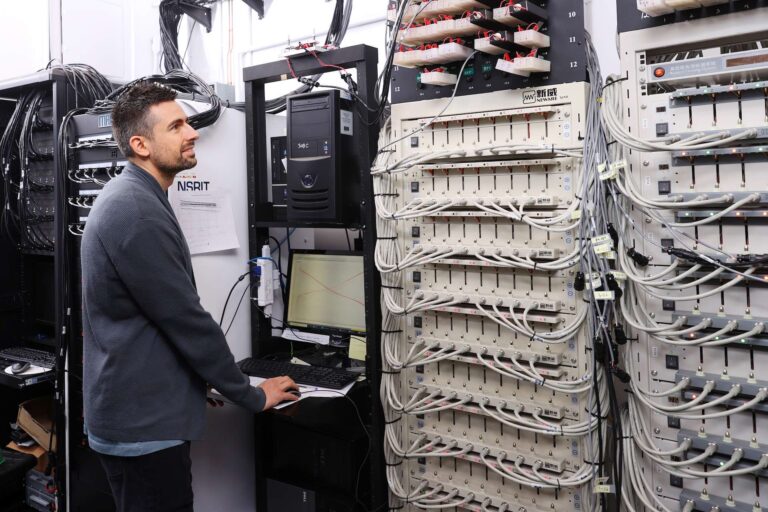
The pair’s new company, Hife Systems, has openly sold “Hibar-style” equipment and parts it describes as “100 per cent identical,” through operations in Canada, China, Germany and Brazil.
But the criminal complaint cites intercepted emails and other communications as Pflugbeil and Shao set Hife up, in which they talked about needing to redo original documents from Hibar so they didn’t look like copies.
That “reflects that Pflugbeil and Shao were trying to cover up the fact that they had stolen [Tesla’s]’s trade secret,’” says an affidavit sworn by FBI agent Thomas McNulty.
It also says they went to a “Toronto-based manufacturer of gears” that had previously supplied Hibar and presented that company with drawings and specifications that were the same as Hibar’s—except the name of the company and date had been changed, and “the drawing identifying number was written in reverse.”
In 2023, the complaint says, undercover agents went to a trade show in Las Vegas where they met Shao and other Hife representatives and pretended to be customers looking to set up a battery assembly line. Over the next few months, Pflugbeil sent them technical documents that included drawings that were “materially identical” to ones belonging to Tesla, it says.
On Monday, Pflugbeil got on a plane from Hong Kong to New York for a meeting with his phony customers, who arrested him.
The technology: The products made by Hibar have the potential to improve Tesla’s manufacturing prowess, a key goal as the company faces more competition than ever.
Hibar’s expertise, along with that of other Canadian companies, may have played a part in Tesla’s decision to build a Markham, Ont., manufacturing hub in 2021 where it makes machines for its battery plants.
One Hibar patent acquired by Tesla described how manufacturers can improve their batteries’ performance by maximizing the amount of battery juice they’re injecting. If pockets of air form in the battery case, that makes it hard to fill batteries quickly, with some companies having to top up the batteries two or three times. Hibar’s technology lets Tesla fill batteries to the max more quickly.
Tesla Toronto has licensed Hibar’s precision-pump technology to Japan-based Unicontrols, which markets the technology not only to the battery industry but also to the cosmetics, food and pharmaceutical sectors, where it says the pumps are widely used.
Hife advertised Canadian-made spare parts for pumps made by Hibar, a strategy Pflugbeil has said would help break up a monopoly on the products, “which is always good for innovation and costs,” according to an email the FBI agent cites in his complaint. Hife’s Google ads promoting precision metering pumps and fill tubes and replacement pumps and parts were shown “tens of thousands of times” in any given week, the government alleges.
Reactions: Pflugbeil’s lawyer, veteran public defender Deirdre von Dornum, said she was still gathering information and wasn’t ready to say anything about her client’s case.
The arrest shocked Pflugbeil’s business associates.
“Klaus worked at Hibar for a long time,” his brother Roland told The Logic in an exchange of messages. Roland runs Hife’s operation in Brazil, where he said he’s lived for 20 years. “When Tesla bought Hibar many employees were laid off,” he wrote. “Tesla did not work for the other industries, only for itself! Old employees of Hibar took advantage of this and invested their experience and contacts in a new company!”
Neither Tesla nor U.S. authorities ever warned Hife they believed it was acting improperly, he wrote.
Battery expert and former Hibar consultant Josef Daniel-Ivad, who is Hife Canada’s third director besides Klaus Pflugbeil and Shao, told The Logic in a brief call that he had no comment except that “there was nothing done wrong.”
Tesla, which disbanded its press team in 2020, did not respond to a request for comment Wednesday afternoon on whether it had contacted Hife in the past or planned to pursue any legal action. Iain McColl, former CEO of Hibar, declined to comment.
The backdrop: The trouble at Hife comes as the Canadian and U.S. governments are trying to reduce their EV companies’ reliance on Chinese supply chains, which dominate the markets for battery materials and bolster battery giants like CATL. Tesla recently backed a lab in Nova Scotia that would enable domestic battery prototyping, in part to reduce chances of intellectual property leaks.
Next: Pflugbeil has a bail hearing Friday morning in New York. Prosecutors argue that as a Canadian citizen with a wife and children in China who faces up to 10 years in prison, he’s a “serious risk of flight.”



Loading...
Thanks for sharing!
You have shared 5 articles this month and reached the maximum amount of shares available.
CloseThis account has reached its share limit.
If you would like to purchase a sharing license please contact The Logic support at [email protected].
CloseGift the full article!
You have gifted 0 article(s) this month and have 5 remaining.
Recipients will be able to read the full text of the article after submitting their email address. They will not have access to other articles or subscriber benefits.
Photo: Christopher Katsarov Luna for The Logic
U.S. authorities arrested Canadian Klaus Pflugbeil this week, accusing him of trying to sell battery manufacturing technology taken from a former employer now owned by Tesla.
Most Popular This Week



In-depth, agenda-setting reporting
Great journalism delivered straight to your inbox.
News
A tech firm born from post-Brexit trade chaos sets its sights on Canada
Briefing
Dozens of Canadian researchers join chorus of scientists calling for a global AI oversight
TC Energy strikes deal with Indigenous groups for ownership stake in Coastal GasLink pipeline
Canada’s Tailscale taps Google Moonshot alum to lead sovereign AI push
Best business newsletter in Canada
Get up to speed in minutes with insights and analysis on the most important stories of the day, every weekday.
Exclusive events
See the bigger picture with reporters and industry experts in subscriber-exclusive events.
Membership in The Logic Council
Membership provides access to our popular Slack channel, participation in subscriber surveys and invitations to exclusive events with our journalists and special guests.





