OTTAWA — Telesat’s Lightspeed satellite constellation has fallen so far behind schedule that it’s in danger of losing its permission to operate in Canada and the United States, the Ottawa-based company disclosed in its annual report Wednesday.
Skip to content


News
Telesat still looking for Lightspeed financing as regulatory trouble mounts
Hopes of finding money by end of 2022 dashed
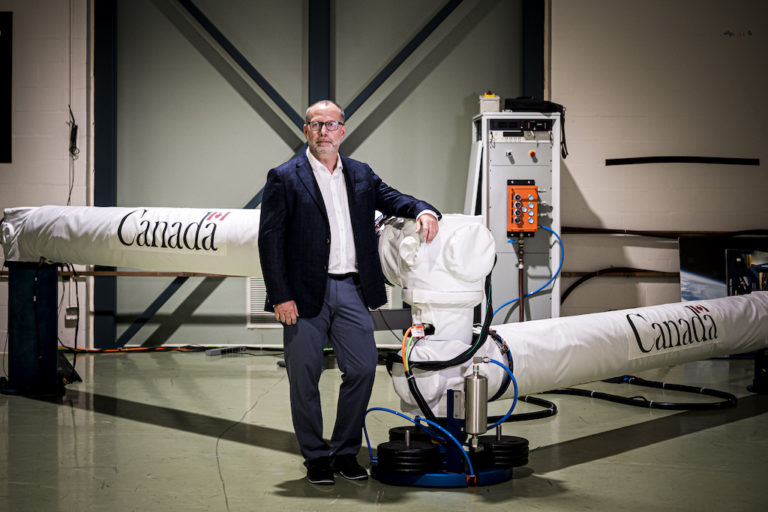
Daniel Goldberg, Telesat’s president and chief executive officer, in October 2022. Photo: Ashley Fraser for The Logic
OTTAWA — Telesat’s Lightspeed satellite constellation has fallen so far behind schedule that it’s in danger of losing its permission to operate in Canada and the United States, the Ottawa-based company disclosed in its annual report Wednesday.
Why: The firm still has not secured the financing it needs for the network of satellites it wants to launch to low orbit over Earth, providing internet connections for commercial customers.
Talking Points
- Last year, Telesat CEO Dan Goldberg said he expected to have found the final funding needed for the company’s constellation of internet satellites by the end of the year
- With the financing still unfinished and milestones unmet, the company will need increasing cooperation from regulators in Canada and the United States to be able to launch
Last fall, it had expected to have nailed that funding down by the end of 2022, for a scaled-back version of a constellation it had planned before the COVID-19 pandemic scrambled its agreement with prime contractor Thales Alenia.
“We continue to make progress with the various parties we’re engaged with and we remain optimistic that they’re going to secure the financing we need to move forward with the program,” CEO Dan Goldberg said in a call with analysts after announcing his company’s fourth-quarter and full-year results. “We know well that investors and others want clarity as to where we stand on Lightspeed financing, and we hope to be in a position to provide that clarity.”
The new problem: Lightspeed is missing key regulatory milestones that require Telesat to launch certain percentages of its satellites by specific deadlines. It has a single prototype in the sky.
Related Articles

In Canada, “Telesat Corporation will not meet the current, required milestones as set out in the authorization,” its annual report said. The company intends to seek an amendment.
In the U.S., Telesat has approval for 117 satellites in the original plan—which it no longer intends to launch. It’s now applied for permission to eventually launch 1,671 satellites, but expects approval for those to depend on how they’ll work with the first batch.
Telesat needs Federal Communications Commission approval of its amended plan for its first Lightspeed satellites, a waiver of FCC rules to allow an extension on getting those satellites up, and approval of its plan for the enlarged constellation.
“If Telesat were to lose its first processing round grant and if Telesat is not granted access to the U.S. market under a second processing round application, Telesat could be prevented from offering its services in the United States,” the annual report said.
How Telesat finished 2022: The company booked operating income of more than $296 million. But after interest, taxes and a foreign-exchange hit, it had a net loss of more than $80 million, after net income of $155 million in 2021 and nearly $245 million in 2020.



Loading...
Thanks for sharing!
You have shared 5 articles this month and reached the maximum amount of shares available.
CloseThis account has reached its share limit.
If you would like to purchase a sharing license please contact The Logic support at [email protected].
CloseGift the full article!
You have gifted 0 article(s) this month and have 5 remaining.
Recipients will be able to read the full text of the article after submitting their email address. They will not have access to other articles or subscriber benefits.
Photo: Ashley Fraser for The Logic
Most Popular This Week


In-depth, agenda-setting reporting
Great journalism delivered straight to your inbox.
News
Canada’s banking regulator weighs new rules for AI risks
Briefing
Mecka raises US$60M to gather data for robot training
Businesses should expect AI to get better, but not necessarily cheaper
Weston family and Fairfax agree to buy drugstore Boots for US$8.9B
Best business newsletter in Canada
Get up to speed in minutes with insights and analysis on the most important stories of the day, every weekday.
Exclusive events
See the bigger picture with reporters and industry experts in subscriber-exclusive events.
Membership in The Logic Council
Membership provides access to our popular Slack channel, participation in subscriber surveys and invitations to exclusive events with our journalists and special guests.