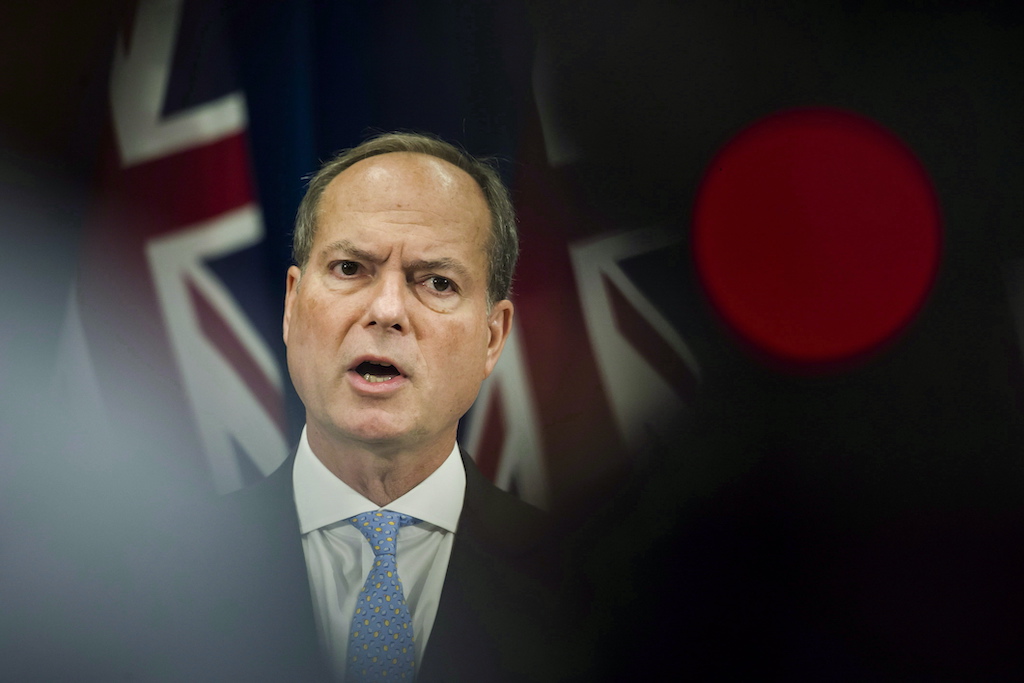
Nearly five months after Ontario tabled its first pandemic budget, the province’s new finance minister, Peter Bethlenfalvy, has unveiled another set of commitments focused on recovery from the COVID-19 pandemic. While many of the measures in Wednesday’s $190-billion-plus budget were outlined in the November 2020 document, it includes funding for a new agency to attract business to the province, new spending on R&D and support for electric vehicle manufacturing.
Here’s what you need to know about what’s in the budget:
Talking Point
Ontario’s second pandemic budget lays out more economic-relief funding for small- and mid-sized businesses, along with employment and training support for those most affected by the pandemic. Stakeholders in the province’s innovation economy expressed concern that with the budget’s intense focus on immediate recovery, it lacks commitments to many of the largest job-creating sectors.
The big picture: Premier Doug Ford’s Progressive Conservative government maintained its earlier deficit projection of $38.5 billion for the 2020–2021 fiscal year, a record high for the province. The government estimates it will drop to $33.1 billion in the next fiscal, shrinking to $20.2 billion by 2023–24.
Bethlenfalvy promised to spend a large chunk of the budget ($16.3 billion) on addressing health impacts directly related to COVID-19, including the province’s vaccine rollout and support for testing and contact-tracing initiatives, as well as improving infrastructure and resources for hospitals. Support for the health sector, however, is second to the government’s spending ($23.3 billion) on economic relief from COVID-19.
Although the deficit projection is unchanged, the government anticipates spending $2.6 billion more in total this fiscal than previously thought, with $3.9 billion more in commitments specifically to help stimulate the economy. With that deeper pool of funding comes big promises for small- and mid-sized businesses as well as the innovation economy, including a new program for electric-vehicle manufacturing, a provincial investment fund and job-training incentives to help boost employment.
Employment support for the post-pandemic economy: The government is proposing a new tax credit that would give recipients up to $2,000 to cover 50 per cent of their training costs. The province expects to spend $260 million on the initiative in 2021, which could help an estimated 230,000 people train or retrain for new jobs. In a statement, the Canadian Federation of Independent Business applauded the grant’s renewal, but said it wanted the government to expand eligibility to businesses that don’t currently qualify, including construction businesses, dry cleaners and caterers.
On top of the grant, the budget earmarks $614.3 million over two years for targeted employment and training support. Some of that funding had previously been announced, including the $115 million total for the Skills Development Fund, which launched in February to provide financial support to organizations that offer skills training. New funding includes $117.3 million for people from populations whose employment was most affected by the pandemic, including women, Indigenous people, youth, people of colour and people with disabilities.
The budget also substantially increases funding to the Skilled Trades Strategy announced in last year’s document, from $180.5 million over three years to $288.2 in 2021–22. The initiative aims to help people retrain and upgrade their skills for available jobs and apprenticeships, including through bursaries.
Attracting private-sector investment: Wednesday’s budget unveiled a new $400-million investment fund to be managed through Invest Ontario, an agency the province is pitching as a “‘one-stop’ shop for business and investors.” This is the first funding commitment for the new agency, which the government launched in its last budget. It aims to identify “high-value projects” in advanced manufacturing, technology and life sciences, and offer resources like investment services, talent support and financial assistance for companies. The budget also lays out plans to introduce legislation around Invest Ontario.
Funding for innovative R&D: The province plans to contribute more than $500 million to research and development with the potential for health-related and other breakthroughs at universities, colleges and academic hospitals. It plans to spend the money alongside federal and private-sector partners, citing the Ontario Institute for Cancer Research, the Ontario Brain Institute, Ontario Genomics, Compute Ontario and the Fields and Perimeter institutes. While the budget refers to the funding as “investments,” it does not detail terms of the financing or whether it will be separate from the province’s overall budget for post-secondary institutions.
Electrifying auto manufacturing: The government is spending $56.4 million over four years on a new program to boost the province’s role in manufacturing electric vehicles, in a bid to maintain the province’s auto sector, which employs some 100,000 people. The Ontario Vehicle Innovation Network will “encourage innovation and collaboration through partnerships between small- and medium-sized enterprises, academia, the auto industry and battery sector, including critical minerals development in Ontario’s North,” the budget reads. The funding follows a $295-million commitment from the province in October to help convert the Ford Oakville assembly facility into a battery-electric-vehicle production hub. “The province is well positioned to continue to lead on electric and autonomous vehicle research and technologies,” the document states.
Small-business relief: The budget delivers on calls from business owners to renew the Ontario Small Business Support Grant. The second installment of the program, which launched in January to help businesses affected by the pandemic, will bring total spending for the grant to $3.4 billion. Businesses that qualify for the grant can receive between $10,000 to $20,000. Based on applications received by mid-March, the province expects about 120,000 businesses will receive the grant. Those that qualified for the first installment will automatically be entitled to a second.
The government is also spending an extra $10 million on Digital Main Street in 2021–22. The program—whose partners include the federal government and private-sector firms including Shopify and Google—is designed to help small businesses expand their digital presence and e-commerce capabilities. So far, more than 10,000 businesses have created online stores through the program’s ShopHere initiative; Digital Main Street aims to help up to 22,900 businesses in the province. Other supports for small businesses include extending the eviction ban for commercial tenants that are approved for the Canada Emergency Rent Subsidy.
Michele Lajeunesse, senior vice-president of government relations and policy at Technation, said the industry association was pleased with the new funding for small businesses, and Digital Main Street in particular. “It helps get the funds into the hands of small- and medium-sized enterprises and especially underrepresented groups to drive that much-needed tech adoption, which is critical to us,” said Lajeunesse. While she credited the government for its “laser-focused plan on economic recovery,” she said she’d like to see more public-private collaboration on initiatives like Digital Main Street post-COVID-19.
Incentivizing business outside Ottawa and Toronto: The government proposed to “temporarily enhance” the Regional Opportunities Investment Tax Credit with an extra $61 million, bringing the total support for the program to about $155 million by 2022–23. The initiative is meant to spur business in regions whose employment rates have traditionally fallen below the provincial average. The program, which launched in March 2020, offers a 10 per cent refundable tax credit to companies that spend over $50,000 to build, renovate or buy commercial or industrial buildings in qualifying regions.
Connecting the province: The budget also pledges $2.8 billion in new funding for broadband infrastructure, as the province promises to expand reliable services to every region of the province by 2025. The commitment brings its total broadband funding to almost $4 billion for the six years starting in 2019–20.
What’s missing: The government announced plans last year to streamline procurement across departments to save about $1 billion of the $29 billion it spends on procurement annually. It also laid out a $500-million plan to digitize government services through a program called Ontario Onwards. Following the last budget, stakeholders in the province’s innovation economy told The Logic they wanted to see funds committed to a strategy that would prioritize made-in-Ontario innovations. “The Government of Ontario must leverage its purchasing power to take advantage of innovative tech solutions,” reads a pre-budget submission from Technation. “Government should buy, not build. By doing so, it can directly support this fast-growing sector and broader economic recovery through already allocated budgetary funds, and in turn, improve services to Ontarians.” While the budget makes reference to Ontario Onwards and the new procurement agency Supply Ontario, it doesn’t allocate new funds to the initiatives or specify whether they will favour local products and services.
While the budget pledged another $1.5 million to create its previously announced intellectual-property curriculum, Benjamin Bergen, executive director of the Council of Canadian Innovators, said the organization wanted to see more on the strategy. “Missing from the budget was a clear strategy to help local companies scale their operations internationally and commercialize their IP abroad,” reads a statement from Bergen. “Instead, we saw a renewed focus on attracting large global companies to Ontario’s innovation ecosystem instead of supporting Ontario’s most innovative companies to scale globally.” The organization also said it would have liked to see support for sectors including cybersecurity, clean energy, fintech, biosciences and digital services.