Toyota is at a tipping point—and Canada’s auto industry could rise, or fall, with it.
On the eve of the Canadian International Auto Show this past week, Toyota Canada CEO Larry Hutchinson fired back at critics who say the world’s biggest automaker is standing in the way of environmental progress. People think the maker of the iconic hybrid Prius is against fully battery electric vehicles or environmental regulation, Hutchinson said, but “none of those things are true.”
His comments come at a pivotal moment for the company, with Koji Sato, a 53-year-old engineer, taking over as Toyota’s global CEO in April. Hutchinson was speaking the night before the show’s official opening, at a party down the street from the Metro Toronto Convention Centre. The next day, auto-show attendees gaped at a massive 70,000-square-foot indoor EV test-drive track, filling space freed up by the absence of several major automakers. There is pressure on Sato to explain why Toyota sells so few battery-electric vehicles, and the scale of the EV test track on the convention centre floor underscores how fast the automaker may need to change.
Part of the issue is that government policies on EVs are changing around the world, including in Canada, where Ottawa is narrowing its requirements for dealers to focus on zero-emissions vehicles—excluding low-emission electrified vehicles, like the versions of the Prius that switch battery power on and off automatically instead of plugging into a socket.
ZEVs, like plug-in hybrids or battery-electric vehicles, can run without any gasoline at all. Canada is not only subsidizing the purchase of ZEVs, it’s mandating that they make up the majority of new vehicle sales by 2030.
Proponents of the mandate say it will force automakers to sell more affordable EV models here. Hutchinson said he not only disagrees with it, he is afraid it will fail.
With limited mining of battery metals today, he said, “it is unconscionable to me that expensive monster trucks powered by battery packs that weigh as much as a small car would be validated under Canadian environmental policy.” (That emphasis is included in the printed handout version of Hutchinson’s speech.)
For 20 years, the hybrid Prius was the anti-Hummer, the symbol of sticking it to fossil fuels.
Then in 2021, environmental groups called for boycotts, comparing Toyota to Chevron or ExxonMobil after the automaker lobbied to relax and expand U.S. EV subsidies that were originally reserved for automakers with unionized workplaces.
Whatever Hutchison’s concerns, observers expect Toyota to more publicly embrace an “EV-first mindset” under Sato.
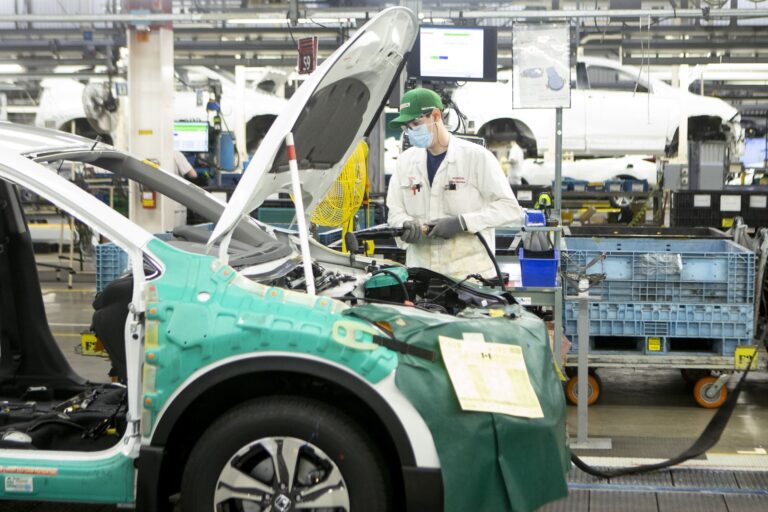
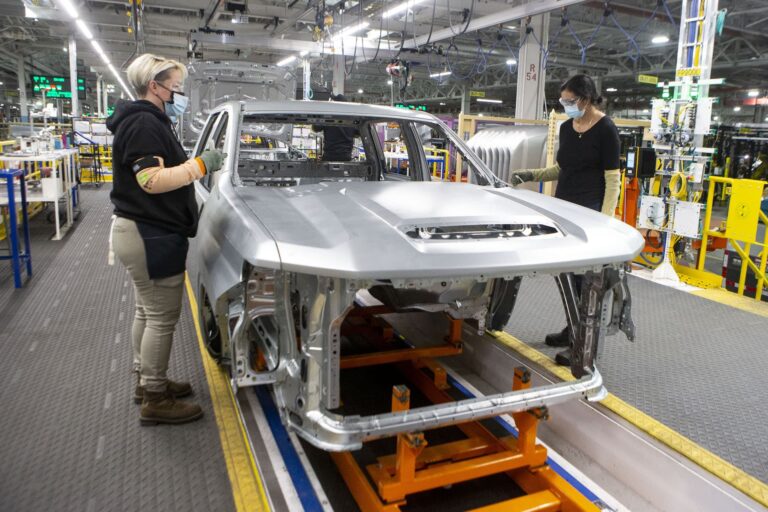
The company is the titan of Canada’s automotive sector, manufacturing 433,412 vehicles in Canada in 2022, “far outdistancing” Ford (137,371) and GM (148,024), according to DesRosiers Automotive Consultants.
So in the months ahead, the vehicles Sato and Hutchinson decide to make—and where they decide to make them—will matter.
Read Shift—The Logic’s authoritative weekly newsletter on automotive technology industry news—for more; and if you know someone who should be reading it, they can sign up here.