The EV transition must be executed carefully, says Honda Canada’s CEO—because the alternative is “disastrous.”
In an interview with The Logic, Jean Marc Leclerc said Canada has bet a lot on that transition: lavish government spending, hopes for economic growth and plans to meet climate targets. In a speech last week at the Electric Autonomy conference in Toronto, he suggested that given such high economic and environmental stakes, the auto industry’s quest for an electrified future was becoming “too big to fail.”
“It’s these massive investments that are happening in a very compressed amount of time,” he told The Logic Tuesday. “Why I said it’s too big to fail is that the right conditions are not in place to move customers as quickly as we’re required to electrification, because of charging infrastructure, because of affordability issues.”
Leclerc’s comments come as more governments, including the U.S. and Canada, are urging automakers to build and sell fully battery-electric vehicles, rather than their traditional approach of demanding automakers hit emissions-reduction goals.
Leclerc said Honda previously had a plan to meet emissions goals through 2030, in part by focusing on selling more of its made-in-Ontario hybrid vehicles. But companies like Honda and Toyota that have favoured hybrids are now under scrutiny, and the federal government has mandated that the majority of new cars sold by the end of the decade burn no gasoline at all. Global Automakers of Canada, an organization that represents Honda alongside other Asian and European auto brands, has warned the policy may actually keep gas-powered vehicles on the road for longer, because people won’t be able to afford to upgrade to more expensive EVs or won’t have enough access to EV chargers to convince them to switch.
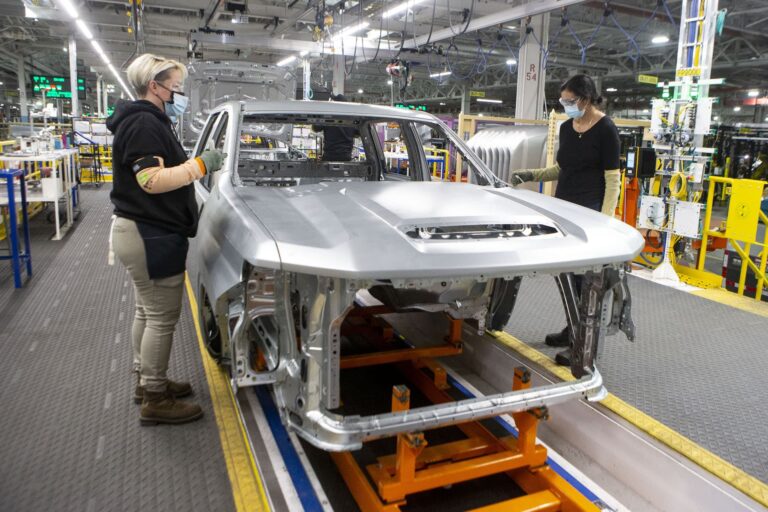
After the federal and Ontario governments each spent $131.6 million last year helping retool Honda’s Ontario plant to build hybrids, neither government has made the hybrid CRV models eligible for any rebate.
Leclerc told The Logic there’s a short-term risk that a run on battery metals drives up the cost of making EVs, making them less affordable for consumers to buy and for automakers to produce. In his speech, he’d warned the lack of incentives and charging infrastructure for consumers and tight supply chain resources for automakers had put them on a “collision course.”
“Having everybody do the same thing at the same time definitely puts upward pressure on prices,” he told The Logic. “I don’t see the stability, if you will, in those critical minerals and precious metals that we need to build batteries.”
Leclerc said he remains confident the government will do what it takes to make sure the Ontario Honda plant has a secure future despite its current focus on hybrids.
He also said Canada needs to come up with a response to the U.S. Inflation Reduction Act “as quickly as possible.”
“We’re saying, ‘Please do not waste any time responding,’” he said.
Honda’s lobbying records in Ontario show it has been monitoring and consulting on Ontario’s Automated Vehicle Pilot Program, which allows testing of certain self-driving passenger vehicles, commercial vehicles or streetcars. Leclerc said there are aspects of Honda’s autonomous-vehicle strategy that are confidential for now. Honda is interested in exploring more Canadian R&D efforts, so long as they jibe with its Ohio R&D team.
“As much as I can say, unfortunately … is there’s movement, if you will, to make Ontario or the [Greater Toronto Area] in particular a destination for these types of activities or development in our industry,” he said.
Read Shift—The Logic’s authoritative weekly newsletter on automotive technology industry news—for more; and if you know someone who should be reading it, they can sign up here.