Will the hype over AI boost interest in autonomous driving—or will it be overshadowed?
AI companies raised US$22.7 billion in venture capital in the first quarter of this year, up 43 per cent from the previous quarter, a PitchBook report estimates. But, senior analyst Brendan Burke wrote, “investors lack interest” in applications outside breakthroughs in generative AI, like the technology used by ChatGPT. Autonomous vehicles are a perfect case study.
“There are two punches that are landing on mobility innovation at the same time,” Andrew Miller told me last week.
Miller, senior leader of urban solutions at Hatch, an engineering and professional services firm, said investors looking for moonshot investments are being pulled toward large-language models. More cautious investors—if they’re not simply satisfied with the more reliable returns they can get in bonds as interest rates rise—may be drawn to the safest AI plays, companies that make software that can scale instantly.
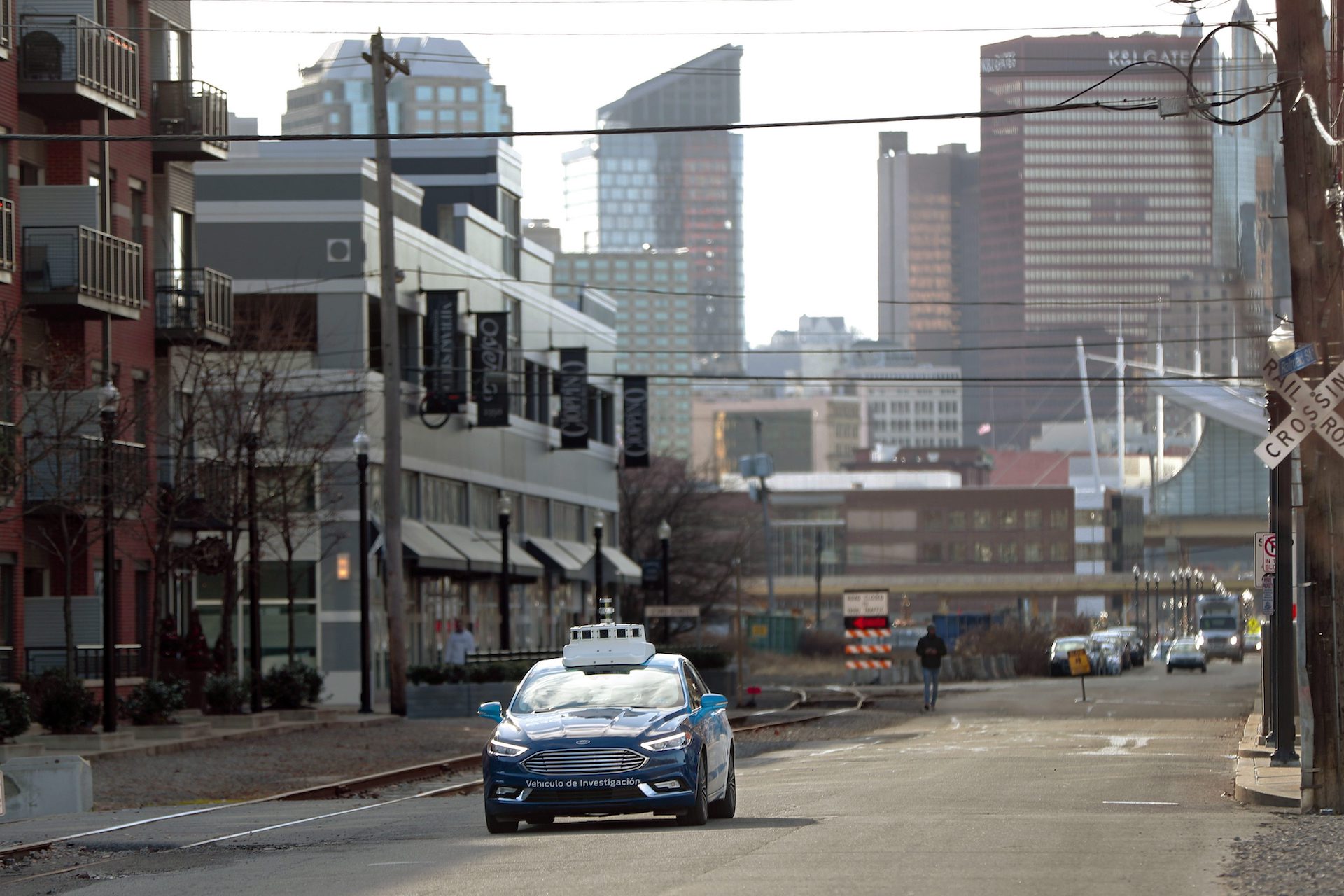
AI-driven autonomous vehicle companies, on the other hand, face the limitations, liabilities and expenses of travelling and testing each vehicle in the physical world, a harder sell in the ChatGPT era.
“In a cheap environment, you could take a chance on both,” Miller said in an interview at the Collision tech conference in Toronto.
“Just as interest rates are getting so very high, all of a sudden there is a generational change in information technology,” he said. “It is not a coincidence that one in two outfits [at Collision] is an AI startup—and then mobility startups, I can count them on my fingers and have one hand to spare.”
A separate PitchBook report found that the value of venture capital deals in the mobility sector fell by nearly 55 per cent in the first quarter compared with the previous quarter, with EVs, auto commerce and micromobility dominating the US$5-billion deal landscape.
The self-driving car business has consolidated during the recent tech-sector downturn. Software firm Applied Intuition acquired Embark Technology, Ford- and Volkswagen-backed Argo AI shut down and TuSimple may pull out of the U.S. Meanwhile, regulators there said they have “real concern” as they probe Tesla’s self-driving system.
“When it comes to mobility tech, the problems before us are not technical. They are political,” Miller said.
There are some bright spots. Amazon is growing its Zoox robotaxi team, and Quebec City-based LeddarTech is preparing to go public. Ford re-hired 550 Argo AI engineers to work on its pivot toward advanced driver-assist systems. And while regulators may not be convinced of Tesla’s AI prowess, some investors are.
John Hayes, a Canadian entrepreneur and CEO and co-founder of autonomy software platform Ghost Autonomy, said the self-driving car industry has survived an experiment—and that opportunities will follow.
“There’s certainly been a reduction in the number of companies doing [autonomy]. We’re coming out of this very strange period, before 2021, when you had a few very big bet investments, and you had this very unusual behavior of investing billions of dollars before there was product-market fit,” he said.
“That’s an experiment that had not been done before. And it seems like it hasn’t worked out.”
Nonetheless, Hayes said the recent consolidation has left gaps in the market that his company hopes to fill. As computer chips and sensors improve, he sees hardware becoming more of a commodity, and autonomy becoming more of a software-driven business. While the enthusiasm around AI tools like ChatGPT is encouraging, he said his company plans to function more like an “ordinary startup,” not a research group inside a company.
“You can’t just do AI for its own sake,” he said. “You have to solve a particular problem and know what that is.”
Read Shift—The Logic’s authoritative weekly newsletter on automotive technology industry news—for more; and if you know someone who should be reading it, they can sign up here.