Justin Trudeau thinks he knows why Donald Trump keeps saying the U.S. should annex Canada.
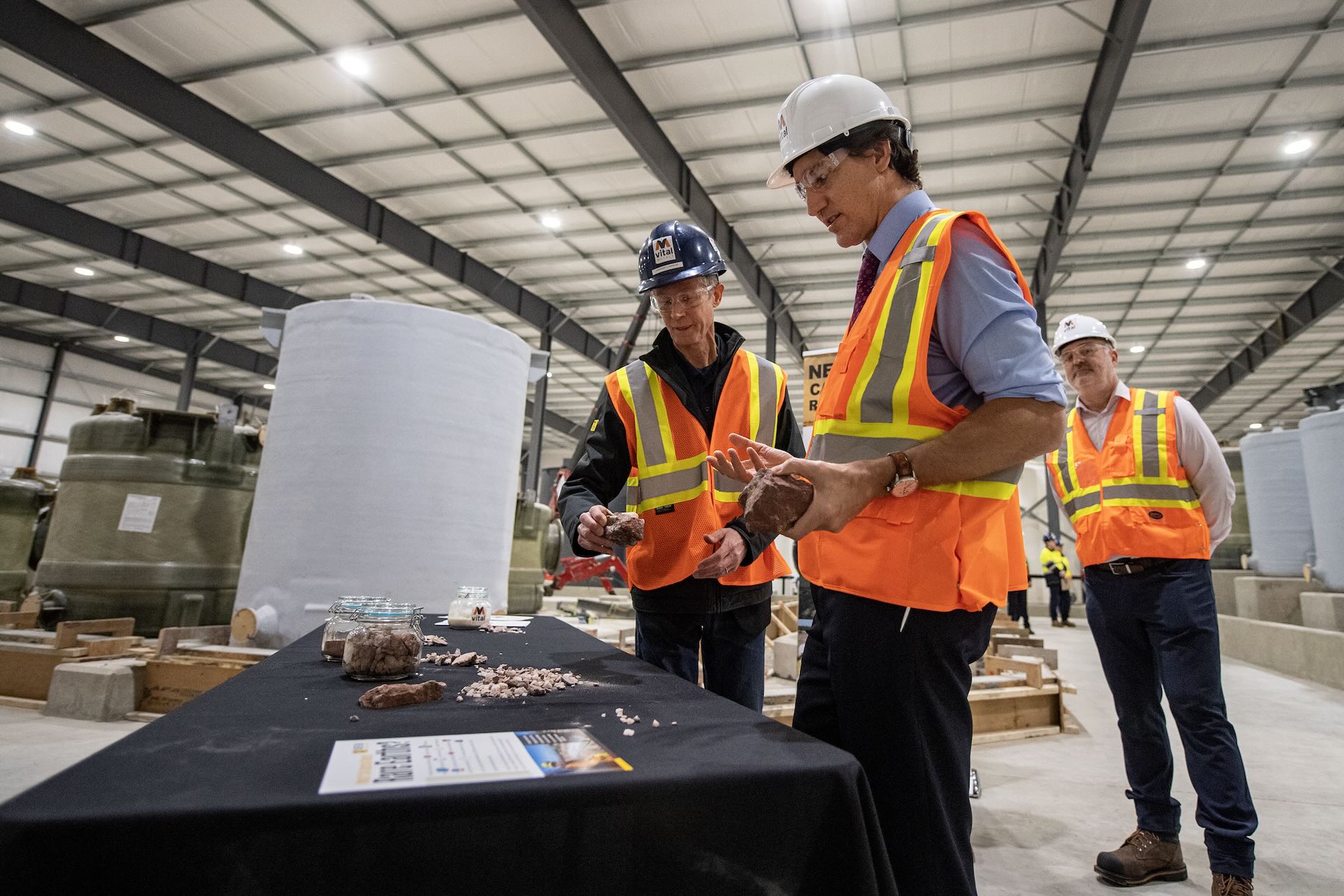
Critical minerals “may be very much a part of why they keep talking about absorbing us,” the prime minister said last week during a closed-door meeting, a recording of which my colleague Murad Hemmadi obtained.
It was a striking remark, given that Canada has long offered to supply minerals to the U.S., hassle-free. Now, suddenly, the White House is strong-arming not only Canada but countries like Ukraine for them.
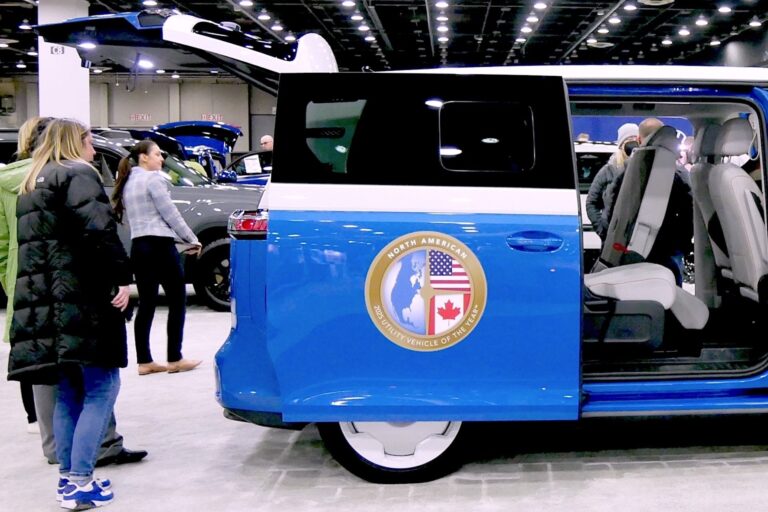
Why the surging interest in critical minerals? On one level it’s no surprise. Demand for these commodities has been rising for years because they’re essential for electric technology like cars or wind turbines, said Frik Els, who works at the data firm, Adamas Intelligence.
But the U.S. president now has someone close by with a keen interest in the topic: Tesla CEO Elon Musk, who is building a lithium refinery to give the EV maker more control of its own minerals. Much of Tesla’s lithium supply, incidentally, is mined in Canada.
Trump’s no EV fan, so what’s the rush? Even if EV sales slow, the U.S. would need to prop up supply chains used by defence and semiconductor firms. Key to those industries is the subset of critical minerals known as rare earths. They’re indispensable to a range of military equipment, from night-vision goggles to submarine propulsion systems to F-35 stealth fighter jets. Until recently, China supplied nearly all the world’s critical minerals, including those rare earths.
China has begun tightening exports, adding new curbs as recently as Feb. 4.
Can’t the U.S. just “dig, baby, dig” without Canada? Yes and no. Canada exported $29.8 billion in critical minerals to the U.S. in 2023 and imported just $8.4 billion back across the border. Billions of dollars in metals are hard to replace. About 80 per cent of the U.S. aerospace industry’s nickel comes from Ontario, the province’s economic minister Victor Fedeli has estimated.
The U.S. would also need to build significant processing capacity. Even on its own soil it relies heavily on Canadian firms to refine nickel, produce graphite and supply zinc and germanium. That’s why the Biden administration used U.S. Department of Defense funding to underwrite Canadian companies like Electra Battery Materials, Nano One and Lomiko.
Canada is “almost unrivalled,” in sheer prospecting potential, said Jeff Killeen, policy director at Prospectors & Developers Association of Canada. “We’ve got the Canadian Shield … formed billions of years ago. We’re the second largest nation on earth, nothing changes that.”
Els, though, warns that some of the commodities Canadian politicians want to leverage in U.S. trade negotiations can be bought elsewhere. And the U.S. does have its own mining projects, he said, that were held up under previous administrations. Trump has pledged to cut red tape and get more mines to market.
Despite the mounting cross-border tensions, companies are still interested in dealmaking, said Ghada Nafie, CEO of Canadian battery material company Litus, who returned recently from a trade mission to the U.S.
“There was desire on both sides to collaborate, and that desire was very high,” she said. “That made me hopeful that both of our nations, Canada and the U.S., will continue to be lucrative long-term trading and collaboration partners.”
Read Shift—The Logic’s authoritative weekly newsletter on automotive technology industry news—for more; and if you know someone who should be reading it, they can sign up here.