For cars to drive themselves, they’ll need to see.
Inside their artificial eyeballs are a series of silicon specks that must process large volumes of data very, very fast.
For cars to drive themselves, they’ll need to see.
Inside their artificial eyeballs are a series of silicon specks that must process large volumes of data very, very fast.
‘No chip on Earth’ can handle the math required to drive a car
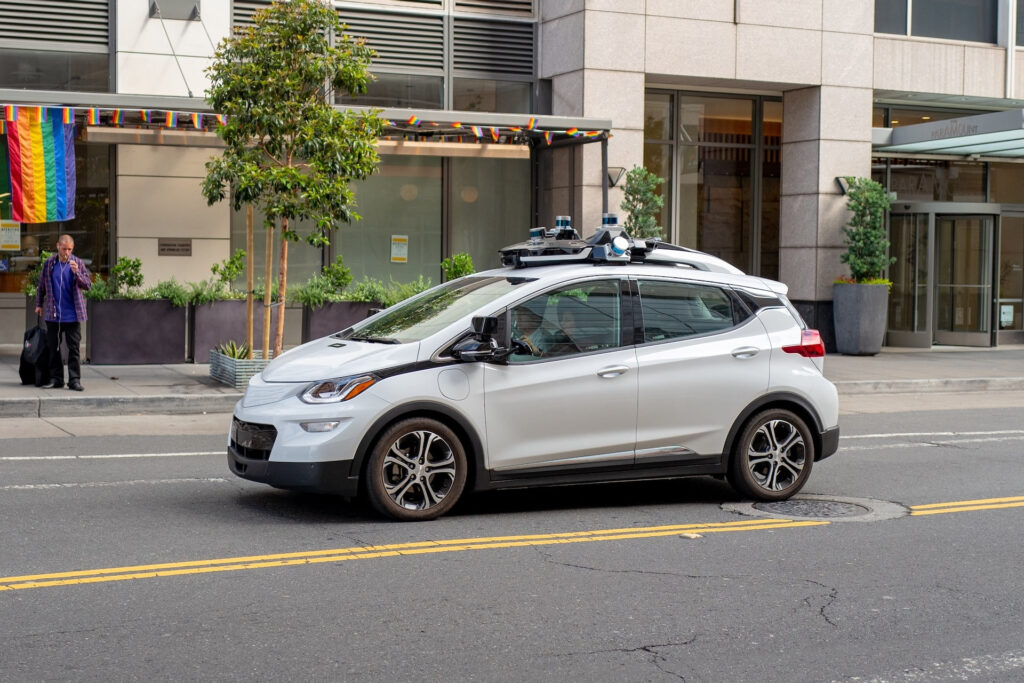
For cars to drive themselves, they’ll need to see.
Inside their artificial eyeballs are a series of silicon specks that must process large volumes of data very, very fast.
Arun Iyengar is the CEO of Untether AI, a Toronto-headquartered semiconductor startup looking to help get autonomous vehicles on the road.
One problem carmakers face is a “need [for] compute density that doesn’t exist in the marketplace,” he said in a March interview with The Logic—meaning they need faster chips than what’s currently available. To achieve any level of real autonomy, according to Iyengar, a vehicle needs semiconductors that can conduct 10,000 trillion operations per second (TOPS). It’s a measure of the number of mathematical calculations the chip can handle as it tries to process all the data from sensors and inform driving decisions. “There’s no chip on Earth that does [that] right now.”
Untether’s first generation of components is capable of 2,000 TOPS, and Iyengar said the next iteration, due by the end of the year, will be able to do five times that on a single card. Sectors like automotive that require vision systems are the startup’s biggest market so far; it’s also selling to defense contractors and financial-services firms.
General Motors is a marquee client-investor. “We are working with them on their next-gen perception system for autonomous vehicles,” said Iyengar. The provincial government’s Ontario Vehicle Innovation Network is providing $1 million in funding for the $3-million R&D project, which was announced last April. The firm is working with other auto-sector clients, but declined to name them.
The degree to which a car is self-driving is measured on a six-increment scale. A Level 3 model can handle most low-stakes driving, keeping track of what’s going on around it so it can brake, accelerate and manoeuvre as needed. But carmakers have been wary. “The driver can be sleeping and the system alerts [them] to take control back,” noted Iyengar, a San Jose, Calif.-based longtime semiconductor executive. “And it’s that handoff that people felt was extremely risky.”
Wheelwrights like Ford and Waymo have cited sleepy test-drivers as a reason to skip straight to higher levels of autonomy.
“Autonomous vehicle proliferation has got delayed,” noted Gaurav Gupta, a vice-president analyst at research firm Gartner. But he said that’s not primarily down to chip speed. The other elements required to get self-driving cars on the road—sensors, software, regulations, public-buy in and business models—are also not yet ready. “This is an exceptionally hard technology to bring into real life … because people’s lives are involved,” he said; a higher-TOPS chip won’t bring robo-taxis to every city.
Untether is working to make its components more efficient, and compatible with other vendors so that original-equipment manufacturers can mix and match. “The industry is waiting to see who can provide them that huge compute density,” Iyengar said.
Read Shift—The Logic’s authoritative weekly newsletter on automotive technology industry news—for more; and if you know someone who should be reading it, they can sign up here.
Loading...
You have shared 5 articles this month and reached the maximum amount of shares available.
CloseIf you would like to purchase a sharing license please contact The Logic support at [email protected].
CloseYou have gifted 0 article(s) this month and have 5 remaining.
Recipients will be able to read the full text of the article after submitting their email address. They will not have access to other articles or subscriber benefits.
Photo: Getty Images/Smith Collection/Gado
Great journalism delivered straight to your inbox.

Get up to speed in minutes with insights and analysis on the most important stories of the day, every weekday.
See the bigger picture with reporters and industry experts in subscriber-exclusive events.
Membership provides access to our popular Slack channel, participation in subscriber surveys and invitations to exclusive events with our journalists and special guests.