OTTAWA — The daycare kids loved Bubs at first sight.
A line of the youngsters emerged from a church basement for a walk on a chilly fall day, along a commercial strip west of Ottawa’s downtown. As soon as the first of them caught sight of the robot across the street and pointed, more than a dozen young heads turned—craning ever more sharply as the caregivers led their charges down the block.
Talking Points
- Startled city governments put a stop to unauthorized previous trials of ‘bots carrying food and goods from local retailers to nearby customers when one Canadian company tried it amid the COVID-19 pandemic
- Real Life Robotics is going about a similar business more methodically, seeking to befriend regulators in its mission to make deliveries economical for mom-and-pop stores and restaurants
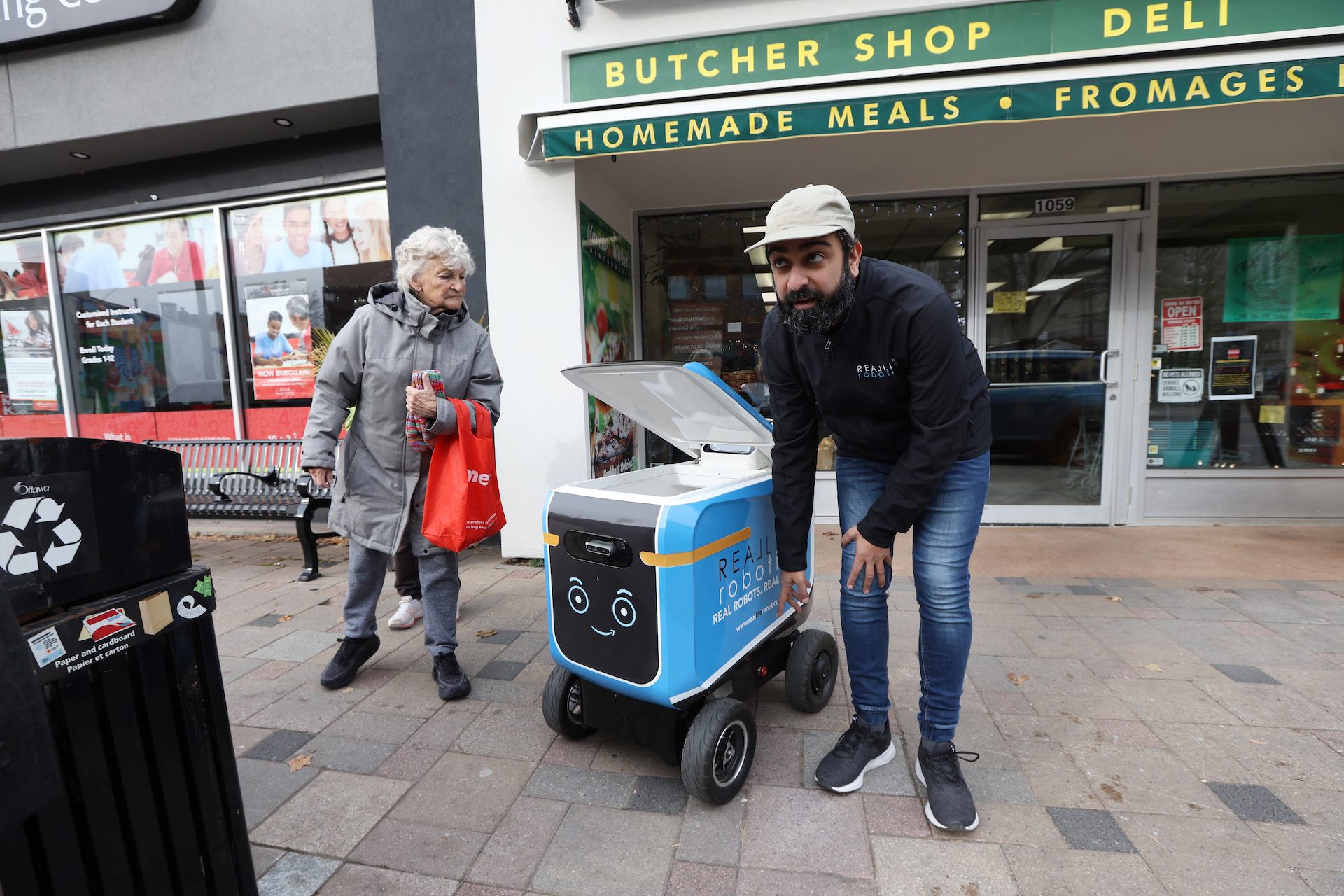
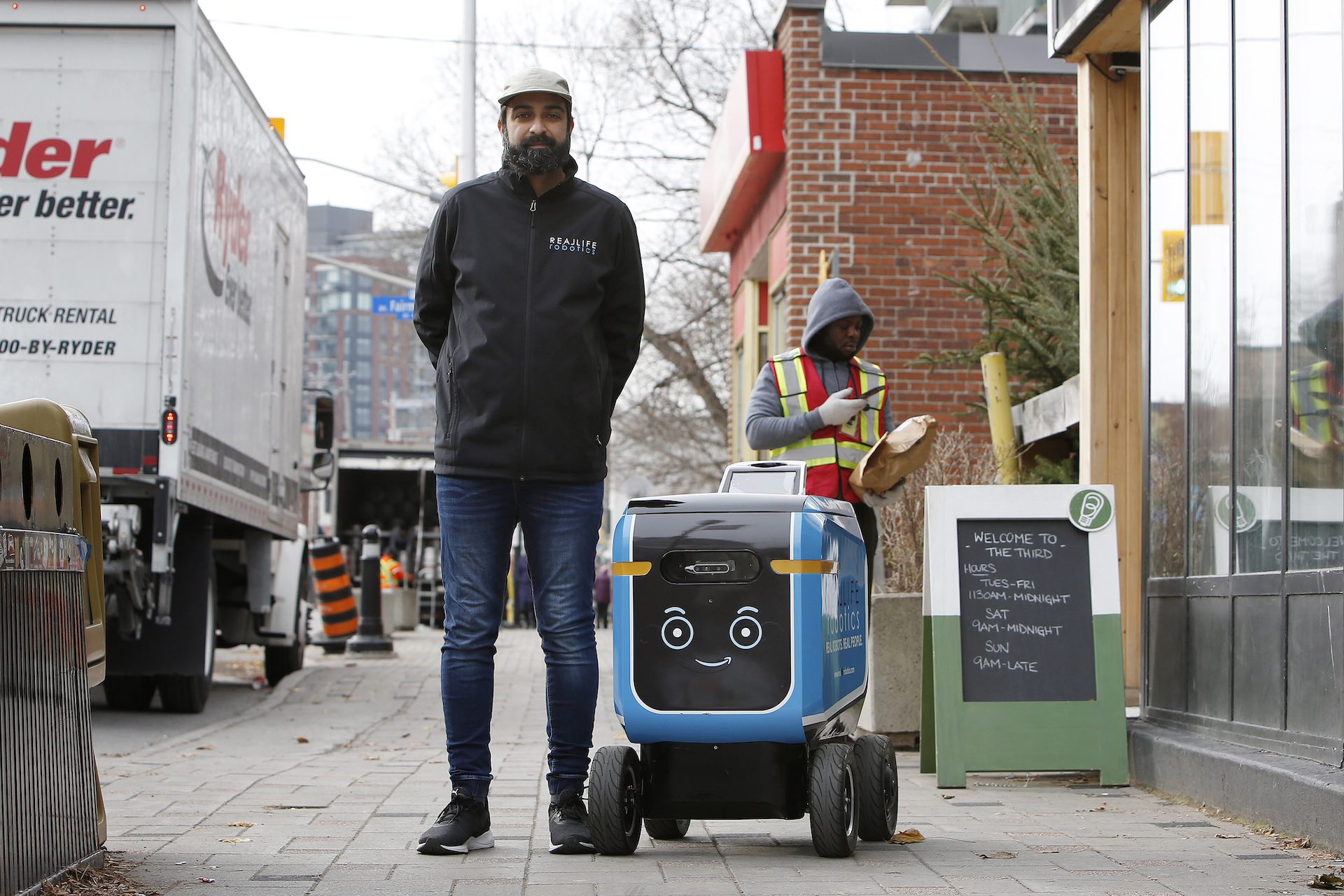
Bubs is an insulated container on motorized wheels, about the size of two laundry baskets, with a cheery cartoon face painted on the front. It catches a lot of eyes.
This one is a demo model for delivery robots from Real Life Robotics, where Sharif Virani is head of growth. The company’s mission, he says, is nothing less than saving Canada’s mom-and-pop shops, by outcompeting the likes of Walmart and Uber Eats simultaneously.
“You look on any Main Street in Canada. What’s happening right now? Small businesses are shuttering,” Virani said.
Delivery is a big advantage for huge retailers, he contends. By letting restaurants and stores that don’t have the scale of a Walmart or Amazon offer local delivery—without paying the commissions commanded by Uber’s or SkipTheDishes’ services—Real Life Robotics aims to find a niche.
The model is to offer “robots as a service,” charging clients flat monthly fees for the right to a given number of simultaneous deliveries, Virani said. Participating businesses would share a pool of bots from a nearby depot.
He looked around the commercial strip. “This whole neighborhood could have five or eight robots servicing it.”
Virani operated the robot— “this guy,” as he calls it—using a complicated remote control, walking close behind as Bubs promenaded along the sidewalk. He moved the robot in stop-and-start fashion, keeping it well below its top speed. Bubs has cameras and a sensor package making it capable of autonomous or semi-autonomous operation, however, so a person could manage several at once from a distance, watching feeds and taking control only when needed.
That’s where Real Life Robotics anticipates finding an advantage over delivery services that use humans.
“Labour is almost impossible to find. Minimum wage is going up,” Virani said. The federal government’s tightening restrictions on temporary foreign workers and students will reduce the supply of people willing to work cheap, he believes. A person who supervises multiple deliveries at once, from home, without having to cover fuel and wear and tear on a vehicle, can be paid better for less unpleasant work.
“We’re trying to save the main street, make delivery a little bit more accessible and portable.”
“We have to cater to these jobs, because we’re kind of screwed otherwise,” Virani said.
Uber Eats is keen on delivery robots, too, though its latest experiment in Austin, Texas, lets customers, not businesses, decide whether they’d prefer an automated courier.
Bubs the demo machine is an older model; it needs to be plugged in to charge and it makes halting three-point turns. Half a dozen of Bubs’s descendants with contact charging and turn-on-the-spot capabilities, are to roll in January onto sidewalks in Markham, Ont., for a test in a designated zone for transportation experiments.
“Move fast and break things” is a bad approach to transportation technology, Virani said, because you can actually break things—and people. A 200-pound robot that can move at several times a normal walking pace could be a menace.
The Ontario Vehicle Innovation Network, the provincially funded agency overseeing the trial, declined to speak to The Logic about it.
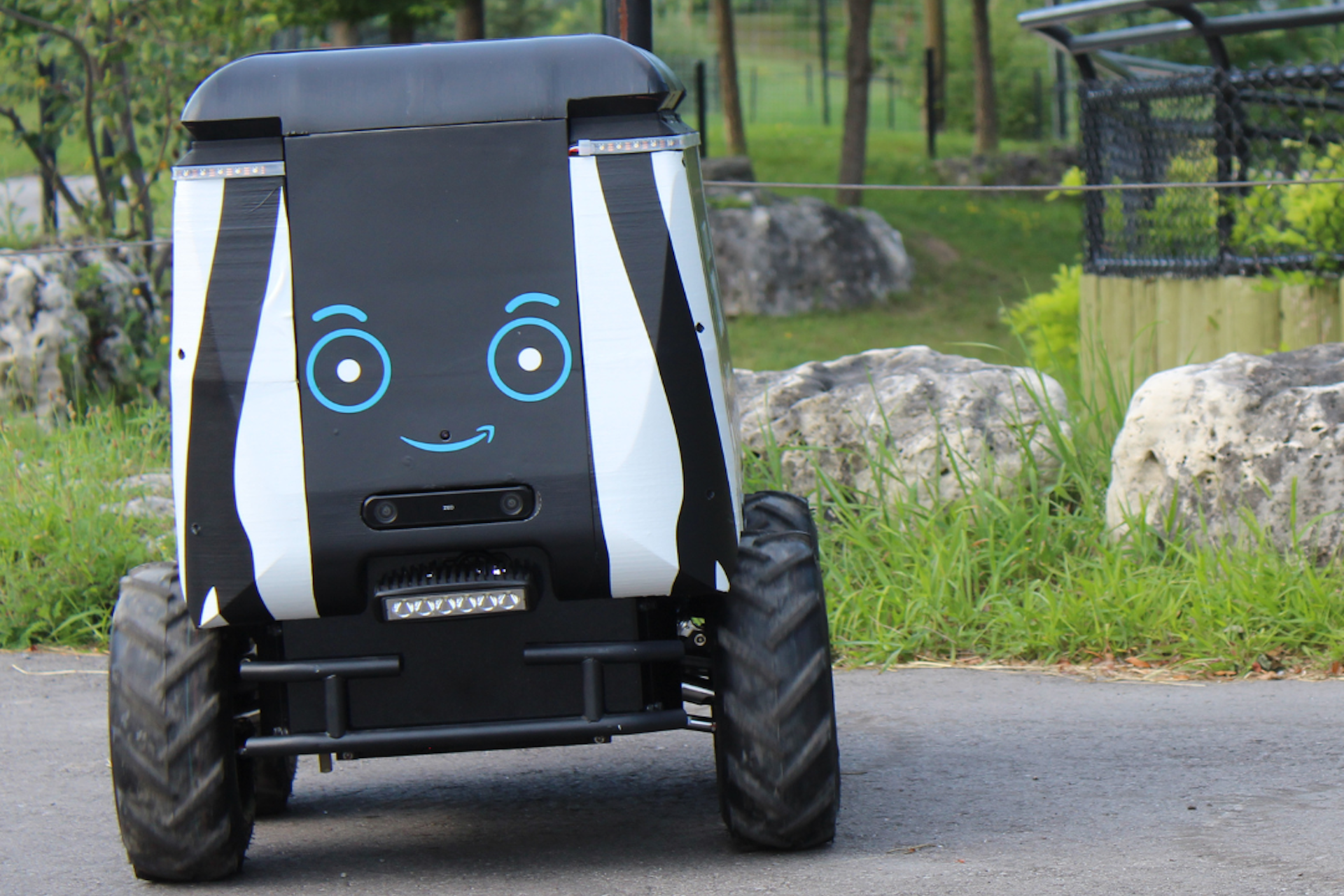
Last summer, Bubs iterations worked in the relatively controlled environment of the Toronto Zoo, transporting food for animals.
Bubs, a delivery robot model from Real Life Robotics, performs its duties last summer in a test at the Toronto Zoo. Photo: Toronto Zoo/Handout
“No accidents, no incidents,” Virani said. These tests “are important so that we can monitor and do things progressively, and not just launch willy-nilly.”
The Bubs sensors can also be used to monitor things that have nothing to do with deliveries but interest governments. Air pollution or light levels or illegally parked cars, for instance. That’s part of a methodical plan to court municipal governments’ support—because delivery robots have been tried in Canada before and they made politicians mad.
Toronto-based Tiny Mile began test runs in its home city during some of the worst of the COVID-19 pandemic (its robots were smaller, pink and named Geoffrey) but was quickly run out of there, and Ottawa, too. (It’s now working in Miami, with local approval). Virani worked at Tiny Mile for a little while, and Real Life Robotics has taken a lesson about taking politicians by surprise.
“A city councillor doesn’t want to get a call from a voter and not know what they’re talking about,” he said.
Virani on the street in Ottawa with Bubs. While Virani piloted this iteration of the robot with a wireless controller, the company is testing autonomous versions. Photo: David Kawai for The Logic
As it happened, one person whose attention Bubs got during the Ottawa photo shoot for The Logic was the local city councillor. Jeff Leiper spotted the bot as he came out of a meeting in a community centre next to the church with the daycare, and crossed the road to see what was up.
Virani gave Leiper a business card and the quickest version of his pitch: “We’re trying to save the main street over here, make delivery a little bit more accessible and portable.”
Leiper wasn’t about to jump on a Bubs bandwagon, but his first reaction was positive. A key question is how the robots would work on crowded sidewalks, he said, but pedestrians are already used to making their way around each other and street furniture like benches, signs and garbage bins.
“The trade-off between adding a bit more to already busy sidewalks versus a clear business case for local businesses serving the residents who live closest? I like the grand bargain there at first glance,” Leiper said.
After a $242,000 grant from the federally backed Canadian Food Innovation Network in January and an investment round in April from RHA Ventures, Real Life Robotics has about 10 staff, distributed among Waterloo, Toronto and Ottawa, Virani said. It’s had a couple of people dedicated to the zoo and will plant some in Markham for the winter trial.
“Building in public,” letting people see the bots, is really important for getting buy-in, Virani said, and also for learning and developing the technology.
“One of the things that I told the team after our first week is, ‘Everyone’s got to buy an Allen key,’” he said. “Things always go wrong, so you’ve got to always be ready for them. You’ve got to be ready to work at all hours of the day. And you’ve got to celebrate the wins, man.”