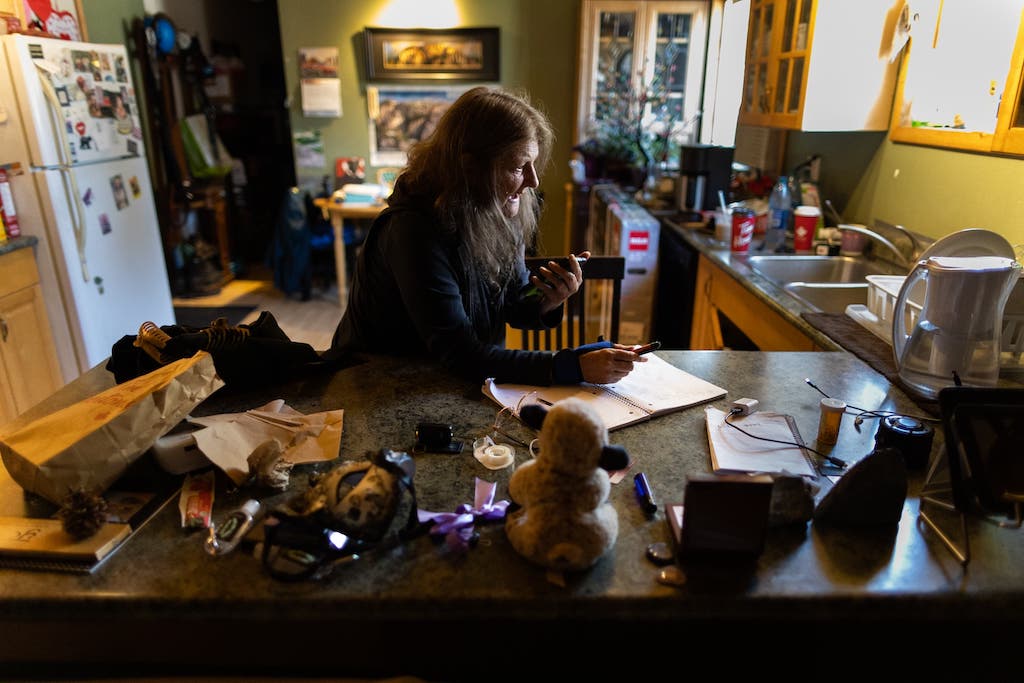
SQUAMISH, B.C. — When people living in Squamish want food delivered from local restaurants, they’re likely to Just Call Terry.
That’s Terry as in Terry Hein, a 68-year-old entrepreneur who drives a Chevrolet Trax and brings everything from steaks from the local chophouse and burgers from nearby fast-food chains to people living in this adventure community north of Vancouver.
With a population of some 24,000, and where a drive from one far-flung neighbourhood to another can be upwards of 20 minutes, Squamish is not a go-to market for app-driven food delivery in the vein of Uber Eats. Yet Hein is on the road seven days a week, along with a fleet of drivers who make deliveries under her company’s banner.
Talking Points
- Terry Hein’s delivery service in Squamish, B.C., leverages local knowledge and a personal touch to fill the space Uber Eats and SkipTheDishes do in larger centres
- Similar businesses have sprung up in small cities and towns across Canada, where the bigger players can’t efficiently operate
Just Call Terry is one of numerous businesses that fill a need for food delivery in smaller Canadian markets, where bigger players like Uber Eats and SkipTheDishes won’t—or can’t—effectively operate. Hein started the company 18 years ago, partnering with five restaurants in the area. “It grew from there in a way that’s just been unbelievable,” she said.
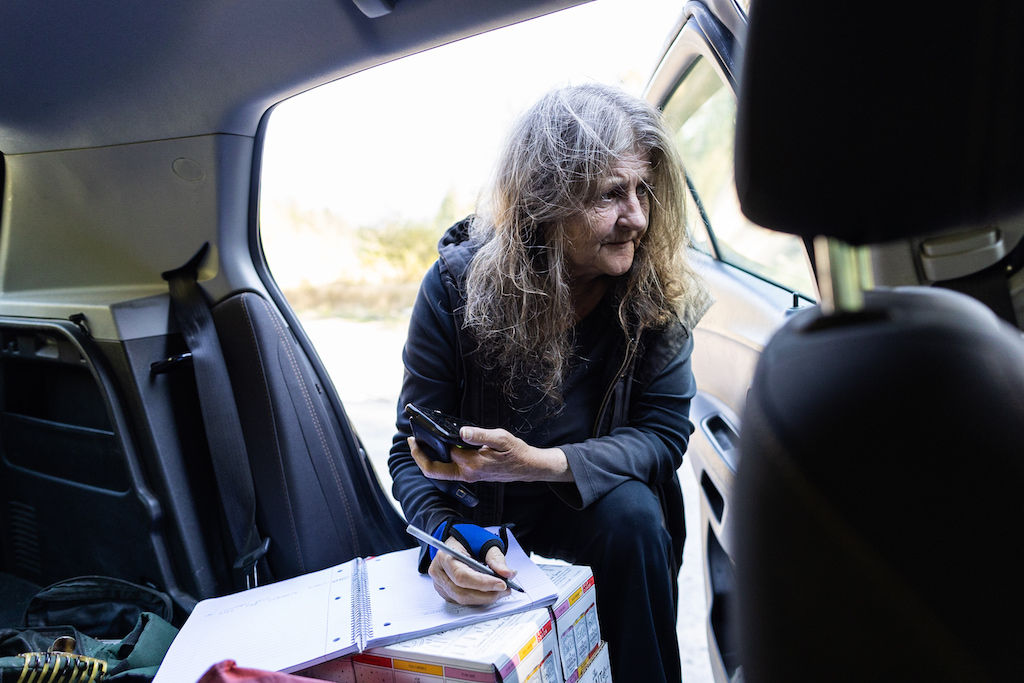
On most days, she’s behind the wheel by 11 a.m. (she tries to take one day off each month) when demand tends to be slow enough that she can juggle answering her cellphone with picking up and delivering orders. Just Call Terry’s partner restaurants—her website now lists 16—call her directly with their diners’ orders. Customers wanting deliveries from any other merchants in town have to call Terry themselves. “I answer my phone constantly. I speak to people,” she said. “I find out what they want, when they want it.”
Just Call Terry doesn’t offer an app or online ordering. Hein takes orders manually from customers and restaurants. Photo: Jesse Winter for The Logic
Around 3:30 p.m., though, Hein’s busy period begins, and she is adamant that she won’t look at her phone while driving, only when parked. So at that point, she heads home to work exclusively as dispatcher, sending out six drivers for the evening shifts from Sunday to Thursday, and 10 on Fridays and Saturdays. Last December, on a day she described as monsoon-like, her company completed 180 deliveries—an all-time high.
She doesn’t trust many others to work the busy phones and send drivers where they need to go with efficiency. “Not many people’s heads can do what I do,” she said. “I’m like a computer.” Hein did try shifting to an online-ordering system for what she described as “like, a minute.” She found it didn’t work well for her.
Food delivery of some form has long been a feature of small-town life—even Hein worked as a driver for a pizzeria before starting her own venture. But demand in rural and remote spots seemed to take off as ordering via apps—and the gig economy that makes it possible—took root in major urban centres. Uber Eats launched in Toronto in 2015 and now operates in more than 140 areas in Canada, while SkipTheDishes first started in Saskatoon in 2012 before expanding to more than 100 cities.
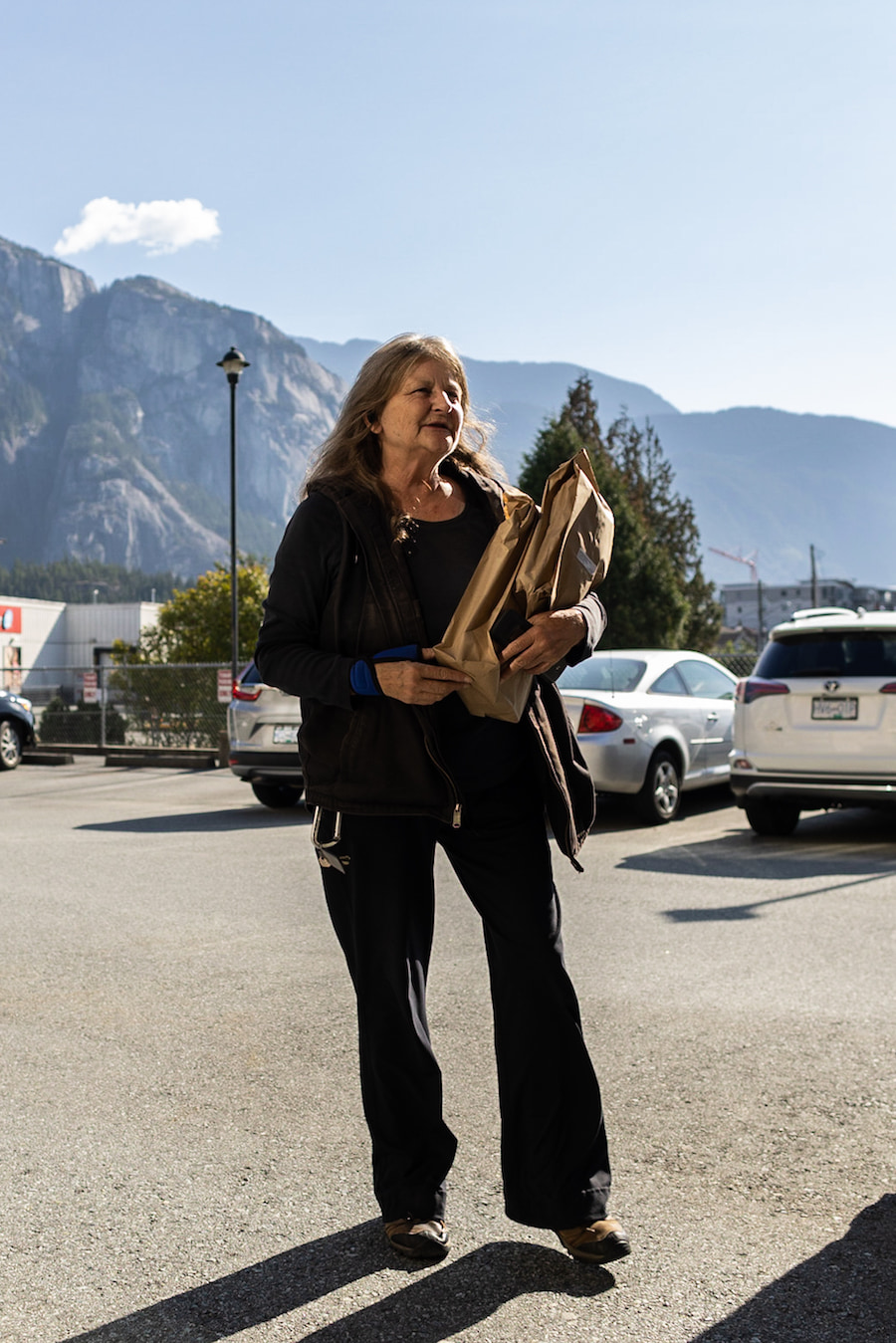
Hein’s regulars include elderly clients for whom she does routine grocery shopping. Her work, she said, is “100 per cent personal.”
Those services eventually found their way to a few of Canada’s smaller cities. An Uber Eats spokesperson noted that the company now has a presence in Sidney, B.C., population: 11,672; and Grimsby, Ont., population: 27,000. But they’ve mostly stuck to urban and suburban areas, leaving others to fill the growing demand in places like Squamish, where diners were well aware of the variety and convenience their urban counterparts enjoyed.
That’s because the business models of companies like Uber Eats and SkipTheDishes are a poor fit for many towns and small cities, where merchants’ margins are thinner, and pools of potential drivers are limited. Even in urban centres, restaurateurs have complained that the fees —typically 20 to 30 per cent per order—are exploitative, and that the service creates more headaches than profits. Driver retention is also an ongoing problem.
Hein isn’t the only person to find opportunity in a space the big players have left open. In Squamish, she now has a competitor—one of her former drivers has started his own delivery business. In Merritt, B.C., William Tsui co-founded a service in 2020 called Canuck Eats, which has since expanded. When he moved to the city of roughly 7,000 in the B.C. Interior, there were few food-delivery options beyond pizza because, Tsui said, larger delivery companies won’t serve any area with less than 10,000 people. “It’s just us independent small guys that are working in those markets,” he said.
While her company offers food delivery from restaurants, Hein also does grocery shopping for some of her clients. Photo: Jesse Winter for The Logic
Many have structured their businesses to avoid the sort of backlash that app-based services have encountered from restaurants in large centres. Hein signs contracts with establishments in Squamish, charging them a flat rate of about $5 a day. Feastify, a food-delivery app that operates in more than 100 mostly rural communities in Canada, charges restaurants an 18 per cent commission, said co-founder and CEO Chris Thomas, up to 12 percentage points less than the reported rates of bigger players. It also has live dispatchers, who can act as go-betweens when disputes over orders arise. Rather than approving refunds when customers request them, as other services do, Feastify lets restaurants try to resolve the issue and salvage some, if not all, of the order amount.
The small-town services have also taken a different approach to what Thomas calls “driver management.” While bigger companies tend to try to get as many drivers as possible to sign up, he said, that system won’t work well in an area where business on a Friday night may only necessitate four drivers: “Nobody’s going to be making any money, right?” Unlike app-based companies that use artificial intelligence to assign drivers, Feastify has humans doing live dispatching, which allows them to batch together orders from adjacent homes, and “micromanage” in other ways to maximize drivers’ incomes.
Without local knowledge and connections to people living in the area, it can be difficult to find local workers for delivery, said Chandler Lang, owner and founder of Revelstoke Delivery, which serves its community of about 6,700 in the snowbelt just west of the B.C. Rockies. The company, which makes about half of its revenue from food delivery, employs drivers as hourly staff rather than independent contractors, and owns a fleet of winter-ready vehicles for them to use. “Unless you live here, or you’re already established, it’s kind of hard to be like, ‘OK, I can guarantee that I’m going to have this amount of employees for X amount of time,’” said Lang.
Most important, though, may be the neighbourly touch these businesses provide compared to that of major corporations. After 18 years of service, Hein describes her work as “100 per cent personal.” Her regulars include elderly computer-averse clients for whom she does routine grocery shopping. They call and dictate their lists, which Hein writes down. On delivery, they typically hand her a cheque, which she finds “cute” rather than inconvenient. “I’m the best part of their day,” she said.
Hein and her drivers carry dog treats for a household’s canine members (as a bonus, it sometimes gets the dogs to stop barking when orders arrive). And when COVID-19 prevented door-to-door sales, she brought $300 worth of Girl Guide cookies, free of charge, to some of her older clients.
In the afternoons and evenings, Hein works as her company’s dispatcher. Photo: Jesse Winter for The Logic
Neither Uber Eats nor SkipTheDishes, two of Canada’s major food delivery players, would explain to The Logic how it determines which markets it enters. Uber Eats spokesperson Keerthana Rang wrote in an email that those decisions depend “on market conditions and operational complexity,” while SkipTheDishes did not respond to a request for comment.
Whatever the deterrents, the local startups have found enough success to start expanding—with some hoping to build their own delivery empires, and even push into bigger cities. Since launching in Merritt, Canuck Eats now operates in three other areas: Nanaimo, B.C.; Oshawa, Ont.; and Edmonton. “Within the next few years, we want to have a location in every province,” said Tsui.
To keep its service attuned to conditions in each specific market, Canuck Eats created a franchise model. For a $5,000 fee, a local entrepreneur can bring the service to their location. Canuck Eats helps with the technology and marketing, but the local owner negotiates with restaurants and drivers. So far, Tsui’s funded the venture himself, along with a $13,000 injection from Clearco’s ClearAngel program in October 2021. Tsui said he plans to bootstrap the company, but would entertain interested investors on a case-by-case basis.
Feastify, meanwhile, is in the midst of a $3-million fundraising effort, in part to support its planned expansion. It recently launched in its first East Coast communities. Thomas said it’s secured about half of that goal. The company may eventually target communities with populations between 30,000 and 50,000, said Thomas, and may run a test in the U.S. as early as this year.
Hein, too, has considered expanding, but her sister talked her out of it, reminding her of her age. At 68, Hein considers succession-planning a more pressing priority than empire-building. She’s a bit tired, as someone who works every day would be. A couple months ago, she injured her back while carrying a 24-pack of beer (although four weeks into what was expected to be at least an eight-week healing period, Hein insisted “it doesn’t even hurt anymore.”) Just Call Terry has been her life for nearly two decades, and she’s unsure what she’ll do with the business when she no longer wants or is able to run it herself.
So Hein has started to think about selling, but finding the right buyer is tricky. “As much as I’d like to,” she said, “I’m not comfortable giving my name to just anyone.”