OTTAWA — Francine Berish has spent a lot of time looking down on Belle Park from above. The Queen’s University librarian uses aerial photographs and fire insurance plans to assess the biodiversity and impacts of climate change on this spit of land in Kingston, Ont., that juts into the Great Cataraqui River. It’s part of a community-based project tracking the space’s history as wetland, landfill and golf course. “We’re learning the impact that an individual tree can make,” Berish said.
Skip to content
 An aerial photo of Kingston, Ont., including the area that now forms Belle Park, taken in September 1924. Photo: Photographer unknown/Queen’s University

News
Ottawa’s push to fulfill USMCA copyright commitments meets resistance from universities
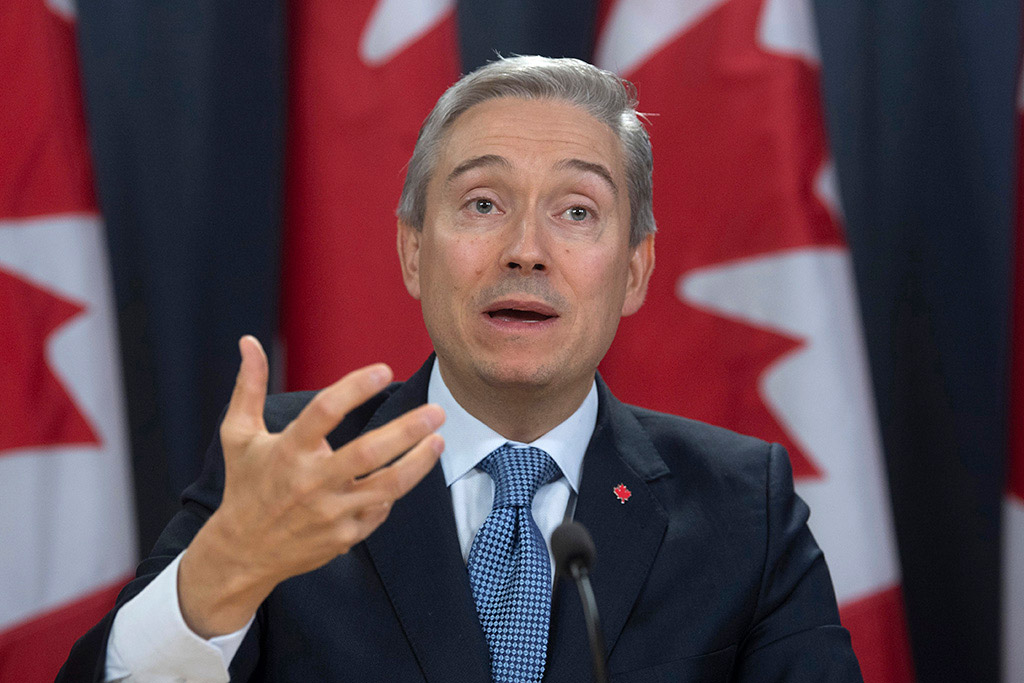
Innovation Minister François-Philippe Champagne in Ottawa in March 2020. Photo: Adrian Wyld/The Canadian Press
OTTAWA — Francine Berish has spent a lot of time looking down on Belle Park from above. The Queen’s University librarian uses aerial photographs and fire insurance plans to assess the biodiversity and impacts of climate change on this spit of land in Kingston, Ont., that juts into the Great Cataraqui River. It’s part of a community-based project tracking the space’s history as wetland, landfill and golf course. “We’re learning the impact that an individual tree can make,” Berish said.
Talking Point
Canada’s universities are disappointed that Ottawa hasn’t yet moved forward with measures to reduce the impact of changes to copyright it agreed to when renegotiating NAFTA.
But the Belle Park Project may not be able to make all its findings available digitally as planned because of upcoming changes to copyright rules that Canada promised to make as part of the renegotiation of NAFTA. The new rules will let creators profit from their artistry for longer, but stymie upstarts who want to remix those works and researchers who want to study and teach them.
Bill C-19, the Liberal government bill that will implement April’s federal budget, would also extend the length of copyright protection from 50 years after the death of a work’s author to 70. It’s a move to which Canada committed in the USMCA at the behest of the U.S., which passed its own extension in October 1998. “We’re adopting the American standard in an attempt to make it an international standard,” said Barry Appleton, a Toronto-based trade lawyer.
Despite that commitment, the copyright changes aren’t settled yet. While Canada, the U.S. and Mexico agreed to implement most USMCA provisions immediately after its July 2020 start date, the deal gave Canada two and a half years to enact the copyright term extension. The Liberal government has since suggested that it’s willing to use the issue as a bargaining chip in an ongoing trade dispute over the U.S.’s proposed EV tax credits.
In a December 2021 letter to key U.S. senators, Finance Minister Chrystia Freeland and International Trade Minister Mary Ng said the tax credits “violate the United States’ obligations” under USMCA. Canada is willing to “consider the possible suspension of USMCA concessions of importance to the U.S. in return,” including delaying copyright changes, they wrote. Ng’s office did not respond to The Logic’s questions about whether the government was still willing to hold off on the copyright changes as a result of the dispute.
In the meantime, some innovation-economy groups have criticized the Liberal government over its plan to enact the changes. In February 2021, Innovation, Science and Economic Development Canada (ISED) launched a consultation on the term extension and measures to reduce the impact on people and companies that use works that would be under copyright for longer. The government’s proposals included expanding a system under which users can license so-called “orphan” works—the owners of which are unknown or cannot be reached—to creations that are no longer being commercialized, like out-of-print books. ISED also considered a 100-year cap on copyright protections, as well as letting people use such content without permission but letting rights holders claim compensation.
Some innovation-economy groups have expressed concern that the budget bill does not include any such exemptions. “It is very disappointing that your government chose to disregard the entire consultation process on mitigation measures and what you heard from stakeholders when implementing the term extension,” Universities Canada president Paul Davidson wrote in a May letter to Innovation Minister François-Philippe Champagne and Heritage Minister Pablo Rodriguez, which the association provided to The Logic.
The lobby group, which represents over 90 post-secondary institutions, said the change will “reduce access to important scientific, historic and cultural material” and increase costs and litigation risks for students and faculty using copyrighted material. University libraries are keen to digitize their collections and make them more widely accessible; if the proposed changes take effect, Berish and her colleagues will have to wait two decades longer before the works fall into the public domain.
ISED did not directly answer The Logic’s questions about why it did not include mitigation measures to the copyright term extension in the budget bill. The government “negotiated” the two-and-a-half-year transition period in USMCA “to ensure Canadian industry was provided with adequate time to provide input and adapt to these changes,” said department spokesperson Doreen Flynn. She said ISED is reviewing responses to the consultation and will “continue to consider the possibility of future measures.”
That doesn’t satisfy Universities Canada. “While we’re hearing that new measures could be introduced in the future as part of a broader package of copyright reforms, there are no guarantees and therefore not much comfort” for researchers and other users “whose projects are facing potential years of uncertainty,” said Ann Mainville-Neeson, vice-president of policy.
Appleton said there’s nothing in USMCA stopping Canada from offering exemptions as it extends the copyright term. But other innovation-economy groups favoured decoupling the two.
In its submission to ISED, the Intellectual Property Institute of Canada (IPIC), an association representing IP professionals, called for the term extension to be implemented “swiftly and cleanly.” The proposals focused on orphan and out-of-commerce works required further, careful study, said Catherine Lovrics, a partner at Marks & Clerk Canada and chair of the IPIC’s copyright committee, in an interview with The Logic.
The association’s submission noted that the U.S. is still weighing whether to adopt similar measures, while EU members took eight years from the bloc’s first consultations to implement them. Implementing the copyright term extension benefits Canadian creators not only domestically, but also abroad through reciprocal agreements, Lovrics said.
House of Commons committees are currently reviewing Bill C-19. The copyright changes won’t take effect automatically once it’s passed; the legislation instead gives cabinet the power to enact them.



Loading...
Thanks for sharing!
You have shared 5 articles this month and reached the maximum amount of shares available.
CloseThis account has reached its share limit.
If you would like to purchase a sharing license please contact The Logic support at [email protected].
CloseGift the full article!
You have gifted 0 article(s) this month and have 5 remaining.
Recipients will be able to read the full text of the article after submitting their email address. They will not have access to other articles or subscriber benefits.
Photo: Adrian Wyld/The Canadian Press
An aerial photo of Kingston, Ont., including the area that now forms Belle Park, taken in September 1924.
Most Popular This Week




In-depth, agenda-setting reporting
Great journalism delivered straight to your inbox.
News
Panel decries Canada’s chaotic way of funding world-class science
Briefing
AI is pushing insurers to become asset managers, Canadian CEOs say
Trump administration faces lawsuit over 50% tariffs on Canadian goods
Canada-U.S. trade war to reduce real GDP by 1.4% over 2024 levels after five years: PBO
Best business newsletter in Canada
Get up to speed in minutes with insights and analysis on the most important stories of the day, every weekday.
Exclusive events
See the bigger picture with reporters and industry experts in subscriber-exclusive events.
Membership in The Logic Council
Membership provides access to our popular Slack channel, participation in subscriber surveys and invitations to exclusive events with our journalists and special guests.





