OTTAWA — The University of Ottawa Heart Institute is returning a US$250,000 research grant from the FTX Foundation, the charity arm of the crypto empire that imploded last November, ending weeks of silence about the ethical questions the contribution raised.
Skip to content


News
Ottawa’s heart institute promises to return US$250,000 grant from bankrupt FTX empire
Research centre follows University of Toronto’s lead after weeks of silence
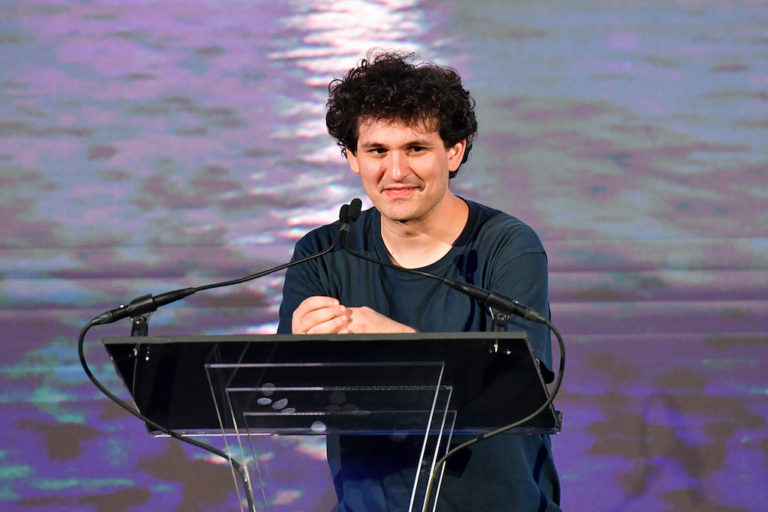
FTX founder and CEO Sam Bankman-Fried during a television appearance in August, two and a-half months before his crypto empire collapsed. Photo: Bloomberg/Jeenah Moon
OTTAWA — The University of Ottawa Heart Institute is returning a US$250,000 research grant from the FTX Foundation, the charity arm of the crypto empire that imploded last November, ending weeks of silence about the ethical questions the contribution raised.
The grant had been funding a project led by Emilio Alarcon, an institute researcher and University of Ottawa biochemistry professor, aimed at devising germ-resistant plastic.
Talking Points
- As a deadline arrives for recipients of donations from executives in the bankrupt FTX empire to return the money, the University of Ottawa Heart Institute has broken weeks of silence to say it will do so
- The institute “has no interest in virtue-washing the proceeds of crime,” its chair told The Logic
“The Heart Institute prides itself on its integrity and has no interest in virtue-washing the proceeds of crime,” the chair of the institute’s board, Paul LaBarge, told The Logic in an email Sunday night.
LaBarge, a partner at law firm LaBarge Weinstein, was travelling in New Zealand. He had not previously heard of the situation, but wrote that the possibility that the institute had money from defrauded FTX customers in its accounts was serious and merited immediate investigation.
Hours later, the institute posted a note to its website about returning the money.
The grant for Alarcon’s project was one of three to Canadian institutions publicized by the FTX Future Fund. It pledged tens of millions of dollars for research, media and other projects that reflected the preoccupations of executives at FTX and its affiliated trading firm Alameda Research, including pandemic preparedness.
Related Articles

Two of those executives, Caroline Ellison and Gary Wang, pleaded guilty to fraud and related charges in December. A third, Nishad Singh, pleaded guilty on Tuesday to conspiring to commit fraud and other crimes. FTX chief executive Sam Bankman-Fried has pleaded not guilty to numerous charges of his own in U.S. court.
The remains of FTX are now under the administration of windup specialist John J. Ray III, who previously cleaned up the wreckage of Enron and Nortel. He has alleged, in essence, that FTX and Alameda’s leaders helped themselves to customer deposits on FTX’s cryptocurrency exchange until eventually the whole edifice collapsed.
On Feb. 5, FTX made a public call for “recipients of contributions or other payments that were made by or at the direction of the FTX Debtors, Samuel Bankman-Fried or other officers or principals of the FTX Debtors” to return that money by Feb. 28.
That sweeping language is partly explained by the complexity of the corporate arrangements around FTX’s charity and charity-adjacent work, which included multiple entities.
The University of Toronto, where US$492,119 in FTX Foundation money was supporting a project to improve the quality of social scientists’ predictions about the future, told The Logic in early February that it was returning that grant. Western University in London, Ont., said that it would await a direct request from FTX Foundation Inc. before returning a US$150,000 grant for research into resilient food sources.
Alarcon, like many staff at the University of Ottawa Heart Institute, has dual appointments at the institute and at the university, which are legally distinct institutions with their own budgets and boards.
The institute is physically attached to an Ottawa Hospital building, where its physicians care for heart patients; the Heart Institute has yet another corporate entity, the Ottawa Heart Institute Research Corp., which handles research funding for its scientists and their labs.
According to the Heart Institute’s statement, Alarcon’s grant came from FTX Philanthropy Inc. and went to the research corporation.
On its now-defunct website, FTX Foundation had listed both the university and the institute as Alarcon’s professional homes, and the university had claimed oversight of Alarcon’s project in a statement to The Logic in November, saying at the time that it “is underway and it continues to advance in accordance with the university’s policies and regulations.”
The University of Ottawa did not immediately reply to The Logic’s inquiry in February about what it would do now that FTX had asked for money given away by its executives to be sent back. But later, after The Logic persisted, spokesperson Jesse Robichaud said in an email that “it is the institute that is best positioned to speak on the funding you mention as it was granted to Dr. Alarcon through the institute and not through the university.”
No Heart Institute spokespeople or executives responded to numerous approaches by phone, email and other channels. Alarcon himself also did not answer emails or phone calls.
After the institute posted its statement, spokesperson Leigh Morris replied to an email, but refused to elaborate on when that repayment process began or what it might mean for Alarcon’s project: “Please feel free to share our statement with your readers. We will not be making any further comments,” he wrote.
Money that the FTX windup team recovers would go toward paying off the bankrupt entities’ obligations. FTX account holders—the people most directly victimized by frauds—would be first in line, followed by a list of potential creditors that includes three dozen Canadian entries, from pension plans to celebrity entrepreneur Kevin O’Leary to the Montreal Children’s Hospital Foundation.



Loading...
Thanks for sharing!
You have shared 5 articles this month and reached the maximum amount of shares available.
CloseThis account has reached its share limit.
If you would like to purchase a sharing license please contact The Logic support at [email protected].
CloseGift the full article!
You have gifted 0 article(s) this month and have 5 remaining.
Recipients will be able to read the full text of the article after submitting their email address. They will not have access to other articles or subscriber benefits.
Photo: Bloomberg/Jeenah Moon
Most Popular This Week


In-depth, agenda-setting reporting
Great journalism delivered straight to your inbox.
Commentary
Carmichael: Being boxed in will help Canada focus on what matters
Briefing
Rio Tinto gets nearly $165M in additional federal funds for Quebec aluminum
U.S. to lift tariffs on some Canadian products crucial to Maine: Collins
Carney warns of tech dependence after Starlink disruptions in Ukraine
Best business newsletter in Canada
Get up to speed in minutes with insights and analysis on the most important stories of the day, every weekday.
Exclusive events
See the bigger picture with reporters and industry experts in subscriber-exclusive events.
Membership in The Logic Council
Membership provides access to our popular Slack channel, participation in subscriber surveys and invitations to exclusive events with our journalists and special guests.






