OTTAWA — The charitable arm of FTX, the bankrupt crypto business, pledged hundreds of thousands of dollars in support to projects at three Canadian universities, money an academic ethics expert says they’re honour-bound to give back.
Skip to content

Exclusive
FTX’s charitable arm funded three Canadian scholars
Even if they sought and accepted crypto company’s grants in good faith, the money has to go back: Ethicist
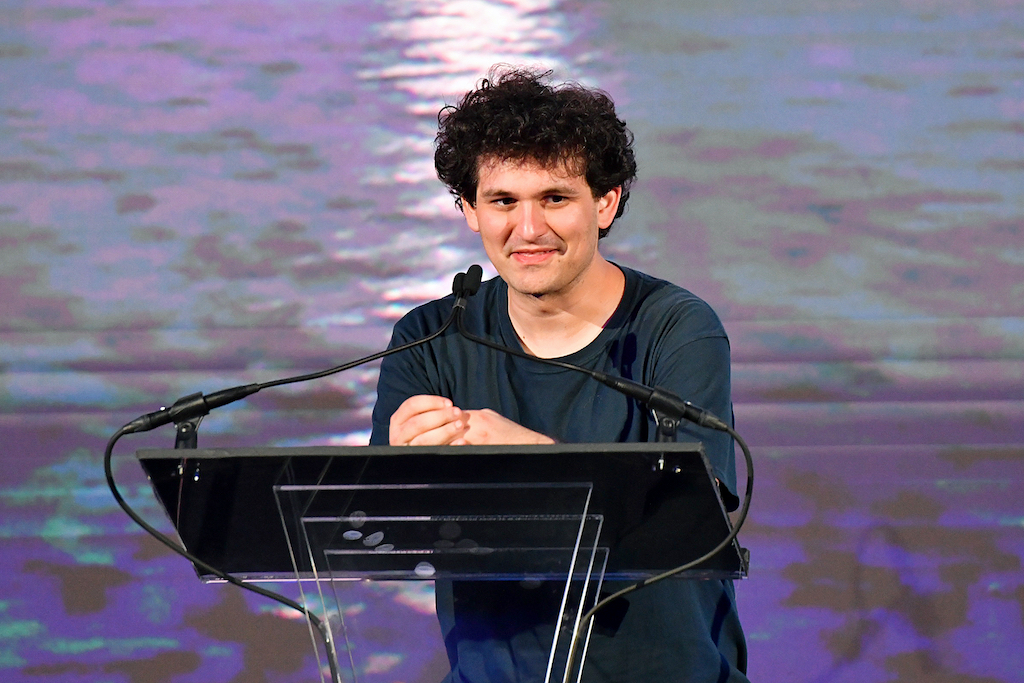
Sam Bankman-Fried on stage during the first annual Moonlight Gala benefiting CARE - Children With Special Needs on June 23, 2022 in New York City. Photo: Craig Barrit/Getty Images
OTTAWA — The charitable arm of FTX, the bankrupt crypto business, pledged hundreds of thousands of dollars in support to projects at three Canadian universities, money an academic ethics expert says they’re honour-bound to give back.
“If you accept money or chattels—goods, valuables of any kind—that you later discover was stolen, then it’s pretty clear that you have an obligation to return the stolen property to its rightful owner,” said Arthur Schafer, a philosophy professor and director of the University of Manitoba’s Centre for Professional and Applied Ethics.
None of the schools—the University of Toronto, the University of Ottawa and Western University—told The Logic they plan to do so. The University of Ottawa would not even say whether it has the money promised from the FTX Future Fund.
Talking Points
- The charity funded by former crypto billionaire Sam Bankman-Fried and his close friends at FTX supported causes he believed in, including research conducted by academics at three Canadian universities
- Regardless how good the causes are, the money needs to go back to its rightful owners, ethicist Arthur Schafer told The Logic
Nobody has been charged criminally in the sudden implosion of the FTX empire, which was founded in 2019, raised US$400 million at a valuation of US$32 billion early this year, and filed for bankruptcy protection on Nov. 11. That means none of the money distributed through the crypto company’s charitable arms has been legally determined to have been looted.
But FTX’s new CEO, cleanup specialist John Ray III, has told a bankruptcy court he’s found a “complete failure of corporate controls,” unreliable documents and rampant misuse of customer funds.
“A substantial portion” of FTX’s assets, he wrote in an early filing, “may be missing or stolen,” and there was evidence corporate money was used to buy real estate in the Bahamas for FTX employees. FTX lawyers working under the new regime told a bankruptcy judge the operation was run as a “personal fiefdom” of its rumpled impresario Sam Bankman-Fried.
Like FTX the crypto platform, the FTX Future Fund grew from nothing to titan incredibly quickly. Launched last February as one component in the larger FTX Foundation, the fund published an update in June saying it had made 262 grants and investments, totalling US$132 million.
Also like FTX, the fund was a project primarily of Bankman-Fried (along with fellow executives Caroline Ellison, Gary Wang and Nishad Singh), and it was preoccupied with his interest in long-term threats to human survival. It supported causes related to pandemic preparedness, control of artificial intelligence and how to better predict the future.
The fund set out to make bets on potentially world-changing projects and wasn’t picky about details like whether recipients were individuals or charities or non-profits or private corporations. They could have ideas that would probably fail, as long as the potential upside was big enough.
It sank tens of millions of dollars during its short life into promoting “effective altruism,” the philosophy that has inspired adherents like Bankman-Fried to try to get rich so as to give away as much money as possible in a way that does the most good for the most people.
Related Articles
The Logic examined the list of grants posted on the FTX Future Fund site—as of Sept. 1, the tally was up to US$160 million—and found three with clear Canadian links:
• US$250,000 in March for biochemist Emilio I. Alarcon at the University of Ottawa, “to develop new plastic surfaces incorporating molecules that can be activated with low-energy visible light to eradicate bacteria and kill viruses continuously.”
• US$492,119 in June for the Social Science Prediction Platform at the University of Toronto, “a platform which allows economists and other social science academics to use forecasting in their research.” Economics professor Eva Vivalt is one of two principal investigators, along with Stefano DellaVigna of the University of California, Berkeley.
• US$150,000 in July for engineering professor Joshua Pearce at Western University, to pay graduate students “to conduct research projects on resilient food, specifically on manufacturing rope for seaweed farming and on making leaf protein concentrate.”
When FTX went bust, the staff at the FTX Foundation—including William MacAskill, an associate professor of philosophy at the University of Oxford who’s considered one of the founders of the effective altruism movement—resigned together, saying they had “fundamental questions about the legitimacy and integrity of the business operations that were funding the FTX Foundation and the Future Fund.”
The Logic sent detailed questions to all three Canadian professors and their universities about whether they had the money in hand, how they came to apply for it, and whether they had formal or moral obligations to give any funding back.
None of the researchers replied but the three schools sent brief statements via their media-relations departments.
Western University confirmed that Pearce has received the $150,000 for the resilient-food project from the FTX Foundation.
“To date, the university has not been notified of any claims related to FTX Foundation, Inc. or this funding,” read a statement from Western’s acting vice-president for research, Bryan Neff. “Like many charitable organizations who received funds in good faith, the university will watch as this matter develops.”
The other two schools sent brief statements.
“The research project is underway and it continues to advance in accordance with the university’s policies and regulations,” said the University of Ottawa’s statement, relayed by spokesperson Jesse Robichaud.
“The University of Toronto sought and received US$492,119 from the FTX Foundation well before the FTX cryptocurrency exchange sought bankruptcy protection, and we will meet any obligations that may result,” said a statement from U of T’s media-relations department (the department would not name a spokesperson to attribute it to). “We do not anticipate any adverse impact on the project.”
Subscriber Event

The FTX Future Fund describes the grants to Western University and the University of Toronto as “regrants,” indicating they were given through “extremely independent” outsiders the fund entrusted to choose recipients on its behalf. There were more than 100 of these people, but the FTX Foundation didn’t identify them publicly. Neither Western nor the University of Toronto would say who their regrantors were.
Ray has overseen the windups of Enron and Nortel, among other big corporate failures, and is known for aggressively pursuing money on creditors’ behalf. Citigroup agreed in 2008 to pay US$1.66 billion to settle a lawsuit over its role in enabling Enron’s misbehaviour, for instance. Ray is also credited with recovering $1.8 billion from the originators of bad mortgages for Residential Capital, which bought a lot of them and then went bankrupt.
In those cases, Ray’s targets were accused of playing roles in the companies’ collapses, which is not the case with recipients of FTX Future Fund grants.
In the case of FTX, Schafer said, expecting the researchers to have known they were getting money from a questionable source would be unfair.
“If regulators and the Securities and Exchange Commission and auditors and accountancy firms hadn’t detected the fraud or hadn’t declared it, I think it would be unreasonable for us to expect universities independently to conduct such investigations, unless there were red flags,” he said.
That doesn’t change the ethical calculus now, in his view: If the money wasn’t FTX’s or its executives’ in the first place, the recipients can’t keep it.
If the money has already been spent, Schafer said, the universities should have accounts to cover such cases, similar to the funds or insurance policies law societies keep to compensate victims of corrupt lawyers. They do it to keep public faith in their integrity, he said.
“It’s part of being a professional.”
Editor’s note: This story was updated after its initial publication to include a statement from Western University that arrived after deadline.



Loading...
Thanks for sharing!
You have shared 5 articles this month and reached the maximum amount of shares available.
CloseThis account has reached its share limit.
If you would like to purchase a sharing license please contact The Logic support at [email protected].
CloseGift the full article!
You have gifted 0 article(s) this month and have 5 remaining.
Recipients will be able to read the full text of the article after submitting their email address. They will not have access to other articles or subscriber benefits.
Photo: Craig Barrit/Getty Images
Most Popular This Week




In-depth, agenda-setting reporting
Great journalism delivered straight to your inbox.
Commentary
Carmichael: Canadian ignorance about India is a strategic weakness
Briefing
Aritzia shares pop after earnings rise 204%
First Nation in Alberta goes to court over fast-tracked oil pipeline
Chinese EV maker Geely Auto Group to launch in Canadian market in 2027
Best business newsletter in Canada
Get up to speed in minutes with insights and analysis on the most important stories of the day, every weekday.
Exclusive events
See the bigger picture with reporters and industry experts in subscriber-exclusive events.
Membership in The Logic Council
Membership provides access to our popular Slack channel, participation in subscriber surveys and invitations to exclusive events with our journalists and special guests.





