OTTAWA — In a budget widely viewed as a response to the U.S.’s Inflation Reduction Act, Finance Minister Chrystia Freeland on Tuesday announced a raft of new tax incentives and spending measures aimed at bolstering cleantech development and hastening Canada’s transition away from fossil fuels.
Skip to content
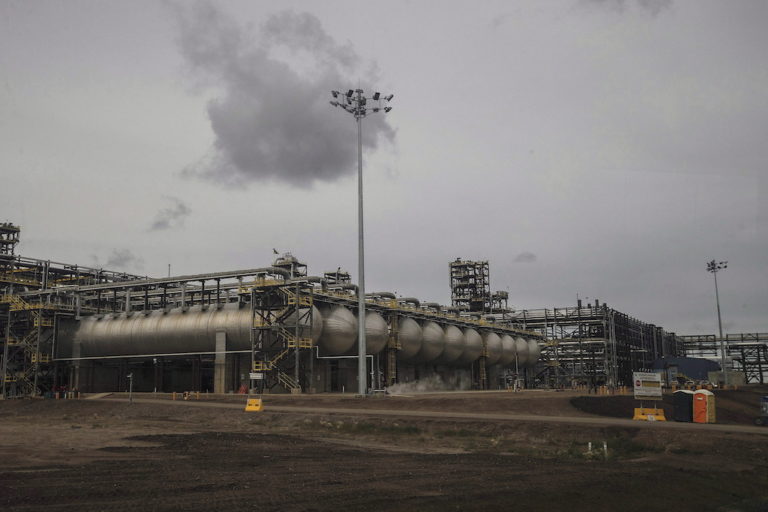
 Chrystia Freeland tours Air Products hydrogen production plant in Edmonton in August 2022. Photo: The Canadian Press/Amber Bracken
News
Ottawa lays out billions in green energy tax credits in budget response to U.S. Inflation Reduction Act
Four key tax credits costing $16.89 billion over five years underpin the federal cleantech strategy
Chrystia Freeland tours Air Products hydrogen production plant in Edmonton in August 2022. Photo: The Canadian Press/Amber Bracken
OTTAWA — In a budget widely viewed as a response to the U.S.’s Inflation Reduction Act, Finance Minister Chrystia Freeland on Tuesday announced a raft of new tax incentives and spending measures aimed at bolstering cleantech development and hastening Canada’s transition away from fossil fuels.
Central to the federal government’s response to the IRA, which will endow American clean-energy developers with around US$369 billion in supports over the next decade, is a suite of tax credits that will compensate project developers for their capital investments. Ahead of the 2023 budget, Canadian industry was calling on Freeland to respond to the IRA, arguing that a failure to introduce similar aid could put Canadian companies at a strategic disadvantage given the sheer scale of the supports embedded in the U.S. legislation.
Talking Point
- In response to U.S. President Joe Biden’s passage of the IRA, Canadian policymakers have introduced a suite of new tax incentives aimed at boosting cleantech manufacturing, hydrogen, and green electricity
Ottawa has planned $16.89 billion in new spending over the next five years on four key tax credits in the areas of clean electricity, hydrogen, cleantech manufacturing, and carbon capture and storage. Over the next 10 years, the cost of those and other refundable tax credits aimed at building Canada’s green economy will rise substantially, up to around $80 billion, a senior government source said.
The incentives are an effort to fill the capital spending gap required to meet Canada’s net-zero commitments: the country currently spends about $15 billion to $20 billion per year on the energy transition, according to the official, but the required spending is closer to $100 billion.
The “backbone” of Ottawa’s plan to build out its green technology sector, the person said, is the Clean Electricity Investment Tax Credit announced on Tuesday, which aims to lay the groundwork for a zero-emissions green grid capable of meeting rising electricity demands amid the adoption of EVs and other technologies. The credit is expected to cost $6.3 billion in the four years starting 2024–25, then ramp up to $19.4 billion in the six years thereafter.
The arms-length Canada Infrastructure Bank will also spend $10 billion building out Canada’s clean grid, project-by-project investment that does not have a time horizon.
Read more on Federal Budget 2023


Other key tax credits are for cleantech manufacturers and hydrogen. The latter, first announced last year, will allow companies to write off between 15 and 40 per cent of the cost to develop projects, including separate exemptions for the equipment needed to convert hydrogen into ammonia for transportation.
The Clean Technology Manufacturing Investment Tax Credit, meanwhile, covers 30 per cent of costs of zero-emission vehicle makers, battery manufacturers, and miners and refiners of battery metals like lithium, cobalt and nickel. The policy, which comes as Canada jockeys for investments from European, American, Japanese and South Korean electric-vehicle makers, is expected to cost $4.5 billion in the five years starting 2023–24, and $6.6 billion in the six years thereafter.
The U.S. has put more than US$6 billion toward its battery supply chain in infrastructure legislation and at least US$20 billion more in the Inflation Reduction Act, according to an estimate by Clean Energy Canada.
Of lesser emphasis in the budget was an investment tax credit for carbon capture and storage. Heavy emitters like oil companies had hoped the credit, which was first announced in the 2022 budget, would be expanded to match the IRA. The current CCS credit, which allows oil companies, concrete makers and other heavy emitters to write off half of the up-front cost for CCS installations, adds $521 million in new costs over the next five years. Over the next decade, that cost will rise to around $15 billion as more projects are proposed.
Related Articles


Energy companies have been urging the federal government to expand the CCS tax credit, or to introduce carbon contracts for difference, a mechanism under which the government guarantees the price companies can receive for emissions reductions they sell on carbon offset markets. Budget 2023 did not expand the tax credit to cover operating costs as industry recommended, but the document suggested Ottawa “will consult on the development of a broad-based approach to carbon contracts for difference that aims to make carbon pricing even more predictable.”
Under the IRA, American carbon-capture and storage developers are eligible for a guaranteed US$85-per-tonne price for any carbon they successfully sequester.
On top of the credits detailed on Tuesday, Ottawa topped off one of its favoured spending programs, the Strategic Innovation Fund, with $500 million over 10 years in support of clean technology investment.
Finance Canada decided to let tax credits, rather than direct spending programs like SIF, do most of the heavy lifting on its clean energy response, the senior official said, in large part to avoid the uncertainty of one-off investments and “protracted negotiations” for clean-tech investments.
With tax credits, “decision-making remains in the market, and that’s where it should be,” the official said.
Overall, the government cannot lean entirely on regulations like carbon taxes to incentivize clean energy development, the official said, suggesting the public sector will have to take a more active role in industrial development in order to meet net-zero targets: “We cannot regulate our way to a clean economy.”
The official’s remarks come as Ottawa has doled out heaps of cash in an effort to secure next-generation technologies like hydrogen and electric vehicles.
To that end, the federal government has committed public dollars to Volkswagen’s plans to build a battery gigafactory in Ontario, the latest in a string of electric-vehicle-related investments announced in the province. But the dollar figure agreed to behind closed doors with Volkswagen has not been disclosed to the public, and was not broken out in the budget. The senior official said the investment was budgeted for, but was “bespoke,” rather than from an existing federal fund like the SIF.
Canada’s investments in clean electricity could also send a signal to automakers striving to lower their carbon footprints as they invest in new manufacturing. Volkswagen said its investment in Canada was in part because of renewable sources of energy, and fellow battery maker LG had previously shied away from expanding its Ontario plant over electricity-availability concerns.
As it tries to incentivize investment in clean technologies, the federal government’s tax credits are also tied to meeting various labour requirements. Those thresholds, which will be decided with unions and other stakeholders over the next few months, will be finalized by Oct. 1, according to the budget.
Electricity and hydrogen projects will need to pay “prevailing wages,” based on union compensation, and train apprentices, or risk losing 10 percentage points from their respective tax breaks. Hydrogen and cleantech firms must ensure at least 10 per cent of tradepersons’ hours are worked by registered Red Seal apprentices.
The restrictions on cleantech firms reflect a budget that, on the whole, bolsters supports for workers. The budget includes tax breaks for tradespeople buying tools and to encourage business owners to sell their firms to employee ownership trusts, as well as $625 million next year to assist job searchers through Labour Market Transfer Agreements.



Loading...
Thanks for sharing!
You have shared 5 articles this month and reached the maximum amount of shares available.
CloseThis account has reached its share limit.
If you would like to purchase a sharing license please contact The Logic support at [email protected].
CloseGift the full article!
You have gifted 0 article(s) this month and have 5 remaining.
Recipients will be able to read the full text of the article after submitting their email address. They will not have access to other articles or subscriber benefits.
Photo: The Canadian Press/Amber Bracken
Most Popular This Week




In-depth, agenda-setting reporting
Great journalism delivered straight to your inbox.
News
Canada’s oil majors eye the next production boom
Briefing
Jamieson Wellness agrees to $2.5B takeover by Kirin
Canada’s jobless rate drops to 6.4% as the economy rights its Q1 skid
Manulife expects Hong Kong to be a strength despite China’s tax crackdown
Best business newsletter in Canada
Get up to speed in minutes with insights and analysis on the most important stories of the day, every weekday.
Exclusive events
See the bigger picture with reporters and industry experts in subscriber-exclusive events.
Membership in The Logic Council
Membership provides access to our popular Slack channel, participation in subscriber surveys and invitations to exclusive events with our journalists and special guests.