Abraham Tachjian is expected to wrap up his term as Canada’s open banking lead this month with pressing questions about the initiative still unresolved—the latest in a series of departures that has left the country’s fintechs wondering what comes next.
Skip to content

News
Open banking’s leadership shakeup leaves fintech sector on edge
Cabinet shuffle adds doubt to timeline for transformational new system
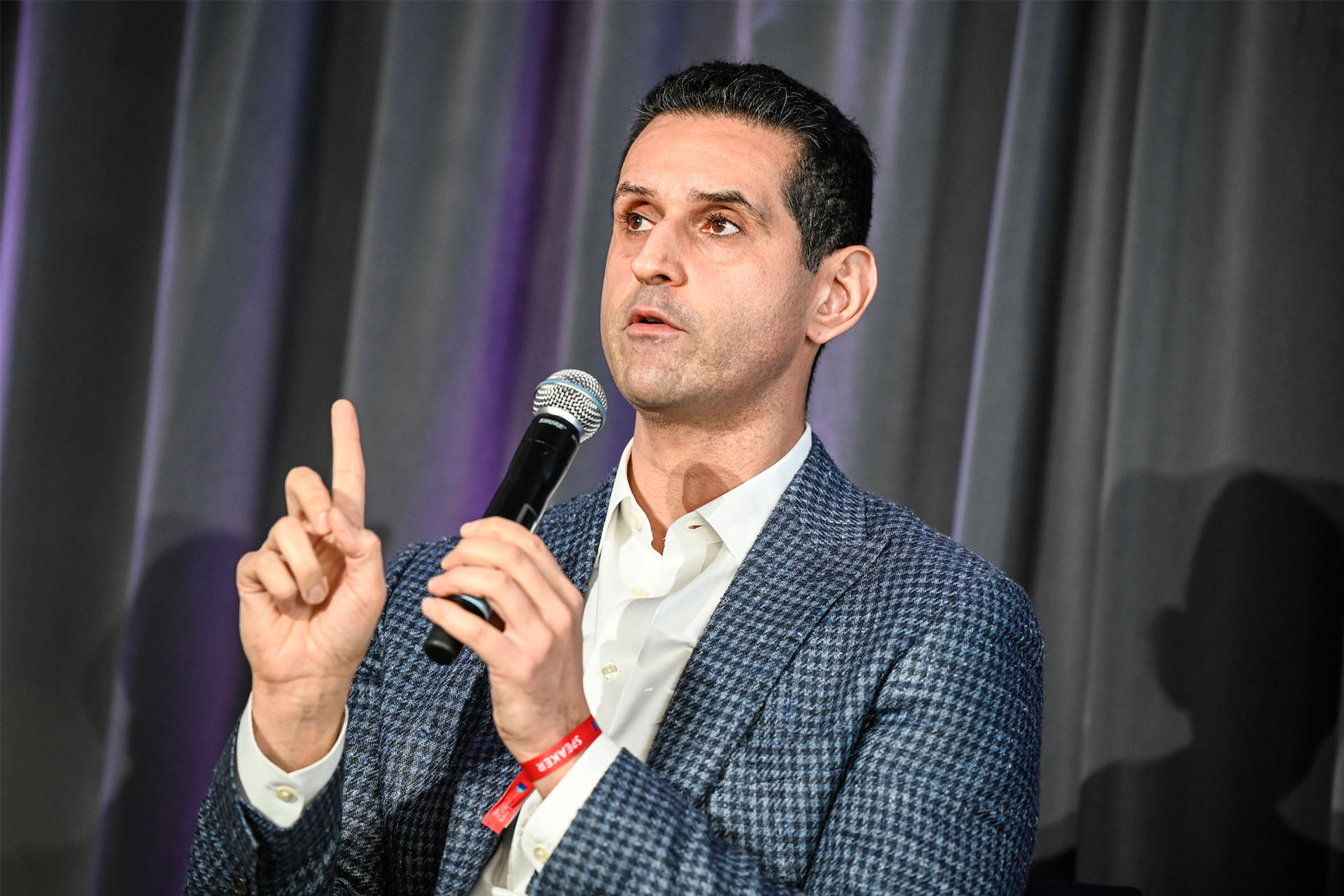
Abraham Tachjian at the Elevate tech conference in Toronto in September 2022. Photo: Christopher Katsarov Luna for The Logic
Abraham Tachjian is expected to wrap up his term as Canada’s open banking lead this month with pressing questions about the initiative still unresolved—the latest in a series of departures that has left the country’s fintechs wondering what comes next.
The federal government appointed Tachjian in March 2022 to spearhead a new, made-in-Canada system that would let fintechs access data that’s been traditionally controlled by the banks.
His planned departure comes shortly after Prime Minister Justin Trudeau shuffled his cabinet in late July. The shakeup saw associate finance minister Randy Boissonnault, who was responsible for open banking, take on the role of employment minister. The move, along with the likelihood of a new mandate letter for Finance Minister Chrystia Freeland, has led to speculation over who will oversee progress on the file.
Here’s what you need to know:
Related Articles

Tachjian’s exit: Since he was named open banking lead, Tachjian has participated in more than 200 stakeholder consultations and established working groups with representatives from the country’s banks, credit unions and fintechs to discuss the system, addressing issues like liability, privacy and security.
Tachjian’s recommendations are supposed to inform a “read-only” model of open banking, where accredited companies could view individual consumer data relevant to the products and services the firms offer, as long as they get authorization from those consumers. The Department of Finance told The Logic in April that the government is committed to presenting the first phase of open banking in 2023, but no further developments have been announced.
The Logic followed up last week, asking the department if Tachjian is still expected to leave his post this month, and whether a read-only model of open banking will be presented to Canadians sometime this year. Spokesperson Maude Duguay didn’t answer directly but said the department and the open banking lead are “continuing their work at this time.”
“If the government remains silent on open banking, it might mean that their plan is to rely on the Big Five banks to make policy and supervise data sharing.”
“It feels like we’re approaching this deadline of [Tachjian’s] tenure coming to an end without any clarity as to what’s happening next,” said Alex Vronces, executive director of the industry association Fintechs Canada. “It wouldn’t be interpreted well by the market if Abraham left and the government signalled no direction on open banking.”
Juanita Leon, spokesperson for Toronto-based Wealthsimple, which participated in Tachjian’s working groups, said the team has heard nothing from the government to suggest it’s shifting from its 2021 commitment to a made-in-Canada system of open banking. The target date to implement the first phase of the model was January 2023.
A new mandate: There is speculation in Ottawa that the finance minister could receive a new mandate letter that doesn’t mention open banking, according to a LinkedIn post by Benjamin Bergen, president of the Council of Canadian Innovators, a lobby group representing Canadian scale-ups.
Such an omission “would indicate the government’s lack of commitment to the innovation economy” and a misreading of “the economic future of the banking system,” Bergen wrote.
Vronces agreed, saying the absence of open banking in a mandate letter would suggest the government doesn’t consider open banking advocates and the fintech sector “politically important.”
But it wouldn’t mean progress on open banking has come to a stop, he added, noting that Finance Canada would still need to advise Freeland what to do next. If the government remains silent on the issue, it might mean it plans to rely on the Big Five banks to make policy and supervise data sharing, Vronces said.
Andrew Escobar, director of open finance at Lehi, Utah-based MX and corporate director at the Ottawa-based Canadian Internet Registration Authority (CIRA) said in a LinkedIn post that open banking requires renewed focus, and suggested shifting responsibility for the file from the finance minister to the minister of innovation. (Escobar stressed to The Logic that the post reflected personal views that are not attributable to MX or CIRA.)
Innovation, Science and Economic Development Canada may be a better home for the dossier, given its work on the new Consumer Privacy Protection Act, which is arguably the legislative foundation of open banking, he said. The department has “been diligent in considering how a ‘data mobility framework’ would apply to banking and financial services,” he added.



Loading...
Thanks for sharing!
You have shared 5 articles this month and reached the maximum amount of shares available.
CloseThis account has reached its share limit.
If you would like to purchase a sharing license please contact The Logic support at [email protected].
CloseGift the full article!
You have gifted 0 article(s) this month and have 5 remaining.
Recipients will be able to read the full text of the article after submitting their email address. They will not have access to other articles or subscriber benefits.
Photo: Christopher Katsarov Luna for The Logic
Most Popular This Week



In-depth, agenda-setting reporting
Great journalism delivered straight to your inbox.
Commentary
Carmichael: Canadian ignorance about India is a strategic weakness
Briefing
Aritzia shares pop after earnings rise 204%
First Nation in Alberta goes to court over fast-tracked oil pipeline
Chinese EV maker Geely Auto Group to launch in Canadian market in 2027
Best business newsletter in Canada
Get up to speed in minutes with insights and analysis on the most important stories of the day, every weekday.
Exclusive events
See the bigger picture with reporters and industry experts in subscriber-exclusive events.
Membership in The Logic Council
Membership provides access to our popular Slack channel, participation in subscriber surveys and invitations to exclusive events with our journalists and special guests.