About one-third of Canadians said they won’t take a COVID-19 vaccine if it’s available, even if it’s mandated by law, according to a new poll conducted by Toronto-based predictive-analytics firm Riwi.
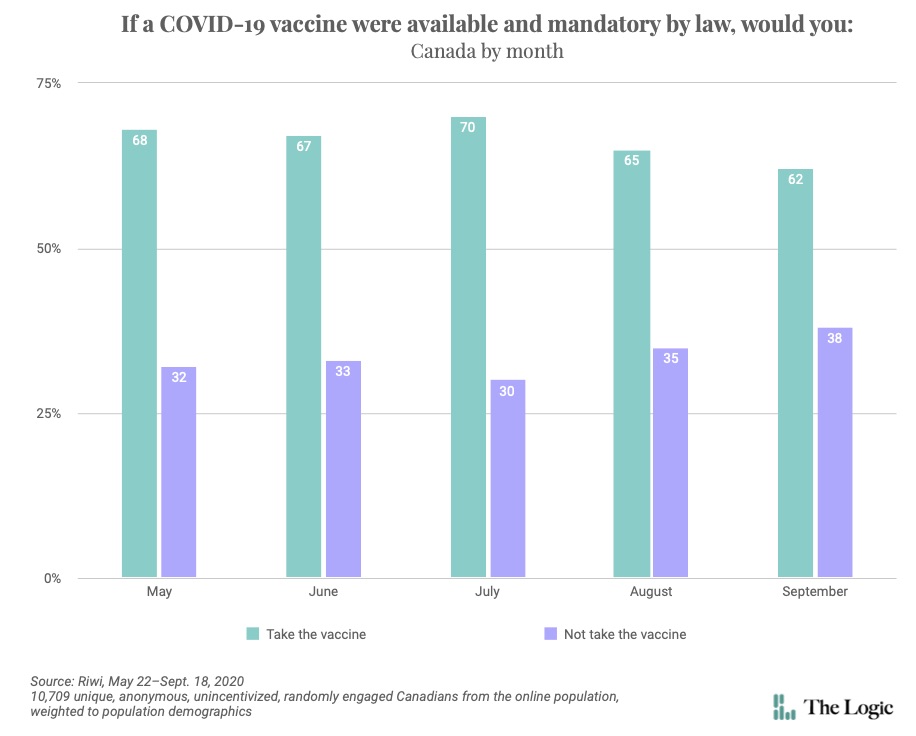
The percentage of Canadians who said they would be willing to take a vaccine has also been dropping since July, the study found.
Talking Point
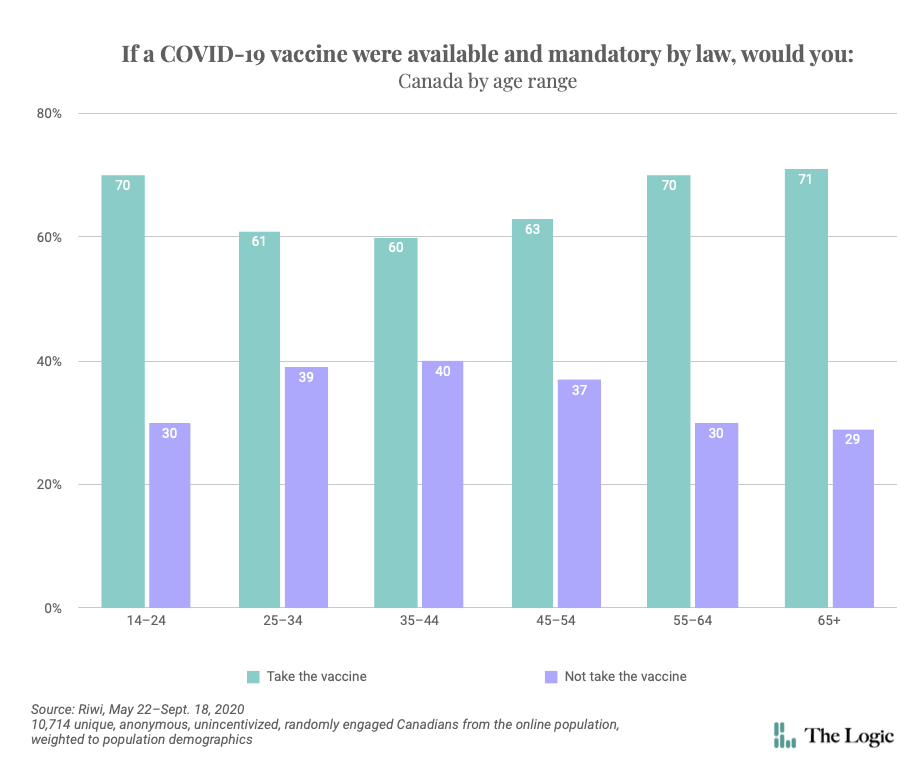
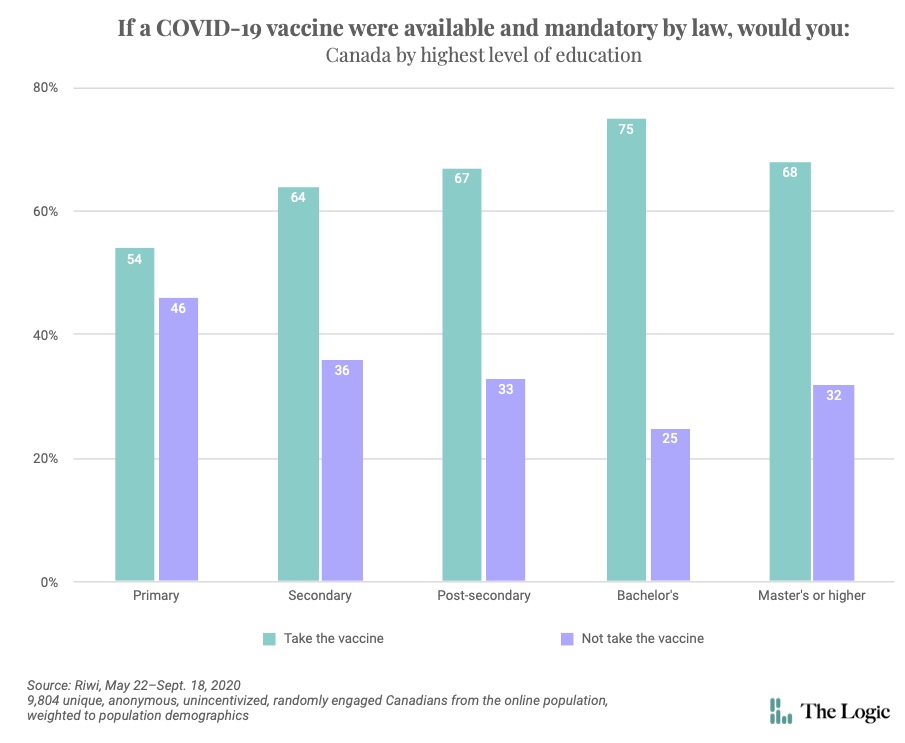
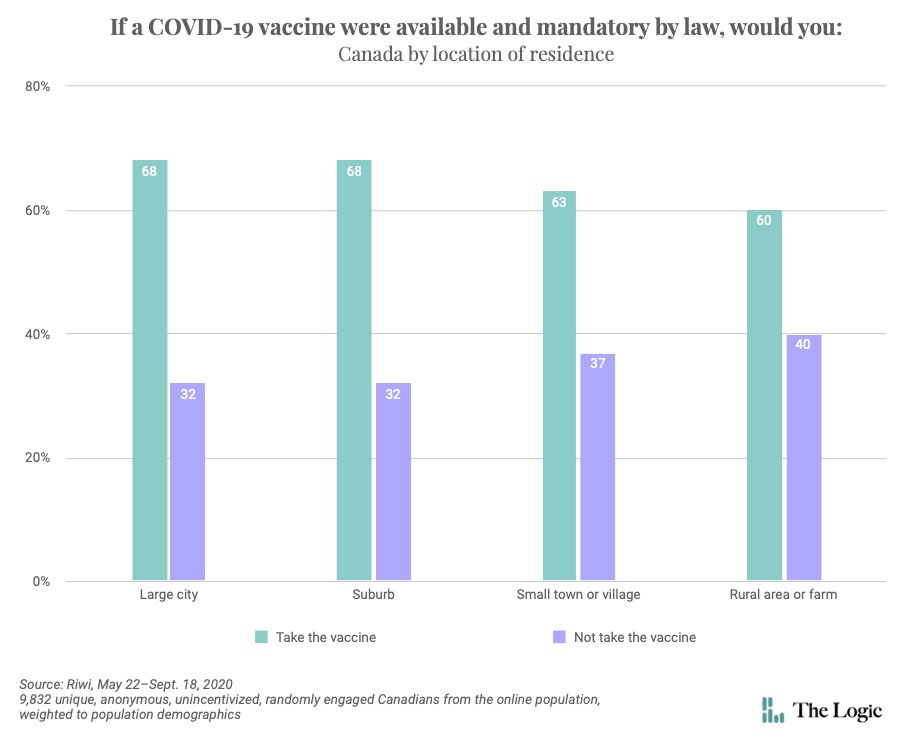
Canadians were most willing to take a vaccine in July, but that’s dropped in August and again in September. The old and young (over 55 and 14–24) are much more likely to take a vaccine than people in the middle (25–64). Canadians living in rural areas are much less likely to take a vaccine than Canadians living in cities. Also, people with less education are much less likely to take a vaccine. Fifty-four per cent of people with just primary education said they’d take a vaccine, compared with 75 per cent of people with a bachelor’s degree.
Founded in 2009 during the H1N1 pandemic with the goal of monitoring public health responses in real time, Riwi runs surveys on dormant or vacant URLs, reaching a broad segment of internet users, including young people and immigrants, who are often missed in traditional polling methods. The firm, which collected data on the willingness of people in 11 countries to take a COVID-19 vaccine, shared key findings with The Logic on data from May 22 to September 18.
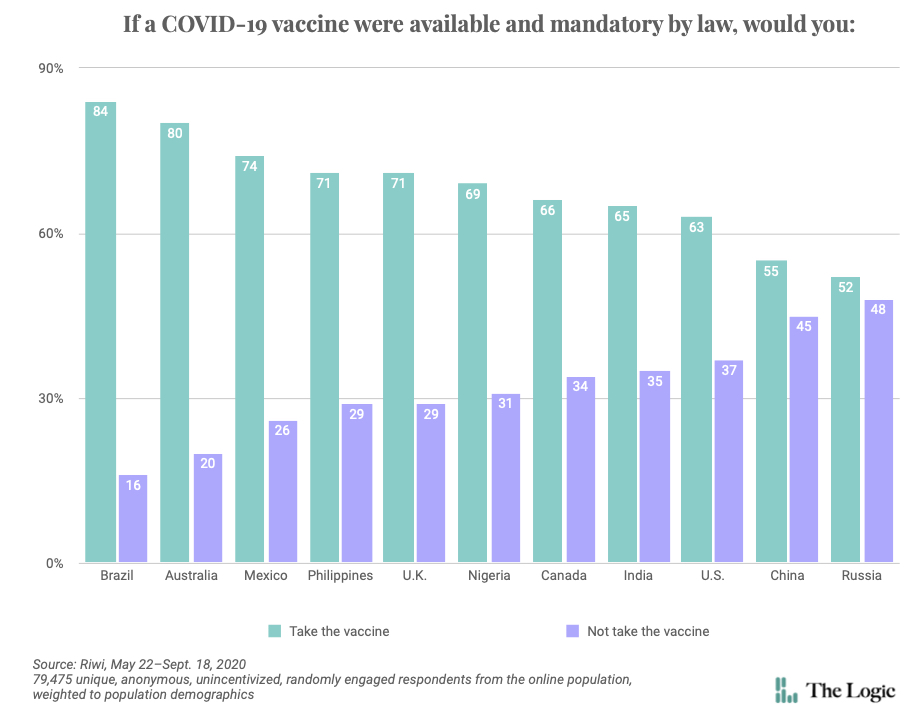
The 34 per cent of Canadians who said they would ignore a legal requirement for vaccination is about the same as the 37 per cent in the U.S. who said they’d do so, but well above the 16 per cent in Brazil or 20 per cent in Australia. Canadians were most willing to take a vaccine in July, but that percentage fell in both August and September. The greatest divide is on education lines. Forty-six per cent of people whose highest level of education was primary school said they wouldn’t take a vaccine, whereas 25 per cent of people whose highest level of education was a bachelor’s degree said they would not.
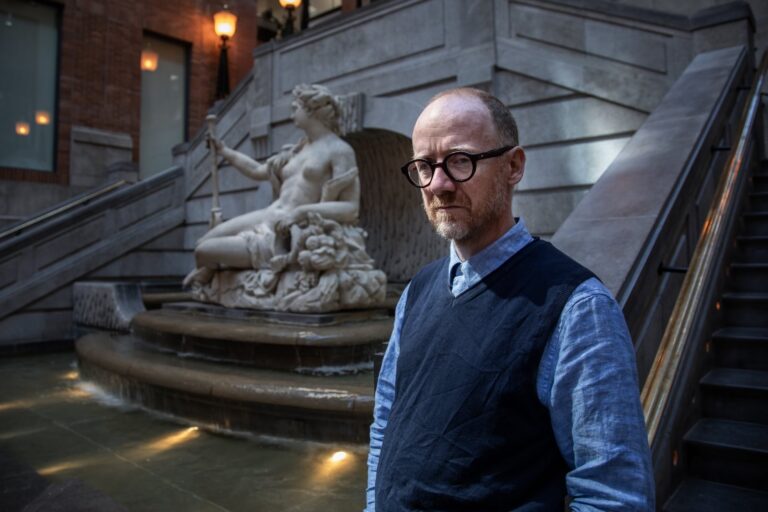
“We’ve seen this before. Whether it was work with the measles, mumps and rubella vaccine or concerns around the flu vaccine, there were relatively similar perceptions of anxiety that were reflected both in America and Canada,” said Riwi CEO Neil Seeman. He is concerned that misinformation about vaccination’s side effects, negative perceptions about the pharmaceutical industry and lack of trust in public health officials have created a situation where people in Canada and around the world are reluctant to take a COVID-19 vaccine. However, he remains optimistic that with better public education campaigns focused on groups that his polling shows are hesitant, more people can be convinced to take vaccines.
“There’s a fair bit of, I think, gentle education and authentic education and leadership that will help get us over the reluctance we’re seeing,” said Seeman.
Here’s a breakdown of Riwi’s latest research.
The July high
Canadians’ interest in taking a vaccine peaked in July, when 70 per cent of people said they’d take it. In August, that number fell to 65 per cent. It fell again to 62 per cent in September, its lowest point so far.
Global positioning
People in Russia were the most likely to say they wouldn’t take a vaccine, at 48 per cent. China was close behind at 45 per cent.
Middle-age wariness
The old and young were more likely to say they’d get vaccinated than people in their middle years. While around 30 per cent of Canadians between the ages of 14–24 or over 55 said they wouldn’t take a vaccine, that number jumped to around 40 per cent for those between the ages of 25–54.
Wealthier want vaccines
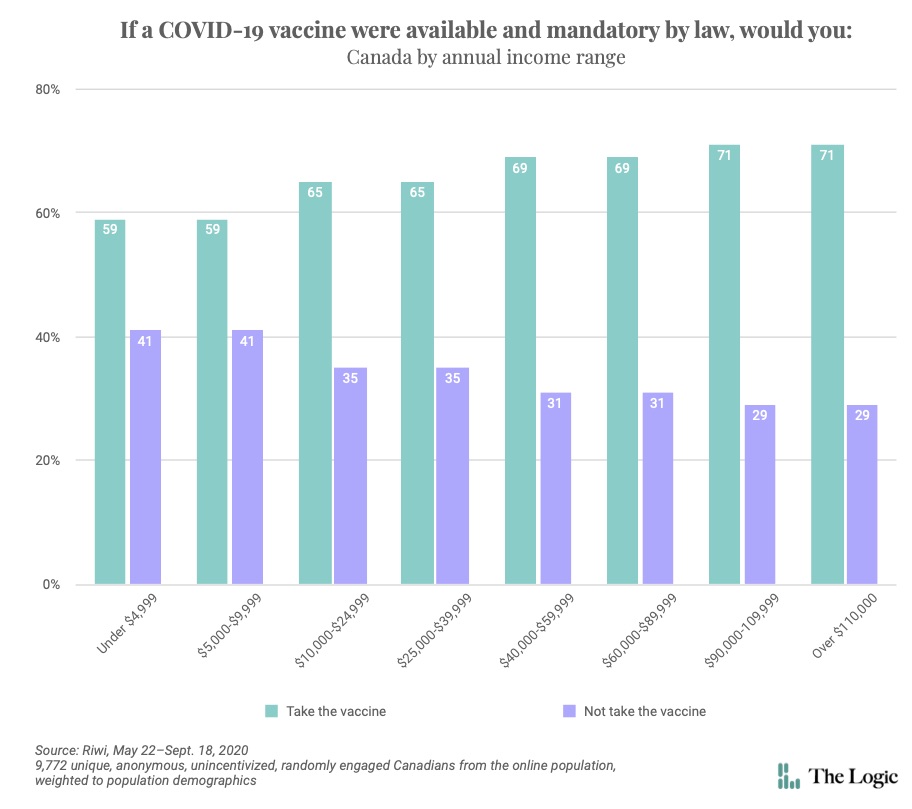
The higher someone’s income, the more likely they were to be willing to take a vaccine. While 59 per cent of people making under $10,000 per year before taxes said they’d get vaccinated, 71 per cent of people making over $90,000 said the same.
Education gap
The largest gap in vaccine interest in Canada was between the 75 per cent of people whose highest education was a bachelor’s degree who said they’d get vaccinated and the 54 per cent of people who just completed primary school who said they would. More education didn’t always lead to more willingness to be vaccinated, though. Sixty-eight per cent of people with a master’s degree or more said they’d take a vaccine.
Rural/urban divide
People who live on farms or in rural areas or small towns were slightly less likely to say they’d be willing to take a vaccine, compared with individuals living in large cities or suburban areas.