Listen Now
0:00
NORTH BAY, ONT. — Small cities in northern Ontario best-known for mining and forestry have become unlikely film and TV production hubs for everything from big-budget thrillers to holiday romances.
From Sudbury to North Bay and Sault Ste. Marie, the production boom is starting to have a major impact on the economies of small cities and towns in the region. The growth is driven partly by regional tax credits and provincial investment, but also by the region’s epic landscapes and idyllic towns.
Talking Points
- Ontario’s film sector contributed $2.6 billion to the province’s economy in 2024, creating 34,836 direct and spinoff jobs in the province
- Though most production activity is in southern Ontario, the north represents a small but growing share, with around 12 per cent of the province’s 2,017 productions filmed in the region between 2016 and 2023
“North Bay has done an amazing job of being able to create this authentic kind of love story backdrop, or to be able to double for a great Americana Christmas setting,” said Patrick O’Hearn, associate executive director of Cultural Industries Ontario North (CION).
The industry has an estimated regional economic impact of $537 million between 2016 and 2023. As of 2022, the most recent year for which figures are available, northern Ontario was generating roughly $137 million in production spending, and had created up to 1,200 jobs—a number expected to nearly double by 2028, according to CION.
That’s still tiny compared to the rest of Ontario’s film industry, but the dollar sums and predicted speed of growth are having a significant impact on communities crying out for increased investment. Ontario’s film sector contributed $2.6 billion to the province’s economy in 2024, creating 34,836 direct and spinoff jobs in the province. Though most production activity is in southern Ontario, the north represents a small but growing share, with around 12 per cent of the province’s 2,017 productions filmed in the region between 2016 and 2023.
Related Articles


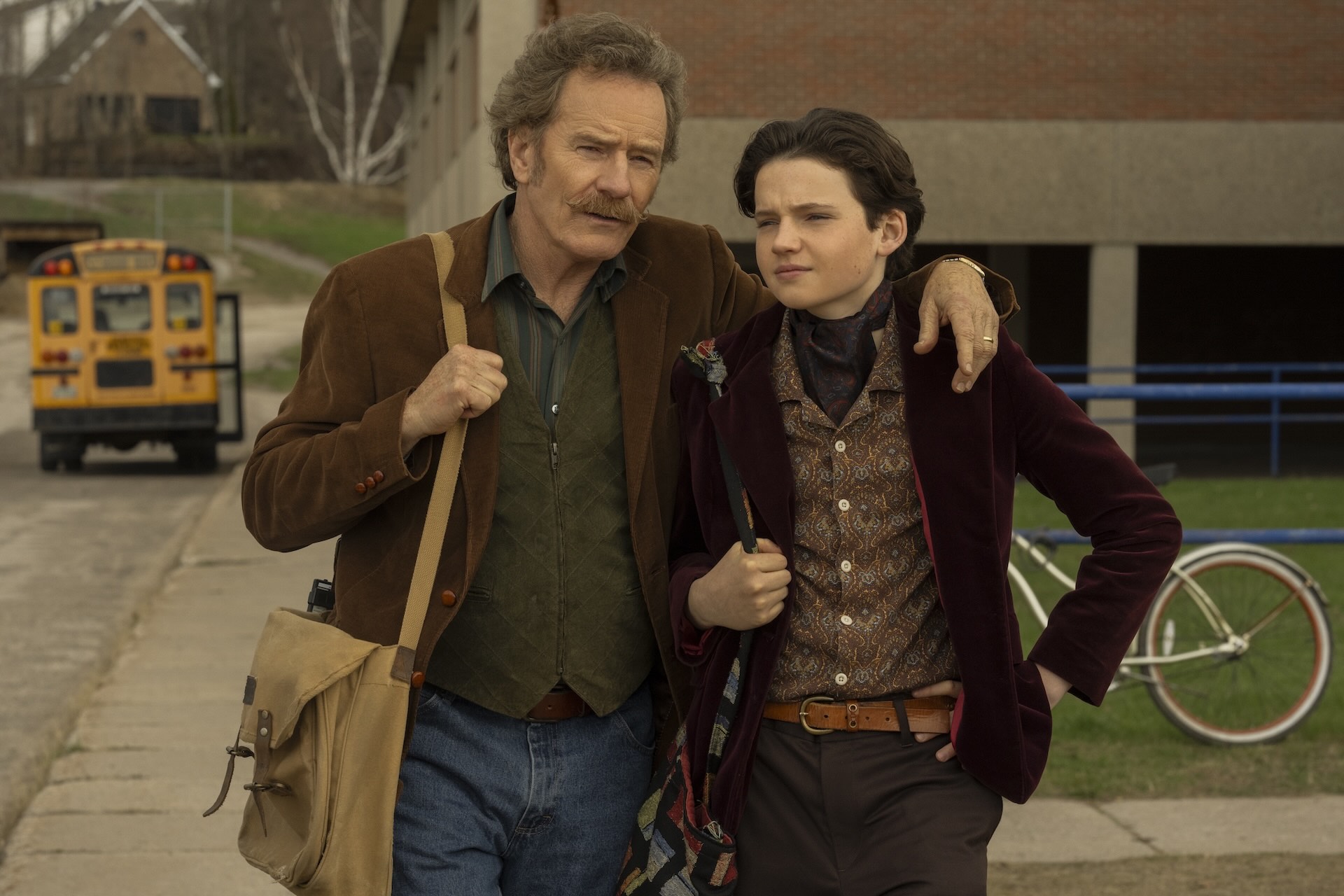
Hallmark-ready streets may have helped put northern Ontario on the film and TV production map, but bigger-budget, prestige projects are starting to see the benefits of the region, too. In spring 2023, Bryan Cranston shot scenes for the 2025 film Everything’s Going to be Great in a North Bay high school and the city’s historic Capitol Centre theatre. Then, in February 2024, Guillermo del Toro filmed scenes for his blockbuster Frankenstein on Lake Nipissing’s icy surface. North Bay is now one of the busiest filming jurisdictions in Ontario outside Toronto, with the industry generating an estimated $40 million annually for the city of 52,600 people.
“We obviously hear the excitement from audiences,” O’Hearn said. “We see that throughout the north—that community excitement that revolves around seeing your backdrop on the big screen.”
These are communities that otherwise rely on extracting resources from the land, rather than capturing its beauty on camera. Northern Ontario accounts for 26 per cent of Canada’s mineral production value, contributing almost $24 billion directly to the provincial GDP in 2023 alone.
Reliance on resource extraction has created a slow-growing and sometimes volatile economy that feels the effects of booms and busts as demand for resources grows and shrinks. Communities in northern Ontario tend to have fewer opportunities for people working in creative industries, and there’s a need for economic diversification and a “transition to a knowledge economy,” according to a 2016 study by the federal government.
Slowly, that’s changing. One study shows that filmmakers and other creatives are increasingly calling small-town Ontario their home. Money and opportunity have also created both interest and demand for skilled workers in the region. In 2012, North Bay’s Canadore College introduced a three-year film program. Then, in 2018, Canadore opened a nearly 5,600 sq.-ft. post-production facility on its campus, giving productions the infrastructure to both film and finish their work in northern Ontario.
“I was in year one of that program’s existence,” said Martin Smith, a former student at Canadore who has since worked as an assistant production manager on Letterkenny and Shoresy, both of which helped boost the profile of northern Ontario’s production industry. “I was working two weeks after graduation on Letterkenny Season 1. It was perfect timing for me.”
“Myself and many of my schoolmates, where we have really found an advantage with shooting in the north, was just the ability to progress and move up,” Smith said. “If I had been in Toronto and entered the industry 10 years ago, I wouldn’t be in the position I’m in today.”
A longer-term challenge for the region has been to create predictable, sustainable employment opportunities. For years, production companies would roll in from southern Ontario or elsewhere, often with their own cast and crew, do their filming, then leave.
“When it first started, the industry up here had very limited resources,” said Derek Diorio, a writer, director and producer who moved to North Bay with his family in 2018 after working in Ottawa for decades. “There wasn’t anything up here.” Now, he said, North Bay has the kit, the crew and, increasingly, the cast. “You have an acting pool that is maturing and growing,” said Diorio. “People are working, and I would dare say, making a living.”
Diorio said almost 90 per cent of people on his current television production crew trained at Canadore. Many of the actors are local as well. O’Hearn also pointed to a workforce of set painters, electricians, carpenters and caterers, among other professions, that both make film production in the north viable and bolster small-town economies in additional ways.
Still, the local industry is subject to the ups and downs faced by the industry at large. During the 2023 Hollywood strikes, productions in the region fell more than 40 per cent from 37 productions in 2022 to just 21 the following year. This represented the lowest regional output in a decade, excluding the pandemic.
This instability triggered other setbacks in the north, including the permanent closure of North Star Studios in 2024, less than two years after it launched with a promise to serve as the largest production facility of its kind in the region. North Star laid off 44 staff and its 95,000 sq. ft. space has since been taken over by a mining engineering company.
In September 2025, the Toronto International Film Festival hosted a conference urging more filmmakers to go north for “unmatched incentives.” These include funding from the Northern Ontario Heritage Fund Corporation, which can cover up to 50 per cent of costs on a production up to a value of $2 million. Other bonuses such as a 45 per cent tax credit rate for productions shot outside of the Greater Toronto Area.
“It has certainly worked exceedingly well in terms of bringing production companies up here,” Diorio said of the support available. Ultimately, though, he said incentives alone shouldn’t be the final goal. “The idea is to create an industry that stands on its own,” he said.