Skip to content

Canada's Business and Tech Newsroom

  • Professional Subscription
  • Partnerships & Advertising
  • Licensing & Syndication
Log In Subscribe
Welcome,
  • My Account
  • Log Out
  • Business
  • Tech
  • National
  • The Big Read
  • Briefings
  • Commentary
Search
Log In Subscribe
Welcome,
  • My Account
  • Log Out
News

New Alberta innovation minister hopes tech-focused recovery plan will help province compete for capital, talent

On Thursday, Alberta reported its worst-ever deficit, projecting a $24.2 billion budget shortfall for the 2020–21 fiscal year amid a pandemic and drop in oil demand. It falls to newly-appointed Innovation Minister Doug Schweitzer to implement the province’s tech-focused recovery plan. 

The current United Conservative Party government is not the first to try to diversify the traditionally energy-heavy provincial economy, and tech executives have questioned its commitment to the sector following a series of cuts last year. Schweitzer said the government has heard their concerns, and believes its new incentives and programs will attract capital and talent. “Technology-driven companies aren’t geographically determined,” he told The Logic in a Thursday interview. “We have to make sure that Alberta is competitive.” 

News

New Alberta innovation minister hopes tech-focused recovery plan will help province compete for capital, talent

By Murad Hemmadi
Then-justice minister Doug Schweitzer at a news conference in Calgary in December 2019.
Then-justice minister Doug Schweitzer at a news conference in Calgary in December 2019. Photo: The Canadian Press/Todd Korol
Aug 28, 2020
A A
A Small A Medium A Large
Share

Gift

Share

On Thursday, Alberta reported its worst-ever deficit, projecting a $24.2 billion budget shortfall for the 2020–21 fiscal year amid a pandemic and drop in oil demand. It falls to newly-appointed Innovation Minister Doug Schweitzer to implement the province’s tech-focused recovery plan. 

The current United Conservative Party government is not the first to try to diversify the traditionally energy-heavy provincial economy, and tech executives have questioned its commitment to the sector following a series of cuts last year. Schweitzer said the government has heard their concerns, and believes its new incentives and programs will attract capital and talent. “Technology-driven companies aren’t geographically determined,” he told The Logic in a Thursday interview. “We have to make sure that Alberta is competitive.” 

Talking Point

New Alberta Innovation Minister Doug Schweitzer is charged with implementing his government’s post-pandemic recovery plan, including a new R&D incentive, funding for VC firms, and an investment attraction agency set up to rival other provinces and countries for capital. The local tech sector has welcomed the new efforts, but remains wary following cuts to tax credits and programming last year.

The pandemic exacerbated the downturn of an already-struggling Alberta economy. In June, RBC Economics projected real GDP in the province would contract 8.7 per cent in 2020, behind only Newfoundland and Labrador, after shrinking an estimated 0.6 per cent last year.

Announced that same month, the province’s economic recovery effort includes $175 million in new money for the Alberta Enterprise Corporation (AEC) fund-of-funds, an investment-attraction agency, and an R&D grant to be introduced in January 2021. Schweitzer’s department is also working on plans for industries like technology and innovation and finance and fintech, among others, to be unveiled in the fall. 

The pandemic has made companies reconsider the factors that inform their location decisions, Schweitzer suggested, noting that “a lot of those big banks are working out of kitchen tables right now, where people are at home on Zoom calls.” Last month’s reduction in the provincial corporate tax rate, now at eight per cent, gives firms the best chance to get a return on their investment, he said. “That’s in Alberta; it’s not in Ontario.”

Tech executives expressed concern about the new UCP government’s plan for the sector last year after it first froze and then eliminated five tax credits including ones for scientific research and experimental development (SR&ED) and startup investment. Some said they were considering leaving the province. In December 2019, The Logic reported Toronto-based Wattpad had picked Halifax over Calgary for its second headquarters.

In making the cuts, Finance Minister Travis Towes cited the additional administrative and compliance costs of applying for and administering targeted incentives, touting instead the broad-based rate reduction. His budget also claimed “the federal government already provides generous supports for research and development.”

Despite this, the province’s new innovation employment grant covers the same innovation activities as Ottawa’s SR&ED credit, although the province says its payout—eight per cent for the regular level of annual expenses and up to 20 per cent for anything above, up to $4 million in spending—is the best in the country. The incentive is a response to feedback from the business community, Schweitzer acknowledged. “We heard loud and clear that [for] startups that don’t necessarily generate profit out the gates—sometimes it can take them years—Alberta had to do more to be to be competitive [and] attract that growth capital,” he said. He believes it’s not too late to win the tech sector back. 

Innovation economy executives who criticized the government for last year’s credit cuts offered cautious praise of the new grant. “It could very well mean more money in the hands of businesses that actually take new ideas and commercialize them,” James Keirstead, CEO of Edmonton-based electronics company Levven, told The Logic shortly after some program details were announced in July. But he called for a replacement to the investor tax credit, which incentivize local sources of capital to consider backing the startups around them. “[There’s] lots of oil and gas money that’s done billions of dollars in investment deals, but not in the tech space because they don’t know [it],” he said. 

The government is looking further afield. It’s currently scouting for a CEO for Invest Alberta Corporation (IAC), set up to promote the province and court outside capital. The arms-length agency will highlight the low cost of living and office space, highly-educated workforce and tax differential, according to Schweitzer. It’ll have offices in Singapore, Hong Kong, London, New York and Houston, as well as domestic ones. “We’re going into the heart of Vancouver, Toronto,” he said. 

The agency will pursue potential investors, acting as a concierge, but will not be “investing directly in projects,” Schweitzer’s spokesperson Justin Brattinga told The Logic. By contrast, Invest Ontario, announced last month, will fund companies that choose to locate there. “That’s one failing that I think governments of yesteryear [had], when they were too hands-on … in making strategic investment decisions,” Schweitzer said, claiming he will instead rely on the domain expertise of AEC and IAC to make calls with the province’s money.

The new minister also touted the province’s commercialization success, citing Alberta Innovates. The agency “has done an amazing job over the last long time actually developing technologies” in the environmental and pharmaceutical sectors, he said. “Investors around the world [should] know this is a tool that they can use to help develop their startup [and] technologies that are going to create the next unicorn for Alberta.”

Gift the full article

Despite this, the October 2019 provincial budget reduced Alberta Innovates’s budget by $129.7 million over the following two fiscal years, and it later laid off 125 staff. Asked about the cuts in light of his praise of the agency, Schweitzer cited the recency of his appointment. “A lot of things have changed over the last while in the province, with the pandemic and other areas,” he said, adding that his portfolio will expand in the near future. 

With files from Catherine McIntyre.

#Alberta #Doug Schweitzer

Sponsored Content

The road to risk-smart regulation

By Deborah Aarts

Why cybersecurity needs to match pace with AI

By Jessica Aftimus Rosa

How to shift your workforce from AI experimentation to adoption

By Jessica Aftimus Rosa
Paid promotional content

Loading...

Thanks for sharing!

You have shared 5 articles this month and reached the maximum amount of shares available.

Close
This account has reached its share limit.

If you would like to purchase a sharing license please contact The Logic support at [email protected].

Close
Want to share this article?

Upgrade to all-access now

Close
Gift the full article!

You have gifted 0 article(s) this month and have 5 remaining.

Copy link and gift
Copy Link
Email to a friend
Send Email
Gift on Social Media

Recipients will be able to read the full text of the article after submitting their email address. They will not have access to other articles or subscriber benefits.

Then-justice minister Doug Schweitzer at a news conference in Calgary in December 2019.

Photo: The Canadian Press/Todd Korol

Most Popular This Week

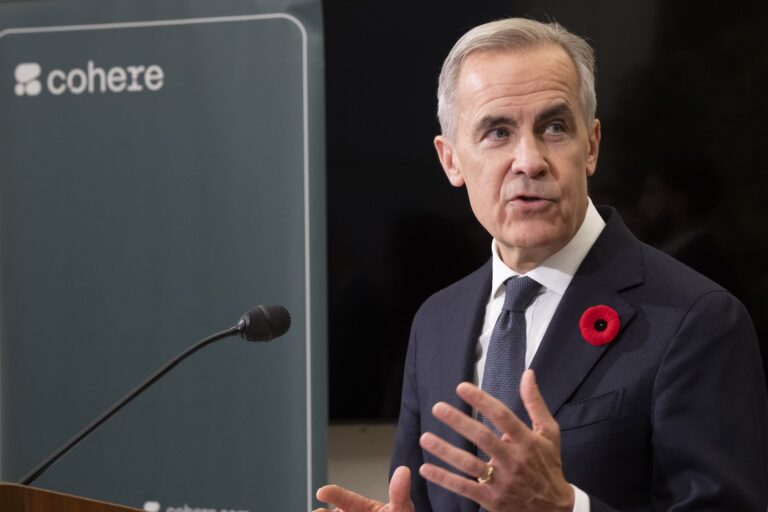
An image of Prime Minister Mark Carney, standing in front of a microphone and speaking. He is wearing a blue suit and tie, while looking away from the camera. He is standing in front of a dark background. The Cohere logo is visible in the background.
News

Conservatives challenge Ottawa to justify its $1.6B Cohere investment

By Catherine McIntyre
A logo that reads AI in blue lettering against a light yellow background.
News

BDC launches programs to test Canadian AI tools in small businesses

By Catherine McIntyre
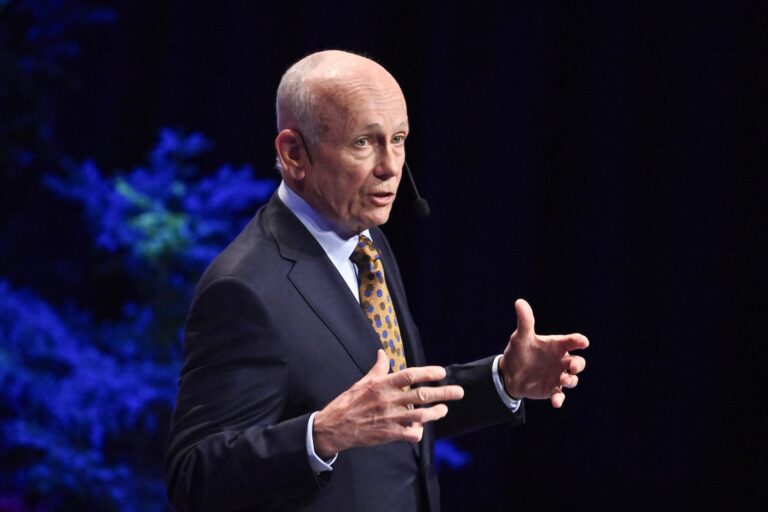
A man wearing a headset microphone sits on a stage. He is speaking and gesturing with his hands. The background is dark blue.
News

Ottawa will invest up to $1.6B in Cohere as firm’s valuation hits $35.7B

By Catherine McIntyre
Prime Minister Mark Carney and the rest of the Liberal front bench stand applauding Finance Minister François-Philippe Champagne in the House of Commons. Champagne is in the middle of the frame, with his hands on a desk lectern.
Special Report

What business wants from the 2026 federal budget

By David Reevely, Joanna Smith, Anita Balakrishnan, Claire Brownell, Chaimae Chouiekh, Murad Hemmadi and Meghan Potkins

In-depth, agenda-setting reporting

Great journalism delivered straight to your inbox.

The Big Read

How AI is really changing math

By Andrew Seale

Briefing

Finance partly walks back proposed ban on crypto ATMs

By Claire Brownell   |   Nov 4, 2026 | 2:22 PM ET

Companies that lend staff to the Major Projects Office are kept secret to avoid conflict allegations

By David Reevely   |   Nov 4, 2026 | 1:26 PM ET

Google is letting users in Canada shop directly through its AI tools

By Catherine McIntyre   |   Nov 4, 2026 | 10:17 AM ET

Best business newsletter in Canada

Get up to speed in minutes with insights and analysis on the most important stories of the day, every weekday.

Exclusive events

See the bigger picture with reporters and industry experts in subscriber-exclusive events.

Membership in The Logic Council

Membership provides access to our popular Slack channel, participation in subscriber surveys and invitations to exclusive events with our journalists and special guests.

Recent Popular Stories

Analysis

Why a midterm sweep for the Democrats won’t end Canada’s trade nightmare

By Joanna Smith   |   Oct 29, 2026
Commentary

Carmichael: Canada’s Nobel-winning economist thinks Carney is on the right track

By Kevin Carmichael   |   Oct 31, 2026
A man wearing a dark suit jacket, blue button-down shirt and spotted brown-and-blue tie stands in front of a black and blue background, gesturing and speaking into a microphone.
News

Ottawa will invest up to $1.6B in Cohere as firm’s valuation hits $35.7B

By Catherine McIntyre   |   Oct 29, 2026
A man wearing a headset microphone sits on a stage. He is speaking and gesturing with his hands. The background is dark blue.
News

Bank of Canada raises key interest rate amid soaring energy costs

By Kevin Carmichael   |   Oct 28, 2026
Bank of Canada Governor Tiff Macklem in a suit, speaking and gesturing with his right hand.
Special Report

What business wants from the 2026 federal budget

By David Reevely, Joanna Smith, Anita Balakrishnan, Claire Brownell, Chaimae Chouiekh, Murad Hemmadi and Meghan Potkins   |   Oct 28, 2026
Prime Minister Mark Carney and the rest of the Liberal front bench stand applauding Finance Minister François-Philippe Champagne in the House of Commons. Champagne is in the middle of the frame, with his hands on a desk lectern.
News

The Canadian Forces were warned about safety gaps for 20 years before Wainwright disaster

By David Reevely   |   Oct 30, 2026
A side shot of a row of fully equipped soldiers making a beach landing from zodiac watercraft, rifles in hand.

Canada's most influential executives and policymakers are reading The Logic

  • CPP Investments
  • Sun Life Financial
  • C100
  • Amazon
  • Telus
  • Mastercard
  • bdc
  • Shopify
  • Rogers
  • RBC
  • General Motors
  • MaRS
  • Government of Canada
  • Uber
  • Loblaw Companies Limited
logic-logo

Canada's Business and Tech Newsroom

100% human-crafted journalism

Newsroom

  • News Tips
  • AI Policy
  • Editorial Disclosures
  • Story Pitches

Company

  • About Us
  • Terms of Service
  • Privacy Statement
  • Corporate Information

Contact

  • Contact Us
  • Advertise
  • FAQs
  • Work at The Logic

© 2026 The Logic Inc. All Rights Reserved.

Trusted by leaders

Error

Account creation failed.

Please email us at [email protected].

Create Account

[wppb-register form_name=”cozmo-registration-form-for-modal”]

I do have an account
Login
or

[wppb-login]

I don’t have an account