Listen Now
0:00
TORONTO — The University of Toronto has announced a partnership with a Cambridge, Mass.-based BioLabs following the departure of Johnson & Johnson’s JLabs incubator program from the MaRS Discovery District last year.
The firm, which is an incubator for life sciences startups, has taken over the 40,000 square-foot facility at the MaRS innovation hub that includes shared labs and co-working space that JLabs vacated at the end of last year. The university said the move will preserve space used by more than 30 early-stage startups and expand their access to international investors and industry partners.
Related Articles
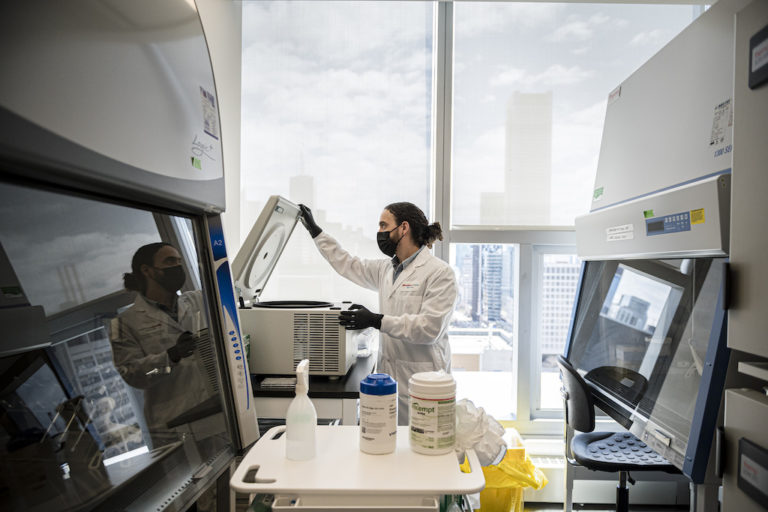
Johnson & Johnson told Toronto startups last summer it was ending its JLabs program in the city, nine years after opening it as the company’s first location outside the U.S. The incubator provided member startups with specialized lab infrastructure and access to the pharma giant’s network of mentors and investors, giving the company early exposure to potential partnerships and acquisition targets.
Unlike its predecessor, BioLabs isn’t tied to a corporate anchor. Leah Cowen, U of T vice-president of research and innovation, said that means the incubator can support a greater variety of life sciences startups and connect them to a deeper pool of potential partners.
The company operates a global network of shared lab space and programming for entrepreneurs, with 19 locations in the U.S., Europe, Asia and now one in Canada. The incubator aims to help turn academic research into viable companies by connecting founders with mentors, investors and potential customers. The organization says it has supported over 500 companies, which have collectively raised more than US$5 billion in funding.
Cowen said that while U of T has a strong record of launching companies, “for them to be able to scale and grow here in Ontario, they need these kinds of critical supports that the BioLabs model can help provide.” Cowen said BioLabs’ international network is one of the biggest advantages for startups. “That can really be transformative for the companies,” she said.
Cowen added in a press release that BioLabs’ presence also helps preserve limited wet-lab space near the city’s research institutions and hospitals—the specialized infrastructure that life-sciences entrepreneurs need to grow but have long struggled to access. That shortage was a key reason JLabs was considered strategically important when it opened in 2016 and why the university quickly sought to replace it when it left.